


Los Angeles International Airport can feel like a small city, with nine passenger terminals, dozens of airlines, and a web of walkways and shuttles connecting it all. If you have ever arrived at LAX only to discover your airline actually departs from a different building, you are not alone. Knowing which terminal is right for your flight can save you time, stress, and the occasional sprint between gates.
Get the latest updates straight to your inbox!
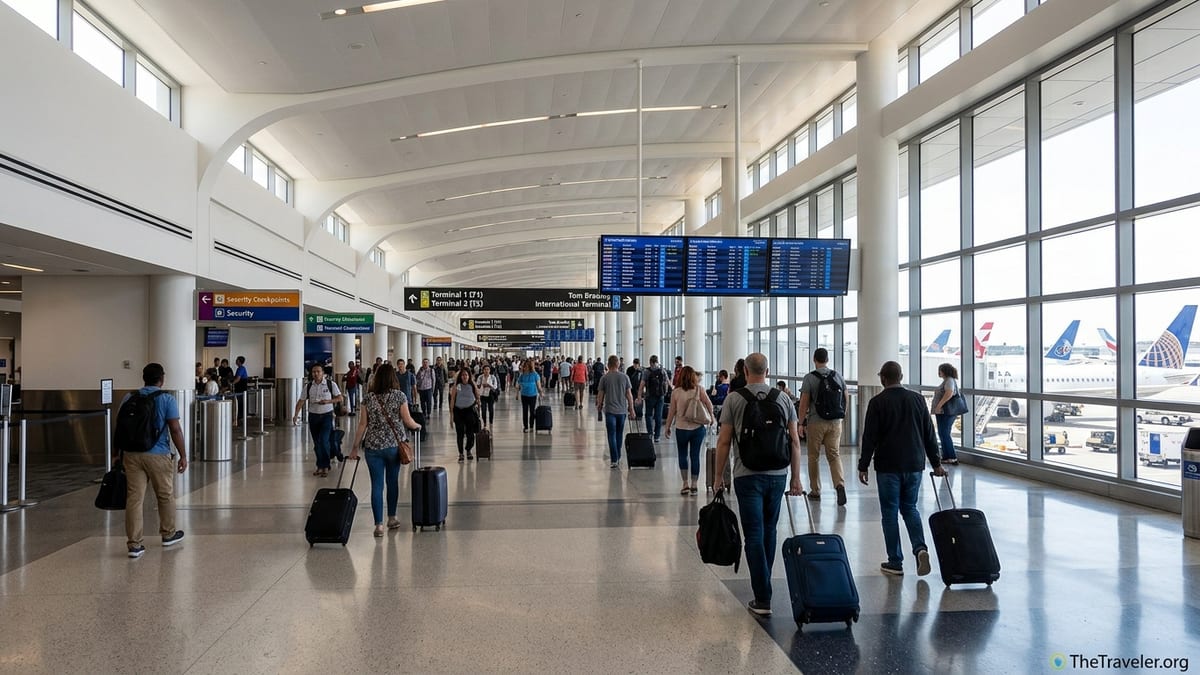
Understanding LAX’s Terminals in 2026
Los Angeles International Airport is organized around a horseshoe-shaped road called World Way, with eight numbered terminals plus the Tom Bradley International Terminal, usually labeled Terminal B. Together, they handle one of the highest volumes of passenger traffic in the United States, from short West Coast hops to long-haul flights to Asia and Europe.
For passengers, the most important detail is that the terminal printed on your boarding pass is what counts. Airline assignments at LAX are updated regularly, and carriers sometimes operate from multiple terminals or use different terminals for check in and departure. For example, it is increasingly common for a domestic leg of an international itinerary to depart from Tom Bradley’s West Gates even though check in happens at a different terminal.
Another key change in recent years is that LAX’s secure-side connector network now links almost all of the terminals. With the completion of walkways between Terminal 1, Terminals 2 and 3, and the Tom Bradley International Terminal, passengers can walk airside from Terminal 1 all the way around to Terminal 8 if they remain behind security. This creates more flexibility to clear security where lines are shorter, then walk to your actual departure gate.
Despite these improvements, LAX remains large and busy. Walking from Terminal 1 at the far north end of the horseshoe to Terminal 8 at the south end is roughly a two-mile journey. That is manageable for a relaxed traveler with time to spare, but can feel daunting if you have 40 minutes to make a connection. Understanding which airlines use which terminals will help you plan better before you ever leave home.
Which Airlines Use Which Terminals
Airline assignments change, but as of mid 2026 the broad pattern has been relatively stable. Terminal 1 is heavily dominated by Southwest Airlines, which uses the terminal as a major West Coast hub for routes such as Los Angeles to Oakland, Phoenix, and Denver. Several ultra-low-cost carriers, including Frontier and some seasonal operators, also check in at Terminal 1, with some passengers bused to the Tom Bradley West Gates for boarding when those shared gates are used.
Terminals 2 and 3 form the core of Delta Air Lines’ presence at LAX. Delta uses Terminal 3 for most check-in and departures on key domestic routes such as Los Angeles to Seattle, Atlanta, and New York, while also connecting passengers to international departures that may leave from Tom Bradley’s main concourses. Partner airlines including some SkyTeam carriers typically use a combination of Terminal B and these Delta terminals, which allows relatively smooth connections for passengers flying, for example, from San Diego to Los Angeles on Delta and onward to Paris on Air France.
American Airlines is centered on Terminal 4, with additional operations in Terminal 5 and some international flights using Tom Bradley. A passenger flying Los Angeles to Miami may depart from Terminal 4, while someone headed to London on American might check in at Terminal 4 but board at a gate in Terminal B. JetBlue and Spirit use Terminal 5 along with some American flights, reflecting the shared use of that space while Terminal 5 undergoes long-term reconstruction and modernization. Terminal 6 is primarily home to Alaska Airlines, Hawaiian Airlines, and several partner carriers such as Air Canada and Porter, which use the terminal for both West Coast flights and transcontinental services.
United Airlines continues to operate from Terminals 7 and 8, using them as its core LAX base. Typical United routes such as Los Angeles to Chicago, Newark, and Honolulu depart from these terminals, and many international United flights also arrive and depart there instead of Tom Bradley. This can surprise travelers who assume all overseas flights use Terminal B, but in practice, United’s international passengers often remain within the United complex in Terminals 7 and 8. International carriers without a specific alliance terminal, along with most major foreign airlines, operate from the Tom Bradley International Terminal, checking in and boarding from its main concourses or the remote West Gates.
How to Confirm Your Terminal Before You Go
Because LAX airline assignments can shift, the terminal your airline used last year might not be the one it uses today. The most reliable way to confirm is to check your airline’s own app or website on the day of travel. Most major airlines, including American, Delta, United, Southwest, Alaska, and JetBlue, display the terminal alongside the gate number within the booking details and mobile boarding pass. For example, a Delta flight might be listed as “Terminal 3, Gate 35,” while an American flight shows “Terminal B, Gate 148.”
Airport-based information is also useful, but should be considered a second check rather than the primary source. LAX publishes current airline location maps and maintains a flight status tool that lists terminals and gates for each departure and arrival. These tools are updated to reflect changes such as the 2026 relocation of several international carriers from Tom Bradley to Terminal 4, but there can still be short-notice gate or terminal adjustments based on construction or operational needs.
Real-world experience shows that relying only on memory can be costly. A frequent traveler who last flew JetBlue out of Terminal 5 in 2024 might assume that has not changed, only to find that a particular transcontinental flight now boards from Tom Bradley’s West Gates, with passengers transported by bus from Terminal 5. If that traveler heads straight to Tom Bradley for check in, they may discover that JetBlue is only processing customers at Terminal 5 and must walk or shuttle back, losing precious time in the process.
For tight connections or trips with unfamiliar carriers, build in extra time and verify your terminal the night before departure and again on the morning of travel. Many flyers set a reminder on their phone to open the airline app about three hours before departure to reconfirm terminal and gate details. This simple step can help you avoid racing between terminals because of a late gate change.
Making Connections Between Terminals
Once you are at LAX, you have two basic choices for moving between terminals: staying behind security via the airside connector paths, or going outside and using the sidewalk or shuttle buses, which requires you to re-clear security at your new terminal. Whenever possible, staying airside will be faster and less stressful. The secure corridor system now links Tom Bradley with Terminals 4, 5, 6, 7, and 8 via a series of walkways and tunnels, and additional connectors join Terminals 1, 2, and 3. Passengers can, for example, clear security at Terminal 4 for an American flight, then walk through to Tom Bradley’s main concourse for a connecting international departure.
Walking times vary by your pace and how crowded the terminal is, but many regular LAX travelers report about 5 to 7 minutes between adjacent terminals and 20 to 25 minutes for longer stretches such as Terminal 1 to Tom Bradley or Terminal 3 to Terminal 7. If you have a two-hour layover between a domestic Southwest flight at Terminal 1 and an international flight departing Tom Bradley on another airline, walking airside is comfortably manageable, and you will have time to stop at a restaurant or lounge en route.
When you arrive internationally and need to clear immigration, collect bags, and recheck them for a domestic connection, you must leave the secure area, complete formalities, and then go back through security before boarding your next flight. This is particularly relevant for travelers connecting from an overseas carrier at Tom Bradley to a domestic airline at a different terminal. In that situation, most travel advisors recommend allowing at least three hours for the connection, to account for potential delays at passport control and security screening, as well as the walk or bus ride between terminals.
Shuttle buses operate in a loop around the terminals and are useful if you have large luggage or mobility issues. These buses pick up on the lower arrivals level under colored signs indicating terminal connectors or airport shuttles. However, with the improved secure-side connections and the ability to pass through security at almost any terminal using a same-day boarding pass, many frequent flyers now prefer to enter the system at the least busy checkpoint and walk to their gate rather than rely on curbside traffic and shuttles.
Domestic vs International Flights at LAX
LAX does not strictly separate domestic and international flights by terminal. While the Tom Bradley International Terminal is the primary hub for foreign flag carriers and long-haul services, several major U.S. airlines use their own terminals for both domestic and international routes. United, for instance, often operates flights to destinations such as Tokyo or London directly from Terminals 7 or 8, allowing its customers to connect seamlessly from domestic arrivals in those same terminals without moving to Tom Bradley.
American Airlines similarly splits its international operations between Terminal 4 and Tom Bradley. An American passenger flying Los Angeles to Dallas and then on to Sao Paulo may never see Terminal B, connecting entirely within the American complex. Meanwhile, a traveler heading to London or Sydney on American could depart from a gate in Tom Bradley but still check in and drop bags at Terminal 4. This hybrid model can be confusing to first-time visitors who expect all “international” flights to be clustered in a single building.
Many international carriers, such as Japan Airlines, British Airways, and LATAM, still rely heavily on Tom Bradley’s check-in halls and gates, particularly for widebody aircraft that need the terminal’s larger stands and modern boarding bridges. Some of these airlines have adjusted their LAX locations over time, occasionally relocating check-in operations to a neighboring terminal while keeping departures from Tom Bradley or integrating with alliance partners in Terminal 4 or 3.
For passengers, the practical rule is that your boarding pass is your guide. Ignore general assumptions about which terminal “should” be used for an international or domestic flight and instead follow the specific terminal and gate information provided by your airline on the day of departure. If anything looks unclear, airport staff inside each terminal are accustomed to these questions and can confirm whether your flight boards from that building or from a remote gate linked to another terminal.
Planning Your Time at LAX
Because Los Angeles traffic can be unpredictable and LAX’s central terminal area is often busy, planning generous arrival times is wise. Many airlines suggest that passengers flying domestically should arrive at least two hours before departure and those on international flights at least three hours. At LAX, those recommendations are generally realistic, especially for peak travel periods such as summer holidays or major event weekends.
If you are connecting between airlines on separate tickets, such as arriving on a low-cost carrier at Terminal 1 and departing to Europe with a different airline at Tom Bradley, treat the connection as if you were starting a fresh journey. Collect your checked bags, walk or shuttle to the correct terminal, recheck your luggage, and clear security again. Building in a minimum of three hours for such self-connect itineraries reduces the risk of missed flights caused by slow baggage handling or long lines at passport control.
Passengers with mobility needs or traveling with children should account for the distances between terminals when choosing their routes. For example, a family arriving on an Alaska Airlines flight at Terminal 6 and departing on United from Terminal 7 may choose to walk the short connector instead of going curbside and re-clearing security. Conversely, an older traveler with heavy luggage connecting from a long-haul international arrival at Tom Bradley to a regional American Eagle flight from the remote American satellite might prefer to accept the shuttle bus assistance offered at the baggage claim area.
Inside the terminals, food and retail options vary. Tom Bradley is known for its upgraded dining, including sit-down restaurants and well-known coffee and bakery brands, while Terminals 2 and 3 have been significantly refreshed as part of the Delta Sky Way project, adding modern bars, coffee shops, and grab-and-go counters. If you have freedom to choose where to spend time during a longer layover and hold a boarding pass that keeps you airside throughout, it can be worth walking 10 or 15 minutes toward a terminal with better amenities, then heading back to your departure gate closer to boarding time.
Lounges and Premium Services by Terminal
Lounge access can influence which terminal is most convenient for premium passengers or frequent flyers. Tom Bradley hosts several of the airport’s flagship lounges, including alliance-operated spaces for oneworld, Star Alliance, and SkyTeam passengers, as well as branded lounges from carriers such as Qantas, Korean Air, and Emirates, and a large American Express Centurion Lounge. These are popular with travelers on long-haul routes who value showers, hot meals, and quiet workspaces before or between flights.
Delta’s expanded footprint in Terminals 2 and 3 includes a prominent Sky Club in Terminal 3, frequently cited as one of the better domestic airline lounges at LAX due to its size, design, and food offerings. American’s primary lounges are located in Terminal 4, including its Flagship Lounge for eligible international and transcontinental passengers. United operates multiple United Club locations across Terminals 7 and 8, serving both domestic and international customers traveling on United and Star Alliance partners.
Not all terminals have lounges. Terminal 1, for example, has no traditional airline lounge despite serving a very high volume of Southwest passengers. Travelers who value lounge access and carry cross-airline memberships, such as Priority Pass or an eligible premium credit card, sometimes plan their security entry point based on lounge locations rather than the closest gate. A passenger departing on a domestic American flight from Terminal 5 might enter through Terminal 4 to use an American lounge, then walk airside to their departure gate closer to boarding.
Premium ground services, such as private car transfers between gates, are limited and usually reserved for high-end first-class passengers on certain international airlines. Most travelers should expect to move between terminals on foot, by shuttle, or via moving walkways inside the secure corridor. If you anticipate needing assistance, it is advisable to request wheelchair or mobility support from your airline at the time of booking, as this can significantly reduce stress when navigating LAX’s long corridors and multiple levels.
The Takeaway
Choosing the right terminal at Los Angeles International Airport comes down to two simple habits: always confirm the terminal with your airline close to departure, and give yourself enough time to navigate a large, busy, and often changing airport. While broad patterns hold, such as Southwest in Terminal 1, Delta in Terminals 2 and 3, American centered in Terminal 4, Alaska in Terminal 6, and United in Terminals 7 and 8, individual flights may still check in or depart from Tom Bradley or neighboring terminals.
Once at the airport, use the expanded secure-side walkways to your advantage, clearing security at a less crowded checkpoint if needed and walking to your departure terminal. For international connections, expect to clear customs, collect bags, and recheck them, and plan at least three hours if you are switching airlines or tickets. By treating the terminal printed on your boarding pass as your source of truth, and by understanding how LAX’s terminals fit together, you can turn what might feel like an overwhelming airport into a manageable, even efficient, part of your trip.
FAQ
Q1. How do I find out which terminal my flight uses at LAX?
The most reliable way is to check your airline’s app or website on the day of travel, where the terminal and gate are usually listed with your flight details. You can also confirm on airport flight information displays once you arrive.
Q2. Are all international flights at LAX handled in the Tom Bradley International Terminal?
No. While many foreign carriers use Tom Bradley, several U.S. airlines, including United and American, operate some international flights from their own terminals, such as Terminals 4, 7, and 8.
Q3. Can I walk between terminals without leaving security?
Yes, most LAX terminals are now connected airside by walkways and corridors. You can generally walk from Terminal 1 through to Terminal 8 without re-clearing security, as long as you stay behind the checkpoints.
Q4. How much time should I allow for a connection between terminals?
For domestic-to-domestic connections within the secure area, 60 to 90 minutes is often enough. For international arrivals requiring immigration and customs, especially when changing airlines, plan for at least three hours.
Q5. What is the best way to move between terminals if I have checked luggage?
If you have not yet gone through security, you can walk outside along the sidewalk or use the free terminal shuttle buses on the arrivals level. After collecting luggage from an international flight, you must exit customs, then walk or shuttle to your next terminal and clear security again.
Q6. Does it matter which terminal I use to go through security?
In many cases, you can clear security at a different terminal than your departure gate as long as you have a same-day boarding pass. Travelers sometimes choose a terminal with shorter lines, then use the airside corridors to walk to their actual gate.
Q7. Where is Southwest Airlines at LAX?
Southwest primarily operates from Terminal 1 at LAX, using it as a main base for many of its West Coast and domestic routes. Always confirm your terminal in case of construction or operational changes.
Q8. Where does United Airlines fly from at LAX?
United operates from Terminals 7 and 8 for most of its LAX flights, including many domestic and some international routes. Passengers connecting between United flights usually remain within these two terminals.
Q9. What should I do if my boarding pass and the airport signs show different terminals?
In that situation, check your airline’s app or speak to an airline agent at the nearest check-in desk or customer service counter. Gate and terminal changes do happen, and airline staff can confirm the most current information.
Q10. Is two hours enough for a self-connecting international flight at LAX?
Two hours is often too tight for self-connecting from one airline to another after an international arrival. To allow for immigration, baggage claim, recheck, and security, three hours or more is generally a safer buffer.