


Global eSIMs and travel SIM cards have exploded in popularity, promising simple mobile data in almost any country. Drimsim is one of the longest-running names in this space, offering pay-as-you-go data in more than 190 destinations with a single SIM or eSIM. But while the idea of “one SIM for the whole world” sounds perfect, Drimsim is not automatically the best-value choice for every kind of traveler. Some people will save a lot of money and hassle with it, while others are better off with local SIMs or regional eSIM bundles.
Get the latest updates straight to your inbox!
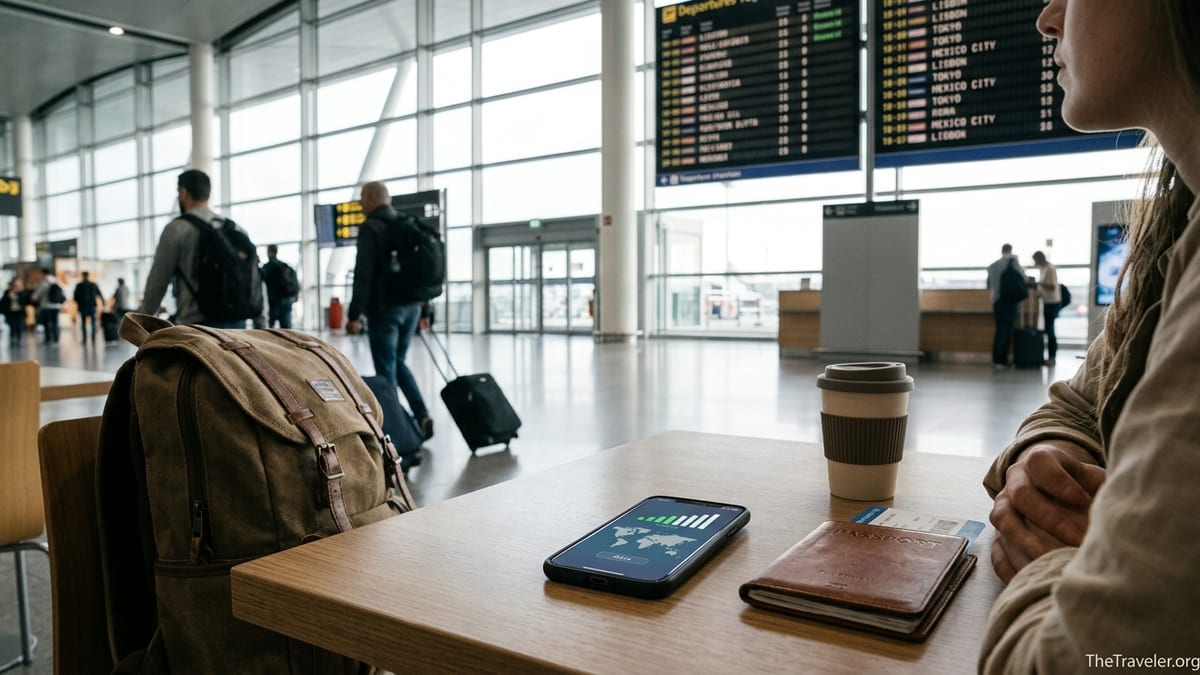
How Drimsim Works in Practice
Drimsim is a prepaid international SIM and eSIM service built around simple, per-megabyte pricing. You buy either a physical SIM card delivered to you, or activate an eSIM in the app, then top up your account balance. Instead of fixed packages, you pay only for what you actually use, country by country, at rates listed in Drimsim’s online calculator. Many destinations sit around a few US cents per megabyte, which roughly works out to around 10 USD per gigabyte in popular regions, though exact prices vary by country and can be higher in places with expensive wholesale connectivity.
The key difference from many travel eSIM brands is that Drimsim does not force you to choose a 3, 5, or 20 GB bundle with an expiry date. If you use only 300 MB on a long weekend in Prague, you only pay for that usage. If you barely touch data during a safari in Tanzania because lodge Wi-Fi is reliable, you do not lose money on an unused “tourist package” that expired before you left the country.
Coverage is broad rather than ultra-cheap. Drimsim lists regions across Europe, Asia, Africa, North America, South America, and Oceania, with specific country pages and prices. For example, you can land in Spain, continue on to Morocco, and then fly to the United States on the same SIM without swapping cards or scanning new QR codes. This global continuity is where the service becomes valuable for certain types of trips and travelers.
In real-world use, travelers often combine Drimsim with local options. A frequent pattern is to activate Drimsim for immediate connectivity on arrival, then decide later whether to buy a cheaper local SIM if staying longer. Because Drimsim is pay-as-you-go, you can think of it as a roaming safety net that you keep active on your phone even when you are using other data sources.
Frequent Flyers and Multi-Country Itineraries
Travelers who hop between many countries in a short time tend to get the most practical value from Drimsim. Consider a consultant flying from New York to London for three days, then to Zurich for client meetings, with a one-day side trip to Milan, and finally back to the United States. They might hit four or five different countries in under two weeks. Buying and registering local SIMs in each destination would take time, involve ID checks, and leave them juggling multiple SIM cards and phone numbers.
With Drimsim, that same traveler can land at Heathrow, switch their phone’s data line to the Drimsim eSIM, and be online at the airport. When they move from the United Kingdom to Switzerland, there is no need to visit a shop or change plans. Data simply continues at the Swiss rate, pulled from the same prepaid balance. For work trips where time is more valuable than squeezing out every last dollar of savings, this convenience can easily justify slightly higher per-gigabyte costs compared with a local Swiss or Italian SIM card.
Another concrete example is a round-the-world ticket: Los Angeles to Tokyo, onward to Singapore, then a few days in Bangkok, a week in Berlin, and finally home via New York. A traveler on that route might cross five or six network environments in three weeks. Instead of figuring out which local operator sells tourist SIMs in each airport, learning activation rules, and hoping their passport is accepted, they can top up Drimsim once before leaving and let it handle data in each country. For someone who travels like this two or three times a year, the ability to reuse the same SIM or eSIM repeatedly is a strong value proposition.
A particularly strong fit is for airline crew and business travelers who are on the road every month. Because Drimsim balances do not disappear at the end of each trip as a time-limited package, they can leave 20 or 30 dollars of credit in the account and know their phone will attach in almost any country they fly to next, without any additional planning.
Digital Nomads and Long-Term Travelers
Digital nomads and long-term backpackers can also benefit from Drimsim, but in a more nuanced way. For example, someone arriving in Lisbon to spend several months working remotely might initially use Drimsim for the first week, relying on its instant connectivity until they are settled. After that, they could pick up a local Portuguese SIM with a large monthly package that works out cheaper per gigabyte than keeping all their data on Drimsim. The Drimsim line then stays active as a backup for cross-border travel.
Imagine a nomad moving from Portugal to Spain, then to Croatia and finally to Turkey over six months. They may buy local SIMs in countries where the process is easy and prices are low, like Spain, where prepaid data packs from mainstream operators are widely sold in high-street stores and kiosks. In more complex markets or short stopovers, such as a four-day visit to Montenegro or North Macedonia in between apartment leases, it might be simpler to rely on Drimsim rather than spend time finding and registering a short-term local SIM.
For overland routes that cross multiple borders in one trip, Drimsim’s value increases. Take a bus journey from Budapest through Serbia and Bulgaria to Istanbul. Border crossings can happen late at night when phone shops are closed. With Drimsim, the traveler stays connected for navigation, messaging, and e-tickets across each frontier. Later, once they settle in Istanbul for a month, they can switch to a Turkish local SIM to enjoy lower rates and local calling, while keeping Drimsim ready for the onward leg to Georgia or back into the European Union.
The trade-off for long-term travelers is therefore cost versus convenience. Local physical SIMs in places like Mexico or Vietnam often deliver far lower data prices, but involve more administration and occasional language barriers. Drimsim becomes the always-available safety line: it may not be the absolute cheapest data source every day, but it significantly reduces the risk of being stranded without connectivity between local plans.
Short City Breaks and Casual Holidaymakers
For many short leisure trips, Drimsim’s pay-for-what-you-use model works well, particularly for travelers from outside the European Union visiting Europe or venturing to destinations where their home carrier’s international roaming is expensive. A US visitor doing a four-day city break in Paris, for instance, might face daily roaming passes of about 10 dollars per day through a major domestic carrier, which quickly adds up over a week-long vacation. Travel eSIMs from newer brands may offer a 5 GB Europe package at a lower headline price, but if that traveler really only uses 1 or 2 GB for maps, messaging, and restaurant searches, much of the prepaid bundle goes unused.
In that scenario, topping up Drimsim with around 20 dollars and using data sparingly can be more economical than both carrier roaming and pre-set bundles. The traveler gains the comfort of knowing they can use more data if needed, but they are not forced into buying a larger package than they will realistically consume. When they return home, any remaining balance stays active for their next trip rather than expiring.
Where Drimsim becomes less compelling is for EU residents who are only traveling within the EU and European Economic Area. Because many EU-based mobile plans include “roam like at home” within the bloc, those travelers often pay domestic rates for data in France, Germany, Italy, and other member states. In that case, activating Drimsim in Paris or Rome might mean paying more than simply using their regular domestic SIM. For them, Drimsim is more useful on trips outside the EU, such as a week in Morocco, a family holiday in Canada, or a stopover in the United Arab Emirates on the way to Asia.
Families on package holidays or resort stays may also treat Drimsim as a backup rather than a primary connection. Parents might load Drimsim on one adult’s phone to make sure there is always working data for airport transfers, ride-hailing, and emergencies, while older children rely on hotel Wi-Fi. This way, the family avoids surprise roaming bills from multiple lines and keeps international data spending predictable.
People Who Value Simplicity Over Absolute Lowest Cost
Another group that gains strong value from Drimsim are travelers who simply do not want to think very much about telecoms. These are people comfortable paying a small premium for a straightforward, unified setup. For instance, retirees on a guided tour through Spain and Portugal might not be interested in finding local carriers, checking compatibility, or navigating contracts in another language. A single Drimsim card that works across the Iberian Peninsula, the United Kingdom on a later extension, and a cruise stop in the Canary Islands can be worth more to them than the savings from a mix of local SIMs.
Similarly, occasional travelers who find mobile technology confusing may appreciate the predictability of topping up a fixed amount before departure and watching their usage in the app. Because Drimsim’s charging is tied directly to data consumed, it is easier for some users to understand than bundles described in foreign currencies, marketing language, and local data units. A clear balance and actual usage in megabytes feels more tangible.
Corporate travel departments sometimes adopt services like Drimsim for staff who need occasional roaming but do not justify a full corporate roaming plan. Issuing a separate Drimsim SIM or eSIM for international trips means finance teams can see at a glance how much each traveler’s data use abroad really costs. This can be simpler to administer than reimbursing roaming charges mixed into normal monthly bills from many different domestic carriers.
That said, travelers with a strong budget mindset and a willingness to do research can often beat Drimsim’s per-gigabyte costs, especially in countries with competitive local markets. For them, Drimsim’s primary value lies in bridging gaps between those well-researched local options or covering complex routes where micro-optimizing every gigabyte is not realistic.
When Drimsim Is Less Competitive
It is important to note that Drimsim is not the cheapest option in every situation. Comparisons from travelers who track per-gigabyte pricing across multiple providers indicate that pure “global eSIM” services, including Drimsim, are often more expensive than buying a local SIM directly in-country for sustained heavy use. In some pay-as-you-go comparisons, community members have specifically described Drimsim as not price competitive against newer global eSIM brands with aggressive pricing in certain regions.
For example, in Mexico it is common to find local prepaid offers from major carriers that bundle several gigabytes of data, unlimited domestic calls, and access to popular social apps for the equivalent of a few US dollars per week. Using Drimsim as your main data source for a month-long stay in Mexico City, with heavy video streaming and tethering, would nearly always cost more than picking up a local SIM at an OXXO convenience store or operator kiosk.
Another area where Drimsim can be less ideal is for travelers whose home plans already include excellent roaming deals. Some postpaid plans in Europe or Asia offer generous daily passes that cap roaming charges or allow the use of domestic data allowances abroad at only a modest surcharge. If you are on such a plan, you might only need Drimsim for countries not covered by your home carrier, or as a backup in case roaming fails or coverage is limited.
There is also the question of network quality. Global eSIM and roaming services typically rely on partnerships with local carriers, and the specific network your phone attaches to can vary. While Drimsim aims to partner with reputable networks, it does not always give power-users full control over which local carrier they use. In remote regions, a dedicated local SIM tied to the best-performing operator for that area may deliver stronger coverage than a multi-network roaming solution.
The Takeaway
Drimsim’s biggest value is not in winning every price comparison against local SIMs or regional eSIM bundles. Its strength lies in simplicity, continuity, and flexibility across many borders and trips. Travelers who move frequently between countries, people who want a reliable backup for navigation and messaging, and those who prioritize convenience over complex telecom shopping are the ones who benefit most.
If you are flying to one country for two weeks and you are comfortable buying a local SIM on arrival, that local option will probably be cheaper for heavy use. If you have a home plan with strong roaming benefits in certain regions, it makes sense to lean on those where they apply. But if your itinerary includes multiple countries, uncertain travel dates, or late-night border crossings when shops are closed, keeping a Drimsim SIM or eSIM on your phone can be worth much more than the difference of a few dollars per gigabyte.
In practice, many savvy travelers combine approaches. They use Drimsim at the airport, during overland legs, and on brief stopovers, then switch to local SIMs or specialized regional eSIMs when settling in somewhere for weeks or months. Viewed that way, Drimsim becomes less a competitor to other options and more a universal roaming toolkit you always have in your pocket.
Before choosing, think honestly about your travel style: how many borders you cross, how much time you want to spend shopping for SIMs, and how critical constant connectivity is to your work or personal life. For those who value hassle-free global coverage and flexible, usage-based billing, Drimsim can be a powerful ally on the road.
FAQ
Q1. Is Drimsim cheaper than my mobile carrier’s international roaming?
In many cases it can be, especially for travelers from countries where standard roaming is expensive, but the exact savings depend on your carrier’s specific rates and any roaming passes they offer.
Q2. Who gets the most value from using Drimsim?
Frequent travelers who visit multiple countries, people on complex itineraries, and those who prioritize simplicity and always-on backup connectivity tend to benefit the most.
Q3. Is Drimsim a good choice for a single two-week trip to one country?
It can work well, especially for light data users, but a local SIM card will often be cheaper for heavier use if you are comfortable buying and registering one on arrival.
Q4. Does Drimsim work for calls and SMS or only data?
Drimsim is primarily used for data, which supports apps like WhatsApp, Telegram, and email; travelers who need regular voice calls and SMS usually keep their home SIM active for that purpose.
Q5. How does Drimsim compare with other global eSIM brands?
Drimsim focuses on pay-as-you-go pricing without fixed bundles; some competitors are cheaper in certain regions with time-limited packages, while Drimsim offers flexibility and reusability across trips.
Q6. Is Drimsim suitable for digital nomads staying months in one country?
It is excellent as a backup and for border crossings, but for long stays, a local SIM with large monthly data allowances usually provides better value as a primary connection.
Q7. Do my Drimsim credits expire after each trip?
Drimsim is designed so that topped-up balances can be used across multiple trips, though you should always check the latest terms and any inactivity rules before relying on stored credit.
Q8. What kind of phone do I need to use Drimsim?
You can use Drimsim with either an unlocked phone that accepts a physical SIM or an eSIM-capable device; many recent smartphones support eSIM activation through the Drimsim app.
Q9. Is Drimsim a good option for families traveling together?
Yes, many families use one or two Drimsim lines as shared connectivity for navigation, ride-hailing, and emergencies, while relying on Wi-Fi in hotels and rentals for most day-to-day browsing.
Q10. Should I use only Drimsim, or combine it with other options?
Most value-focused travelers combine Drimsim with local SIMs or regional eSIM bundles, using Drimsim for airports, short stays, and cross-border travel, and cheaper local options for longer stays and heavy data use.