


Rentalcars.com is one of the world’s largest car hire booking platforms, with access to tens of thousands of locations and major brands in more than 160 countries. It promises to find you a good deal in seconds, but not every traveler gets the same value from using a global broker instead of booking directly with Hertz, Avis, Enterprise, or a local agency. Understanding who benefits most, and in which scenarios, can help you decide whether using Rentalcars.com is a smart move for your next trip or whether you are better off going straight to the rental desk.
Get the latest updates straight to your inbox!
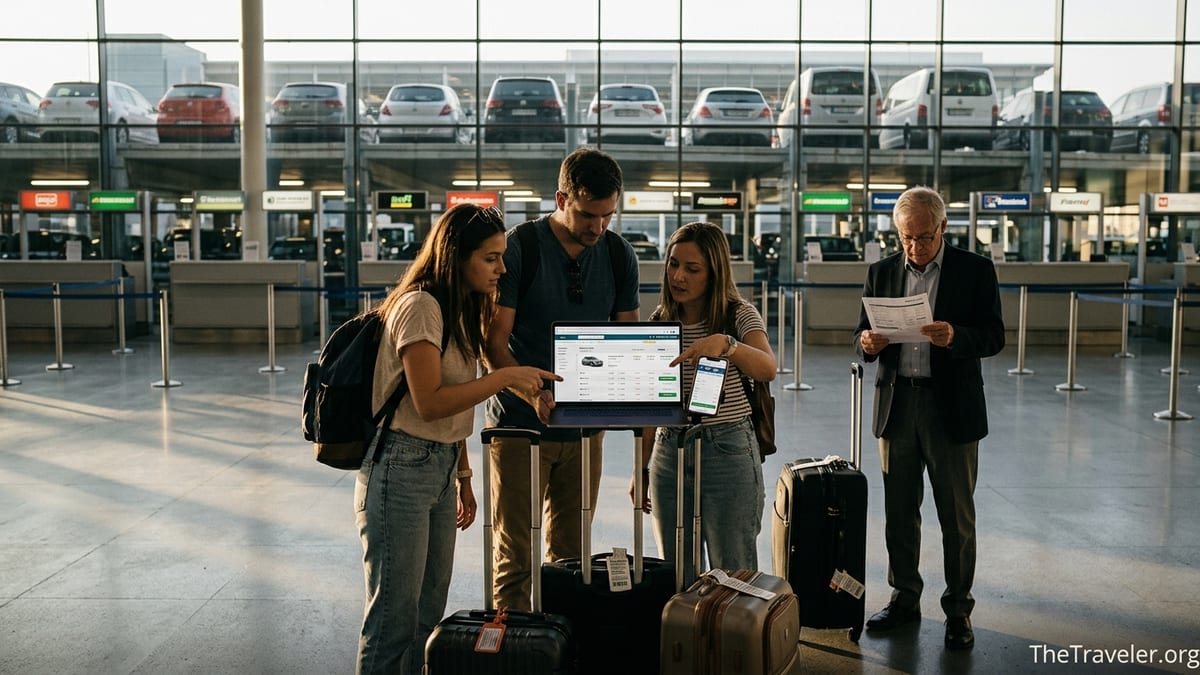
How Rentalcars.com Works Behind the Scenes
Rentalcars.com operates as an online travel agency for car hire, rather than a rental company in its own right. It is part of Booking Holdings, the same group that owns Booking.com and Priceline, and aggregates offers from big players like Avis, Budget, Hertz, Europcar and Sixt along with regional and local suppliers. In practice, that means Rentalcars.com controls the search, comparison, and payment flow, while the actual rental contract and pickup experience happen with the supplier you choose at the counter.
For most bookings you effectively enter into two relationships: you pay Rentalcars.com for the reservation and any optional “Full Protection” coverage, and you sign the rental agreement with the car hire company when you collect the vehicle. Travelers who understand this split tend to have smoother experiences, because they know that billing issues around deposits and fuel are handled by the rental brand, while disputes over broker-side insurance and prepayments must go through Rentalcars.com support.
The platform’s strength is breadth. If you search for a one-week compact rental in July at Rome Fiumicino Airport, for example, you might see side-by-side results from Europcar, Sicily By Car, Italy Car Rent, and local firms at a range of prices and mileage policies within a single screen. Instead of visiting each brand’s website, you can compare vehicle classes, on-airport versus shuttle pickup, deposit amounts, and customer ratings in one go. For travelers who prioritize quick comparisons and are comfortable with online intermediaries, this consolidation is where the core value lies.
However, because it is a broker, Rentalcars.com may show offers with different payment rules to those listed on a supplier’s own website. You might find a “pay now, non-refundable” deal with a big discount compared with the same company’s more flexible direct rate. Travelers who do not carefully check cancellation terms or the details of insurance and deposits sometimes discover at the counter that what looked like a simple low price comes with strict conditions.
Frequent Travelers and Loyalty Users
Regular travelers who already use Booking.com for hotels can sometimes extract extra value from Rentalcars.com by stacking loyalty benefits. Booking.com’s free Genius program, for example, includes discounts on selected rental cars for logged-in members, alongside hotel perks. In practice, a traveler who books hotels several times a year and reaches a higher Genius level may see 10 to 20 percent reductions on eligible car rentals when searching through their Booking.com account or app, especially in popular destinations like Orlando, Malaga, or Lisbon.
Consider a traveler based in Chicago who flies to Phoenix three times a year to visit family. By consistently using Booking.com for both accommodation and car hire, they may unlock Genius discounts that occasionally make a Rentalcars.com-backed booking a few dollars per day cheaper than going to the same company’s direct website. If a mid-size SUV in Phoenix in March shows at around 55 dollars per day direct with a major brand but 48 dollars per day through a Genius-tagged offer, the savings over a week-long trip can be meaningful.
That said, using Rentalcars.com does not build loyalty with the underlying car hire brand. A frequent renter who usually books direct with Hertz or National might value elite benefits such as faster check-in, guaranteed upgrades, or free additional drivers more than a small headline discount from a broker. For these travelers, the best value from Rentalcars.com tends to come in secondary scenarios: when their preferred brand is sold out, when they want to compare competitor pricing in a new destination, or when a Genius-type promotion creates a large temporary gap between broker and direct rates.
Overall, seasoned travelers who pay attention to loyalty trade-offs and are willing to do quick side-by-side checks between Rentalcars.com and direct sites can leverage the platform as a smart comparison tool rather than a default booking channel. They benefit when discounts are genuine and conditions acceptable, but they know to fall back on direct bookings when elite perks or clearer service lines are more important.
Budget-Conscious Leisure Travelers
Budget-conscious vacationers are among those most likely to benefit from Rentalcars.com, provided they read the fine print. For a family planning a seven-day holiday on Spain’s Costa del Sol in early September, the platform might surface a compact car from a well-known brand for around 18 to 25 euros per day when booked several months in advance, compared with 30 euros or more per day for a similar model on the same company’s own site with flexible terms. For a couple traveling for two weeks, that difference easily covers several restaurant meals or attraction tickets.
Travelers heading to classic sun destinations such as Faro, Palma de Mallorca, or Heraklion often find that Rentalcars.com lists a broad range of low-cost and mid-range local providers alongside the global names. A young couple flying into Faro in October, for example, may see offers from lesser-known brands at roughly 10 to 15 euros per day with high mileage limits. While these deals can be attractive, they may require larger security deposits and stricter damage checks at return, so the best value goes to travelers who are comfortable with these trade-offs and who can use a credit card with enough available limit for deposits.
For U.S. travelers visiting Europe, Rentalcars.com can also help navigate unfamiliar brands. Someone from Denver planning a May road trip through Tuscany might be unsure whether to trust smaller Italian agencies. The platform’s user rating filters, visible mileage caps, and “on airport” versus “shuttle” location indicators make it easier to balance price against convenience. A slightly higher price from an on-airport office with strong ratings can still represent good value if it saves 45 minutes of waiting for a crowded shuttle after a long transatlantic flight.
However, highly budget-driven travelers sometimes run into frustration when additional fees at the counter make the total cost higher than anticipated. Complaints in public reviews often focus on mandatory extras such as local insurance, cross-border charges, or one-way drop fees. The travelers who get the best value are those who add up the entire expected cost, including deposits and likely extras, rather than simply choosing the lowest daily rate they see on the first results page.
Complex Itineraries and One-Way Trips
Travelers with complex routes often gain particular value from Rentalcars.com’s ability to surface one-way and multi-country options that are not immediately obvious on individual company sites. If you want to pick up a car in Los Angeles and drop it in San Francisco in August, some rental brands will quote high one-way fees or show limited availability when you search directly. Rentalcars.com, however, may display alternative combinations through less obvious suppliers or different downtown locations that offer more palatable total prices.
Take a real-world scenario: a family flying into Munich at the start of July, planning to drive through Austria and end in northern Italy. The parents want to pick up a station wagon at Munich Airport and drop it in Verona ten days later. Searching brand by brand involves checking multiple sites, each with its own approach to cross-border permissions and drop fees. On Rentalcars.com the family can plug in the full route once and see who allows the drop-off, what the extra charges roughly are, and whether unlimited mileage is included. While the total cost may still be high because of international drop fees, the ability to compare multiple suppliers in one place makes it easier to find the least expensive workable option.
Similarly, North American road-trippers planning long-distance one-way journeys, such as a pickup in Seattle with drop-off in Denver, can use Rentalcars.com to see whether off-airport locations or less familiar brands offer more attractive conditions than the big names. In some cases, a regional company working with Rentalcars.com might provide a lower one-way fee than global competitors, especially outside peak summer dates. Travelers who are flexible about exact pickup points, for example selecting a city neighborhood office rather than the primary airport, often find that the platform helps them uncover combinations they would not have considered.
The caveat is that complex itineraries also create more room for misunderstandings, particularly around cross-border restrictions and insurance validity. Savvy travelers who get good value from Rentalcars.com in these situations take time to read both the broker’s conditions and the rental company’s own terms, paying close attention to which countries are covered, which types of driving are excluded, and whether winter equipment or toll tags are included or extra.
Travelers Who Value Choice and Transparency
Rentalcars.com is particularly well suited to travelers who like to see the whole market at a glance before deciding. People who shop for flights using big metasearch engines or compare hotel prices across several booking sites often approach car rental the same way. For them, the platform’s map view, filter options, and customer score indicators provide a sense of control and transparency, as they can refine results by fuel policy, mileage, supplier rating, and pickup type.
For instance, a solo traveler visiting Dublin for a week in November might filter for “full to full” fuel policy, 8 or higher review scores, and “in terminal” pickup only. The results could narrow from dozens of offers to a handful from two or three brands at very similar price points. This allows the traveler to prioritize details that matter, such as waiting time at the desk or the likelihood of a modern car with good safety features, rather than chasing a marginally cheaper rate from a low-rated provider.
The same applies to families comparing SUV or minivan options at busy summer destinations like Orlando International Airport. Rentalcars.com can display a broad lineup from multiple brands, including standard and premium categories, on a single page. Parents can quickly see whether paying a bit more for a larger model or a brand with consistently better child-seat reviews makes sense when weighed against a cheaper but more basic option. For travelers who value clarity in what they are booking and access to a wide range of suppliers, the platform’s comparison capabilities are a genuine strength.
Nonetheless, transparency has limits when critical details depend on the individual rental location’s behavior rather than the broker’s listing. Some negative customer stories mention unexpected queues, hard-selling of local insurance despite having broker-side protection, or disputes over small scratches on return. Travelers who understand that ratings and policies are guides rather than guarantees tend to set their expectations appropriately and still find value in the overview the platform provides.
Who Should Think Twice Before Using Rentalcars.com
While many travelers can benefit from Rentalcars.com, some may be better served booking directly with a rental company. Business travelers, in particular, often prioritize guaranteed service levels, loyalty benefits, and simple billing over marginal savings. A consultant flying frequently between New York and Houston, for example, might value a direct corporate agreement with a single provider that includes express pickup and itemized invoices that integrate easily with their expense system. For them, a cheaper upfront rate through a broker may not compensate for the added complexity when something goes wrong.
Travelers who are uncomfortable navigating disputes between a broker and a supplier may also wish to proceed carefully. Because Rentalcars.com handles reservations and, in many cases, sells its own Full Protection product, while the car provider controls deposits, damage inspections, and local insurance, disagreements can become more complex. Someone renting in a high-pressure environment, such as a small off-airport office in southern Italy during peak season, might encounter insistent upselling or strict damage checks regardless of what the broker’s voucher says. Travelers who prefer a single point of contact and clear accountability might feel more at ease booking directly, especially in countries where they do not speak the language.
Another group that may not see strong value from Rentalcars.com are brand-loyal renters with elite status or co-branded credit card benefits tied to a specific company. A traveler with top-tier status at National, for example, may be able to choose almost any car in the aisle and rely on consistent treatment and upgrades. If they book that same company through a broker, the local location may treat the rental as a generic third-party reservation, potentially limiting loyalty perks or complicating the recognition of elite benefits. In these cases, the apparent savings from a broker rate need to be weighed against the loss of known, reliable service.
Finally, travelers who tend to book at the last minute or during peak events might find that Rentalcars.com’s advantages narrow. During a major trade fair in Frankfurt or a big sporting event in Miami, the platform will generally reflect the same shortage-driven price spikes and limited availability seen on direct sites. At these times, special loyalty rates, corporate codes, or direct negotiations with local offices sometimes produce better outcomes than relying solely on broker listings.
The Takeaway
Rentalcars.com delivers the best value to travelers who use it as a powerful comparison engine rather than a one-click solution. Budget-conscious leisure travelers, especially those planning straightforward round trips in popular holiday destinations, often gain the most when they book early, read conditions carefully, and are comfortable dealing with a broker alongside the rental company. Frequent travelers plugged into Booking.com’s ecosystem can also benefit when Genius-linked discounts meaningfully undercut direct rates without sacrificing important terms.
At the same time, not everyone is an ideal candidate. Business travelers who depend on consistent service, car rental loyalists with status and perks, and anyone who strongly prefers dealing with a single company when problems arise may find that booking directly with a major brand better suits their needs. For complex cross-border journeys or high-pressure locations, the value calculation depends heavily on a traveler’s tolerance for navigating sometimes competing rules between broker and supplier.
In the end, the smartest approach is to treat Rentalcars.com as one tool among several. For any significant rental, compare at least one or two direct offers alongside the broker’s prices, verify that all fees and policies align with your expectations, and consider the non-monetary value of loyalty benefits and service quality. Travelers who take these extra steps are the ones most likely to convert Rentalcars.com’s global reach and pricing power into real-world value on the road.
FAQ
Q1. Is Rentalcars.com a rental company or just a broker?
Rentalcars.com is an online booking platform that acts as a broker. You reserve and often prepay through them, but the actual rental contract is signed with the car hire company at pickup.
Q2. When does Rentalcars.com usually offer better value than booking direct?
It often provides better value for leisure trips in busy tourist destinations, especially when you book early, compare several suppliers, and take advantage of occasional discounts linked to Booking.com accounts.
Q3. Do I earn loyalty points with Hertz, Avis, or other brands if I book via Rentalcars.com?
In many cases you will not earn full loyalty benefits when booking through a broker, or they may be harder to claim. Travelers who rely on elite perks often do better booking directly with their preferred brand.
Q4. How can I avoid surprise charges when using Rentalcars.com?
Read the rental conditions carefully, including fuel policy, mileage limits, deposit amounts, and any local insurance rules. Cross-check key points on the rental company’s own website and keep a copy of your voucher when you pick up the car.
Q5. Is Rentalcars.com safe to use for one-way or cross-border rentals?
It can be useful for these trips because it shows multiple suppliers that allow one-way or cross-border travel, but you should confirm restrictions, drop fees, and insurance coverage with the rental company before driving.
Q6. Who should probably book directly instead of using Rentalcars.com?
Frequent business travelers, renters with high-level status at a specific brand, and anyone who strongly prefers a single point of contact if problems arise may get more consistent value from booking direct.
Q7. Does Rentalcars.com’s Full Protection cover everything the rental desk might charge?
Full Protection is a broker-side product that usually reimburses you for eligible charges rather than preventing the rental company from taking a deposit or billing damage. You still need to follow the claim process and keep all documents.
Q8. Are the prices on Rentalcars.com always cheaper than on the car company’s own site?
No. Sometimes the platform is cheaper, sometimes direct sites or other agencies are. The best value comes from comparing a few options for your exact dates and location, not assuming one channel is always lowest.
Q9. Is Rentalcars.com a good choice for first-time international renters?
It can be helpful because it shows multiple brands and filters in one place, but first-time renters should be especially careful to understand insurance, deposits, and local driving rules, and may prefer well-known brands with higher customer ratings.
Q10. What should I do if the rental company does not honor what my Rentalcars.com voucher says?
First, calmly show the voucher and ask the local staff to explain the discrepancy. If it is not resolved, document everything with photos or written notes, keep receipts, and contact Rentalcars.com customer support as soon as possible after the rental.