


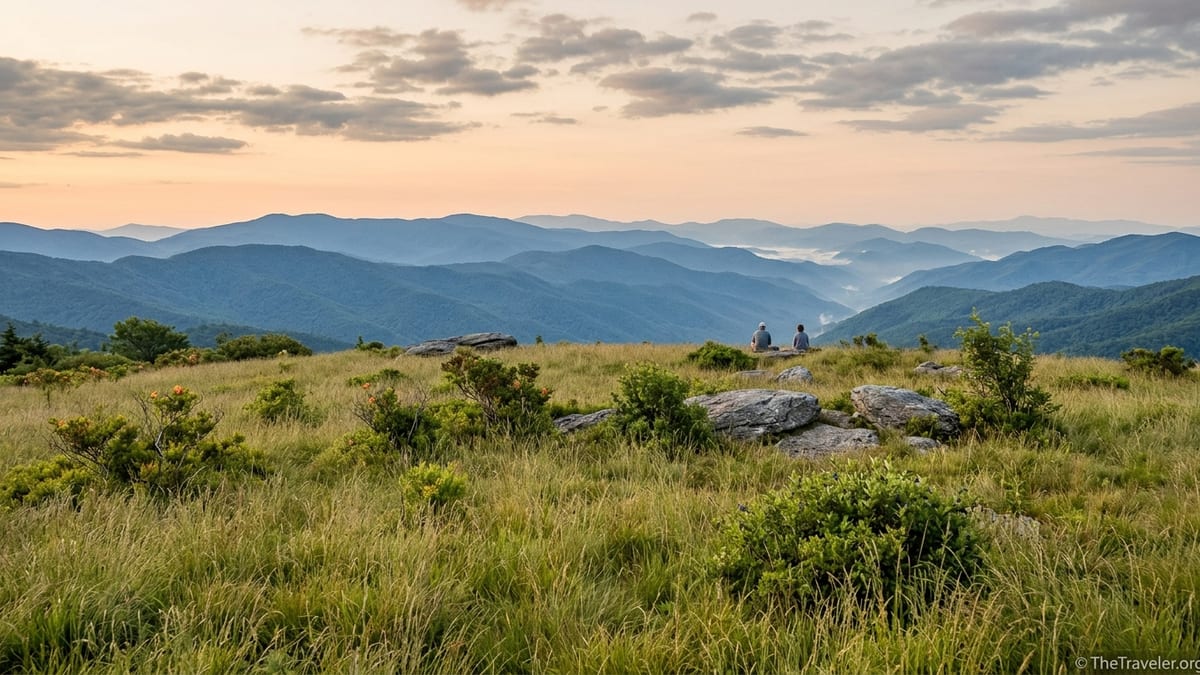
On a clear day atop Andrews Bald, the Great Smoky Mountains roll away in soft blue layers, the wind moves gently through knee-high grass, and conversations from the busy parking lot at nearby Kuwohi, also known as Clingmans Dome, feel a world away. For many hikers, this high-elevation meadow is not just another overlook but one of the most peaceful viewpoints in the entire park, a place where the Smokies finally seem to exhale.
Get the latest updates straight to your inbox!
A High Meadow Above the Clouds
Andrews Bald is a grassy high-elevation meadow perched around 5,920 feet in Great Smoky Mountains National Park, making it one of the highest grassy balds in the park and the highest of its kind that the National Park Service actively maintains. Reached by the Forney Ridge Trail from the Kuwohi / Clingmans Dome parking area, it sits on the southern slopes of the crest, opening toward the rolling summits around Fontana Lake and the North Carolina side of the range. On a typical summer afternoon, temperatures here can feel 10 to 15 degrees cooler than down in Gatlinburg or Cherokee, and a light breeze is common even when lower elevations feel stagnant.
The sense of space is what strikes most hikers first. Instead of a narrow overlook squeezed between trees, the bald spreads out as a broad, gently sloping field speckled with azaleas, blueberries, and low shrubs. You can wander a short way along the faint paths through the grass to find your own patch of rock or soft turf, turning away from the small knot of people near the first viewpoint. Families often spread out picnic blankets while solo hikers sit against weathered boulders facing the ridgelines, each group able to enjoy the view without crowding the others. This low-density feel is a big reason travelers describe Andrews Bald as peaceful even on popular summer weekends.
The location also means you are often looking down on the clouds. Moist air rising from the Tennessee and North Carolina valleys frequently pools below the high peaks, creating an ocean of white that swirls in and out of the folds. On some days, distant ridges appear and disappear as clouds drift through, and the scene can change completely in the space of a 20-minute rest break. You may arrive to an opaque fog and, after a snack and some patience, watch as the sky opens into clear blue and the layered Smokies emerge in stages.
A Manageable Trail That Filters Out the Fuss
The path to this calm viewpoint is one of the secrets to its atmosphere. From the Kuwohi parking lot, the Forney Ridge Trail to Andrews Bald is about 1.8 miles each way, or roughly 3.6 miles round trip, with a mix of rocky tread, built stone steps, and dirt singletrack. The trail initially descends, which surprises some hikers who have just driven to the highest road-accessible point in the park. Over the course of the outing you will tackle several hundred feet of elevation change, enough to feel like a real hike without drifting into all-day backcountry territory.
In practical terms, this moderate effort filters the crowd. Many visitors who stop at Kuwohi never leave the paved half-mile path to the observation tower, especially on busy summer days when license plates in the lot range from nearby Tennessee and North Carolina to far-flung states like Texas or Michigan. Families with strollers, tour groups, and people in flip-flops tend to stay on the wide concrete ramp. By contrast, hikers who commit to the rocky Forney Ridge Trail have at least basic footwear, water, and a willingness to walk for a couple of hours, which shifts the mood of the crowd from sightseeing to quiet exploration.
Trail improvements over the past decade have made this route more accessible to a broader group of hikers without losing its backcountry feel. Sections that were once badly eroded have been shored up with timber steps and stonework. In practice, that means fewer ankle-deep mud holes after rain and a clearer, more durable tread, especially helpful for visitors who are newer to mountain hiking. Still, the uneven rocks and roots demand attention, and that concentration on foot placement has an unexpected benefit: conversations tend to pause, people spread out, and the hike naturally becomes quieter as hikers settle into their own pace.
For many travelers on a short Smokies trip, this balance of effort and reward makes Andrews Bald one of the smartest choices in the high country. It offers a more immersive hiking experience than roadside pullouts or the paved Kuwohi tower path but does not require the all-day commitment of climbs like Alum Cave to Mount Le Conte or the long ridge walks of the Appalachian Trail. The manageable distance, often completed in two to three hours with photo stops, makes it ideal for a morning before driving Newfound Gap Road or an afternoon break from Gatlinburg’s busy streets.
A Rare Landscape: Why the Bald Stays Open
Part of the magic of Andrews Bald lies in its unusual ecology. In the Smokies, true tree line is much higher than any peak in the park, so these treeless meadows are not the product of altitude alone. Instead, grassy balds like Andrews and nearby Gregory Bald are the result of a mix of factors that likely include historic grazing, climate, and soil conditions. Left alone, most of these places would gradually fill in with shrubs and spruce-fir forest, which is exactly what has happened on other nearby summits that were once open.
The National Park Service has made a deliberate decision to keep Andrews Bald open, one of only two grassy balds in the park that receive active maintenance. Crews periodically cut back encroaching trees and shrubs to preserve the meadow, both for its cultural value and for the unique plant communities that thrive in this high, sunny environment. For visitors, that management decision has a simple, very visible outcome: a wide-open view that you can enjoy without peering through a narrow window in the forest canopy.
Seasonal changes only deepen the sense of reward. In early June, flame azaleas splash vivid orange and red across the slopes, and low-growing rhododendron add purple and pink accents. Later in the summer, blueberry bushes dot the meadow, and careful hikers may find a handful of ripe berries along the edges of the trail, a small, tangible reminder that this is a living landscape, not a manicured overlook. In autumn, the grasses shift to warm golds and russets, contrasting with the deep greens of the conifer forest above and the patchwork of changing leaves in the lower valleys.
Because the bald is relatively compact, it also feels intimate compared with panoramic pullouts that stretch along busy roads. On a typical visit you might share the space with a dozen or so people spread out across the meadow, yet the curved shape and gentle dips in the terrain allow each group to feel partially tucked away. You can sit in the grass, listen to the wind and the calls of high-elevation birds such as dark-eyed juncos, and forget that the bustling Kuwohi parking lot lies just 1.8 miles uphill.
Views That Feel Personal, Not Performed
Travelers often compare Andrews Bald with more famous viewpoints like the Kuwohi observation tower or Newfound Gap. Kuwohi delivers a dramatic 360-degree panorama, but it often does so amid selfie sticks, overheard phone calls, and a steady flow of visitors arriving every few minutes. By the time people reach the open meadow of Andrews Bald, the crowds have thinned enough that the views feel more personal, less like a show everyone is watching together and more like a quiet conversation between you and the mountains.
From the bald on a clear day, your eyes first trace the close ridges dropping toward the south, then wander out to the subtle blue layers that define the Smokies. On the horizon, hikers often pick out the faint line of the Nantahala Mountains or the glint of Fontana Lake when the light strikes at the right angle. Instead of a single, dramatic focal point, the scene here is about breadth and softness, encouraging people to sit a little longer, to linger over lunch, or to lie back in the grass and watch shifting clouds.
The way hikers use the space adds to that tranquil feel. You might see a couple quietly celebrating an anniversary with a small picnic, a group of friends taking turns reading on a shared blanket, or a solo traveler with a lightweight camera and a thermos of coffee who walked out for sunrise. Photographers tend to set up in low-profile fashion, crouching among the grass with a tripod leg tucked against a rock instead of blocking the main trail. Social media shots happen, of course, but the meadow’s size and the need to hike out and back naturally reduce the carnival atmosphere that can develop at drive-up viewpoints.
Time of day further shapes the experience. Early mornings often bring soft pastel light and cooler air, with a good chance of fog breaking into sun as the hours pass. Late afternoons can glow in warm tones, especially in autumn, when the low sun catches the grasses and turns them almost copper against the blue ridges beyond. Even in mid-summer, evenings at Andrews Bald can feel surprisingly quiet, as day-trippers from nearby tourist towns head back for dinner reservations and the last few hikers settle in for an unhurried walk back uphill.
Practical Tips for a Peaceful Visit
Reaching Andrews Bald begins with the drive to the Kuwohi / Clingmans Dome parking area, accessed via a 7-mile spur road from Newfound Gap Road. In peak season, especially from late May through October and on clear weekends, this lot can fill by mid-morning, and rangers sometimes temporarily restrict access until spaces open up. To tilt the odds toward a calmer outing, aim to arrive early, around 8 a.m., or later in the afternoon after the midday rush subsides. Checking the park’s official conditions and alerts before you go helps you avoid unexpected road closures or weather advisories at high elevations.
There is no fee to hike the trail itself, but Great Smoky Mountains National Park does require a parking tag for most vehicles stopping longer than a brief unloading, which visitors can purchase at kiosks or visitor centers in nearby towns. The cost is modest compared with many national parks and helps fund ongoing trail work and maintenance that keep routes like Forney Ridge in good condition. Budget-conscious travelers staying in gateway communities such as Gatlinburg, Pigeon Forge, or Cherokee can plan a full high-country day around that tag by pairing the Andrews Bald hike with a stop at the Kuwohi observation tower or a short walk along the Appalachian Trail.
On the trail, sturdy walking shoes or hiking boots are strongly recommended. Sections of Forney Ridge feature rock steps, roots, and short muddy stretches, especially after rain, conditions that can surprise visitors in casual sandals. A small daypack with at least one liter of water per person, a light rain jacket, and basic snacks makes the experience more relaxing. Even in June and July, a cool breeze and afternoon thunderstorm are not uncommon at nearly 6,000 feet, and having a dry layer to pull on can be the difference between an uncomfortable scramble back uphill and a peaceful hour watching weather move through the valleys below.
Families should plan on extra time, as younger children often move slowly on the rocky sections, but many school-age kids complete the hike comfortably with a few snack breaks. Those traveling with older relatives may find trekking poles helpful for stability on the descent and return climb. While the initial steps from the parking area can look intimidating, once past the first steep segment the grade moderates, and plenty of relatively level stretches offer chances to rest and enjoy the cool spruce-fir forest before the final push back to the car.
Seasons, Weather, and When the Bald Is at Its Best
The rewards at Andrews Bald shift with the seasons, and timing your visit to match your priorities can elevate the experience from good to unforgettable. In late spring and early summer, generally from late May into June, the azaleas around the bald are at or near peak bloom, creating pockets of intense color amid the green grass. Temperatures are comfortable, with many days topping out in the 60s or low 70s Fahrenheit at elevation, even when nearby towns feel hot and humid. These weeks are popular, but the moderate hike still keeps the crowds relatively manageable compared with easy-access spots in the park.
July and August bring the warmest weather, yet afternoons at the bald often remain cooler and breezier than trails at lower elevations. Afternoon thunderstorms are common, so starting early or planning to be off the exposed meadow before the most active storm hours is a smart move. Some hikers deliberately aim for days with partly cloudy forecasts, when dramatic cloud layers and fast-moving shadows add visual depth to the view. Others prefer the reliably blue skies that can follow a passing front, especially after early autumn cold snaps that scour haze from the air.
Autumn is arguably the most peaceful season at Andrews Bald. While leaf-peeping crowds fill roads and overlooks at mid-elevations in October, the high ridges often feel quieter. The grasses turn amber, the air takes on a crisp edge, and visibility on clear days can seem almost endless. Daytime highs at the bald might hover in the 50s, dropping sharply once the sun dips, so extra layers and warm hats are important, particularly for sunset outings. In winter and early spring, access can be more variable. The road to Kuwohi is often closed due to snow, ice, or maintenance, which effectively cuts off easy access to the Forney Ridge Trailhead, though hardy backcountry hikers sometimes reach the area via longer routes.
Whatever season you choose, checking the park’s current conditions before you head out is essential. Weather at nearly 6,000 feet can differ dramatically from the forecast in nearby towns. A sunny afternoon in Townsend or Bryson City might coincide with dense fog at the bald, and temperatures in the 80s down low can mean a brisk 50 degrees along the high ridges. Going in with realistic expectations and flexible timing makes it easier to appreciate whatever mood the mountains serve up on a given day.
The Takeaway
In a national park that welcomes well over ten million visitors a year, finding a view that feels genuinely peaceful can be a challenge. Andrews Bald stands out because it asks for just enough effort to thin the crowds, rewards that effort with a rare high-elevation meadow, and frames the Smokies in a way that encourages lingering rather than rushing. The combination of cool air, open sky, and quiet grassy slopes makes it one of the few places where the park’s famous haze feels like a backdrop to calm rather than a veil between you and the landscape.
For travelers planning a first or return trip to Great Smoky Mountains National Park, adding Andrews Bald to the itinerary is a smart way to balance the must-see stops with a deeper, more contemplative experience. You will still share the trail with other hikers, and on a perfect June weekend the meadow will never be entirely empty. Yet even then, there is space here to step a few yards away, sit on weathered rock, and listen to wind instead of engines, to birds instead of car doors. That, more than any single vista, is why hikers keep returning to this quiet corner above the clouds.
FAQ
Q1. How long is the hike to Andrews Bald and how difficult is it?
The hike is roughly 3.6 miles round trip via the Forney Ridge Trail from the Kuwohi / Clingmans Dome parking area. Most visitors describe it as moderate, with some rocky and rooty sections and a noticeable climb on the return, but it is manageable for reasonably active hikers, including older children, with time and rest breaks.
Q2. Where does the trail to Andrews Bald start?
The trail begins at the far end of the Kuwohi / Clingmans Dome parking area. Instead of following the paved path to the observation tower, look for the signed Forney Ridge Trail on the left side of the lot, where stone steps lead down into the forest toward Andrews Bald.
Q3. Do I need any permits or passes to hike to Andrews Bald?
You do not need a hiking permit for a day trip to Andrews Bald, but Great Smoky Mountains National Park requires a parking tag for most vehicles that stop in designated parking areas for more than a short time. These tags are available as daily, weekly, or annual options and can be purchased in and around the park.
Q4. Is Andrews Bald a good hike for families with children?
Yes, many families with school-age children enjoy this trail. The distance is moderate and the destination, a wide grassy meadow with big views, is rewarding for kids. Parents should be prepared for rocky sections, keep younger children close on the descent, and bring plenty of snacks and water to keep energy and morale high.
Q5. When is the best time of year to visit Andrews Bald?
Late spring through fall is generally the best time to visit. In late May and June, azaleas and other flowers provide colorful blooms, summer offers cooler temperatures than the valleys below, and autumn brings golden grasses and far-reaching views. Winter access is more limited because the road to Kuwohi often closes for snow, ice, or maintenance.
Q6. What should I wear and bring for the hike?
Wear sturdy walking shoes or hiking boots with good traction, and bring a small daypack with water, snacks, and a light jacket or extra layer. Weather at nearly 6,000 feet can change quickly, so packing a rain shell and an extra warm layer, even in summer, helps ensure a comfortable and safe outing.
Q7. Are dogs allowed on the Andrews Bald trail?
Pets are generally not allowed on most hiking trails in Great Smoky Mountains National Park, including the Forney Ridge Trail to Andrews Bald. Travelers with dogs can explore pet-friendly options like the Gatlinburg Trail or Oconaluftee River Trail near park visitor centers.
Q8. How crowded does Andrews Bald get compared with the Kuwohi tower?
The Kuwohi observation tower often draws heavy crowds throughout the day, especially in peak season, while Andrews Bald is noticeably quieter. You will likely share the trail and meadow with other hikers, but the moderate distance, rougher terrain, and open space at the bald create a more relaxed atmosphere than the paved tower path.
Q9. Can I watch sunrise or sunset from Andrews Bald?
Yes, sunrise and sunset can be beautiful from Andrews Bald, with soft light on the ridges and shifting colors in the sky. If you plan a dawn or dusk visit, carry a reliable headlamp or flashlight, extra warm layers, and be conservative with timing, as navigating the rocky trail in the dark is slower and more challenging than in daylight.
Q10. Is the trail to Andrews Bald suitable for people with limited mobility?
The Forney Ridge Trail includes rock steps, uneven surfaces, and moderate grades, so it is not considered accessible for most visitors with limited mobility or those using wheelchairs. Travelers seeking high-elevation views with easier access might prefer the paved path to the Kuwohi observation tower, understanding that it is quite steep but smooth and wide.