


In an era when new luxury hotel brands debut every season, Four Seasons continues to stand apart as one of the world’s most trusted names in high-end hospitality. From beachfront resorts in Mexico to sky-high urban retreats in Tokyo, the Canadian-born company has turned a simple promise of consistent, thoughtful service into a global benchmark. Understanding how Four Seasons earned this status offers useful insight for travelers choosing where to stay and for anyone curious about what truly defines modern luxury in hotels today.
Get the latest updates straight to your inbox!
A Quiet Beginning That Redefined Modern Luxury
Four Seasons did not begin as a palace hotel for the jet set. When young architect Isadore Sharp opened his first property in Toronto in 1961, it was a modest motor hotel on a scruffy city block, built for business travelers who wanted something more comfortable and personal than the typical chain. What set it apart was not marble or chandeliers but an insistence on treating guests with an uncommon level of care, from spotless rooms to staff who remembered names and preferences. That philosophy, rather than exuberant opulence, would become the brand’s through line as it expanded.
The real breakthrough came in the 1970s with properties such as Four Seasons London at Park Lane, which blended the elegance of traditional European grand hotels with a new North American focus on comfort and service. Guests could expect things that now seem obvious in luxury hotels: a dedicated concierge who could secure theater tickets, beds that were consistently excellent, and staff empowered to solve problems quickly rather than hide behind rigid rules. In effect, Four Seasons helped define what urban luxury hotels would look like for the next several decades.
As the company grew into the United States, Europe, the Middle East, and Asia, it held onto a deceptively simple goal: to deliver the same feeling of confidence whether a guest checked into a ski resort in Vail or a business hotel in Singapore. Today the group manages more than one hundred hotels and resorts worldwide, still anchored in Toronto but present in destinations as diverse as Doha, Taormina, Kyoto, and the Red Sea. Through this international growth, consistency of service rather than uniform design has remained the core promise.
Ownership changes, including a 2007 deal that brought in investors tied to Bill Gates and Prince Al Waleed bin Talal, injected capital for expansion without diluting the original philosophy. Corporate leadership has changed over time, but the company still publicly traces its identity back to Sharp’s founding principle and early decisions to prioritize guests and staff experience over rapid, cost-cutting growth. For travelers, that continuity is part of the brand’s appeal.
The Golden Rule: Service as a Non-Negotiable Standard
Ask Four Seasons executives what truly differentiates the brand and they return to one idea: the Golden Rule. From internal training documents to the company’s culture statements, staff are taught to treat others as they would wish to be treated themselves. In practical terms that means housekeepers who take a moment to tidy a child’s scattered toys into a neat arrangement, or a front-desk agent who reroutes luggage and rebooks connecting flights before a guest even asks after a delay.
This culture of empowered, anticipatory service shows up in small, real-world moments that frequent guests often recount. At Four Seasons Resort Maui at Wailea, for example, returning families report that beach attendants remember which cabanas they prefer and whether they favor sparkling or still water. In Paris, staff at the George V are known for arranging same-day alterations from nearby couture houses for guests arriving during fashion weeks. These gestures are not formally advertised benefits but examples of employees given permission to say yes as often as possible.
The service mindset extends behind the scenes. Four Seasons invests heavily in staff training and retention in a sector known for high turnover. At city hotels like Four Seasons Hotel Hong Kong or Four Seasons Hotel Seoul, long-tenured concierges often stay for a decade or more, building local connections that matter when a guest needs a last-minute table at a difficult restaurant or a discreet doctor’s visit. For travelers, that institutional memory translates into a sense of being looked after by a well-briefed friend instead of a faceless brand.
Of course, not every stay is perfect, and online forums occasionally surface frustrations about renovation timing or inconsistent service at individual properties. Yet even in criticism, Four Seasons tends to be compared against unusually high expectations that the brand itself created. Many travelers who share mixed experiences still acknowledge that staff responses are often swift and sincere, with managers proactively offering room moves, credits, or tailored fixes to restore trust.
Designing Comfort, Not Flash, Across Flagship Properties
While some luxury brands chase statement architecture or maximalist decor, Four Seasons has typically favored quietly refined spaces that age well. The aesthetic varies by property, but there is a common focus on natural light, comfortable seating, and layouts that feel intuitive rather than theatrical. A guest who walks into the lobby at Four Seasons Hotel Seoul finds a contemporary, warm space with Korean touches, while the George V in Paris leans into classical French elegance and towering floral arrangements. Both feel distinctly local yet unmistakably Four Seasons in their attention to comfort.
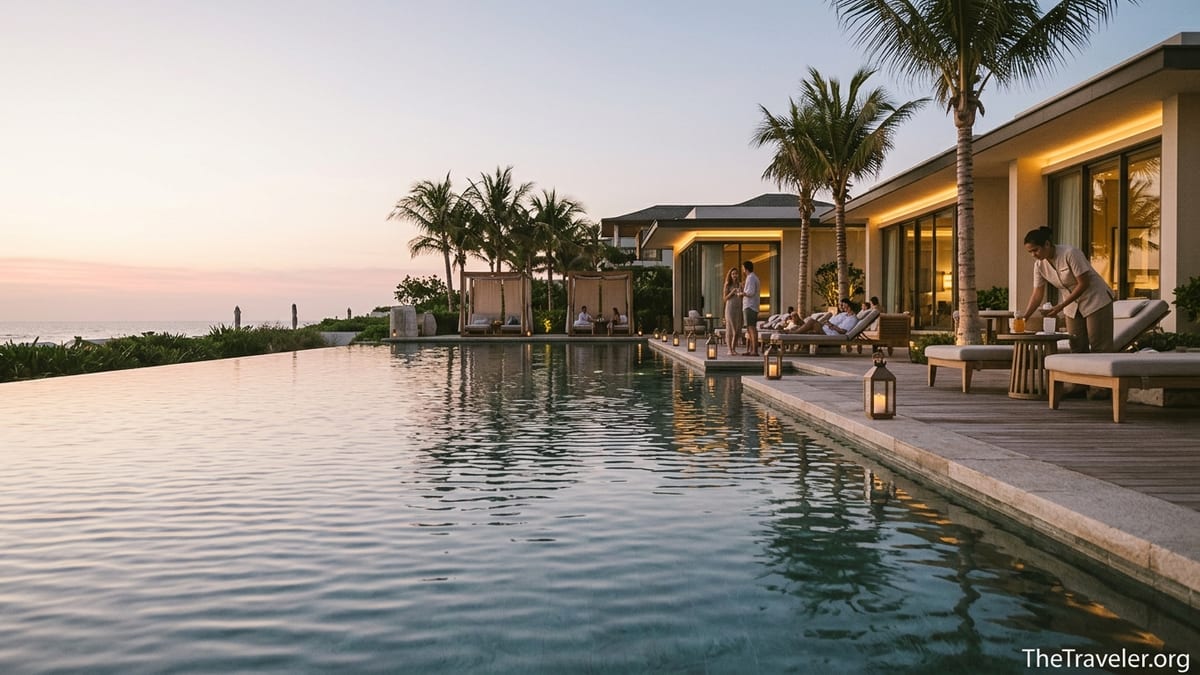
In resort locations, that design philosophy is often expressed through indoor-outdoor living and strong connections to the landscape. Four Seasons Resort Bali at Sayan, built into a lush river valley, uses teak, stone, and water features that make the spa and suites feel like part of the jungle setting. At Four Seasons Resort Maldives at Landaa Giraavaru, villas open directly to the lagoon, with cushioned daybeds and private pools oriented toward sunsets. These properties are clearly luxurious, but the design language is more about ease and nature than Instagram-ready spectacle.
Urban flagships showcase another side of the brand. The Four Seasons Hotel New York, which recently reopened after a period of closure and renovation, doubles down on spacious, high-floor rooms that feel residential: generous closets, deep soaking tubs, and wide windows overlooking Midtown. In Tokyo, Four Seasons Hotel Tokyo at Otemachi occupies upper floors in a modern tower, but the interiors favor tactile fabrics, soft earth tones, and some of the city’s best skyline views from guest rooms and the rooftop bar.
What unites these different styles is a consistent focus on the details a traveler notices after the first night: blackout curtains that actually block city lights, intuitive bedside controls, showers with strong water pressure, and bedding that many loyal guests try to replicate at home. Rather than relying on a single visual identity, Four Seasons has chosen to standardize comfort at a granular level while allowing architecture and decor to reflect each destination.
Where Consistency Meets Recognition: Awards and Real-World Trust
One way to measure whether a luxury brand is delivering on its promise is to look at independent ratings. Four Seasons properties regularly appear at the top of lists from organizations such as Forbes Travel Guide and major travel magazines. In 2024, the company reported that it held more Five Star ratings from Forbes Travel Guide across its hotels and spas than any other single brand, a notable marker in an industry where stars are granted property by property rather than to entire chains.
Drill down into specific hotels and the pattern continues. Four Seasons Hotel Doha in Qatar holds a coveted Five Star score from Forbes Travel Guide, reflecting both its location on the waterfront and the quality of its service and dining. In Seoul, the Four Seasons there is one of a very small handful of Korean hotels to receive the guide’s top distinction, placing it alongside storied names that have dominated the luxury scene for years. Travelers choosing a city break in these destinations can read these ratings as a data point that the brand’s standards are being maintained in markets with increasingly stiff competition.
Reader surveys also suggest a deep reservoir of trust. Condé Nast Traveler’s lists of top resorts and hotels often feature multiple Four Seasons properties, from the serene Four Seasons Resort Hualalai on Hawaii’s Big Island to newer arrivals such as Four Seasons Resort Cabo del Sol in Mexico, which opened in 2024 and quickly picked up accolades. For guests, this cluster of honors translates into practical assurance: it becomes easier to justify nightly rates that can run from around 500 to several thousand US dollars, depending on room type and season, when third parties consistently vouch for the quality.
At the same time, Four Seasons has had to maintain that consistency as new competitors emerge. In cities like Dubai or Shanghai, where almost every major luxury brand is present, travelers can compare Four Seasons directly with peers such as Mandarin Oriental, Aman, or Rosewood. The fact that Four Seasons continues to capture a disproportionate share of repeat guests and corporate contracts in these markets speaks to more than nostalgia. It reflects the company’s ability to deliver a reliably high baseline of experience even as boutique newcomers experiment with bolder concepts.
From Private Jet Journeys to Branded Residences: Extending the Ecosystem
Part of what makes Four Seasons feel like a gold standard today is how far it has extended beyond traditional rooms and suites. The Four Seasons Private Jet Experience, launched in the mid 2010s and refined in recent years, offers around the world itineraries on a custom-fitted aircraft with just over 40 lie flat seats. Travelers might pay upwards of approximately 150,000 US dollars per person for a three to four week journey that hops between multiple Four Seasons properties in destinations like Kyoto, Paris, and the Serengeti, with curated excursions and on board chefs built into the price.
On the ground, the brand has built one of the most substantial portfolios of branded residences in luxury hospitality. In North America, projects such as Four Seasons Private Residences New York Downtown and Four Seasons Residences Austin allow owners to buy apartments that come with hotel style services: housekeeping, room service, dedicated concierge teams, and, in some cases, preferred access to the neighboring hotel’s spa and pool. Entry prices can start in the low millions and climb into eight figure territory for penthouses, reflecting buyers’ willingness to pay a premium for Four Seasons management and perceived resale value.
Internationally, the model is similar. In Mumbai, Four Seasons Private Residences rises as a striking tower in the Worli district, offering high floor homes with panoramic views and access to amenities managed by the hotel team next door. In San Francisco, at 706 Mission Street, Four Seasons operates another residential tower where owners benefit from in residence dining, valet, and security handled to hotel standards. For frequent travelers or second home buyers, these residences blend the privacy of a private apartment with the convenience of full service hospitality.
For guests who are not buying property or booking a jet journey, the broader ecosystem still matters. A traveler staying at Four Seasons in Bangkok or Madrid can reasonably expect that the brand’s focus on high touch service extends to managing complex operations like residences and long haul trips. That reputation, in turn, pulls in a clientele that tends to be loyal, affluent, and inclined to use multiple Four Seasons products over time, reinforcing the company’s position at the top of the market.
Evolving With the Modern Luxury Traveler
Luxury travel expectations have changed dramatically since Four Seasons opened its first hotel, and the company has had to adapt. Today’s guests in their 30s and 40s often prioritize experiences over formality: they want access to local neighborhoods, wellness programs, and flexible work travel setups as much as they want fine china and white tablecloths. In response, many Four Seasons properties have invested in wellness and lifestyle oriented amenities that go beyond a standard gym and spa.
At Four Seasons Resort Chiang Mai in northern Thailand, for example, guests can take guided bike rides through rice fields, join cooking classes focused on regional Lanna cuisine, or participate in yoga sessions overlooking the paddies. On the Red Sea, a new Four Seasons resort has been designed to combine overwater living and coral reef access with sustainability features that appeal to eco conscious travelers. Urban hotels, from Madrid to Singapore, are increasingly programming rooftop bars, art collaborations, and pop up chef residencies that attract locals as well as hotel guests.
Technology is another area of evolution. The Four Seasons mobile app allows in house guests to chat with staff, order room service, book spa appointments, or arrange airport transfers without picking up the phone, mirroring how many people now communicate in daily life. In practice, that means a traveler landing late at night can request extra pillows and schedule breakfast delivery before leaving the airport, with confirmations arriving in minutes. The digital layer supports but does not replace personal interaction, which remains central to the brand’s identity.
Sustainability has also moved up the agenda. While approaches vary by property and Four Seasons tends to speak cautiously about specific targets, many hotels have introduced measures like reduced single use plastics, energy efficient building systems, and partnerships with local conservation projects. In the Maldives and Seychelles, marine biology teams run coral restoration programs and guest education sessions. For travelers, these efforts may not be the sole reason to book, but they increasingly influence decisions among guests who want their spending aligned with responsible practices.
How Four Seasons Compares in a Crowded Luxury Landscape
In the rarefied world of high end hospitality, Four Seasons is hardly alone. Brands such as Aman, Rosewood, Mandarin Oriental, and newer lifestyle focused groups all compete for the same affluent traveler. What distinguishes Four Seasons is less about having the most dramatic architecture or the most avant garde restaurants, and more about offering a consistently high floor of quality almost everywhere it operates.
An Aman resort in a remote destination might deliver a more secluded, ultra minimal aesthetic, while Rosewood might lean into residential style decor and strong bar scenes in certain cities. Yet those brands usually have smaller networks. A traveler who wants the same level of comfort and service on a complex itinerary that includes both major capitals and resort destinations is more likely to find a Four Seasons in each stop, from Boston and Bangkok to Dubai and Des Moines’ nearest international hub city. That practical coverage matters to corporate travelers, families, and private jet users who value predictability.
Price positioning offers another comparison point. Four Seasons is almost always at the upper end of the local market, but it does not seek to outprice every competitor. In cities like London or New York, base level rooms at Four Seasons might start somewhere around 1,000 US dollars per night in peak periods, broadly in line with other top tier brands. Specialty suites, overwater villas, and private residences easily climb far higher, but the brand does maintain some entry level rooms or off season promotions that allow a wider audience to sample the experience.
Ultimately, what has pushed Four Seasons into gold standard territory is a reputation built not on a single signature property but on how the brand performs across many. Travelers who have stayed at the group’s hotels in far flung locations often report a similar pattern: the decor and scenery change, but the way staff handle a lost item, a late check out request, or an unexpected celebration feels reassuringly familiar. In a sector where inconsistency can quickly erode loyalty, that perceived reliability is itself a form of luxury.
The Takeaway
Four Seasons did not become one of the world’s most respected luxury hotel brands simply by building beautiful properties. Its enduring strength lies in a tightly held culture of service built around the Golden Rule, a willingness to invest in staff and comfort oriented design, and an ability to extend its standards into ventures as complex as private jet tours and branded residences. Layered on top of that are third party awards and guest loyalty that reinforce the brand’s promise every time it adds a new dot to the map.
For travelers, choosing Four Seasons often means choosing peace of mind. Whether booking a city break in Seoul, a honeymoon in Cabo del Sol, or a family holiday in Maui, guests can expect thoughtful attention, rooms that prioritize rest, and a team prepared to solve problems with minimal friction. In a hospitality landscape crowded with concepts and buzzwords, that blend of consistency, humanity, and quiet innovation is what has turned Four Seasons into a global gold standard for modern luxury hospitality.
FAQ
Q1. What makes Four Seasons different from other luxury hotel brands?
Four Seasons emphasizes consistent, guest centered service based on the Golden Rule across its global portfolio, rather than relying solely on eye catching design or trend driven concepts.
Q2. Are all Four Seasons hotels considered five star properties?
Not every property holds an official five star rating, but many do, and independent guides such as Forbes Travel Guide regularly place Four Seasons among the most awarded luxury hotel brands worldwide.
Q3. How expensive is it to stay at a Four Seasons hotel?
Prices vary by city and season, but standard rooms at flagship properties in major cities often start in the mid to high hundreds of US dollars per night, with suites and villas costing significantly more.
Q4. Is Four Seasons suitable for families with children?
Yes. Many resorts offer kids’ clubs, family pools, connecting rooms, and children’s amenities like mini bathrobes and welcome treats, making them popular choices for multigenerational trips.
Q5. What is the Four Seasons Private Jet Experience?
It is a series of multi week, small group journeys on a customized private jet that links stays at different Four Seasons properties, with most meals, excursions, and transfers included in the per person price.
Q6. Do Four Seasons hotels have loyalty or points programs?
Four Seasons does not operate a points based loyalty scheme like some large hotel chains. Instead, it focuses on recognition of repeat guests through personalized service and on property benefits.
Q7. How do Four Seasons branded residences work?
Branded residences are privately owned homes managed by Four Seasons. Owners typically have access to hotel like services such as concierge, housekeeping, in residence dining, and shared amenities.
Q8. Are Four Seasons properties good for business travelers?
Yes. City hotels usually offer strong Wi Fi, well equipped meeting spaces, business services, and central locations, along with the reliability that frequent corporate travelers often prioritize.
Q9. What is Four Seasons doing about sustainability?
Approaches differ by property, but many hotels have introduced measures like energy efficient systems, reduced single use plastics, and partnerships with local environmental and community projects.
Q10. How far in advance should I book a Four Seasons stay?
For peak seasons, holidays, and in demand resorts, it is wise to book several months ahead, especially if you need specific dates, room types, or connecting accommodations for a family.