


Walk into any travel agency in North America or Australia and ask about train tickets in Europe, and one name still comes up more than almost any national rail operator: Rail Europe. Even in an era when French, German, Italian, and Spanish railways all sell tickets directly online, millions of international travelers continue to book through this global platform instead of going straight to local sites. The reasons are less about hard savings and more about simplicity, language, and support when things go wrong.
Get the latest updates straight to your inbox!
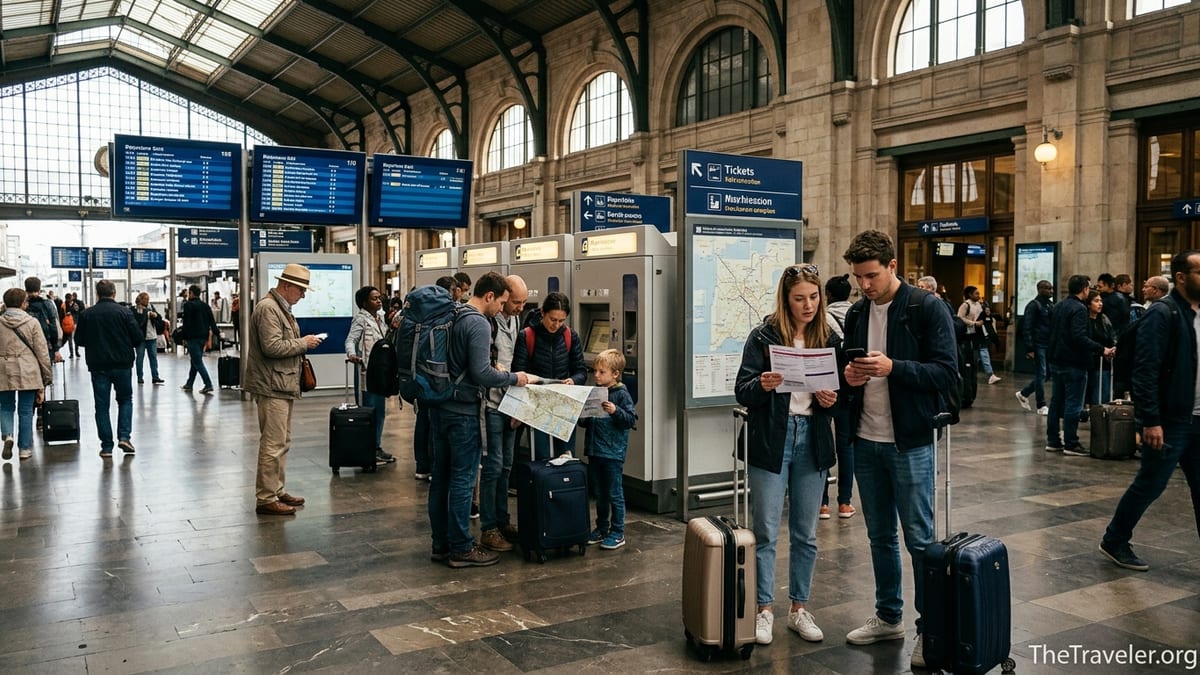
A Single Doorway Into a Fragmented Rail System
For a first-time visitor planning, say, a two-week trip from Paris to Amsterdam, then on to Berlin and Prague, the European rail system can feel bewildering. High-speed lines might be run by SNCF in France, Eurostar under the Channel, Deutsche Bahn in Germany, and a mix of national and private operators in Central Europe. Each has its own website, booking rules, refund conditions, and interface quirks. Rail Europe positions itself as a single front door into this patchwork, connecting to dozens of operators behind the scenes while showing the traveler one unified search box and one payment page.
On a typical Rail Europe search for mid-summer travel, a traveler from the United States can type “Paris” and “Amsterdam” without worrying whether they should book through SNCF Connect, NS, or Eurostar. The platform surfaces options across operators on a single results page, often including combinations that require crossing national borders. That kind of cross-border routing can be harder to piece together through local sites, which tend to prioritize their own domestic segments.
Industry case studies describe Rail Europe as one of the largest European train ticket sellers, with a particularly strong base of customers in the US, Canada, the UK, Australia, and the Middle East. The platform’s core business is aggregating these disparate rail systems into something that feels closer to how people are used to booking flights: enter origin, destination, and date, and let the engine handle the complexity behind the scenes.
This aggregation has real-world value on routes like Zurich to Venice via Milan or Barcelona to Lyon via the Franco-Spanish border. On individual operator sites, these journeys often require multiple searches and separate tickets. Rail Europe, by contrast, can usually display through itineraries and sell the entire trip in a single transaction, which is precisely what many overseas visitors are looking for.
Language, Currency, and Payment Made Easy
Another major reason international travelers default to Rail Europe is simple comfort. The site is fully available in English and several other languages, and it allows users to choose familiar currencies such as US dollars, Canadian dollars, Australian dollars, or British pounds. For someone booking from Chicago or Sydney, this eliminates the mental math of converting euros and reduces the chance of surprises on a credit card statement.
Consider a Canadian traveler booking a high-speed trip from Madrid to Seville on Spain’s Renfe network. Renfe’s own site has improved significantly, but its interface, translation quality, and accepted payment methods can still feel challenging for those unused to it. Rail Europe, meanwhile, lets the same traveler see the AVE departure in an English interface, priced in Canadian dollars, and pay using a North American credit card that may not always work smoothly on every local rail site.
Payment acceptance is not an abstract concern. Travel industry partners highlight how Rail Europe has invested in modern payment processing to handle cards and digital wallets from outside Europe, and to cope with high seasonal peaks like the summer months when North American and Asian visitors book in large numbers. For a traveler, the benefit shows up simply as a card that “just works,” without repeated declines or the need to call a bank to authorize a foreign website.
Currencies also matter psychologically. A US-based family planning several long-distance segments might see a Rail Europe basket total of around 1,200 US dollars and feel comfortable that this fits their budget. Seeing the same total as roughly 1,100 euros on several different national sites is objectively similar but feels less transparent, especially once foreign transaction fees and exchange rate variations are factored in.
Customer Support, Flexibility, and a Safety Net
When you book directly with a national operator, you are tied to that operator for changes and problems. This can work very well on straightforward trips: for example, Deutsche Bahn’s own site is excellent for German domestic routes and offers strong after-sales tools. But international travelers often juggle multiple carriers on one itinerary, and they may worry about navigating different call centers or help desks if something goes wrong. Rail Europe’s promise of centralized customer support in English is a significant draw.
Official information from the company emphasizes that its booking fees help fund high-quality customer support and ongoing investment in its technology platform. For travelers, that translates into a single account where tickets from multiple operators are stored, and one customer service channel to contact in case of schedule changes, missed connections, or refund requests.
Imagine a traveler who has booked London to Paris on Eurostar, then Paris to Nice on a French high-speed TGV, followed by Nice to Milan with Trenitalia. Booking all three segments on Rail Europe means that the traveler can log into one account to download every ticket, rather than tracking three different booking references across three separate sites. If a rail strike affects the Paris to Nice leg, there is at least one central support team familiar with the combined itinerary, which many travelers find reassuring even if the underlying rules still belong to each operator.
That centralization does not change European rail refund policies, which are set by each railway. But for most casual visitors, having one place to initiate changes and refunds is simpler than learning the nuances of SNCF’s, Trenitalia’s, and Deutsche Bahn’s individual systems. Particularly during irregular operations, such as summer heatwaves or industrial action, this support layer becomes one of the key reasons travelers feel more comfortable booking through Rail Europe.
Rail Passes and Reservations in One Place
Rail passes are another area where international travelers often prefer an intermediary. Products like Eurail and Interrail allow flexible travel across multiple countries but frequently require separate seat reservations on high-speed or night trains. The rules are confusing enough that even experienced European travelers sometimes need to double-check which segments need reservations and which can be boarded freely.
Rail Europe has deep integration with Eurail and Interrail passes, not only selling the passes themselves but also handling many of the associated seat reservations. For example, a traveler with a Eurail Global Pass can often use Rail Europe to secure mandatory reservations on Eurostar from London to Paris, on TGV routes inside France, or on Italian high-speed trains, all in one workflow. This helps demystify a system where reservation fees may vary by operator and route.
Recent updates to Rail Europe’s own help pages and community discussions show that the company now charges specific reservation-related fees for passholders in addition to the railways’ own supplement costs. While some budget-conscious travelers prefer to avoid these platform fees by booking directly with individual railways when possible, many others accept them as the price of convenience and consolidated management.
In practice, a backpacker from the US might accept a small platform fee to lock in a sleeper berth on an overnight train from Vienna to Venice and a daytime high-speed connection from Milan to Florence, using a single Rail Europe account for both. Alternatives exist, such as booking directly on the Austrian or Italian operators’ sites, but each alternative requires more research and often a greater tolerance for language and interface differences.
Transparent Total Prices, With a Catch
One area that can cause confusion is pricing. For most simple journeys, independent comparisons suggest that Rail Europe, Trainline, Omio, and the national operators generally sell the same base fares. European consumer rules require that when these platforms sell the same fare class as the operator, they must offer it at the same underlying ticket price. Where the difference comes in is service and booking fees, which are how third-party platforms make their margin.
Rail Europe itself explains that it applies a fixed booking fee per order, rather than a percentage of the ticket price. Recent guidance from the company’s help center describes booking fees that typically fall in a band of a few units of local currency, such as several pounds in the UK or a similar amount in euros or US dollars, applied once per shopping cart above a minimum ticket value. Travelers who add multiple journeys into a single booking can therefore spread that fee across the whole itinerary.
In a practical example, a solo passenger booking a one-way ticket from Brussels to Amsterdam might see a base fare around 34 euros when checking the Belgian and Dutch rail sites. On Rail Europe, the base price would be the same, but the final total might be slightly higher once a booking fee is added. However, if that same passenger adds a second journey, say, Amsterdam to Berlin on a later date into the same basket, the single booking fee would now cover both trips, narrowing the per-ticket gap between Rail Europe and the local sites.
Regulators have pushed all online rail sellers to be more transparent about such fees. In the UK, for instance, authorities have scrutinized how online ticket retailers display additional costs and have emphasized that mandatory fees should appear clearly within the total price rather than being tucked away until the final payment screen. Rail Europe is among the companies that have adjusted their displays so travelers can see the booking fee breakdown earlier in the process.
Familiar Brand and Trust Among Overseas Visitors
History and branding also explain why many international travelers instinctively gravitate toward Rail Europe. The brand has been active for decades in North America and other long-haul markets, long before European railways themselves offered user-friendly multi-language online booking. Older guidebooks and tour operators in the United States, Canada, and Australia often recommended Rail Europe as “the way” to get train tickets before departure, and that legacy still influences traveler behavior today.
Recent industry reports highlight that the US and Canadian markets together account for a large share of sessions on the Rail Europe platform, with particularly high average order values. This makes sense given that North American visitors tend to combine multiple long-distance journeys, such as Paris to Nice, Nice to Milan, and Milan to Rome, into a single trip, and are often willing to pay a bit extra for convenience and reassurance.
For these travelers, Rail Europe functions almost like a familiar travel agency brand. It appears frequently in English-language travel media, is endorsed by many brick-and-mortar agencies, and is recommended in forums for those who are nervous about foreign websites. Even when savvy rail users point out that local rail operator sites can be cheaper or more flexible, newcomers often stick with the brand they recognize, especially for a first trip.
Reputation cuts both ways. Online discussions include both positive experiences of smooth journeys booked entirely through Rail Europe and negative stories involving missing reservations or difficulties obtaining refunds. The mixed feedback reflects the complexity of European rail rather than a single platform, but it does underline a key point: travelers need to understand that Rail Europe is an intermediary, not the railway itself, and that it sits between them and the operators whose trains they are boarding.
When Local Rail Sites May Be a Better Choice
Rail Europe’s strengths do not mean it is always the best option. Experienced travelers, especially those on tighter budgets, often prefer to book directly with national operators when possible. Direct sites like SNCF Connect in France, Deutsche Bahn in Germany, Trenitalia and Italo in Italy, and Renfe in Spain can sometimes offer special discounted fares, broader ticket types, or promotional offers that are not always surfaced by third-party platforms right away.
For example, Deutsche Bahn occasionally runs saver fares that are easiest to find and filter on its own site, and Italian carriers sometimes release limited flash sales that appear there first. Local sites can also be more flexible on changes for certain domestic tickets, particularly if a traveler holds a national railcard or has status in a local loyalty program, which third-party platforms may not fully support.
Some routes are also poorly served by aggregators. Regional lines in parts of Eastern or Southeastern Europe, for example, might still lack full digital integration with global booking systems. In these cases, national rail sites or even in-person station counters remain the best or only option. Travelers planning more niche routes, such as local trains in rural Romania or some cross-border regional services, often report better results researching via local railways, traveler forums, or dedicated regional sites.
The trade-off is time and confidence. Booking on multiple local sites means creating different accounts, navigating different languages, and juggling different after-sales processes. For regular visitors, this extra effort pays off. But for many long-haul travelers visiting Europe once every few years, Rail Europe’s promise of one account, one interface, and one support channel remains compelling, even at the cost of modest fees.
The Takeaway
So why do so many international travelers still book through Rail Europe instead of going straight to local rail sites? The answer lies in a combination of simplicity, language, payment reliability, centralized support, and brand familiarity. For someone sitting in Toronto or Los Angeles planning a multi-country itinerary, Rail Europe makes European trains feel as easy to book as a long-haul flight, packaging multiple rail operators under one digital roof.
That convenience does carry a cost in the form of booking and reservation fees, and it can mean missing out on certain promotions or ticket types that are easier to find directly from national railways. Travelers who prioritize saving every possible euro, or who plan to use rail frequently across many trips, are usually better off investing the time to learn major operators’ own sites and booking directly where it makes sense.
For many occasional visitors, though, Rail Europe strikes a reasonable balance. It is rarely dramatically more expensive for mainstream routes and can significantly cut down the research and administrative burden of planning a complex rail-heavy vacation. The most practical approach is often a hybrid one: use Rail Europe to map out options, compare with at least one major local operator for key legs, then book wherever the mix of price, flexibility, and peace of mind feels right for your particular trip.
FAQ
Q1. Is Rail Europe cheaper than booking directly with local rail operators?
In most cases, the underlying ticket price is similar, but Rail Europe adds booking fees that make it slightly more expensive than buying the same fare directly from a national rail site.
Q2. Why would I pay extra booking fees to use Rail Europe?
Many travelers accept the fees in exchange for a single English-language platform, familiar currencies, broad operator coverage, and centralized customer support for multi-country itineraries.
Q3. Can Rail Europe sell tickets for every train in Europe?
No. Rail Europe connects to many major operators, but some regional railways and local routes are not integrated, so you may still need to use national sites or station ticket offices.
Q4. Do I still get the same refund and change conditions through Rail Europe?
Yes. Refund and exchange rules are set by each railway, so Rail Europe generally applies the same conditions, though you manage the process through its platform instead of directly with the operator.
Q5. Is Rail Europe a railway company?
No. Rail Europe is a travel technology and ticketing company that resells tickets from many different European rail operators rather than running trains itself.
Q6. Is it safe to use Rail Europe for important long-distance trips?
Rail Europe is widely used by international travelers and agencies, and most trips go smoothly, but as with any intermediary you should keep copies of your tickets and allow extra time for connections.
Q7. When is it better to book directly with national railways?
Booking directly is often preferable if you are comfortable with local sites, want to hunt for the very lowest promotional fares, or are traveling mainly within a single country with a strong online booking system.
Q8. How do Rail Europe’s fees work in practice?
Rail Europe usually charges a fixed booking fee per order above a minimum ticket value, so combining several journeys in one basket can reduce the effective fee per ticket.
Q9. Does Rail Europe work well with Eurail and Interrail passes?
Yes. Rail Europe sells passes and can handle many required seat reservations for them, though it may charge separate reservation-related fees on top of the railways’ own supplements.
Q10. Should I use only Rail Europe or mix it with local booking sites?
Many experienced travelers use a hybrid approach, checking Rail Europe for convenience and overall planning, then comparing key routes on major national rail sites before deciding where to actually book.