


For many first-time visitors, Naples is all about the historic center and the seafront. Ask a local, though, and you will quickly hear another name: Fuorigrotta. This western district, just a few Metro stops from the centro storico, is where Neapolitans go for football nights, open-air concerts, huge fairs, unfussy trattorie and the rhythms of everyday life. If you want to understand how the city actually lives, eats and celebrates, Fuorigrotta is where the picture comes into focus.
Get the latest updates straight to your inbox!
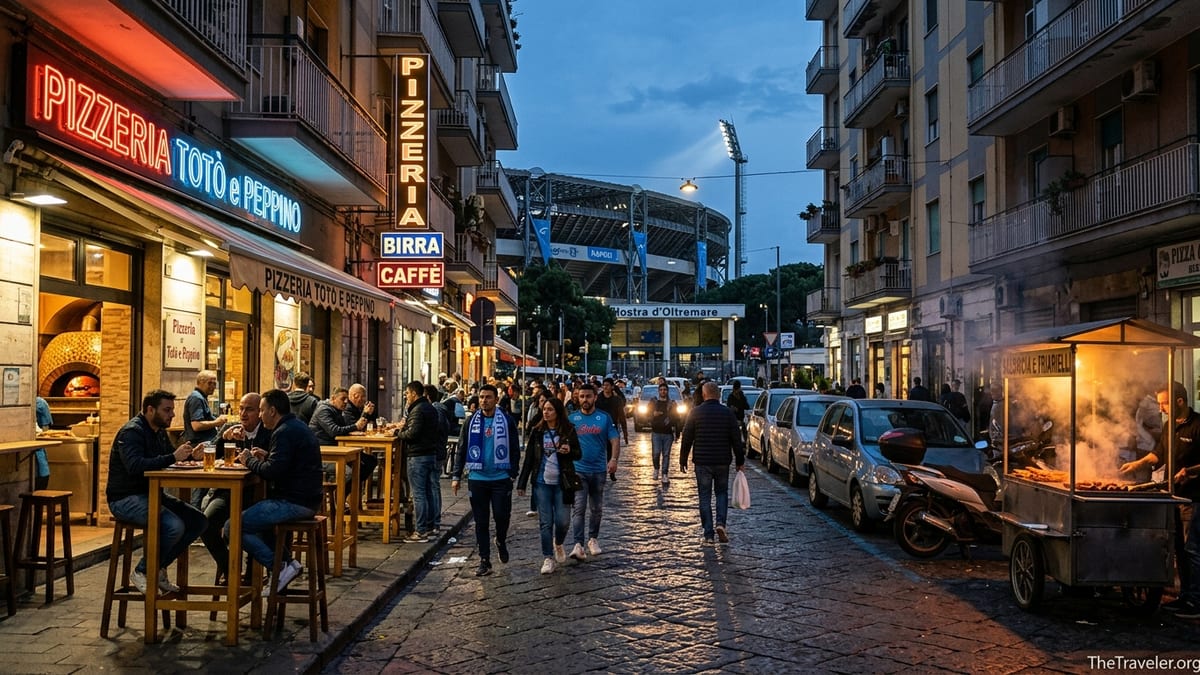
The Neighborhood That Feels Like Everyday Naples
Fuorigrotta sits west of central Naples, on the way to the Phlegraean Fields and Pozzuoli, and is one of the city’s most populated districts. It is known as a working and middle class area rather than a postcard-perfect quarter, which is precisely why Neapolitans like it. Here, apartment blocks, small shops and street markets dominate the streets instead of luxury boutiques. You are more likely to see neighbors chatting from balcony to balcony or grandparents walking children home from school than large tour groups with selfie sticks.
Locals appreciate how practical Fuorigrotta is. Three railway and Metro lines converge around Campi Flegrei station, including Line 2 of the underground and the Cumana railway, so residents can reach the historic center in about 10 to 15 minutes while keeping their daily lives slightly apart from the tourist crush. That easy access also benefits visitors: you can stay or spend the day here, enjoy the quieter evenings and still be just a short train hop from Spaccanapoli or the archaeological museum.
What strikes many outsiders is the sense of neighborhood continuity. Streets like Via Giulio Cesare, Viale Augusto and Via Leopardi are lined with pharmacies, bakeries, greengrocers and clothing shops that locals actually use, not just souvenir stores. On a weekday morning you will see people lining up at coffee bars before work, pensioners reading the paper, and students heading to the nearby university campus. It feels like a district where life is lived on the pavement.
Although Fuorigrotta is not as picturesque as the seafront area of Chiaia, there is an authentic charm in its slightly worn facades and 20th‑century buildings. Many date from the 1930s and 1940s, when the area was heavily redesigned and the Mostra d’Oltremare exhibition grounds were built. This rationalist architecture, mixed with contemporary apartment blocks and unexpected pockets of green, gives the neighborhood a distinct identity within Naples.
Mostra d’Oltremare: Fairs, Food Festivals and Open-Air Nights
The single place that perhaps best explains why locals love Fuorigrotta is Mostra d’Oltremare. This large exhibition and congress center, opened in the late 1930s, is today one of the main trade fair venues in Italy and the largest in southern Italy. Spread across a vast urban park with pavilions, fountains and open lawns, it hosts everything from travel expos and design fairs to hobbyist gatherings and food festivals throughout the year.
For Neapolitans, Mostra d’Oltremare is more than a trade fair complex. On weekends it turns into a social hub. Families pay a modest entrance fee, often just a few euros, to wander between temporary markets, children’s play areas and street food stands. Events such as second‑hand markets, home and garden shows, craft fairs and seasonal initiatives like travel or wedding expos draw crowds from across the city. At many of these, you can spend an afternoon sampling local cheeses, cured meats, pastries and wines from Campania’s inland villages without ever leaving Fuorigrotta.
Music is another big draw. The Arena Flegrea, an open‑air theater inside Mostra d’Oltremare, regularly hosts Italian and international performers in the warmer months. Recent editions of summer festivals have brought well‑known rock, pop and indie acts to this stage, and locals gather for evening concerts under the stars, often combining a show with a casual pizza or panino in the neighborhood before or afterward. For visitors, concert nights are one of the most atmospheric times to see Fuorigrotta in full, lively mode.
Even outside major events, Mostra d’Oltremare functions as a park where residents jog, walk dogs or push strollers along leafy paths. Having this amount of green space in a densely built part of Naples is a luxury, and it gives Fuorigrotta a more breathable feel than its reputation as a purely concrete district might suggest. Travelers who enjoy seeing how locals use public spaces will find that a late afternoon stroll here offers a vivid slice of Neapolitan daily life.
Stadio Diego Armando Maradona: Football, Street Food and Rituals
Fuorigrotta is also home to one of world football’s most storied arenas, the Stadio Diego Armando Maradona. Formerly known as Stadio San Paolo, this multi‑purpose stadium can hold more than 50,000 spectators and has hosted everything from Serie A matches to World Cup games and major concerts. For residents, the stadium is not just a sports venue but a secular temple where the emotional life of the city plays out.
On match days, Fuorigrotta transforms hours before kickoff. Streets around the stadium fill with vendors grilling sausages, frying arancini and selling paper cones of taralli and peanuts. Many supporters arrive well ahead of time specifically to eat. Classic stadium‑area snacks include panini stuffed with salsiccia and friarielli, the local bitter greens, as well as thick slices of frittata di maccheroni, a kind of pasta omelet that is easy to eat on the go. Prices are usually modest, often between 4 and 7 euros for a generous sandwich, which makes this kind of informal dinner accessible to families and groups of friends.
Bars and pizzerias near the stadium become extensions of the stands. A place like Pizzeria Leopardi, a short walk away, is typical of the area: it serves traditional round Neapolitan pizzas with classic toppings, generally in the 6 to 10 euro range depending on ingredients, and fills up quickly with locals in blue shirts on game nights. The atmosphere can be noisy and exuberant, but it is welcoming; conversations about line‑ups and tactics flow easily, and visitors often find themselves drawn into the pre‑match buzz.
Even if you are not attending a match, walking around Fuorigrotta in the hours leading up to kickoff is an experience in itself. Flags hang from balconies, kids kick plastic balls on side streets, and the smell of grilled meat mixes with the chants from the Curva as warm‑up songs echo across the neighborhood. For many locals, these sensory details are tied to memories of family outings and formative evenings, which helps explain their attachment to the district.
Where Locals Actually Eat: Pizzerias, Trattorie and Bars
Fuorigrotta’s food scene is built around simple, satisfying places rather than high‑end restaurants. Pizzerias are everywhere, and they cater primarily to residents. One example is L’Imperatore a Fuorigrotta, a pizzeria where the average price for a meal, including a pizza and a drink, comes to around 15 euros per person. A margherita or marinara might cost around 5 to 7 euros, while more elaborate pizzas topped with buffalo mozzarella, local yellow and red piennolo tomatoes or cured meats reach 9 or 12 euros. These are the everyday prices that make eating out a regular habit for many Neapolitans.
Beyond pizza, small trattorie offer home‑style dishes like pasta e patate con provola, ragù alla napoletana, or seafood pasta when fresh catch is available. Menus are often written on chalkboards and change according to the market; visitors can expect first courses in the 7 to 10 euro range and second courses of meat or fish from about 10 to 15 euros. Portions are usually generous, designed for people who work hard and expect to be well fed.
Cafés and pastry bars dot the main streets, and locals have strong feelings about which one pours the best espresso. At many counters, a short coffee costs around 1.20 to 1.50 euros, sometimes less if you stand at the bar. In the mornings, residents grab cornetti or sfogliatelle on the way to the Metro, often for 1 to 2 euros each. In the late afternoon, the same bars become social spaces where young people meet for aperitivo drinks and small snacks before going on to a match, a concert or an event at Mostra d’Oltremare.
Because these establishments cater primarily to locals, there is generally less English spoken and less emphasis on polished decor than in more touristic neighborhoods. Instead, the appeal lies in the straightforward welcome and the feeling of being temporarily absorbed into the routines of the area. For travelers, this can be refreshing: you sit next to people discussing work, family or the latest transfer rumors, not just other visitors swapping sightseeing tips.
Fuorigrotta’s Rhythm: Markets, Students and Commuters
What keeps residents attached to Fuorigrotta is not only its big venues but its everyday rhythm. This is a commuter hub: every morning, thousands of people stream through Campi Flegrei station to reach offices, schools and shops across Naples. Buses and the Metro also run frequently, connecting the district to the central station at Piazza Garibaldi and to seaside areas. For locals, this means they can work elsewhere yet return to a neighborhood where people know their names at the corner bar.
There is a strong student presence as well. With university facilities and several high schools nearby, streets are busy with young people during term time. You see groups hanging out with takeaway coffee or slices of pizza al taglio between classes, and low‑priced snack bars cater to their budgets. This keeps Fuorigrotta lively at times when more tourist‑dependent areas might feel quiet, and it means new food trends, from gourmet panini to specialty coffee, often filter into the district via its student population.
Markets provide another anchor of daily life. While large supermarkets are present, many residents still shop at smaller fruit and vegetable stalls or fishmongers in and around streets like Via Consalvo or Via Campegna. In the mornings, the sidewalks fill with crates of seasonal produce: artichokes and oranges in winter, zucchini flowers and tomatoes in summer. Prices fluctuate, but a couple of euros can buy enough ingredients for a family meal, and the informal conversations at these stalls are part of the neighborhood’s social fabric.
Even in the evenings when there is no match or major event, Fuorigrotta does not completely shut down. People walk dogs, stop for gelato, chat under dim streetlights, or sit in pizzerias watching football games on television. It feels like a place where nightlife is woven into domestic life instead of being separated into a club zone. Visitors who stay here for a few nights often comment that they start recognizing the same faces, which is a key reason many Neapolitans feel at home in this district.
Why Travelers Should Care: Experiencing a Local Side of Naples
From a traveler’s perspective, Fuorigrotta offers a chance to see a dimension of Naples that postcards rarely show. Staying here or spending long evenings in the neighborhood gives you insight into how Neapolitans balance work, family, sport and leisure. You might arrive for a match or a big fair at Mostra d’Oltremare, but along the way you notice the neighborhood coffee rituals, the way people greet each other by name in corner shops, and the patience with which baristas talk football with regulars.
Practical considerations also matter. Accommodation around Fuorigrotta, often in small family‑run bed and breakfasts or simple hotels, can be more affordable than in the central historic districts, especially on non‑match days. At the same time, public transport links make it straightforward to reach major attractions. This combination of lower prices, good connections and lively street life is exactly what many residents value and what can make the area appealing to travelers seeking a more grounded experience.
There are also safety and comfort factors that locals appreciate. While Fuorigrotta is not a polished, upscale district, it is accustomed to handling large crowds for events, so public order is generally well managed on busy days. On ordinary evenings, the presence of families, students and commuters gives the streets a lived‑in feel rather than the empty, slightly tense atmosphere that some tourist zones can have after shops close. Visitors who follow the same basic precautions they would in any big city typically find the neighborhood straightforward to navigate.
Most importantly, spending time in Fuorigrotta helps round out the story of Naples. The city is not only baroque churches and sea views; it is also 20th‑century apartment buildings, football chants drifting between balconies, and markets selling crates of eggplants for family Sunday lunches. In this sense, the district is a living classroom for anyone curious about how contemporary Neapolitans actually live.
The Takeaway
Fuorigrotta may not be the first name that appears in travel brochures, but for Neapolitans it plays an outsized role in their emotional map of the city. It is where they pack into the stands of Stadio Diego Armando Maradona, spend weekends wandering among stalls at Mostra d’Oltremare, grab a quick pizza at their usual pizzeria, or sit on a park bench with a coffee as trains come and go from Campi Flegrei.
For visitors willing to look beyond the historic center, the district offers an accessible way to experience real daily life in Naples. You can eat where locals eat, join them at concerts and fairs, and watch how an ordinary weekday unfolds in one of Italy’s most intense cities. In the process, you gain a deeper understanding of why people here are so attached to their neighborhood, and why, when they talk about their city, Fuorigrotta almost always enters the conversation.
FAQ
Q1. Is Fuorigrotta a good area to stay in for first-time visitors to Naples?
Fuorigrotta can work well if you want a local, residential atmosphere with good public transport links and are comfortable staying a little outside the historic center.
Q2. How do I get from Fuorigrotta to central Naples?
You can use Metro Line 2 from Campi Flegrei station or the Cumana railway to reach the historic center in roughly 10 to 15 minutes, depending on the stop.
Q3. What kind of food is Fuorigrotta best known for?
The district is popular for everyday pizzerias, casual trattorie and match‑day street food such as sausage and friarielli sandwiches, fried snacks and traditional pastries.
Q4. Are restaurant prices in Fuorigrotta cheaper than in the city center?
Prices are often slightly lower, with classic pizzas commonly in the 5 to 10 euro range and full meals in modest pizzerias averaging around 15 euros per person.
Q5. Is Fuorigrotta safe to walk around at night?
Fuorigrotta is generally busy with residents, students and event‑goers. Using normal big‑city precautions, many visitors find it practical and manageable even after dark.
Q6. What events take place at Mostra d’Oltremare?
Mostra d’Oltremare hosts trade fairs, travel and craft expos, concerts, food festivals, hobby shows and family events throughout the year in its large park‑like grounds.
Q7. Do I need tickets in advance to visit matches at Stadio Diego Armando Maradona?
For major Serie A games and European fixtures, it is wise to buy tickets in advance, as popular matches can sell out or have limited availability close to kickoff.
Q8. Is Fuorigrotta very crowded on match days and during big events?
Yes, the area around the stadium and Mostra d’Oltremare becomes busy before and after events, with heavier traffic, crowds of fans and many temporary food stalls.
Q9. Can I visit Fuorigrotta just for an evening meal if I am staying in the center?
Absolutely. Many locals commute in the opposite direction, and visitors can easily take the Metro for dinner at a neighborhood pizzeria and return later that night.
Q10. What is the main reason locals say they love Fuorigrotta?
Residents often mention the combination of strong football culture, big public events, practical transport links and a down‑to‑earth neighborhood feel where daily life is front and center.