


More news on this day
Arriving three hours before departure used to be the gold standard for international flights, but travellers heading to Europe this summer are discovering that even this generous buffer is no longer enough.
Get the latest news straight to your inbox!
A Perfect Storm of New Tech and Old Bottlenecks
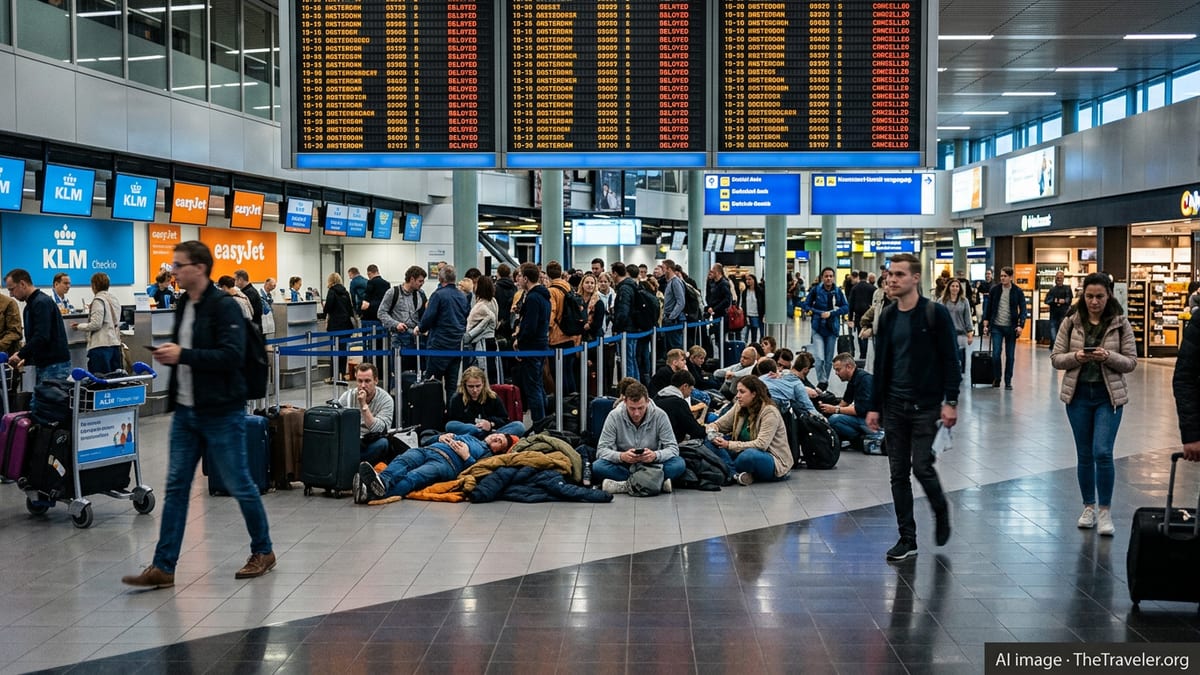
Across major European hubs, reports indicate that passengers are facing security and border queues stretching far beyond the traditional three-hour arrival window. The rollout of the European Union’s new Entry/Exit System (EES), which records fingerprints and facial images for non-EU visitors, is at the heart of this shift. What was once a quick passport stamp has become a more complex biometric registration, slowing the flow of people through already constrained checkpoints.
Published coverage from aviation and travel outlets points to waits of four hours or more at some Schengen-area airports during recent holiday peaks, with industry briefings warning that six-hour queues are possible as the high summer season builds. Early adopters of the system in late 2025 already experienced congested halls and missed flights. Now that EES is fully operational at more airports, the friction is no longer isolated but emerging as a network-wide issue during busy periods.
Airport and airline associations had cautioned over the winter that existing staffing levels and infrastructure were calibrated for the old, faster process. With biometric registration taking significantly longer per passenger, the system is struggling when large numbers of non-EU travellers arrive within a short time frame. The result is visible in social media posts, travel forums and local news reports describing terminal queues snaking back into check-in halls and, in some cases, out toward curbside drop-off areas.
Meanwhile, airlines have begun quietly revising their own guidance. Budget and full-service carriers alike are now urging customers on some routes into or out of the Schengen area to arrive four to five hours in advance, particularly at peak times and at leisure-heavy airports in Spain, Portugal, Italy and Greece. For travellers used to a three-hour rule, this shift underscores how dramatically the risk calculus has changed.
Why Six-Hour Lines Are No Longer Theoretical
The warning that queues could stretch to six hours does not come from isolated anecdotes alone. Travel industry analyses and briefings from airline trade bodies highlight that the duration of an individual passport check has multiplied compared with the pre-EES era. Where officers once needed under half a minute to stamp a document and wave a traveller through, they are now completing biometric scans, verifying digital records and resolving occasional mismatches and technical glitches.
Those extra seconds per person appear small in isolation but scale quickly when planeloads of holidaymakers land within minutes of each other. At some airports, reports note that EES kiosks have suffered intermittent outages or slowdowns, forcing staff to revert to manual processing and compounding delays. Even short technical interruptions can add tens of minutes to queue times once a backlog forms, particularly when terminals are operating near capacity.
Industry assessments also point to uneven implementation across the Schengen zone. While some airports have invested in additional kiosks, redesigned queuing areas and communication campaigns to help travellers prepare documents in advance, others are still working with limited space and staffing. Where national border agencies have not ramped up personnel to match the new processing times, wait times have been among the longest, according to coverage from European aviation news outlets.
Another factor is that not all travellers are being recognised by the system on subsequent trips. Consumer reports and travel community posts describe cases in which passengers who believed they had completed EES registration were asked to go through full biometric capture again, suggesting data-matching or retrieval problems. Each repeated registration pushes processing times higher and increases the likelihood that lines spill over into critical choke points such as security screening and boarding gates.
From Check-In to Take-Off: How Delays Cascade
The visible queues at passport control are only one part of the story. When border processing slows dramatically, it exerts pressure on the entire airport ecosystem. Check-in desks must open earlier and stay open longer to cope with customers anxious about reaching the gate. Security lanes can become overcrowded when passport control backs up in front of or behind them. Gate agents face waves of distressed passengers who have been trapped in queues for hours and arrive minutes before departure.
Aviation analysts note that European air traffic flow is already under strain from slot constraints, staffing gaps at air navigation providers and weather-related disruptions. When large numbers of passengers are held up at border control, flights risk missing departure slots, which can trigger knock-on delays across the day. Missed connections are another growing concern, particularly at major hubs where non-EU travellers must pass through EES checks before boarding onward flights within Europe.
Publicly available guidance from travel risk consultancies underscores that delays caused by border control are generally outside the scope of EU air passenger compensation rules. Airlines are responsible for operating the flight, not for the pace at which governments process travellers. This means passengers who miss departures purely because they were stuck in EES lines may have limited recourse beyond rebooking assistance or goodwill gestures from carriers.
Travel insurance providers are beginning to update their advice accordingly. Policy summaries highlighted in recent coverage encourage customers to read fine print on “missed departure” clauses, as not all products cover delays rooted in security or border bottlenecks. For many holidaymakers, this adds a financial incentive to build in more buffer time, even if that means spending longer airside in departure halls.
The Airports Most at Risk This Summer
While EES applies across the Schengen area’s external borders, some locations are emerging as particular flashpoints. Reports from Mediterranean leisure gateways handling large numbers of British and other non-EU tourists describe two- to three-hour queues now being treated as a routine feature of weekend peaks. On the busiest days, travel industry commentary warns that these waits can stretch further when multiple wide-body aircraft arrive back-to-back.
Northern European hubs are also under scrutiny. Coverage from pan-European aviation trackers shows that airports managing both heavy transfer traffic and point-to-point leisure flows can be especially vulnerable, as they rely on tight connection times to keep itineraries viable. When non-EU passengers arriving from long-haul flights are held up at border control, the ripple effects can cause missed onward flights across the continent.
Smaller regional airports are not immune. Some facilities that previously experienced modest queues are now grappling with the same biometric registration requirements but with fewer lanes and limited space to expand. Local media in several tourism-dependent regions have reported terminal congestion, car parks filling earlier in the day and ground transport delays as taxis and buses struggle to access jammed forecourts.
Industry groups representing European airports and airlines have urged EU institutions to review rollout timelines and funding for EES, arguing that without rapid improvements to staffing, technology reliability and passenger communication, the system risks undermining public confidence in air travel. Their position, reflected in joint statements and open letters, is that the new digital border regime is not inherently unworkable but requires more realistic planning to avoid becoming synonymous with chronic queues.
What Travellers Can Realistically Do Now
For passengers with summer trips already booked, the reality is that much of the infrastructure and staffing picture is out of their hands. However, consumer travel advice from airlines, airports and tourism boards has converged around several practical steps. The most prominent is time: travellers on flights into or out of the Schengen zone are being encouraged to arrive earlier than they may be accustomed to, particularly at peak weekend and holiday periods.
On some routes, carriers now explicitly recommend arriving at least four hours before departure, and in a few high-risk cases even earlier. While such guidance is not yet universal, the pattern suggests that the old one-size-fits-all “three hours for long-haul” rule no longer provides the same margin of safety at busy European gateways. The risk is especially acute for travellers checking bags, families with young children and those unfamiliar with airport layouts.
Preparation is another key theme in current public messaging. Having passports and supporting documents ready, understanding whether a journey involves crossing the Schengen external border and checking real-time airport updates can all shave precious minutes off processing times. Some border agencies and airports have introduced pre-registration tools or instructional videos to help first-time EES users understand what to expect at the kiosk and how to complete biometric scans quickly.
Ultimately, the shift toward longer recommended arrival times highlights a broader rebalancing of responsibility between travellers and the systems that process them. Until EES operations stabilise and staffing catches up with demand, passengers heading to Europe this summer may need to treat a three-hour airport arrival not as a safe buffer but as a potential gamble, particularly at the most crowded hubs.