


Piazza della Signoria is the square where Florence most clearly feels like itself. For visitors, it is a dramatic open-air museum framed by Renaissance palaces and famous statues. For locals, it is something more intimate and enduring: a civic living room, a political stage, a shortcut on the way to work, and the backdrop to countless everyday rituals. Understanding why Florentines still call this their true historic heart helps travelers experience the piazza as more than a beautiful backdrop for photos.
Get the latest updates straight to your inbox!
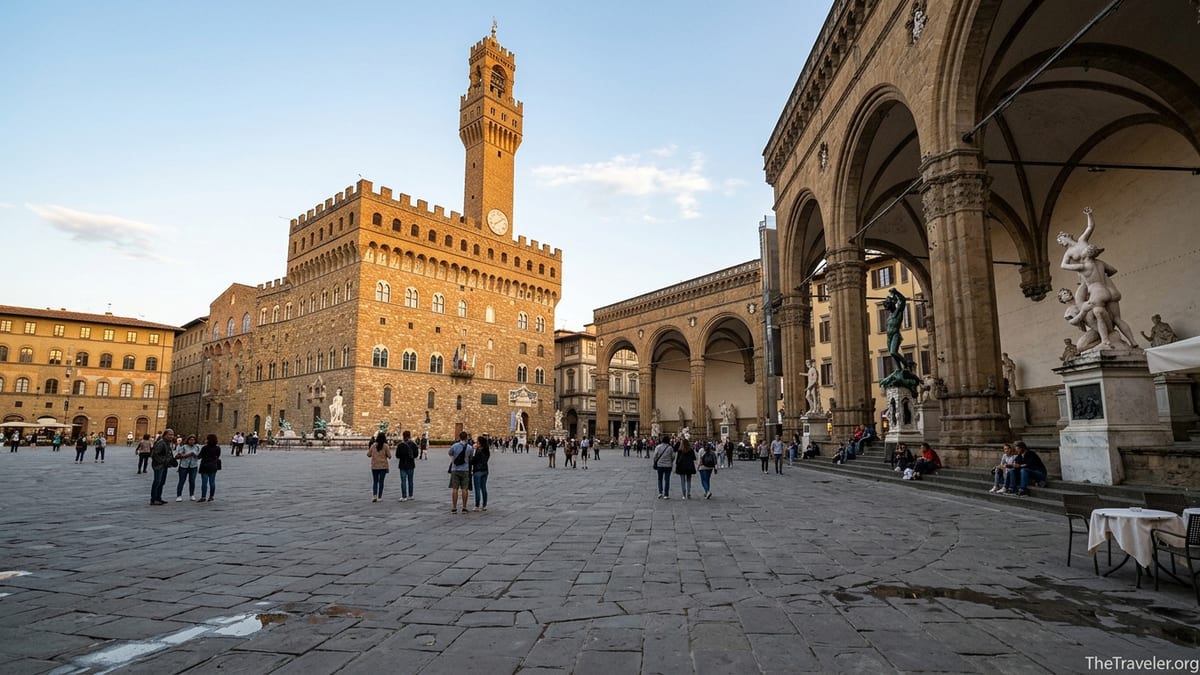
The Square That Grew Up With Florence
Long before guidebooks and selfie sticks, the space that became Piazza della Signoria was the political center of the Florentine Republic. The Palazzo Vecchio, whose fortress-like tower dominates one side of the square, was begun in the late 13th century as the seat of the city’s government. When locals talk about “andare in Piazza,” going to the Piazza, they still often mean this one first, because this is where the big decisions were once made and where power was most visibly displayed.
The piazza itself took shape around the palace as medieval houses were demolished to create an open public space large enough for assemblies, proclamations, and ceremonies. The Loggia dei Lanzi, the open-air arcade on the south side, was built between about 1376 and 1382 specifically to host public gatherings such as the swearing-in of magistrates. Today, commuters cut through its arches on the way to the Uffizi or the Arno, hardly glancing up at the sculptures above them, a reminder that for Florentines this spectacular setting is also just part of the daily city grid.
Centuries of dramatic episodes unfolded here, from the bonfires of the preacher Savonarola to the Medici’s theatrical displays of power. Locals grow up hearing stories of how the square witnessed executions, popular uprisings, and triumphant processions. When a Florentine points out the circular marble plaque in the pavement marking where Savonarola was burned, it is not simply a history lesson. It is a way of saying that the stones beneath your feet have absorbed the city’s memories, and that in Piazza della Signoria, history feels present rather than distant.
This layering of political and personal history explains why the piazza still holds more emotional weight for residents than many other scenic corners of Florence. Weddings spill out of nearby churches for photos in front of the Palazzo Vecchio, high school classes gather on its steps on field trips, and families bring visiting relatives here first to say, “This is our Florence.” For locals, the square is not a monument to the past but a stage where new memories keep accumulating.
An Open-Air Sculpture Gallery Locals Grow Up With
One reason Florentines feel such strong attachment to Piazza della Signoria is that it offers daily, free access to some of the most famous sculptures in the world. Children in Florence often encounter Benvenuto Cellini’s bronze “Perseus with the Head of Medusa” or Giambologna’s twisting “Rape of the Sabine Women” on school excursions long before they ever visit a formal museum. These statues, displayed in the Loggia dei Lanzi and in front of the Palazzo Vecchio, become familiar faces.
The Loggia, originally a ceremonial space, evolved in the 16th century into a kind of open-air gallery for the Medici collection. Today, locals meeting friends will often say “ci vediamo alla Loggia,” let’s meet at the Loggia, as casually as someone elsewhere might say “meet me at the corner.” Students sit on the low stone walls beneath masterpieces carved from single blocks of marble, scrolling their phones under allegories of myth and power. The juxtaposition can be startling for a visitor, but for Florentines it encapsulates how art is woven into everyday life.
Even the copy of Michelangelo’s David that stands to the left of the Palazzo Vecchio’s entrance plays a role in local identity. The original was moved indoors to the Accademia Gallery for protection, but this replica maintains the historical alignment: David, symbol of the small but defiant republic, facing the seat of government. Locals pass this statue on their way across town and still reference it in political conversations, pointing out that the city has long celebrated the idea of standing up to more powerful forces.
Because these works are part of the shared neighborhood landscape, locals notice their small changes: scaffolding when a statue is cleaned, a new lighting scheme that alters the marble’s color at night, or the temporary removal of a piece for restoration. A shopkeeper on nearby Via dei Calzaiuoli might comment that Cellini’s Perseus looks brighter after a recent conservation, or a guide born in Florence might recall how the piazza felt emptier during a restoration season. This close, continuous relationship with the art helps keep Piazza della Signoria emotionally central to Florentine life.
A Stage for Power, Protest, and Public Ritual
While Piazza della Signoria no longer hosts the governing council of the republic, it remains Florence’s preferred stage for symbolic public moments. The city’s official historic parades, such as the corteo storico that accompanies events like the Calcio Storico matches, often pass through or culminate here. Locals in Renaissance costumes carrying medieval banners cross the stones that once saw real political struggles, and residents lean from windows or gather near the Neptune fountain to watch, folding these performances into their annual rhythm.
The square is also where Florentines still come to make themselves heard. Peaceful demonstrations and rallies, often about national politics, environmental issues, or local cultural policies, are regularly authorized in Piazza della Signoria. Residents know that choosing this piazza, rather than a more anonymous space, gives their message symbolic weight. When a banner unfurls in front of the Palazzo Vecchio, it visually links contemporary grievances with centuries of civic debate.
High-profile cultural events occasionally take over the square as well. Fashion houses have staged shows or presentations that incorporate the piazza’s backdrop, turning the historic façade into a temporary runway. Local newspapers and the municipal website report street closures around the square during these evenings, and residents discuss whether such events strike the right balance between international attention and respect for the piazza’s character. These conversations around the dinner table reinforce the feeling that what happens in Piazza della Signoria is everyone’s business.
On a more intimate scale, the square serves as the ceremonial heart of many smaller personal milestones. Couples propose under the tower, university graduates pose in laurel wreaths in front of the statues, and amateur choirs sometimes perform informally near the Loggia. While tourists snap photos of these moments, the people living just a few blocks away recognize them as the latest expressions of a long tradition: using this space to give important occasions a public, shared dimension.
Daily Life: Coffee, Shortcuts, and Evening Strolls
Beneath the layers of history and ceremony, Piazza della Signoria is also embedded in the routines of everyday Florentine life. In the early morning, before most tours arrive, office workers cut across the square from the direction of Piazza del Duomo toward the river, pausing briefly to greet colleagues or to check the weather over the roofs. Street cleaners wash the stone pavement, baristas roll up awnings, and delivery workers navigate handcarts between café terraces and souvenir shops.
Locals know the unwritten rules of the square’s cafés. Historic establishments such as the pastry and chocolate-focused places under the arcades offer two distinct experiences: a quick espresso at the bar for a price similar to any neighborhood café, and a slow, scenic drink at an outdoor table with a view of the statues at a significantly higher cost. It is common to see Florentines step in for a one-euro-something espresso at the counter before work, while visitors linger outside over cappuccinos that might cost four to six euros simply because of the position. Residents accept this as part of the city’s tourist economy and use the system to their advantage.
In the late afternoon and early evening, the piazza becomes part of the broader Florentine habit of the passeggiata, the relaxed pre-dinner stroll. Locals may begin near the Duomo, wander down Via dei Calzaiuoli, emerge into Piazza della Signoria to check if any new temporary art installation or stage has appeared, and then continue toward the Arno. Children chase pigeons near the Neptune fountain while grandparents sit on the low steps of the Loggia, watching as office workers finish their day.
Even for residents who rarely stop in the square, Piazza della Signoria functions as an orientation point. Friends describe meeting points as “davanti a Palazzo Vecchio” or “sotto la statua equestre,” under the bronze equestrian statue of Cosimo I. When giving directions by phone, someone might say “when you see the copy of David, turn left for Via dei Gondi.” This constant use of the piazza as a reference in conversation keeps it mentally central even when people are just passing by.
Balancing Tourism With Local Attachment
Piazza della Signoria is one of Florence’s most visited spaces, which means that for much of the day it is crowded with tour groups and organized visits from across the world. Florentines sometimes joke that the square “belongs to the tourists” between mid-morning and late afternoon, and many locals time their errands to skirt the busiest hours. Yet even those who complain about the crowds often have a favorite corner or time of day when they reclaim the space as their own.
One common strategy is to experience the piazza early or late. Residents walking dogs before work enjoy a version of Piazza della Signoria that most short-stay visitors never see: almost empty, with the echo of their footsteps carrying under the Loggia’s arches. Late at night, especially outside peak summer months, small groups of locals gather on the steps of Palazzo Vecchio to talk, and musicians sometimes play softly on the far edges of the square. A Florentine might plan to cross the piazza deliberately at these quieter hours, using the route as a small daily pleasure rather than an unavoidable tourist corridor.
Locals also develop a mental map of “escape routes” to navigate around large tours without losing their connection to the space. Side alleys lead quickly toward Santa Croce, the Arno, or the Mercato Nuovo, and people who grew up in the city learn which narrow streets offer a two-minute detour that still allows a glimpse of the statues. A resident might duck into Via dei Magazzini or slip along the side of the Loggia, emerging with just enough distance from the main clusters to recognize the piazza on their own terms.
For many Florentines, the key is that their relationship with Piazza della Signoria began long before mass tourism reached its current intensity, and it continues in quieter moments that visitors rarely notice. A librarian cutting through the square after a late shift, a group of friends sharing gelato on the steps of the Loggia on a cool February evening, or a retiree sitting on a bench watching cloud shadows move across the tower: these small, private experiences keep the place emotionally anchored in local life even as the daytime scene is dominated by cameras and guided groups.
How Travelers Can Experience the Piazza Like a Local
Visitors who want to understand why Florentines love Piazza della Signoria can adjust their schedule and habits to experience the square more like residents do. One simple approach is to plan at least one visit outside the peak midday hours. Arriving around sunrise, when the cafés are just opening and the statues glow softly in the first light, offers a sense of the piazza as a working civic space rather than a backdrop. You are more likely to see joggers, delivery workers, and early-shift employees than tour leaders raising umbrellas.
Another tactic is to use the square as a crossroads rather than a single destination. Instead of spending one long block of time here, cut through Piazza della Signoria several times over a day as you move between the Duomo, the Uffizi, and the river. Notice how the atmosphere changes: a street performer setting up a small stage in the late afternoon, school groups taking notes near the statues in mid-morning, locals in business attire crossing briskly at lunchtime. Treating the piazza as part of your own walking rhythm allows you to sense its role in the city’s daily flow.
When you do pause, choose your spot deliberately. Standing under the arches of the Loggia dei Lanzi, for example, lets you watch both the sculptures and the movement of people through the square, much as Florentines have done for centuries while waiting for friends or sheltering from a passing shower. Sitting for a few minutes on the steps of Palazzo Vecchio in the early evening, watching how the light shifts from the terracotta roofs to the bronze of the Cosimo I statue, can give you a more anchored memory than a quick photo in the center of the square.
Finally, consider how you consume the view. If you want the experience of a seated drink in the heart of the piazza, accept the higher price as payment for leasing one of Florence’s best “theater seats” for an hour, just as residents do when they decide to splurge for a special occasion. On other days, follow the local habit: have an espresso standing at the bar in a side-street café, then walk into Piazza della Signoria with your hands free and your attention fully on the space itself.
FAQ
Q1. Why do locals still see Piazza della Signoria as Florence’s historic heart?
They associate it with centuries of political life, public events, and personal memories, from school trips under the Loggia to modern demonstrations and evening strolls.
Q2. Is Piazza della Signoria mainly for tourists today?
It is very popular with tourists, especially midday, but locals still cross it daily, use it for civic events, and visit in quieter early-morning or late-evening hours.
Q3. What makes the art in Piazza della Signoria special for Florentines?
Masterpieces like the copy of David, Cellini’s Perseus, and Giambologna’s sculptures form an open-air gallery that residents grow up with as part of their normal cityscape.
Q4. How can I experience the piazza more like a local?
Visit at sunrise or after dinner, cut through it on your way to other sights, pause under the Loggia, and pay attention to people’s routines as much as to the monuments.
Q5. Are there still political events or protests in Piazza della Signoria?
Yes, the square is regularly used for authorized demonstrations, commemorations, and official ceremonies, continuing its long tradition as a civic stage.
Q6. Is it worth sitting at a café table in the piazza?
Outdoor tables are expensive, but locals sometimes accept the higher prices for a special occasion, treating the view as part of what they are paying for.
Q7. What is the Loggia dei Lanzi and why do locals use it so much?
It is a historic open arcade that now functions as a shelter, meeting point, and sculpture gallery, where residents wait for friends or take a short break from the sun or rain.
Q8. Is Piazza della Signoria safe at night?
The area is generally busy and well lit into the evening, with both visitors and locals around, though visitors should still follow normal big-city precautions.
Q9. Do locals actually notice the statues, or are they just background?
They often treat them as familiar neighbors but still notice changes, restorations, or new lighting, and frequently reference them as landmarks in daily conversations.
Q10. If I only have a short time in Florence, should I prioritize Piazza della Signoria?
Yes. For many locals it condenses the essence of Florence: civic history, Renaissance art, lively public space, and the rhythm of everyday life in a single square.