


In Germany, the PAYBACK American Express card is often marketed as a no-brainer: no annual fee, points on almost every purchase, and an easy bridge into travel rewards like Lufthansa Miles & More. For frequent travelers, that sounds ideal. Yet when you look closely at how most people actually use the card, a very different picture emerges. Everyday cardholders are quietly wasting a large share of the potential value of their PAYBACK points, and in some cases even paying more than if they had simply used cash or a straightforward cashback card.
Get the latest updates straight to your inbox!
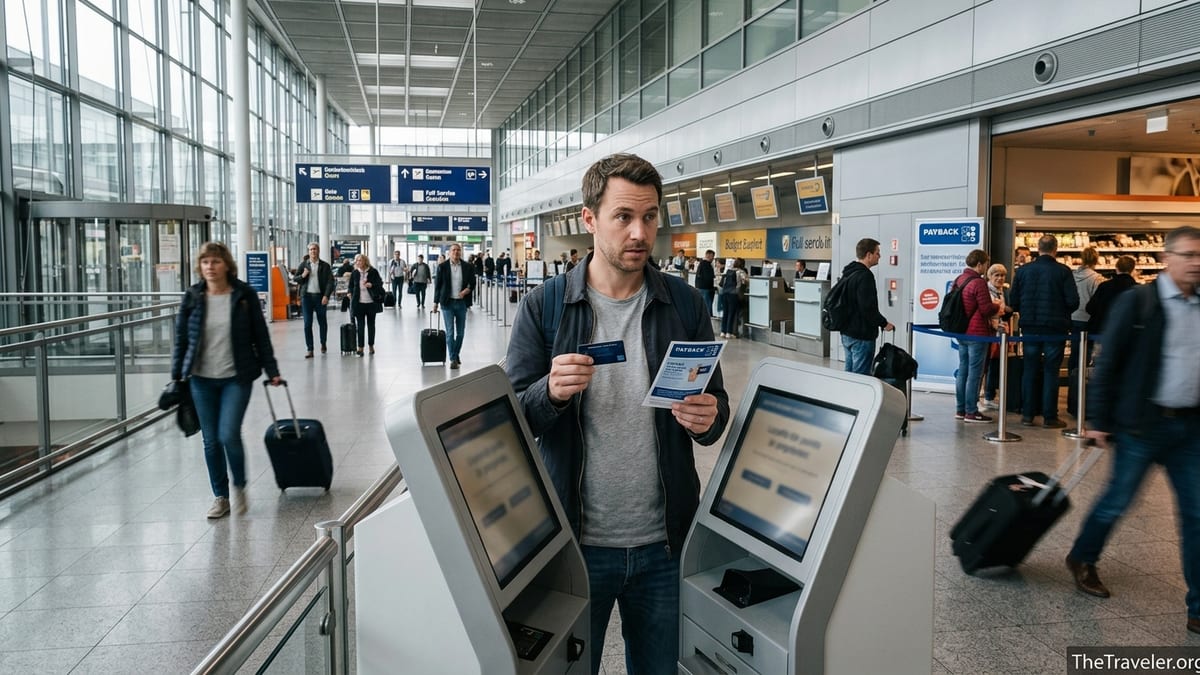
Why PAYBACK American Express Looks Better Than It Really Is
The PAYBACK American Express card is positioned as a free entry ticket into the world of travel rewards. Major comparison sites in Germany routinely highlight its key selling points: zero annual fee, the ability to collect PAYBACK points everywhere American Express is accepted, and a welcome bonus for new customers. Recent product overviews describe the card as permanently free of yearly charges, with a basic earning rate of 1 PAYBACK point for every 3 euros spent. That headline sounds generous, especially to travelers who are used to U.S. credit cards that require high annual fees in exchange for airline miles or hotel points.
In day-to-day life, the marketing is compelling. A family paying 900 euros a month for groceries, fuel, and online shopping can imagine racking up points “for free” and then turning them into a flight or hotel night. In reality, that 900 euros of spending works out to roughly 300 PAYBACK points per month at the base rate, worth about 3 euros when used as a simple discount at the checkout. Over a full year, that is about 36 euros of value. For a no-fee card, this is not terrible, but it is nowhere near the aspirational picture of free long-haul tickets and luxury hotel stays that advertising and influencers often imply.
The card’s appeal also hides a more basic truth: PAYBACK is first and foremost a marketing system for retailers, not a charity. When you swipe your PAYBACK American Express at supermarkets like Rewe or fuel stations such as Aral, the retailer pays transaction fees to American Express and marketing fees into the PAYBACK system. A fraction of that comes back to you in the form of points. The structure is designed so that most of the financial benefit stays with the participating companies, not the traveler.
This imbalance would not matter much if cardholders consistently squeezed maximum value from every point. But most people do not. They redeem points for low-value rewards, ignore limited-time transfer bonuses, and sometimes choose the PAYBACK Amex in situations where a different card would offer higher cashback or stronger travel protections. The difference between the marketing story and the real financial outcome can be substantial over several years of travel.
The Harsh Math: How Little Most People Really Earn
The easiest way to see the problem is to look at the math of a typical household that uses the PAYBACK American Express card for most everyday spending in Germany. Suppose a couple spends 1,500 euros per month on groceries, fuel, pharmacies, and online retailers that accept American Express, plus occasional restaurant visits. At the standard earning rate of 1 PAYBACK point per 3 euros, that spending generates about 500 points monthly. When redeemed at face value as a checkout discount, those 500 points are usually worth around 5 euros.
Over a year, that adds up to 6,000 points, or roughly 60 euros in value. On paper, 60 euros for a free card is acceptable. Yet consider the opportunity cost. Several banks issue no-fee or low-fee Visa and Mastercard products in Germany that offer 0.5 percent to 1 percent direct cashback or statement credit. If the same 18,000 euros of annual spending earned 1 percent cashback, the traveler would receive 180 euros instead of around 60 euros in PAYBACK value. Even at 0.5 percent, the alternative delivers about 90 euros, a 50 percent improvement over the default PAYBACK redemption.
The gap becomes even wider when you compare specialized categories. German supermarket chains sometimes offer their own loyalty cards or partner with banks that provide elevated cashback on groceries, often in the 1 percent to 2 percent range. Likewise, fuel companies run regular promotions where paying with a specific bank’s card triggers additional discounts per liter. A driver who fills up at 2 euros per liter, 50 liters per week, and routinely gets a 3-cent-per-liter discount from a fuel-branded card saves about 78 euros per year on fuel alone. Using only PAYBACK American Express for those purchases might net roughly 30 euros of equivalent point value instead, a clear loss for the traveler.
Because PAYBACK points accrue slowly at the base earning rate, many users do not notice how small their returns really are. The account balance looks impressive when it climbs into the tens of thousands of points, but each point generally represents about 1 cent of nominal value at best. It is not unusual for travelers to spend years swiping their PAYBACK Amex, only to realize that a balance of 20,000 points translates into something close to 200 euros, often less if redeemed carelessly.
Where the Real Waste Happens: Low-Value Redemptions
The biggest leak in the system is not the earning side but how most cardholders redeem their PAYBACK points. By default, PAYBACK encourages uses that are simple but financially mediocre: turning points directly into a discount at partner stores, ordering physical rewards from the PAYBACK catalog, or redeeming for basic vouchers. In these cases, the value per point hovers around 1 cent, and sometimes lower once shipping or limited voucher flexibility is considered. A toaster or suitcase from the catalog that costs 10,000 points might be worth about 80 to 100 euros in the open market, turning what appears to be a generous reward into a poor trade.
Travelers frequently fall into the convenience trap. Imagine a business traveler who uses the card for all expenses, racks up 15,000 points over two years, and then redeems them impulsively at a supermarket checkout to reduce a 150-euro grocery bill. They feel as if they just got a full cart “for free.” In reality, those 15,000 points represent the accumulated opportunity of potentially better redemptions, and the effective return on their spending may have been no more than 1 percent over two full years.
For people who enjoy travel, PAYBACK’s partnership with Lufthansa Miles & More offers a higher ceiling. Payback points can typically be transferred to Miles & More at a 1-to-1 ratio, and public guides for German travelers describe how occasional transfer promotions add 20 to 30 percent extra miles. When used for long-haul business class flights, careful planners can sometimes achieve significantly more value per point than with vouchers or catalog rewards. However, that upside is heavily dependent on timing, route choice, and award seat availability.
Most cardholders never reach that optimal scenario. They either leave their PAYBACK points idle for years, risk losing them if they do not remain active, or redeem them for low-margin items just before they expire. The system is set up so that the highest value requires proactive planning, while the lowest value is only a click or swipe away. This structural bias is one of the main reasons everyday users effectively waste money on their PAYBACK American Express card without realizing it.
Acceptance Gaps and Travel Friction Abroad
Another overlooked cost lies in the limited acceptance of American Express, particularly outside major German cities and abroad in budget-focused travel scenarios. While large retailers, big hotel chains, and global car rental companies increasingly accept Amex, smaller guesthouses, family-run restaurants, and independent shops often do not. Some German users report mixed experiences using Amex in certain foreign destinations or at smaller petrol stations, encountering “card not accepted” moments that force them back to cash or a secondary card.
For a traveler on a road trip through southern Italy or rural Spain, this can mean that only a fraction of their real travel spend flows through the PAYBACK Amex. Fuel at small local stations, meals at neighborhood trattorias, and stays at family-run pensions may all need to be paid in cash or with a debit card. The result: long stretches of genuine “travel money” that earn no PAYBACK points at all. Meanwhile, a widely accepted Visa or Mastercard with cashback would capture value on virtually every transaction, from toll booths to local supermarkets.
Acceptance issues also matter in Germany itself. Although Amex coverage has improved, especially in urban areas, there are still independent retailers and smaller service providers that either refuse Amex or visibly discourage its use. If a traveler has to carry a backup card for these situations, the PAYBACK Amex ceases to function as a universal solution and becomes just one of several options in the wallet. The mental friction of choosing the “right” card at each terminal makes it more likely that people will default to convenience rather than optimizing for value.
In airports and hotels, where Amex acceptance is usually strong, the payback in points can still disappoint when compared with specialized travel cards. A mid-range city hotel in Berlin at 160 euros per night would generate about 53 PAYBACK points at the base rate, worth roughly 0.50 euros. By contrast, a co-branded hotel credit card might award enough points to be worth 5 to 8 euros on a future stay. Over multiple nights and trips per year, that difference can more than outweigh the annual fee on dedicated travel cards.
Psychological Traps: How “Free” Points Drive Extra Spending
Beyond the math and acceptance, the PAYBACK American Express card shapes behavior in ways that quietly cost travelers real money. Loyalty programs are designed to nudge customers toward specific retailers and higher spending levels. PAYBACK is no exception. Promotional emails highlight “10x points weekends” at certain supermarkets, double points on specific brands, or bonus coupons for fuel stations. When combined with the promise of earning points on every euro spent with the Amex card, these promotions often lead people to spend more than they otherwise would.
Take a traveler who usually spends 80 euros per week on groceries at a discount chain that does not participate in PAYBACK. When they see a weekend promotion offering 10 times the usual points at a participating supermarket, they might switch stores and spend 100 euros instead of 80, tempted by the idea of a bigger points haul. If the effective value of the bonus points is only 4 or 5 euros, but the switch in store and spending adds 20 euros to the bill, the traveler is worse off in cash terms even though their PAYBACK account shows a gratifying spike.
Special campaigns on non-essentials can be even more damaging. Electronics retailers in the PAYBACK network sometimes advertise large point bonuses on cameras, headphones, or gaming consoles. A traveler preparing for a trip might justify a 300-euro gadget purchase by telling themselves that they will earn several thousand PAYBACK points toward flights. Yet if those points end up redeemed in low-value ways, the traveler has essentially traded extra discretionary spending for a modest rebate that would have been unnecessary had they simply compared prices or waited for a standard sale.
This behavioral angle is especially powerful among travel enthusiasts who follow social media influencers. Creators sometimes showcase premium travel funded by points, implying that every euro spent on a PAYBACK Amex is an investment toward “free” business class seats or luxury hotels. Without a clear redemption plan and realistic understanding of award availability, many viewers imitate the spending patterns but never manage the same high-value outcomes. The card becomes an excuse to spend more today, based on a vague hope of glamorous travel sometime in the distant future.
When the Card Makes Sense: A Niche but Real Use Case
Despite its limitations, the PAYBACK American Express card is not entirely without merit. For disciplined travelers who already shop regularly at PAYBACK partners and who understand the mechanics of Lufthansa Miles & More, the card can be a simple add-on for building a pool of points without paying an annual fee. Used as a secondary card, it can work alongside a stronger primary travel card, capturing PAYBACK points on purchases that would be made anyway, especially at large chain supermarkets and fuel stations.
Experienced points collectors in Germany often follow a more advanced strategy. They use high-earning Visa or Mastercard products for categories where those cards offer 1 percent or more cashback or travel points, and reserve the PAYBACK Amex for specific PAYBACK promotions or for merchants where American Express is well accepted and no better rewards are available. They then periodically transfer PAYBACK points to Miles & More, timing those transfers to coincide with 20 or 30 percent bonus promotions that appear from time to time. When those miles are redeemed for carefully chosen long-haul tickets in premium cabins, the effective return on the original spending can outperform simple cashback.
For example, a traveler who accumulates 40,000 PAYBACK points primarily from planned spending and targeted promotions might transfer them during a 25 percent bonus campaign, ending up with 50,000 Miles & More miles. If they then redeem those miles for a long-haul flight that would otherwise cost 800 euros, the effective value per original PAYBACK point can far exceed the standard 1 cent benchmark. However, this optimistic scenario requires flexibility, patience, and good knowledge of award charts and taxes and fees.
The key difference between this advanced use case and the typical experience is intention. In the disciplined scenario, the traveler does not allow PAYBACK to dictate where or how much they spend. They choose merchants and routes based on price and convenience first, and treat points as a secondary bonus. For most casual users, that discipline is hard to maintain over years of everyday life. As a result, the PAYBACK American Express card ends up delivering far less than its potential, and often less than simpler alternatives.
The Takeaway
Most people who carry the PAYBACK American Express card in their wallet are not getting what they think they are getting. While the card is marketed as a cost-free way to tap into travel rewards, the combination of modest earning rates, low-value default redemptions, acceptance gaps and behavioral nudges toward extra spending means that a large share of its potential quietly slips away. The typical cardholder might earn the equivalent of 40 to 70 euros per year in value, often less than what they could achieve with a straightforward cashback card that asks for no strategic planning at all.
For travelers who enjoy optimizing loyalty programs, PAYBACK Amex can play a role as a niche tool: a no-fee way to scoop up extra PAYBACK points on purchases that would happen anyway, then move those points into higher-value airline miles when promotions appear. Yet this requires careful tracking and a willingness to say no to marketing campaigns that push unnecessary purchases. Without that discipline, the shiny promise of “free” travel from PAYBACK American Express is more illusion than reality.
If you are a frequent traveler based in Germany, it is worth reviewing your last 12 months of credit card statements. Ask how often your PAYBACK points really changed your travel plans, and whether a different card might have put more cash or truly flexible points in your pocket. Treat PAYBACK Amex as one instrument in a broader toolkit, not as a magic solution. Your travel budget will likely be healthier for it, even if your points balance looks a little smaller.
FAQ
Q1. Is the PAYBACK American Express card really free for travelers?
The card is typically offered without an annual fee, which helps, but “free” is misleading. You still pay through higher merchant prices, missed cashback opportunities on other cards, and the time spent managing points. For many travelers, a basic cashback card may deliver more net value despite charging a small annual fee.
Q2. How many PAYBACK points do I actually earn on everyday spending?
Most versions of the card award 1 PAYBACK point for every 3 euros of card turnover, plus extra points at PAYBACK partner stores. In practical terms, that is roughly a 1 percent return when you redeem points at face value, sometimes less if you choose low-value rewards. Unless you use promotions very carefully, it is not a high-earning product.
Q3. Why do so many people say PAYBACK points are “not worth it”?
Because most cardholders redeem points in ways that deliver poor value, such as checkout discounts, gift cards or catalog items. In those cases, a PAYBACK point is usually worth about 1 cent or less. Compared with 0.5 percent to 1 percent cashback from other no-fee cards, the payoff often disappoints once you do the math.
Q4. Can transferring PAYBACK points to Lufthansa Miles & More really be a good deal?
It can be, but only under certain conditions. Transferring points to Miles & More at a 1-to-1 rate and waiting for a 20 to 30 percent transfer bonus can improve the value per point, especially on long-haul premium cabin awards. However, taxes, fees, limited award space and strict routing rules mean that not every booking is a bargain. You need flexibility and patience to make this path work.
Q5. Is the PAYBACK American Express card good for frequent international travel?
American Express acceptance is strong with major airlines, hotel chains and global car rental companies, but weaker at smaller local businesses, especially outside big cities. If much of your travel spending goes to independent guesthouses, neighborhood restaurants or minor petrol stations, you may find yourself falling back on Visa or Mastercard and earning no PAYBACK points on a large part of your trip.
Q6. Do PAYBACK promotions like 10x points weekends really save me money?
Only if you would have made the same purchase anyway and the prices are competitive. Many travelers spend extra or switch to more expensive shops just to earn bonus points. If you pay 15 or 20 euros more for a shopping basket to chase a handful of euros of points, you are effectively losing money while your points balance goes up.
Q7. What is the biggest mistake travelers make with PAYBACK American Express?
The most common mistake is treating points as a justification for higher spending and then redeeming them poorly, often for low-value vouchers or catalog items. The second big mistake is using the card for every purchase out of habit, even when another card would earn higher cashback or more flexible travel rewards.
Q8. Should I cancel my PAYBACK American Express card if I travel a lot?
Not necessarily. Because the card typically has no annual fee, it can be useful as a secondary tool, especially if you already shop at PAYBACK partners. The key is to avoid letting it dictate your spending. Use it when it clearly beats your alternatives or when you can stack it with a valuable promotion, and rely on stronger travel or cashback cards for everything else.
Q9. How can I avoid wasting money while still using PAYBACK American Express?
First, compare prices across merchants and never choose a shop solely because it offers PAYBACK points. Second, have a clear redemption strategy, such as saving points for airline mile transfers during bonus campaigns. Third, track your effective return once a year by dividing the value of your redemptions by your card spending. If the percentage is lower than what a simple cashback card would give, adjust your habits.
Q10. Is PAYBACK American Express worth it for occasional travelers?
For occasional travelers who dislike complexity, the card is rarely the best choice on its own. You may be better served by a straightforward no-fee cashback card or a bank card with low foreign transaction fees and basic travel insurance. PAYBACK Amex can still sit in your wallet as a backup for specific promotions, but it should not be the foundation of your travel rewards strategy.