


Foreign professionals and their families frequently report that official paperwork in Germany progresses more slowly than expected, particularly for non-German nationals. While the core legal framework is predictable, structural features of German administration, limited digitalisation, and capacity strain in offices dealing with foreigners combine to create long lead times, multiple in-person visits, and extended periods of uncertainty. Understanding these dynamics is essential when evaluating whether relocation to Germany is operationally realistic for an individual or a company.
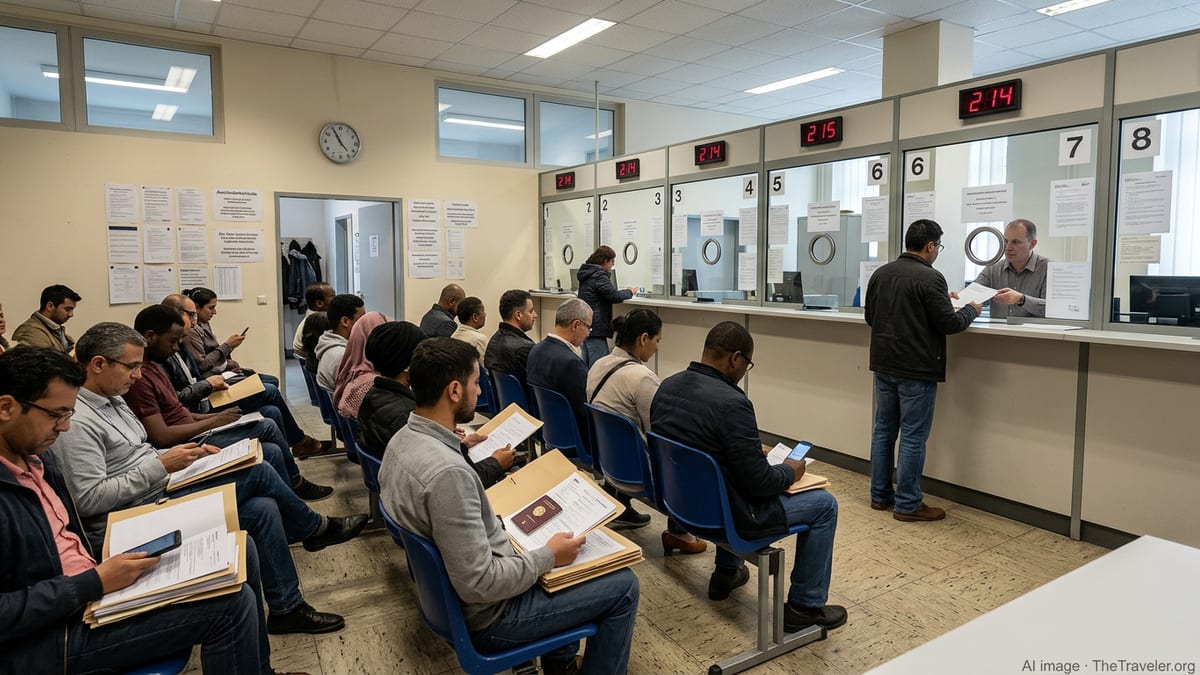
Structural Features of German Administration That Slow Paperwork
Germany’s public administration is designed around legal certainty, documentation, and formal process. Almost every change in personal status or address is tied to a specific administrative act with defined documentation requirements. For foreigners, this often means more decision points, more evidence, and more offices involved than for German or EU citizens. Each step is typically handled sequentially, not in parallel, which creates cumulative waiting times.
The federal structure also matters. Immigration management, residence permits, and local registrations are primarily handled by municipal or district authorities, each with its own staffing level, appointment system, and internal workflows. As a result, two similarly qualified foreigners can experience very different processing speeds depending on whether they live in a large city with a heavily burdened Ausländerbehörde or in a smaller district with surplus capacity.
Legal rules about processing times exist but are often generous. For example, German administrative law generally assumes that three months is a normal maximum period for many decisions before an inaction claim in court becomes possible. In practice, this legal ceiling can become the de facto baseline, particularly for complex residence-related decisions involving foreigners.
Finally, the system has historically been paper-based. Even where online forms exist, original documents and paper files are often still required. This means physical file handling, inter-office mail circulation, and manual data entry, all of which extend processing time compared with more fully digital systems in some other countries.
Digitalisation Gaps and Fragmented IT Systems
Insufficient digitalisation is one of the most frequently cited reasons for slow paperwork in Germany. Studies on public-sector modernisation note that Germany lags behind several European peers in digital public services. A recent industry analysis found that around 60 percent of common administrative services are available online in some form, but citizens still report that they prefer to complete the vast majority of procedures digitally and are often forced into in-person visits because the relevant service is not yet fully online or still requires physical signatures.
For foreigners this digital gap is especially relevant in areas like address registration, residence permits, and status confirmations. In many municipalities, appointments at the residents’ registration office and the foreigners’ office can be booked online, but the actual process still requires physical attendance with original documents and passport. Supporting systems such as electronic document management, automated status updates, or unified national portals are still under development or unevenly implemented, so applicants often receive no interim information between submission and decision.
National-level reports highlight that Germany lacks a single, fully integrated e-government platform and instead relies on a patchwork of local and federal systems that often do not communicate efficiently. This fragmentation means that information previously provided to one authority may not be available to another, forcing foreigners to resubmit similar documents multiple times to different offices. The resulting duplication slows overall throughput and increases the risk of errors or misplaced paperwork, particularly for cross-border cases.
Recent legislative initiatives aim to accelerate digitalisation in public administration, but implementation will take several years. For relocation decisions being made now, the current state of digitalisation should be assumed to involve significant manual handling and limited online self-service, especially in immigration-related processes.
Capacity Constraints in Foreigners’ Offices and Embassies
Authorities that primarily serve foreigners, such as Ausländerbehörden and German diplomatic missions, face particular capacity constraints. Over the last decade, demand for skilled immigration and international mobility has increased, while staffing and organisational modernisation have not kept pace in many regions. As a result, appointment availability and processing times can be lengthy and unpredictable.
Publicly available guidance from some German cities indicates that processing a standard temporary residence permit can take approximately 10 to 12 weeks after submission of complete documents, with more complex cases, such as certain family reunion or long-term status applications, reaching up to nine months. Separate analyses from business immigration providers describe work and residence permits that previously took three to four weeks now frequently requiring 10 to 16 weeks or longer in major metropolitan areas.
Waiting times do not only concern the decision phase. In many cities, foreigners report that securing an appointment at the foreigners’ office can itself take several weeks or months, particularly for popular categories such as Blue Card issuance or extension. Similarly, some German consulates indicate that the standard processing time for certain long-stay visas can be up to 12 weeks, to which applicants must add the lead time needed to secure an appointment slot.
Capacity shortages also affect communication. Foreigners often encounter busy telephone lines, delayed email responses, or generic replies that provide limited clarity on individual cases. This can prolong uncertainty, especially when relocation timelines depend on a coordinated sequence of steps triggered by administrative decisions.
Legal Complexity and Evidence Burdens for Foreigners
For foreigners, German administrative procedures typically involve more complex legal checks and more extensive documentation than for German or EU nationals. Residence-related paperwork, for example, requires assessment of employment status, qualifications, housing situation, health insurance, and, in some cases, security considerations. Each of these criteria must be documented with specific proofs such as work contracts, degree certificates, rental agreements, and insurance confirmations.
German law tends to favour detailed, rule-based decision-making, which increases the demand for evidence and internal review steps. When conditions are not straightforward, officials may need to request clarifications, translations, or additional documents from the applicant. Each additional information request effectively pauses processing until the applicant responds, which can push total timelines well beyond the indicative durations listed on official information sheets.
The legal framework also differentiates between multiple residence categories with distinct rights and conditions, such as various work permits, Blue Cards, family reunion permits, and long-term settlement permits. Foreigners must apply for the correct category with the correct documentation. If an application is incomplete or filed under the wrong basis, authorities may need to re-assess or suggest a different category, which restarts parts of the process and extends the overall timeframe.
Finally, there are statutory rules on when an application is considered formally “filed” and thus triggers legal protection for the applicant. In some cases, submitting at least a complete set of core documents by post or email can start the legal processing period even before an in-person appointment occurs, but this requires knowledge of local practices and the relevant sections of administrative and residence law. Without such awareness, foreigners may wait longer than necessary before their file is formally in the queue.
Local Variations and Uneven Implementation
One of the most important characteristics of German bureaucracy from a foreigner’s perspective is how uneven it can be at the local level. While federal laws define overall rules, municipal and district authorities retain wide discretion in how they organise processes, appointment systems, and document requirements. This leads to substantial differences in speed and predictability between locations.
Large cities with high numbers of international residents, such as Berlin, Munich, Hamburg, and Frankfurt, often face particularly severe pressure. Anecdotal evidence from these cities points to long appointment wait times, limited appointment releases, and backlogs that can extend well beyond officially published processing estimates. Conversely, smaller towns or rural districts with lower caseloads may handle the same type of application within a fraction of the time, sometimes within a few weeks.
Documentation requirements also vary. Some Ausländerbehörden accept digital scans of certain documents, while others insist on certified copies or original paper versions. Practices around English-language documents and whether translations are required can differ, even for similar types of applications. These differences can lead to rejected or delayed submissions if foreigners rely on informal guidance that reflects the practice of a different city or region.
For companies planning relocations to multiple German locations, this local variation means that standardised timelines cannot be assumed. Each site may require separate lead-time planning, especially for critical path processes such as residence permits and mandatory address registrations that must legally occur within a limited number of days after arrival.
Language, Communication, and Information Asymmetry
Language is a non-trivial factor in paperwork speed for foreigners. Many local offices publish information primarily in German and may not provide full English translations of forms or instructions. International surveys of e-government services in Europe have found that multilingual availability is inconsistent, and many digital services do not offer complete translations into widely spoken foreign languages.
When foreigners cannot fully understand requirements or guidance, the risk of incomplete or incorrect submissions increases. Each correction cycle, whether triggered by the authority or by the applicant realising an error, adds additional days or weeks to the overall processing timeline. In-person appointments can also be less efficient when applicants and officials must resolve misunderstandings about documentation or eligibility during the time-limited meeting.
Information asymmetry also plays a role. German bureaucratic terminology is dense, and procedural options such as interim certificates, legal remedies for excessive delay, or alternative application channels are rarely explained in simple, consolidated form. Foreigners who are unaware of such mechanisms may accept long periods of inactivity without realising that they could, for example, submit a more complete application earlier or seek an interim document confirming their lawful status while the main application is processed.
Although private advisory services and online communities can help fill these gaps, the quality and relevance of informal advice vary. Relying on outdated or location-specific experiences from others can lead foreign applicants to misjudge current processing times in their own city, causing further misalignment between expectations and actual bureaucratic timelines.
Implications for Relocation Planning and Risk Management
The cumulative effect of structural, digital, capacity, legal, local, and communication factors is that foreigners must plan for longer and less predictable administrative timelines than might be expected from Germany’s reputation for efficiency. This has concrete implications for individual relocation feasibility and corporate mobility strategies.
Individuals considering a move should anticipate that key procedures such as address registration, tax identification issuance, and residence permit decisions may involve multiple steps spread over several weeks or months. Delays at one stage can cascade into others, particularly when work start dates, access to certain services, or travel flexibility depend on completed paperwork.
For employers, slow paperwork can translate into onboarding delays, project slippage, and increased costs, especially when highly skilled staff cannot commence work until particular formalities are completed. Companies may need to build conservative lead times into project planning, support employees with document preparation, and consider centralising relocations in regions where administrative processes are known to be more predictable.
In assessing whether relocation to Germany is practical, decision-makers should therefore treat bureaucratic timelines as a strategic variable rather than an operational detail. While Germany offers a high degree of legal stability once paperwork is complete, reaching that stable status often requires accepting slow and procedural administration for foreigners.
The Takeaway
Paperwork in Germany can be slow for foreigners because of structural features of the administrative system, patchy digitalisation, capacity bottlenecks in authorities dealing with international residents, and the heightened legal and documentation requirements that apply to non-citizens. Local variation and language barriers further complicate the picture, making experiences highly dependent on where and how an application is filed.
For potential movers and corporate mobility planners, the central lesson is to assume that formalities will take longer than the minimum estimates sometimes cited in informational materials. Building realistic timelines, allowing for back-and-forth on documentation, and recognising that appointment access can be a separate bottleneck are critical to avoiding disruption.
Germany remains a viable relocation destination for many, but its bureaucratic processes for foreigners are seldom fast. Treating administrative timelines as a core part of relocation feasibility analysis is essential in determining whether, when, and how moving to Germany aligns with individual or organisational objectives.
FAQ
Q1. Why does paperwork in Germany often take longer for foreigners than for locals?
Processing for foreigners typically involves more legal checks, more documentation, and additional offices such as the foreigners’ authority and consulates, which lengthens timelines compared with routine procedures for German or EU citizens.
Q2. How long does it usually take to process a residence-related application?
Indicative guidance from some cities suggests around 10 to 12 weeks for standard temporary residence permits once all documents are submitted, with complex cases such as long-term or family-based permits taking several months and, in some instances, up to nine months.
Q3. Are appointment wait times a major cause of delay?
Yes. In many larger cities, securing an appointment at the foreigners’ office or at a German consulate can take weeks or months, meaning that total timelines include both the wait for an appointment and the subsequent processing period.
Q4. Does digitalisation of services significantly reduce delays?
Digital tools such as online appointment booking and downloadable forms help, but many core steps still require in-person visits and paper documents, so current digitalisation only partially offsets slow processing.
Q5. Why do processing times differ so much between German cities?
Local authorities have autonomy over staffing, appointment systems, and workflows. High-demand urban offices with limited capacity tend to have longer queues and backlogs, while smaller districts with fewer cases can process similar applications more quickly.
Q6. Do language barriers contribute to slower paperwork?
Yes. Limited availability of clear English or other-language information can lead to incomplete or incorrect applications, generating additional document requests and repeat appointments that extend overall processing time.
Q7. Are there legal limits on how long authorities can take to decide?
German administrative law generally treats several months as a normal timeframe for many decisions, after which applicants may have legal options to challenge inaction, but using such remedies requires legal knowledge and does not guarantee a faster substantive outcome.
Q8. Does submitting a complete application help accelerate the process?
Providing all required documents in the correct format from the start reduces the likelihood of additional information requests and can materially shorten the total processing time, especially in offices with high workloads.
Q9. Are business and highly skilled workers processed more quickly?
Some categories such as certain skilled-worker permits may receive prioritisation in practice, but they are still subject to appointment availability and the overall capacity of local authorities, so they are not immune to systemic delays.
Q10. How should potential movers factor these delays into relocation decisions?
Foreigners should assume conservative timelines, plan for administrative steps to take several months, and treat bureaucratic risk as a core element of relocation feasibility rather than a minor operational detail.