


More news on this day
Travel disruption across Qatar’s hub network has intensified after a key Qatar Airways flight from Doha to Johannesburg was cancelled, severing an important Africa connection and leaving long haul passengers stranded at Hamad International Airport.
Get the latest news straight to your inbox!
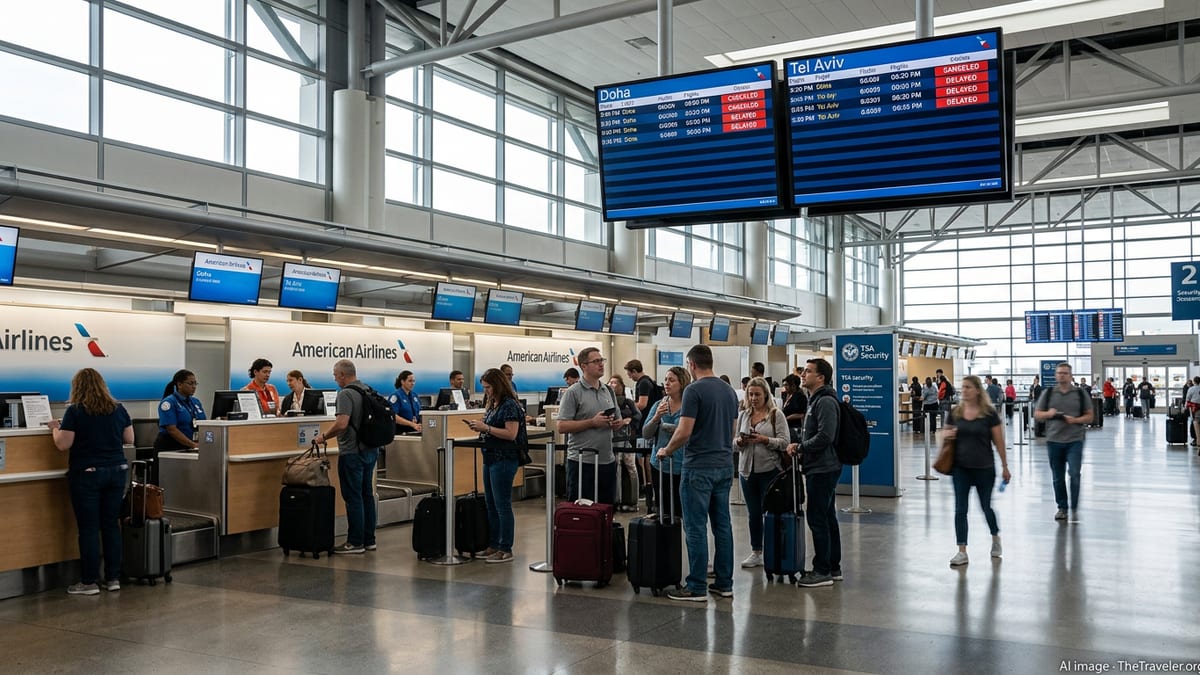
Cancellation Hits Critical Doha–Johannesburg Link
The halted service affects one of Qatar Airways’ primary routes between Doha and Johannesburg, a corridor that connects southern Africa with Europe, Asia and North America through the carrier’s global hub. Flight data and schedule trackers indicate that regular operations on the Doha–Johannesburg pairing have remained fragile since Qatari airspace was first closed in late February and later reopened under restricted conditions.
The latest cancellation comes as Qatar Airways continues to rebuild its timetable following weeks of disruption related to the regional security situation and missile strikes that impacted airspace over Qatar. While the airline has progressively restored parts of its long haul network under designated “safe corridor” operations, individual services such as the Doha–Johannesburg flight remain vulnerable to late operational changes.
Johannesburg is a major gateway for business and leisure traffic from across southern Africa, meaning the loss of even a single rotation can cascade through connecting itineraries. Travelers from cities such as Cape Town, Durban, Gaborone, Harare and Maputo frequently rely on the Doha hub to reach destinations in Europe and Asia, making the cancelled flight particularly disruptive.
Publicly available information from aviation trackers suggests that alternative routings via other Gulf or African hubs are operating on limited schedules and at high load factors, leaving affected passengers with fewer immediate rebooking options and, in some cases, multi‑day delays.
Stranded Passengers Face Long Waits at Hamad International
The cancellation has added pressure to an already strained passenger experience at Hamad International Airport. Since the onset of the airspace disruption, international travelers have reported being stranded for extended periods in Doha as airlines, including Qatar Airways, repeatedly adjust timetables, cancel sectors or consolidate services at short notice.
Social media posts and online travel forums describe scenes of crowded transfer areas, long queues at customer service desks and uncertainty over onward connections. Some passengers recount having their itineraries changed multiple times, with rebooking windows stretching from several days to more than a week as limited outbound flights fill quickly.
According to published coverage, Qatar Airways has deployed additional ground staff at Hamad International during earlier phases of the disruption to assist with check‑in, rebooking and customer care. However, recent accounts from travelers indicate that capacity constraints, high call‑center volumes and the complexity of rerouting long haul journeys through a reduced network continue to pose challenges.
Reports also point to varying levels of support, with some passengers receiving hotel accommodation and meal vouchers, while others say they have been offered only refunds or self‑rebooking options, depending on their ticket conditions and point of origin.
Regional Airspace Turmoil Continues to Disrupt Networks
The Doha–Johannesburg cancellation is the latest visible effect of a broader aviation shock triggered by the closure of Qatari airspace on 28 February following escalations in the Iran war. Published analyses by regional outlets describe how Hamad International Airport, normally one of the world’s busiest transfer hubs, saw a sweeping suspension of scheduled commercial flights in early March, replaced initially by a small number of repatriation and cargo services.
As security conditions evolved, the Qatar Civil Aviation Authority introduced limited emergency corridors, allowing selected passenger flights to operate under strict routing and timing constraints. Qatar Airways subsequently began adding destinations back to its network, but on a reduced scale and with operations highly contingent on ongoing risk assessments.
Even as authorities now signal a gradual resumption of flights for foreign airlines to Doha, industry observers caution that full normalization is likely to take time. Airlines across the region continue to recalibrate schedules, divert routes and negotiate new overflight permissions, creating a volatile environment in which individual flights, such as the Doha–Johannesburg service, can still be altered or withdrawn at short notice.
Travel industry commentary suggests that the disruption is disproportionately affecting long haul itineraries that depend on precise connection windows. When a single leg is cancelled, entire multi‑segment journeys across continents can collapse, forcing passengers to seek scarce alternatives on other carriers or postpone travel altogether.
Knock‑On Effects for Global Long Haul Connections
The loss of the Doha–Johannesburg sector has immediate implications for travelers connecting between southern Africa and destinations across Europe, Asia and the Americas. Qatar Airways has long marketed Doha as a single‑stop gateway linking Johannesburg to cities such as London, Paris, Doha‑based Asian hubs and North American gateways, a proposition now challenged by reduced frequencies and sudden cancellations.
Analysts note that when a key feeder flight into Doha is removed, onward connections on long haul routes can depart with empty seats earmarked for no‑show transfer passengers, while those stranded in Doha face difficulty accessing those same routes due to separate booking classes and overbooked manifests. This dynamic can leave aircraft under‑utilized even as travelers are unable to secure seats.
Other global airlines serving Johannesburg, including carriers via Middle Eastern and European hubs, are reportedly experiencing heightened demand as passengers attempt to bypass the uncertainty around Qatar‑linked itineraries. However, published fare data and traveler reports point to sharp price increases and longer total journey times on many of these alternative routes.
For corporate travel managers and tour operators, the instability of a key trunk route complicates planning for the upcoming peak seasons. Many are reassessing exposure to single‑hub itineraries in volatile regions, distributing bookings across multiple alliances and hubs to reduce the risk of clients becoming stranded mid‑journey.
What Travelers on Affected Routes Can Expect
Consumer rights frameworks for passengers impacted by flight cancellations vary depending on the point of origin, ticketing channel and applicable jurisdiction. Travel experts advising through public platforms generally recommend that affected passengers document all communications, retain receipts for additional expenses and closely review fare rules and airline policies updated in response to the current disruption.
Qatar Airways has previously introduced temporary flexible booking measures for journeys touching Doha during the airspace closure period, including date changes and refunds for certain fare types. Recent online guidance from the airline and local civil aviation updates continues to emphasize that passengers should not proceed to the airport unless they hold a confirmed seat on an operating flight.
With the situation still evolving, travelers booked on upcoming Doha–Johannesburg sectors and associated long haul connections are being urged by travel agencies and aviation commentators to monitor flight status up to the time of departure. In several recent cases, passengers have reported learning of cancellations only by checking airline apps or third‑party trackers shortly before planned check‑in.
For now, the cancellation of the key Doha–Johannesburg flight underscores the fragility of global air connectivity centered on Qatar as the country’s airspace gradually reopens. Until regional conditions stabilize and schedules are fully restored, passengers transiting through Doha, particularly those on complex multi‑leg journeys, may need to factor greater contingency and flexibility into their travel plans.