


More news on this day
Dozens of holidaymakers expecting to fly from Manchester to Alicante were instead left watching their plane depart without them, after a Jet2 service took off while a group of passengers remained stuck in an airport stairwell at the gate area.
Get the latest news straight to your inbox!
Stairwell Bottleneck Leaves Passengers Behind
Reports from British media in January 2026 describe around 35 Jet2 passengers who had cleared security and boarding checks at Manchester Airport, only to be held in a dead-end stairwell near the departure gate. The group believed they were in the final stage of boarding a flight to Alicante in Spain.
According to published coverage, these travellers had their boarding passes scanned and were directed down the stairs towards what they expected would be an airport bus or direct access to the aircraft. Instead, they remained in the enclosed space for up to 40 minutes, with no staff present and no onward transport arriving.
By the time the group was allowed back into the main terminal area, the aircraft had already departed. Their luggage, which had been checked in earlier, was reported to be on board the flight, underscoring the scale of the communication breakdown between gate operations, ground handling and the passengers still waiting to board.
Jet2 has been quoted in press reports as saying the incident is being investigated as a matter of urgency in coordination with Manchester Airport. Publicly available information indicates that the airline has not provided granular details about how the boarding process failed, but acknowledged that the experience fell short of expectations.
Similar Incidents Highlight Systemic Weak Spots
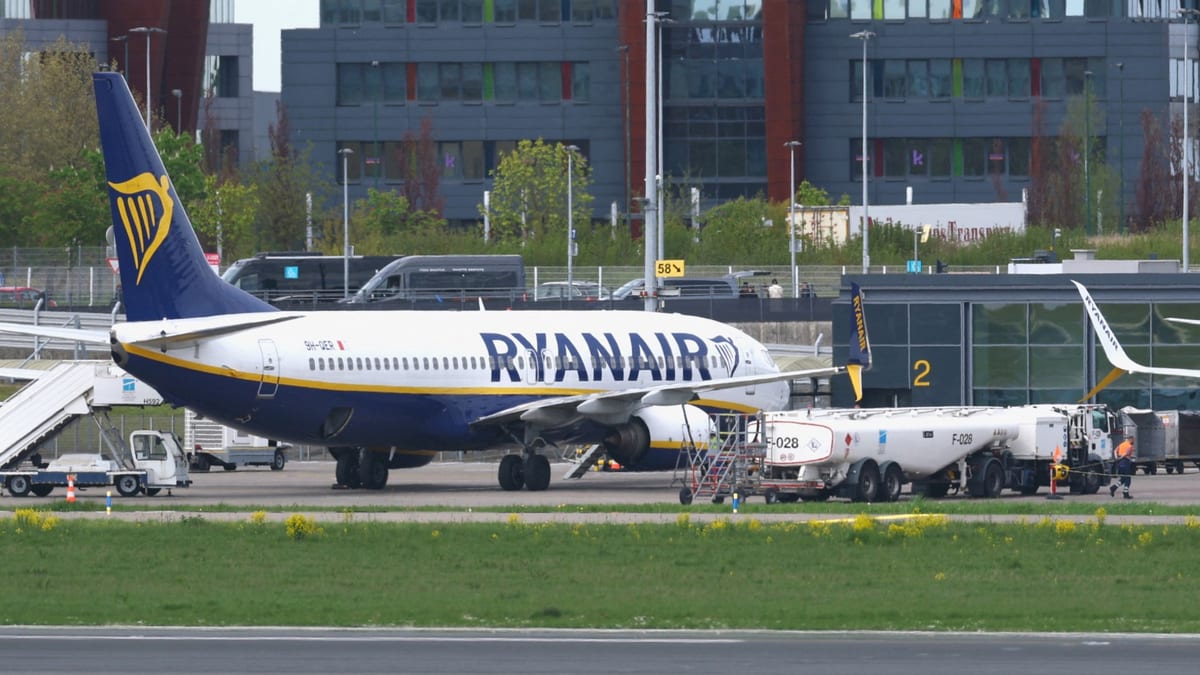
The Manchester case is not isolated. In recent years, there have been multiple reports worldwide of passengers left in terminals, buses or security queues while their booked flights depart without them. In Poland, national broadcasters reported that a Ryanair service from Katowice to Dortmund took off while dozens of ticketed passengers were still attempting to clear a crowded security checkpoint.
Coverage from that Polish airport incident described travellers who arrived at the terminal in what they considered to be adequate time, only to encounter long lines at screening. Some said they passed security before the scheduled departure time, but by the time they reached the gate, the aircraft doors had closed and the plane had either pushed back or taken off.
Elsewhere in Europe and the Middle East, passengers on a Wizz Air service from Jeddah to London reported a protracted, 30 hour disruption. According to British news reports, some travellers were kept on airport buses and later returned to the terminal, only to later discover that an aircraft linked to their original routing had departed without them. In that case, confusion over aircraft substitutions and rebooked departures appears to have played a role.
Individual accounts shared on passenger forums and social platforms also describe smaller scale episodes where a gate change, short-notice boarding call or incomplete announcements at congested terminals led to groups of travellers missing flights while the aircraft left with empty seats. In one widely discussed case, flyers recounted how an unposted gate assignment contributed to a group of more than ten people being left behind as their plane taxied away.
How Boarding Processes Can Break Down
Aviation operations specialists point to several pinch points that can turn a routine boarding into a scenario where passengers are physically present at the airport but still fail to make the aircraft. Among the most cited are security bottlenecks, last minute gate changes, strict cut off times and miscommunication between airlines, ground handlers and airport staff.
At major hubs, security queues can expand quickly during peak travel windows. If an airline keeps its scheduled departure time while large numbers of passengers remain in line, any minor delay in screening can cascade into missed flights. In the Polish case, media coverage has focused on whether coordination between the airline and airport security was sufficient to identify that a large segment of the passenger list was still landside.
Gate area logistics can also be a weak link. At Manchester, the use of a stairwell holding space and the expectation of a shuttle bus introduced additional steps into the boarding sequence. If staff are reassigned, communications break down or automated systems record passengers as boarded once their passes are scanned, it is possible for an aircraft to be released even though some travellers have not yet reached the aircraft door.
Once a boarding deadline passes and the aircraft door is closed, pilots and dispatchers must balance tight slot allocations, crew duty limits and potential knock on delays to later sectors. In many cases, flights depart on schedule without late arriving passengers to avoid wider disruption, particularly in congested European airspace where slot noncompliance can result in further delays and penalties.
Passenger Rights and Airline Responsibilities
When an aircraft departs without passengers who have complied with published check in and security guidance, questions quickly arise over who bears responsibility and what compensation, if any, is owed. In the European Union and the United Kingdom, consumer protection regulations provide structured remedies in cases of denied boarding, cancellation and long delays, although the specific facts of each incident matter.
If travellers are prevented from boarding despite presenting themselves at the gate on time, some legal frameworks treat this as a form of denied boarding rather than a simple missed flight. That distinction can influence whether passengers are entitled to care such as meals and accommodation, alternative transport to their final destination, and in some cases fixed sum compensation.
However, where late arrival at the gate is attributed to factors deemed within the passenger’s control, such as arriving at the airport closer to departure than recommended, airlines may classify the situation as a no show. In those instances, the primary remedies are typically rebooking subject to availability and fare rules, rather than financial redress.
Travel law specialists note that incidents like those in Manchester and Katowice hinge on detailed timelines that are often contested. Publicly available accounts from recent cases suggest that some passengers are pursuing complaints through airline customer service channels and, in some jurisdictions, escalating to national enforcement bodies or alternative dispute mechanisms.
Calls for Clearer Communication and Better Contingency Planning
As reports of stranded passengers gain wider attention, consumer advocates and aviation commentators are urging airlines and airports to prioritise clear, consistent communication at every stage of the journey. One of the most common themes in recent incidents is confusion, with travellers unsure whether a flight has been delayed, boarding quietly, or already departed.
Practical steps frequently recommended in public discussion include more precise information on boarding start and cut off times, real time updates through mobile apps and terminal screens, and clear instructions when passengers are moved to secondary holding areas such as stairwells or buses. When an aircraft cannot wait for a significant group because of slot or crew constraints, some experts argue that transparent messaging can at least reduce the shock of discovering a departure only after reaching the gate.
Airports are also being encouraged to monitor security wait times and share this data in real time with airlines, allowing for more informed decisions about delaying departures when large portions of a manifest remain in queues. In the Manchester and Katowice cases, critics have questioned whether better coordination could have prevented aircraft leaving while sizeable groups of ticketed passengers were still making their way airside.
For travellers, the recent episodes serve as a reminder to arrive earlier than the minimum suggested times during busy periods, monitor gate information closely through official apps and displays, and seek assistance quickly if they find themselves isolated in holding areas without staff presence. While most journeys proceed without incident, the experiences of stranded passengers in Manchester, Katowice and Jeddah illustrate how small breakdowns in process can rapidly escalate into missed holidays and complex rebooking battles.