


Germany is internationally regarded as a country of rules, procedures, and documentation, and this reputation is strongly felt by foreign nationals navigating everyday administration. For relocation decision makers, understanding how complex German bureaucracy is in practice, and how this complexity varies by city and process type, is essential for gauging the practical feasibility and risk of a move.
Defining a Bureaucracy Complexity Score for Germany
For expats, bureaucracy complexity in Germany can be framed as a composite of four observable dimensions: volume of procedures and documents, degree of digitalization, processing timelines and appointment bottlenecks, and predictability of outcomes. Rather than a single official index, a practical “complexity score” for relocation assessments draws on international benchmarks, domestic digitalization data, and consistent pain points reported by foreign residents.
On a global regulatory scale, Germany performs relatively well overall, ranking in the low twenties worldwide in the World Bank’s 2020 ease of doing business comparison. However, it ranks much lower, around 125th, for starting a business because of the number of steps and agencies involved, while procedures related to construction permits, electricity connections, and contract enforcement are comparatively efficient. ([countryeconomy.com](https://countryeconomy.com/business/doing-business/germany?utm_source=openai)) This divergence illustrates a key feature of German bureaucracy for expats: once systems are established, they function reliably, but the initiation of any new legal status, registration, or activity typically requires multi-step, document-heavy interaction with authorities.
For an expat-specific complexity score, this translates into a high administrative load during the first 6–18 months after arrival, followed by a more moderate ongoing burden once registrations, tax IDs, and social insurance records are established. The perceived complexity is amplified by limited digital service penetration, fragmented responsibilities between federal, state, and municipal offices, and inconsistent local implementation.
In qualitative terms, Germany can be rated as medium to high complexity for expats: institutions are rules-based and relatively predictable, but the path through the system is often time-consuming, analog, and requires persistent follow-up. The impact on relocation feasibility is therefore primarily in time, planning, and the need for local administrative support, rather than in arbitrary decision making.
Structural Drivers of Bureaucratic Complexity
Several structural characteristics of the German administrative model drive complexity for foreign residents. The federal system allocates significant autonomy to the 16 states and their municipalities, especially in citizen-facing services such as registration, residence documentation, and local permits. As a result, processes and required documents can differ by city even when they are based on the same national legal framework, forcing expats and employers to navigate localized rules instead of a unified national interface.
Legal density is another central driver. A 2025 academic index measuring the volume of German federal legislation shows a continued rise, with the overall stock of law growing to a new all-time high and increasing by roughly 2.5 percent year on year. ([research-in-germany.org](https://www.research-in-germany.org/idw-news/en_US/2025/4/2025-04-22_New_index_shows__bureaucracy_in_Germany_still_growing.html?utm_source=openai)) While social and administrative laws have grown more slowly than economic regulation, the cumulative effect is a complex legal environment with frequent amendments. For expats, this manifests as detailed and sometimes changing documentation requirements and conditions for status-related processes.
Germany’s long-standing emphasis on paper documentation and original signatures also maintains a high procedural load. Although reforms are ongoing, many authorities still require in-person identification, notarized copies, or physical forms. In practice, this can mean that even when an application is initiated online, expats often must appear in person or mail signed originals, adding steps and increasing the risk of delays from incomplete submissions or postal issues.
Finally, staffing and capacity constraints at local offices amplify complexity. High demand, especially in larger cities, combined with limited digital workflow automation, produces appointment bottlenecks and backlog processing. For foreign nationals whose legal status, work rights, or housing contracts depend on timely decisions, these structural constraints convert procedural complexity into real relocation risk.
Digitalization and the Analog–Digital Gap
Digitalization of public services is a critical determinant of perceived bureaucracy complexity, and here Germany underperforms many European peers. In the EU’s composite digital economy and society assessments, Germany scores close to the EU average for digital public services for citizens, with an index value around the high seventies, and slightly below average for business-oriented digital services. However, it performs significantly below average on indicators such as pre-filled forms, user uptake of e-government, and transparency of service delivery. ([eur-lex.europa.eu](https://eur-lex.europa.eu/legal-content/EN/TXT/?uri=celex%3A52023SC0572&utm_source=openai))
Domestic analyses echo this mixed picture. A 2024 assessment by a major German digital industry association estimates that around 60 percent of administrative services are now at least partially available online, yet citizen perception is lagging: only a very small minority consider German authorities to be global leaders in digitization, and the most frequently used “digital” interaction is simply making an appointment online for a later in-person visit. ([smartcountry.berlin](https://www.smartcountry.berlin/de/konzept/presse/presseinformationen/news_11776.html?utm_source=openai)) This reveals that, for many services critical to expats, digitization still means digital scheduling or document download rather than fully online end-to-end processing.
Recent coverage and commentary describe Germany as still “stuck in an analog era” in many administrative areas, with examples such as continued reliance on fax machines, extensive paper records, and siloed databases. ([amp.dw.com](https://amp.dw.com/en/germany-struggles-to-go-digital-stuck-in-analog-era-fax-machines-paperwork-bureaucracy/a-75206481?utm_source=openai)) For expats, this analog–digital gap is evident when multiple offices request the same information or certificates that are already on file elsewhere, and when key status changes, such as residence permit upgrades, require repeated submission of basic documents like registration certificates and employment confirmations.
Reform initiatives are underway. Draft legislation aims to reduce bureaucratic burdens in eight key domains, including residence registration, and there is specific funding earmarked for digitalization of foreigners’ offices and other authorities. ([gtai.de](https://www.gtai.de/en/invest/business-location-germany/business-climate1/reforms-proposed-to-slash-german-bureaucracy-1943582?utm_source=openai)) However, implementation timelines are gradual, and current relocation decisions in 2026 should still assume that many core processes will involve analog steps, especially outside the most digitally advanced municipalities.
International Benchmarks and Business-side Indicators
While expats interact most with resident-focused authorities, business-side indicators also provide insight into systemic bureaucratic complexity. The World Bank’s 2020 data position Germany at around 22nd globally in overall ease of doing business, with strong performance in areas such as getting electricity, trading across borders, and resolving insolvency. For example, resolving insolvency is ranked near the global top, reflecting efficient, rules-based court and restructuring procedures. ([countryeconomy.com](https://countryeconomy.com/business/doing-business/germany?utm_source=openai))
Conversely, starting a business ranks around 125th, despite a relatively strong underlying score, because there are nine separate procedures and multiple authorities that new firms must engage with, including local trade offices, chambers of commerce, and tax offices. The total time is not extreme for an OECD economy, but the breadth of interactions and strict formalities increase the perceived complexity, especially for foreign entrepreneurs unfamiliar with local institutions. ([wolterskluwer.com](https://www.wolterskluwer.com/en/expert-insights/doing-business-in-germany?utm_source=openai))
Property registration also illustrates this pattern: Germany is ranked in the mid-seventies globally for registering property, with an estimated six procedures and around 52 days on average to complete a transfer, involving notarization, land registry updates, and municipal waivers. ([wolterskluwer.com](https://www.wolterskluwer.com/en/expert-insights/doing-business-in-germany?utm_source=openai)) For expats buying residential property through a company or establishing a business facility, this indicates a system that is thoroughly regulated but administratively demanding.
For relocation assessments, these benchmarks support an interpretation that German bureaucracy is not arbitrary but is highly formal, documentation-driven, and distributed across multiple entities. The complexity score for expat-facing processes aligns closely with this business-side picture: reliable, rule-bound outcomes but an elevated time and effort requirement to navigate the initial phases of any new legal or economic activity.
Everyday Administrative Load for Expats
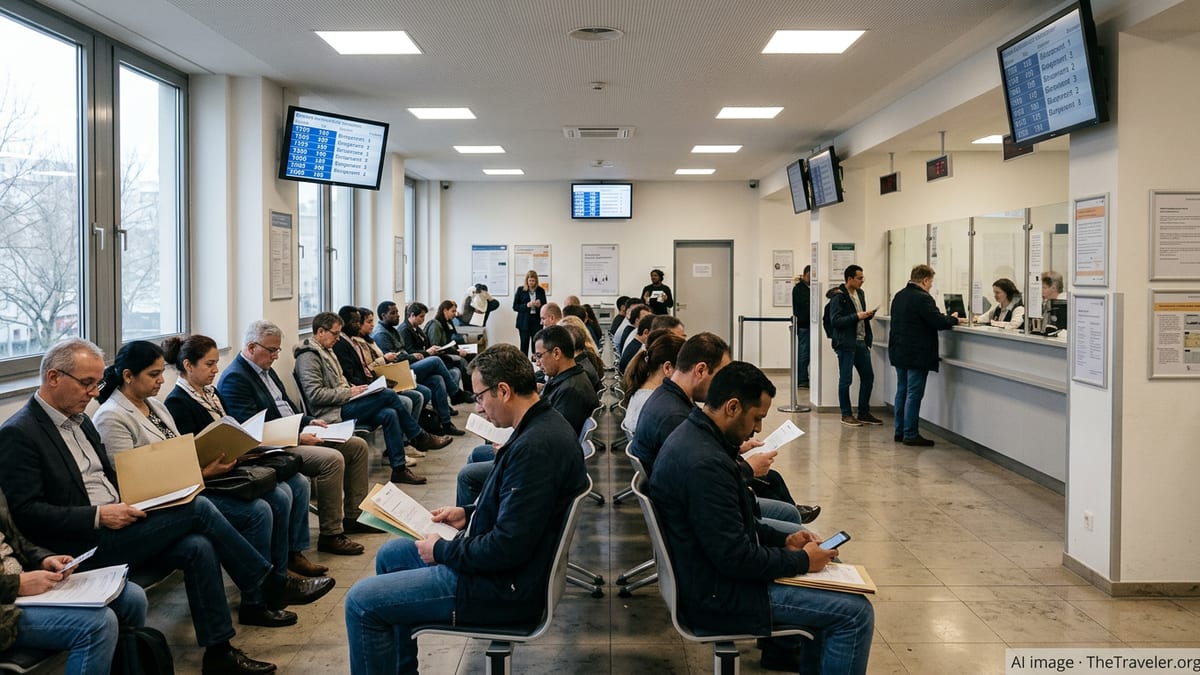
From the perspective of a relocating individual or family, bureaucracy complexity is experienced most acutely in everyday administrative tasks. Core early-stage interactions include address registration, issuance of tax identification numbers, social insurance onboarding, registration with health insurance funds, and in many cases, applications or renewals at foreigners’ offices. Each of these involves its own sequence of forms, evidence requirements, and often in-person appointments.
Residence registration at the local citizens’ office remains a central gatekeeping procedure, as it enables access to numerous downstream services. While some cities are piloting online or partially online registration, the national picture remains mixed, and even digital services often require prior activation of secure identification functions that themselves may only be set up in person. Experience from large cities indicates that online appointment systems can be competitive, and that short-notice or walk-in options are limited, contributing to stress for new arrivals who face contractual deadlines tied to registration. ([gisma.com](https://www.gisma.com/blog/germanys-most-efficient-cities-for-expats-and-students-frankfurt-and-nuremberg-lead-in-digital-public-services?utm_source=openai))
Foreigners’ offices are a particularly significant complexity hotspot for non-EU nationals. Reports from recent years describe cases of several months’ wait just to obtain an in-person appointment, followed by additional processing time of weeks to months for issuance of residence cards. ([mertbulan.com](https://mertbulan.com/2025/07/13/how-digital-is-germany/?utm_source=openai)) Although experiences differ widely by city and workload, these delays illustrate how limited digital workflows and constrained capacity can transform procedural requirements into substantial relocation risks when work authorization or family status depends on timely decisions.
Beyond these flagship interactions, everyday tasks such as registering a business activity as a freelancer, updating registration after moving within Germany, handling vehicle registration, or obtaining official certificates can involve repeated data entry and repeated presentation of identification documents. While many of these processes are manageable with preparation, the cumulative administrative load over the first years of residence contributes to a consistently high perceived bureaucracy complexity score among expats.
Regional and City-level Variation in Complexity
Bureaucracy in Germany is not uniform, and complexity scores for expats differ materially by location. Municipalities are responsible for core services such as citizen registration, local permits, and often first-line information. As a result, cities that have invested in digital platforms and streamlined front-office processes offer a notably lower perceived complexity level than those that still rely heavily on paper-based workflows.
Recent rankings of citizen service offices in Germany’s twenty largest cities, based on the digital availability of key services such as residence registration, issuance of ID documents, and ordering civil status certificates, place cities like Frankfurt and Nuremberg among the most digital-friendly. These locations provide a higher share of services fully or largely online, reducing the number of in-person visits required for new arrivals. ([gisma.com](https://www.gisma.com/blog/germanys-most-efficient-cities-for-expats-and-students-frankfurt-and-nuremberg-lead-in-digital-public-services?utm_source=openai))
By contrast, some large urban centers have become known for particularly heavy bureaucratic loads for foreigners, driven by high demand, limited staffing, and slower digitalization. In these cities, appointment scarcity at foreigners’ offices and registration offices can extend statutory timelines into practice, creating uncertainty around residence documentation and renewals. ([amp.dw.com](https://amp.dw.com/en/germany-struggles-to-go-digital-stuck-in-analog-era-fax-machines-paperwork-bureaucracy/a-75206481?utm_source=openai)) For relocation planning, this means that the same legal framework can produce very different practical experiences depending on municipality.
For employers and relocation providers, regional variation suggests that a more granular complexity score at city level is necessary for accurate risk assessment. Companies concentrating staff in digitally advanced municipalities can expect lower administrative friction, while those assigning employees to jurisdictions with known backlogs may need to build in longer lead times, stronger document preparation support, and contingency planning for delayed appointments or decisions.
Reform Momentum and Medium-term Outlook
Germany is aware of the drag that complex bureaucracy places on competitiveness, innovation, and attractiveness to foreign talent, and a series of reform steps has been launched in response. A federal program aims to reduce bureaucratic burdens in multiple domains, explicitly including residence registration and reporting obligations, with the stated goal of simplifying procedures and cutting redundant information requests. ([gtai.de](https://www.gtai.de/en/invest/business-location-germany/business-climate1/reforms-proposed-to-slash-german-bureaucracy-1943582?utm_source=openai))
Parallel initiatives target the digital transformation of public services, including foreigners’ offices. Funding packages encourage states and municipalities to upgrade IT systems, develop online portals, and integrate secure digital identification. However, the decentralized nature of German administration means that rollout is uneven, and pilot projects in one city may not quickly generalize nationwide. ([eur-lex.europa.eu](https://eur-lex.europa.eu/legal-content/EN/TXT/?uri=celex%3A52023SC0572&utm_source=openai))
Medium-term, these reforms are likely to reduce some of the most visible complexity drivers, such as repeated submission of the same information, paper-based certificates for routine interactions, and excessive in-person identification requirements. Yet in the near term, expats considering relocation in 2026 and 2027 should still plan for a system where many key processes entail multiple steps, appointments with lead times of weeks or months in busy jurisdictions, and significant reliance on German-language forms and notices.
As a result, the overall bureaucracy complexity score for Germany is expected to improve incrementally rather than rapidly, with the pace of change closely tied to the capacity and priorities of individual states and municipalities. For decision-grade relocation planning, this warrants a cautious assumption that current pain points will persist, while recognizing emerging improvements in select cities and process categories.
The Takeaway
Germany’s bureaucracy presents a mixed picture for expats: high predictability and legal certainty, but significant procedural and administrative complexity during the initial years of residence. Structural features such as dense legislation, multi-level governance, and a slow transition from paper to digital workflows translate into multi-step processes, high documentation demands, and, in some locations, pronounced appointment bottlenecks.
International benchmarks indicate that Germany is competitive overall but comparatively burdensome in processes that require interaction with multiple authorities, such as starting a business or registering property. Domestic digitalization data and recent reporting confirm that many services important to expats remain only partially digital, with genuine end-to-end online processing still the exception rather than the rule.
Regional variation is substantial. Cities that have invested heavily in digital citizen services and streamlined front-office operations offer a lighter bureaucracy experience, while others remain characterized by analog processes and capacity constraints. This means that the same legal requirements can result in noticeably different complexity scores depending on the destination city within Germany.
For relocation decision makers, Germany can be rated as medium to high bureaucracy complexity for expats, with the most intense administrative burden concentrated in the initial phase after arrival and around any major status change. Effective mitigation strategies include early planning, comprehensive document preparation, use of professional relocation support where appropriate, and careful selection of destination cities with stronger digital public service offerings.
FAQ
Q1. Is German bureaucracy really more complex for expats than in other European countries?
In relative terms, Germany tends to feel more complex than many northern and western European peers because of its strong reliance on paper documentation, fragmented responsibilities between authorities, and relatively modest uptake of end-to-end digital public services, even though the underlying rules are generally clear and predictable.
Q2. Which bureaucratic processes are typically most challenging for expats in Germany?
The most challenging processes are usually initial residence registration, appointments and applications at foreigners’ offices for non-EU nationals, registration of self-employment or small businesses, and property-related registrations, all of which involve multiple steps, specific document formats, and sometimes long appointment lead times.
Q3. Does speaking German significantly reduce bureaucracy complexity?
Language skills do not change the number of steps or documents required, but they substantially reduce perceived complexity by making it easier to understand official instructions, navigate websites and forms, clarify requirements by phone or email, and respond promptly to requests for additional information.
Q4. Are some German cities noticeably easier than others in bureaucratic terms?
Yes, complexity varies by municipality. Cities that have invested in digital citizen portals and better-staffed service centers offer faster appointments and more online options, while others rely more heavily on in-person, paper-based procedures, resulting in longer wait times and higher effort for expats.
Q5. How does Germany’s level of digitalization affect expat bureaucracy?
Limited digitalization means expats often must appear in person, submit original documents, and provide the same information repeatedly to different offices. Where digital services exist, they are frequently partial, such as online appointment booking without full online application submission, which maintains a relatively high administrative burden.
Q6. Has Germany recently introduced reforms to reduce bureaucratic complexity?
Germany has introduced reform packages aimed at cutting red tape and expanding digital public services, including in areas like residence registration. However, implementation is gradual and uneven across states and municipalities, so improvements are emerging but are not yet transformative nationwide.
Q7. How long should expats expect key administrative processes to take?
Timeframes vary widely by city and workload, but expats should anticipate that core processes such as residence registration, issuance or renewal of residence cards, and business registrations may take several weeks, and in high-demand cities, appointments at foreigners’ offices can sometimes require lead times of months.
Q8. Are business-related bureaucratic procedures especially complex for foreign entrepreneurs?
Starting a business in Germany involves multiple registrations with tax offices, trade authorities, and chambers of commerce, and often notarized documentation, which collectively raise the complexity level for foreign entrepreneurs compared with many other high-income economies, even though the system is transparent and rules-based.
Q9. Does using a relocation or administrative support service materially reduce complexity?
Professional support cannot change legal requirements or appointment availability, but it can significantly reduce expats’ time investment and error risk by pre-checking documentation, monitoring appointment slots, and providing guided interaction with authorities, which effectively lowers the operational impact of Germany’s bureaucratic complexity.
Q10. What is the medium-term outlook for bureaucracy complexity in Germany for expats?
In the medium term, incremental improvements are expected as digital services expand and some procedures are simplified, but the overall bureaucracy complexity for expats is likely to remain moderate to high, with meaningful differences between more and less advanced municipalities.