


In the crowded world of airport lounges, Delta Sky Clubs and premium credit card spaces like Amex Centurion or Chase Sapphire often grab the headlines. Yet a growing number of road warriors quietly seek out a different kind of refuge: American Airlines’ Admirals Clubs. Less glamorous on paper, these lounges can deliver a calmer, more practical experience that many travelers now prefer over larger, buzzier competitors.
Get the latest updates straight to your inbox!
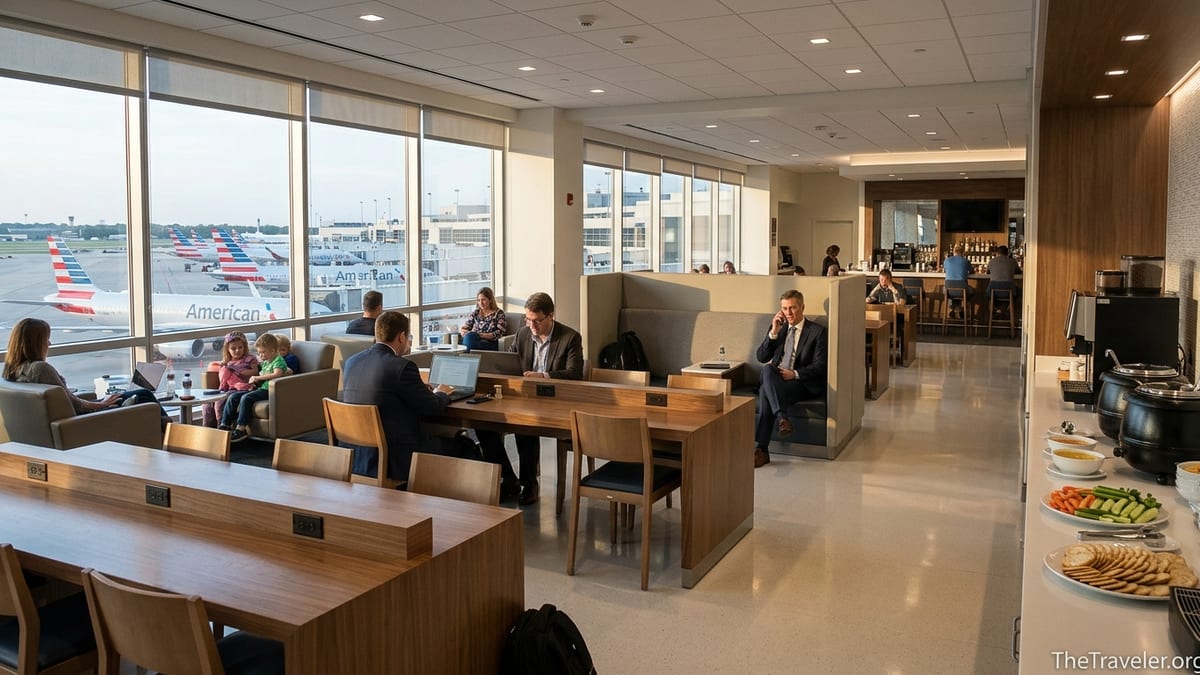
What Admirals Club Really Is in 2026
American Airlines operates more than 50 Admirals Club locations worldwide, covering major hubs like Dallas Fort Worth, Charlotte, Miami, Chicago O’Hare and Phoenix, along with select international airports. While they rarely make social media splash reels, these lounges provide the core services most travelers actually use: dependable Wi‑Fi, work-friendly seating, showers in key hubs, and a quieter space than the main terminal. In other words, they are built around practicality, not spectacle.
Access options remain relatively straightforward. Travelers can buy a one-day pass at many locations, currently priced around 79 dollars or roughly 7,900 AAdvantage miles, or invest in an annual membership that typically runs in the mid-hundreds of dollars depending on status level and whether you choose an individual or household plan. Many frequent flyers instead lean on the Citi AAdvantage Executive World Elite Mastercard, which bundles an Admirals Club membership and guest privileges into its annual fee, effectively turning the card into a lounge key for American’s entire network.
For a typical business traveler based in Dallas or Charlotte who flies American ten or more times a year, that card-plus-lounge pairing can be compelling. They know that at 7 a.m. on a Monday they can clear security, walk directly to an Admirals Club near their gate, grab a light breakfast and coffee, plug in a laptop, and have a quiet conversation with a client without wondering if they will be turned away due to overcrowding policies.
Compared with glossy marketing for some rival lounges, Admirals Club branding has always been understated. But behind that restrained image is a product designed to be a reliable “home base” in major airports rather than a destination in its own right. For many seasoned travelers, that predictability is exactly the selling point.
Why Crowding Fatigue Is Driving Some Travelers to Admirals Club
Across the United States, lounge crowding has become one of the biggest frustrations for frequent flyers. Delta’s Sky Clubs, in particular, have been a victim of their own success after years of generous access rules tied to Amex Platinum and Delta Reserve credit cards. By early 2024 and into 2025, social media feeds and traveler forums filled with images of long entry lines and standing-room-only conditions in flagship Sky Clubs at Atlanta, New York LaGuardia and Los Angeles. Delta responded with tighter access policies, including caps on the number of annual visits for some Amex cardholders starting in 2025, and stricter rules for basic economy ticket holders.
Even after those changes, many Delta flyers still report peak-time crowding, especially on Monday mornings and Thursday evenings, when business travel peaks. United Clubs see similar pressure in hub airports such as Newark and Denver, even as United pours money into larger, more stylish Polaris and United Club spaces in Chicago and San Francisco. In that context, some travelers now see a relatively modest Admirals Club as a welcome pressure relief valve, precisely because it has not been bundled into as many third-party cards and mass-market perks.
One frequent flyer who travels regularly through Los Angeles International told a travel forum in June 2026 that the contrast between the Delta Sky Club in Terminal 3 and the Admirals Club in American’s Terminal 4 was stark. The Sky Club was described as “total chaos” at peak hours, with lines at the entrance and difficulty finding a seat, whereas the Admirals Club next door felt busy but navigable, with open tables and less jostling for food and coffee. That kind of firsthand experience is becoming more common as travelers sample different networks on separate trips.
For a consultant or sales executive who needs to answer emails, rehearse a pitch, or take a confidential call, the ability to simply sit down and breathe can matter more than an Instagram-ready bar or a dozen hot buffet options. Admirals Clubs may not be empty, but relatively tighter access through American’s ecosystem keeps them from turning into what one American regular described online as “a Vegas nightclub line at 8 a.m.”
Calmer, More Workable Spaces Over Flashy Amenities
Step inside an Admirals Club at Dallas Fort Worth or Charlotte, and the first impression is often how functional the layout feels. Seating is typically divided into quiet work nooks, standard armchairs near windows, and small clusters of tables for groups, rather than dominated by a central bar scene. Power outlets and USB ports are easy to find, and the Wi‑Fi is tuned to handle a full crowd of email refreshes and video calls. Many travelers who rely on these lounges are not looking to linger for hours; they want a space that lets them reset and get things done.
Compare that with some of the more headline-grabbing spaces, such as United’s renovated Polaris Lounge in Chicago or premium credit card lounges from brands like Amex and Capital One. Those lounges often offer restaurant-style dining rooms, mixologist-designed cocktail lists, and elaborate buffets. They are fantastic when you have a three-hour layover and want to enjoy a full meal or shower and decompress. Yet their very appeal also attracts a broader crowd, including leisure travelers who might arrive early just to maximize the lounge experience, increasing noise and foot traffic.
By contrast, food at Admirals Clubs tends to be understated: yogurt, fruit, and pastries at breakfast; soups, salads and a handful of hot snack items later in the day; along with a self-serve soda machine and coffee. Complimentary alcohol is typically limited to standard beer and house wine, with premium spirits and cocktails available for purchase. Some locations in hubs such as Miami and Dallas have gradually upgraded their buffets with heartier hot dishes at peak times, but the tone remains “light meal and snack” rather than full-service dining.
That lower-key approach serves a purpose. It attracts travelers who value calm over culinary experimentation. A corporate traveler sprinting between Phoenix and Philadelphia might prefer a lounge where they can reliably grab a light bite and a quiet table in ten minutes rather than queue at a bar and search for a free seat. Admirals Clubs give up the wow factor but pay it back in usability.
Access Rules That Feel Manageable and Predictable
Another reason some travelers prefer Admirals Club is that the access rules feel more stable and intuitive than the fast-changing policies at bigger competitors. The fundamentals are straightforward. To enter an Admirals Club, you must hold a same-day boarding pass on American or an eligible Oneworld partner and meet one of several criteria: be a paid Admirals Club member, hold an eligible American or Oneworld status level, fly in a qualifying premium cabin on an international or transcontinental route, buy a day pass, or carry a card such as the Citi AAdvantage Executive that confers membership as a benefit.
United and Delta, by contrast, have made headline-grabbing moves over the last few years to cope with their own popularity. Delta stopped selling Sky Club memberships to most non-elite customers, restricted access for basic economy travelers, and tightened the Amex card access model with visit caps and higher spend thresholds. United experimented with turning guests away at times of extreme crowding and has steered more investment into its Polaris lounges, which are reserved for long-haul premium cabin passengers rather than most standard United Club members.
These changes make sense from a capacity standpoint but can leave occasional travelers confused. A flyer who once relied on an Amex Platinum to stroll into any Delta Sky Club throughout the year may now find themselves counting remaining visits or discovering that a basic economy ticket blocks them at the door. By comparison, an American loyalist who bought an Admirals Club membership or holds the Citi AAdvantage Executive card knows that, as long as they are flying American or a partner that day, they and their eligible guests can walk in without worrying about annual caps or fare class fine print.
For families, that predictability matters too. An Admirals Club day pass, for example, covers the primary traveler and up to three children under 18, making it a more straightforward value calculation on long connections. Parents can set expectations with their kids in advance without guessing which rules might have changed since their last trip.
The Hidden Advantage: Reliable Help When Things Go Wrong
A less obvious but crucial reason many seasoned travelers swear by Admirals Clubs is the access to dedicated customer service when disruption hits. Weather delays, missed connections, and rolling cancellations have become a regular feature of U.S. aviation, particularly during summer thunderstorm seasons and winter storms. Admirals Clubs typically station a small team of experienced agents at dedicated service desks inside the lounge who can rebook flights, adjust itineraries, reissue boarding passes and sometimes even secure hotel and meal vouchers, all away from the chaotic lines at the main customer service counters.
Imagine a scenario in Dallas where a line of evening departures to Chicago, New York and Boston all face cascading delays due to storms. The rebooking queue in the terminal can snake across the concourse, with overwhelmed agents and anxious passengers. Inside the Admirals Club, a member can step up to a far shorter line or even be approached by a roaming agent offering proactive options. They may be rerouted through Charlotte or Philadelphia, moved to an earlier or later departure, or protected in case a misconnect looks likely, often within minutes.
This kind of behind-the-scenes triage is not unique to American, but Admirals Club regulars frequently cite it as one of the primary reasons they renew their membership each year. One business traveler based in Miami described an overnight storm that wiped out their evening connection home from Charlotte. While the main terminal descended into chaos, the Admirals Club agent rebooked them on a morning nonstop, issued hotel and meal vouchers, and confirmed their upgraded seat, all in the time it would have taken to simply join the public line downstairs.
During mass disruptions, such as nationwide technical glitches or large-scale weather events, that level of support can be the difference between sleeping on the floor of a crowded gate area and salvaging at least a decent night of rest. For some Admirals Club members, the quiet service desk is the most important amenity in the room.
Network Coverage and “Good Enough” Consistency
While Delta has earned praise for the design and food offerings in many of its newer Sky Clubs, and United has poured resources into its Polaris and refreshed United Club spaces, American’s advantage lies in breadth combined with consistency. Travelers who live in secondary hubs such as Raleigh Durham, Austin or Nashville may not have access to the most glamorous flagship lounges, but they often have access to an Admirals Club that feels familiar from airport to airport.
This matters on complex itineraries. A traveler connecting from a small city in the Midwest through Chicago to an international flight out of Miami can reasonably expect Admirals Club access at both hubs with a single membership or card. The food and decor might not be identical, but the experience will follow the same functional template: predictable snacks, coffee machines, a staffed bar, workspaces, shower access in larger locations, and lounge agents capable of handling itinerary issues.
By comparison, credit card lounges and premium airline spaces tend to cluster in a handful of coastal and gateway airports. Amex Centurion lounges, for instance, have large footprints in places like New York LaGuardia, Dallas Fort Worth and San Francisco, but many medium-size airports have no equivalent at all. United’s Polaris network, while impressive, is limited to a few global hubs and accessible only when flying long-haul business class. For a road warrior who spends more time shuttling between domestic cities than flying transatlantic, Admirals Clubs simply appear more often along their actual routes.
Travelers who value this “good enough, almost everywhere I go” consistency are often the same ones who see little need to chase the flashiest lounge experience. They may appreciate a high-end Sky Club or Capital One lounge when it appears in their path, but they are willing to trade some wow factor for the assurance that, in most major airports they visit, an Admirals Club will be just a few gates away.
The Takeaway
American’s Admirals Clubs will probably never top glossy rankings for luxury or food and beverage innovation. In recent surveys of U.S. lounge brands, they often land in the middle of the pack for wow factor, trailing newer premium card lounges and some of Delta’s most ambitious Sky Clubs. Yet that is only part of the story. For a particular slice of frequent flyers, especially those who value calm, predictability and hands-on support during disruptions, Admirals Clubs are quietly becoming the preferred choice.
If your priority is chef-driven menus, signature cocktails and a lounge that feels more like a boutique hotel lobby, then a Sky Club, Polaris lounge or premium credit card space might be worth planning your trips around. But if your reality looks more like back-to-back domestic segments, tight connections, and occasional weather chaos, then the understated Admirals Club model starts to shine. It offers enough comfort to reset, enough food and drink to keep you going, and enough space to work without the constant risk of being turned away at the door.
For many in-the-know travelers, that trade-off is not a compromise at all. It is a deliberate choice in favor of a quieter, more functional refuge, even when larger rivals at the other end of the terminal are making more noise. As airline lounge access continues to evolve, Admirals Clubs prove that sometimes the most valuable perk is not the flashiest setting, but the place where you can simply sit down, plug in and breathe.
FAQ
Q1. Are Admirals Clubs really less crowded than Delta Sky Clubs and United Clubs?
Experiences vary by airport and time of day, but many frequent travelers report that Admirals Clubs generally feel less crowded than the busiest Sky Clubs and United Clubs, largely because access is tied more tightly to American’s own memberships, status levels and co-branded cards rather than a wide array of third-party credit cards.
Q2. Do Admirals Clubs have as much food as larger competitor lounges?
Typically no. Admirals Clubs focus on light meals and snacks such as salads, soups, vegetables, cookies and breakfast pastries, plus standard drinks. Some big hubs have been upgrading hot options, but they usually do not match the full buffets or restaurant-style dining found in select Delta, United or premium credit card lounges.
Q3. Is an Admirals Club membership worth it if I mostly fly domestically?
It can be worthwhile if you fly American frequently through airports with Admirals Clubs, particularly if you value quiet work time and easier access to rebooking help during delays. Many domestic business travelers justify the cost through the bundled lounge access on the Citi AAdvantage Executive credit card, which also includes guest privileges.
Q4. How does Admirals Club access with credit cards compare to competitors?
With American, the primary lounge-linked card is the Citi AAdvantage Executive, which effectively provides full Admirals Club membership for the cardholder and allowed guests when flying American or eligible partners. Delta and Amex, by contrast, have broader card ecosystems that grant Sky Club access to many more customers, which has contributed to crowding and led to visit caps and higher spend thresholds in recent years.
Q5. Are Admirals Clubs good for families traveling with children?
Yes, especially on long connections. A one-day pass covers the primary traveler and up to three children under 18, and annual memberships and eligible cards also allow at least a couple of guests. While there are not usually dedicated playrooms, the quieter environment, available snacks and access to cleaner restrooms can make travel days much easier for families.
Q6. How do Admirals Clubs compare with Amex Centurion or Chase Sapphire lounges?
Admirals Clubs are generally less luxurious, with simpler food and more utilitarian design, but they often win on predictability and network breadth. Premium credit card lounges tend to be concentrated in a smaller set of big airports and can be extremely busy at peak times, whereas Admirals Clubs appear in more of the places where American’s core frequent flyers actually connect.
Q7. Do all Admirals Clubs offer showers and quiet work areas?
No. Shower suites are usually limited to larger hub locations such as Dallas Fort Worth, Miami or some international airports. However, most Admirals Clubs do provide at least a mix of quiet seating, worktables and power outlets, so you can generally find a workable spot even in smaller locations.
Q8. Can I rely on Admirals Club staff to help during irregular operations?
Yes. One of the advantages of Admirals Club membership is access to dedicated agents inside the lounge who can rebook flights, adjust connections and handle ticketing issues. During mass disruptions, lines there are usually shorter and calmer than at the main customer service desks in the terminal.
Q9. If I already have access to Delta Sky Clubs or United Clubs, is Admirals Club redundant?
Not necessarily. If you also fly American with any regularity, Admirals Club access can fill gaps in airports or terminals where your other lounge memberships or cards do not help. Many frequent travelers maintain access to multiple lounge networks for exactly this reason.
Q10. Will Admirals Clubs become more crowded if American adds more credit card partners?
It is possible. Delta’s experience shows that widely distributing lounge access through third-party cards can quickly lead to crowding. For now, American has taken a more contained approach, which helps explain why many travelers currently view Admirals Clubs as a calmer alternative, but policies and partnerships can always evolve over time.