


Few places in the world manage to be a major tourist draw, an artistic treasure house, and a living place of worship all at once. St Peter’s Basilica in Vatican City does exactly that. Every year, millions of travelers from every continent step into this vast church, and many emerge describing the experience as one of the most powerful moments of their time in Rome. In an age of short attention spans and digital distractions, St Peter’s still commands awe. Understanding why reveals as much about us as visitors as it does about this monumental basilica.
Get the latest updates straight to your inbox!
A Basilica Built on Centuries of Faith and History
St Peter’s Basilica stands on a site that has drawn pilgrims for almost two millennia. According to ancient tradition, this is where the apostle Peter, regarded by Catholics as the first pope, was buried in the first century. In the fourth century, Emperor Constantine ordered the construction of the first great church here, Old St Peter’s Basilica, which stood for more than 1,000 years before the present basilica was begun in the 1500s. For many modern visitors, stepping inside is a way to physically connect with early Christian history they may have only encountered in books or films.
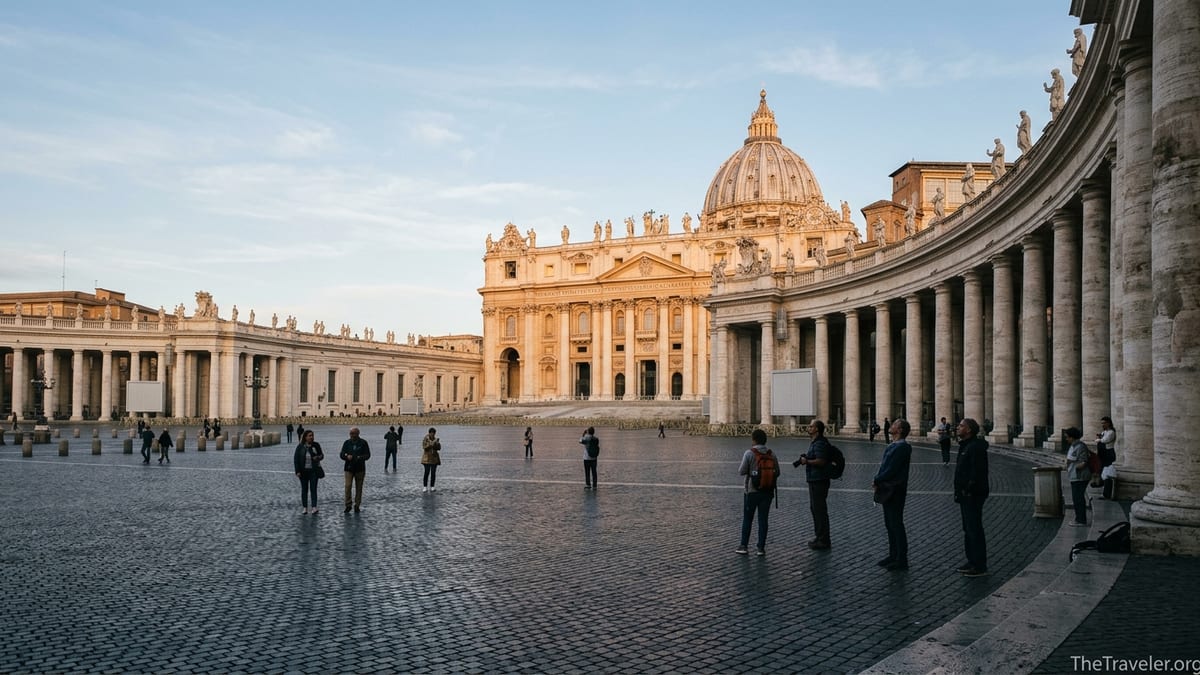
The present St Peter’s took more than a century to build, involving giants of Renaissance and Baroque art. Donato Bramante, Raphael, Michelangelo, and Carlo Maderno all contributed to its evolving design. Michelangelo’s work on the dome in the 16th century, later completed by Giacomo della Porta and Domenico Fontana, gave the basilica its iconic silhouette, while the façade and extended nave were finished in the early 1600s. When travelers stand in St Peter’s Square today and look up at the immense dome, they are seeing the result of a long, politically charged building campaign that reshaped Rome and helped define the image of the Catholic Church.
That layered history is a major part of the basilica’s ongoing appeal. A visitor who arrives on a standard morning guided tour might hear how Renaissance popes commissioned new art not simply for devotion but also as powerful statements of prestige, how medieval pilgrims once approached a very different church on the same site, and how archaeological excavations in the 20th century uncovered a Roman necropolis beneath the basilica. The result is a sense that this single building is a compressed timeline of Western religious and artistic history, something difficult to experience so tangibly elsewhere.
Today, the Vatican offers restricted tours of the Scavi, the excavations beneath the basilica where small groups can see ancient tombs and the area traditionally venerated as Peter’s own burial site. These tours typically must be requested weeks or even months in advance and are limited in numbers, but for those who secure a spot, they help explain why St Peter’s is much more than a photogenic backdrop. It is a place where faith, archaeology, and history intersect in a confined, atmospheric space far from the crowds above.
An Interior Designed to Overwhelm the Senses
Even seasoned travelers who have visited countless churches often pause in silence the first time they enter St Peter’s. The sheer scale is hard to grasp: the basilica stretches roughly 190 meters in length, with the central nave vault soaring more than 45 meters overhead and the dome rising around 136 meters to the top of the cross. Yet the interior is so visually rich that your eye is drawn from detail to detail rather than just registering raw size, which is one reason visitors describe the space as overwhelming but rarely empty or cold.
Much of that impact comes from the collaborative work of artists like Gian Lorenzo Bernini, who shaped the basilica’s Baroque interior in the 17th century. The enormous bronze Baldacchino, Bernini’s sculpted canopy over the papal altar, rises almost like a dark, twisting forest of columns beneath Michelangelo’s bright dome. Around the crossing, colossal statues of saints fill the niches in the piers, while colored marble, gilded stucco, and shimmering mosaics cover nearly every surface. For visitors who might know Bernini only from art books, suddenly finding themselves under this towering bronze structure, as tall as a multi-story building, is a moment when academic knowledge turns into physical experience.
Unlike many historic churches where fragile frescoes must be carefully shielded from light and humidity, St Peter’s interior decoration is dominated by mosaics. Over the centuries, painters’ works were painstakingly translated into glass tesserae, allowing intense colors and fine detail to survive in the changing light of day and the flash of millions of photographs. Travelers browsing the chapels quickly realize that what look like paintings from a distance are often mosaics when seen up close, an unexpected discovery that leads many to linger longer than they planned.
Because entry to the basilica itself is free, visitors are free to move at their own pace once past security. Some take a quick 30-minute walk down the central nave, pause for a photograph under the dome, and move on toward the Vatican Museums. Others spend two hours tracing the measurements of other great churches marked in the floor, studying memorials to popes along the walls, and watching the tiny figures of clergy moving quietly through side doors and sacristies. This freedom to choose your level of engagement, from casual sightseeing to intense artistic study, helps the basilica remain meaningful to such a broad audience.
Masterpieces That Still Speak Across Cultures
Within St Peter’s, specific works of art have become destinations in their own right. Michelangelo’s Pietà, carved when he was in his early twenties, is one of the most famous sculptures in the world. Set in the first chapel on the right as you enter, behind protective glass, it draws hushes and slow-moving crowds throughout the day. Visitors who arrive right at opening time, typically around 7:00 a.m., sometimes find only a handful of people in front of it, allowing them to stand quietly and take in the extraordinary polish and emotional restraint of the marble figures.
Elsewhere, Bernini’s monumental Cathedra Petri, or Chair of St Peter, dominates the far end of the basilica. This theatrical ensemble combines a large bronze throne enclosing a relic chair, four monumental statues of early Doctors of the Church, and a radiant window of alabaster that glows with warm light when the afternoon sun slants into the apse. Many visitors remember this moment of golden light as one of the most powerful visual impressions of their visit, whether they understand the theological symbolism or simply respond to the atmosphere.
In the side chapels, travelers encounter a dense mix of lesser-known but still remarkable works: richly carved altars, tombs of popes by sculptors like Antonio Canova, mosaics of saints that blend Renaissance and Baroque styles, and devotional images crowded with candles lit by visitors. A traveler on a limited budget can spend hours moving from one chapel to another, exploring masterpieces that in any other city might be centerpieces of a major museum, all at no extra cost beyond the effort it took to pass through security.
These works also give St Peter’s a surprisingly personal scale. Even as the basilica swallows up thousands of people, an individual can stand in front of one sculpture or one altar and experience a moment of quiet reflection. Guides frequently encourage visitors who feel overwhelmed by the size of the building to choose two or three works that particularly interest them and focus on those. Whether that is the Pietà, the tomb of a favorite pope, or a quietly glowing side altar where a Mass is underway in a language they do not speak, these micro-experiences help people connect emotionally to the basilica in their own way.
The Dome and the View Over Rome
For many travelers, the emotional climax of a visit to St Peter’s comes not at ground level but at the top of Michelangelo’s dome. A separate ticket is required for the climb, typically around 8 to 10 euros depending on whether you take the elevator part of the way or tackle the full staircase. Even visitors who are not normally enthusiastic about heights or narrow spaces often decide the effort is worthwhile after seeing photographs of the view from the top.
The ascent itself is memorable. Those who choose the elevator save some of the initial steps, but everyone eventually has to follow the spiraling, increasingly sloped staircases that wind between the inner and outer shells of the dome. At one point, the curve is so pronounced that you may find yourself leaning to one side as you climb. Frequent landings give a chance to catch your breath, and small windows offer glimpses of the roof and the city beyond. Travelers with mobility issues or claustrophobia often opt to admire the dome from below instead, but many fit visitors in their 60s and beyond successfully make the climb by taking it slowly.
Partway up, visitors step onto the interior gallery at the base of the dome and suddenly see the basilica from a vertiginous new angle. Looking down, the Baldacchino and papal altar appear miniaturized, and the people below move like specks across the marble floor. Looking outward, you can study the detailed mosaics and stucco decoration on the dome up close, details that are invisible from the nave floor. This mid-level stop is often where the grandeur of the dome truly sinks in.
The final terrace around the lantern at the top delivers one of the signature views of Rome. From here, guests can look down on the perfect oval of St Peter’s Square, trace the old streets of the Borgo neighborhood, and pick out landmarks like Castel Sant’Angelo and the Tiber River. On clear days, the hills beyond the city form a hazy blue backdrop. Many visitors time their climb for late afternoon so they can see the city in warm, slanting light before descending in time for an evening stroll along the river. It is an experience that many remember as much for the shared sense of achievement among strangers catching their breath at the top as for the view itself.
A Living Stage for Global Catholicism
Unlike many historic churches that function primarily as museums, St Peter’s Basilica remains a working center of Catholic worship and global religious life. Papal Masses, canonizations, and major liturgical celebrations take place here throughout the year, particularly on major feasts such as Easter and Christmas. Even on routine weekdays, priests from around the world celebrate Mass at side altars in different languages, while choirs rehearse in hidden lofts and small groups of pilgrims gather for blessings near tombs of beloved popes.
For some visitors, attending an early morning Mass in one of the side chapels is the most meaningful way to experience the basilica. Security lines are usually shorter shortly after opening time, and the interior is quieter, with more worshippers than sightseers. Travelers have described slipping into a small Italian or Spanish Mass with just a few locals present, watching the light change on the marble and hearing the soft murmur of prayers echo off the vast ceilings. Even those who do not share the Catholic faith often comment on the dignity and calm of these moments.
St Peter’s also plays a central role in major events that reach well beyond Vatican City. When a pope dies, his body is typically laid in state in the basilica before the funeral. When a new pope is elected, he celebrates his inaugural Mass here. During Jubilee Years, such as the Holy Year scheduled to begin with the opening of the Holy Door at St Peter’s on Christmas Eve 2024, pilgrims from around the world come specifically to cross that symbolic threshold of mercy. Travelers who happen to visit during such events find the basilica transformed by crowds of pilgrims carrying banners, singing, and praying in many languages.
Even outside of grand ceremonies, the simple rhythms of daily liturgy remind visitors that St Peter’s is not just a backdrop for photographs. Security staff gently close off certain areas before Masses, liturgical processions pass through the nave, and confessionals in multiple languages open for those seeking the sacrament. This living religious activity is one of the reasons the basilica continues to inspire: it is a place where the line between tourist and pilgrim can blur, even if only for a brief, unexpected moment.
Practical Realities That Shape the Experience
Part of St Peter’s ongoing allure is that, despite its fame, it remains relatively accessible. Entry to the basilica itself is free, which surprises many travelers accustomed to paying to enter major monuments elsewhere in Europe. The main costs are indirect: time spent in the security line, optional fees for dome access, guided tours, or online booking services that offer reserved entry times. For budget-conscious visitors, this means it is entirely possible to have a rich experience of the basilica without spending anything beyond transportation.
The tradeoff is that the security queue can be long, particularly in peak months from April to October. On busy mornings, travelers routinely report waits of 60 to 90 minutes under the colonnades of St Peter’s Square. Those who arrive just before opening, around 6:45 or 7:00 a.m., often find much shorter lines and cooler temperatures in summer. Several tour operators sell “skip the line” or “reserved entrance” options, which do not bypass security altogether but channel visitors through separate, generally faster lanes and schedule visits during less congested periods. For families with young children or travelers with limited time in Rome, paying for such services can significantly reduce stress.
Dress code is another practical factor that shapes the visit. Shoulders and knees must be covered for both men and women, and staff regularly turn away visitors in short shorts or sleeveless tops, especially in summer. Savvy travelers carry a light scarf or shawl in their daypack to cover bare shoulders and choose lightweight trousers or longer skirts that meet the requirements without causing discomfort in the heat. Simple adjustments like these, along with wearing comfortable shoes for standing and climbing, can turn what might be an exhausting day into a rewarding one.
Opening hours typically run from early morning to early evening, with some variations between winter and summer seasons and occasional closures for papal events. Wednesday mornings can be particularly affected when the papal audience takes place in St Peter’s Square, so visitors who are not attending often plan their basilica visit for the afternoon or another day. Large signs in the square and information from official Vatican channels help visitors adjust their plans, and good local guides are adept at timing routes so that groups avoid the worst of the congestion. By navigating these logistical realities with a bit of foresight, travelers find they can fully focus on the basilica’s spiritual and artistic impact once inside.
Moments of Quiet in a Sea of Crowds
Despite the constant flow of tour groups and the click of camera shutters, St Peter’s still offers surprising pockets of calm. Experienced travelers often recommend simple strategies to find quieter moments. One approach is to arrive at opening time and walk directly to the apse or a side chapel before slowly making your way back toward the entrance, effectively moving against the main flow. Another is to visit in the late afternoon, after many large groups have left for dinner, when the fading light softens the interior and voices naturally drop.
Inside, some visitors gravitate toward areas that remain more focused on prayer than sightseeing. The Chapel of the Blessed Sacrament, for instance, is reserved primarily for quiet adoration rather than photography. Security staff manage access more carefully here, and the result is a smaller, more contemplative environment where tired tourists can rest in silence for a few minutes before rejoining the crowd. Others find tranquility near the tomb of a pope they admire or at small devotional statues where locals pause to light candles.
Travelers who share their experiences online often describe unexpected moments that moved them more than any planned highlight. A choir rehearsal echoing through the nave at midday, a shaft of light illuminating floating dust motes near the Baldacchino, or a brief conversation with a fellow visitor from another continent who is equally awestruck: these fleeting, unscripted encounters help explain why St Peter’s continues to feel alive. The basilica’s vast size and constant activity mean that no two visits are ever quite the same, and many travelers who return to Rome make a point of visiting again, curious to see how the space will feel at another time of day or year.
In the end, St Peter’s Basilica inspires not only through art and architecture but through the sense of shared humanity it concentrates under one enormous roof. Pilgrims in wheelchairs, backpackers with guidebooks, families herding children, and elderly couples leaning on each other’s arms all move through the same space, looking up at the same dome. That mingling of lives and stories is part of the basilica’s quiet power, a reminder that this monumental church exists not just for cardinals and popes but for anyone who walks through its doors.
The Takeaway
St Peter’s Basilica continues to inspire millions of visitors each year because it operates on multiple levels at once. It is a vast architectural achievement that still dominates the skyline of Rome, an extraordinary museum of Renaissance and Baroque art where admission to the main collection is free, and a vibrant center of global Catholic worship where daily rituals unfold amid centuries of history. Travelers come for many reasons: to climb the dome, to glimpse the Pietà, to attend a papal Mass, or simply to say they have seen one of the world’s most famous churches. Most leave with something deeper than they expected, whether that is a new appreciation for human creativity or a quiet, personal moment of reflection in a side chapel.
For contemporary visitors accustomed to high-speed travel and digital images, standing in the cool, echoing interior of St Peter’s can still slow time. The smell of incense, the worn stone steps, the distant murmur of prayer, and the sudden blaze of light in the dome together create an experience that no screen can fully reproduce. That is why, year after year, millions continue to plan their itineraries around this basilica, and why for many, a journey to Rome does not feel complete until they have stood beneath Michelangelo’s dome and looked up.
FAQ
Q1. Is entry to St Peter’s Basilica free? Entry to the main basilica is free, but you must pass through airport-style security, and there are separate paid tickets if you want to climb the dome or join guided tours.
Q2. What are the usual opening hours for St Peter’s Basilica? The basilica typically opens around 7:00 a.m. and closes in the early evening, with slightly longer hours in summer. Hours can change for special papal events, so visitors should check the latest information shortly before their visit.
Q3. How long should I plan for a visit? Most visitors spend between one and two hours inside the basilica itself, not counting security lines. If you also plan to climb the dome or attend Mass, allow at least half a day for a relaxed experience.
Q4. What is the dress code, and how strictly is it enforced? Shoulders and knees must be covered for both men and women, and hats should be removed inside. Staff members regularly turn away visitors whose clothing does not meet these guidelines, especially during busy summer months.
Q5. Do I need a ticket or reservation to visit? You do not need a ticket to enter the basilica, but you do need to pay for optional services such as dome access or guided tours. Some companies offer reserved entrance times that can reduce waiting, but basic access remains free and unreserved.
Q6. Is it worth climbing the dome? Many visitors consider the dome climb a highlight of their time in Rome, thanks to the close-up view of the interior mosaics and the panoramic view over the city. However, the climb involves narrow, steep staircases and is not recommended for those with serious mobility issues or severe claustrophobia.
Q7. Can I attend Mass at St Peter’s Basilica? Yes, multiple Masses are celebrated daily, often in different languages, especially in the side chapels. Schedules are posted inside the basilica and on official Vatican channels, and visitors are welcome to attend while respecting the liturgical setting.
Q8. When is the best time of day to visit to avoid crowds? Early morning just after opening and late afternoon before closing tend to be the least crowded times. Midday, especially in peak season and on weekends, often sees the longest security lines and the busiest interior.
Q9. Are there guided tours available inside the basilica? Yes, a variety of guided tours are available, including small-group and private options that focus on art, history, or religious significance. Some tours combine St Peter’s with the Vatican Museums and Sistine Chapel, offering a fuller context for what you see inside the basilica.
Q10. Is St Peter’s Basilica accessible for visitors with disabilities? The main floor of the basilica is largely accessible, and staff are generally helpful to visitors using wheelchairs or mobility aids. The dome climb, however, involves narrow staircases and is not suitable for those who cannot manage multiple flights of steps.