


St Peter’s Basilica is one of Europe’s great pilgrimage sites and also one of its busiest tourist attractions. With security lines, strict dress codes and multiple ticket options for the dome and guided visits, a little planning goes a long way. This practical guide brings together the latest information for 2026 so you can experience the basilica, Michelangelo’s soaring dome and St Peter’s Square with minimal stress and maximum impact.
Get the latest updates straight to your inbox!
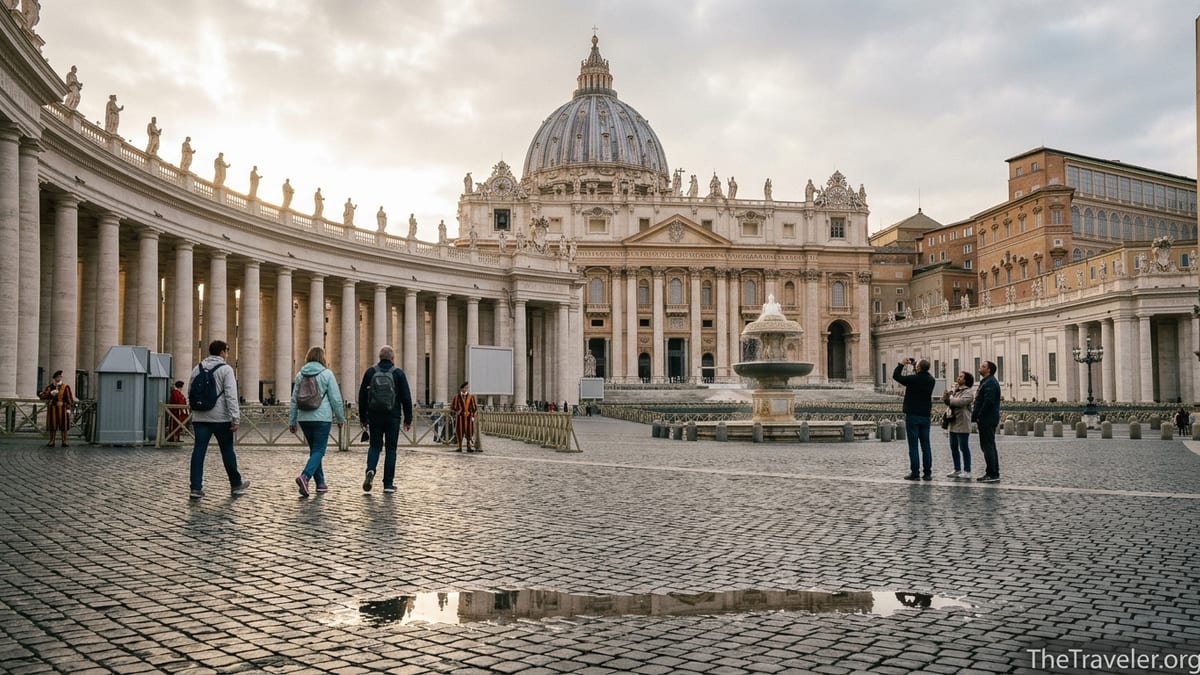
Understanding St Peter’s Basilica Today
St Peter’s Basilica is the spiritual heart of the Vatican and one of the largest churches in the world. The current basilica dates mostly from the 16th and 17th centuries and was shaped by masters such as Bramante, Michelangelo and Bernini. Inside, you will find Michelangelo’s Pietà, Bernini’s immense bronze baldachin over the papal altar and side chapels filled with tombs of popes and saints. Under the floor lie the Vatican Grottoes and, deeper still, the ancient necropolis traditionally associated with the tomb of St Peter.
In 2026 the Vatican is marking the 400th anniversary of the basilica’s consecration, which has prompted a renewed focus on the visitor experience. The Vatican has announced initiatives such as an expanded terrace area near the dome with a small snack bar, new exhibits explaining the basilica’s history and a stronger push to manage queues with timed reservations and clearer security procedures. In practice, this means more services for visitors, but also that you should expect formal controls at every entrance and be prepared to follow staff instructions carefully.
For most travelers, a visit to St Peter’s has three distinct parts: the main basilica floor, which is free; the dome climb, which requires paid tickets; and the surrounding St Peter’s Square. Some itineraries also include the Vatican Grottoes or, via a separate booking, the Vatican necropolis. Each element has its own access rules and best visiting times. Understanding these before you arrive will help you link the pieces into a smooth route rather than standing in line more than necessary.
It is also worth remembering that St Peter’s is first a working church and then a tourist site. Papal liturgies, canonizations or special Holy Year events can cause sudden closures of sections of the basilica or even the entire nave. The Vatican usually posts information a few weeks in advance, but last‑minute changes are possible. Build some flexibility into your Rome schedule, especially if attending a Papal Audience or Mass is important to you.
Opening Hours, Security and When to Visit
As of mid‑2026, St Peter’s Basilica is generally open daily from early morning until early evening. Recent Vatican notices indicate opening around 7:00 a.m., with final entry around 7:15 p.m., subject to the length of security queues and events on the square. The dome has slightly shorter hours and often closes in the late afternoon or early evening, with the last ascent typically about 90 minutes before closing. Precise times can shift seasonally and during special events, so check again shortly before your trip and avoid assuming yesterday’s schedule still applies today.
All visitors must pass through airport‑style security in St Peter’s Square. Bags pass through an X‑ray machine and visitors walk through metal detectors. Liquids in regular water bottles are usually allowed, but pocket knives, glass bottles, aerosol cans or anything that could be considered a tool or weapon may be confiscated. Large suitcases are not permitted and there is currently no left‑luggage facility dedicated to the basilica, so arrive with only a small daypack or handbag. Travelers who tried to enter with hiking backpacks or rolling luggage in recent months often reported being turned away and having to return to their hotels to drop items.
To minimize waiting, timing is everything. Recent visitor reports show that arriving between 7:00 and 8:00 a.m. can mean 10 to 20 minutes at security, while showing up around late morning on a busy Saturday can involve 60 to 120 minutes or more in line, even for those with some forms of “reserved” entry. On the other hand, several travelers in spring 2026 reported almost empty queues if they entered security around 6:45 to 7:00 p.m., giving them roughly an hour inside before closing, which is enough for a brisk yet atmospheric visit of the nave and main chapels.
Weather also matters, especially if you are planning to climb the dome. In Rome’s summer months, afternoon temperatures on the terrace and upper stairways can become uncomfortable. Aim for the first dome time slot of the morning or, in shoulder seasons, a late afternoon climb when the sun is lower and the light over Rome is softer. During winter, early morning visits can be very quiet, but the basilica may feel cool inside; bring a light jacket or scarf even if you find Rome mild outdoors.
Tickets: What Is Free and What You Pay For
One of the most confusing aspects of planning a visit to St Peter’s is understanding what actually requires a ticket. Entry to the main basilica floor is free. You join the main security line in the square, pass through the checks and then enter the basilica through the central doors without paying. Once inside, you can explore the nave, side aisles and chapels, view the Pietà from behind its barrier and walk down to the Vatican Grottoes using the clearly marked staircases near the crossing, again without charge.
The paid elements start when you want either a guided visit or access to the dome. Guided tours can be booked through the official basilica channels or through third‑party tour operators. Official options typically include a headset and a licensed guide who will lead you around major artworks such as the Pietà, Bernini’s baldachin and key papal tombs. Prices in 2026 vary but are often in the region of 25 to 40 euros per adult for small‑group tours in English, with discounts for children. Third‑party tours may bundle the basilica with the Vatican Museums or offer “early entrance” or “skip‑the‑line” marketing; these convenience packages frequently cost more and you should read what is actually included with care.
Dome access is always ticketed and is paid on site or via pre‑booked options that combine basilica entry with the climb. Recent travelers report buying dome tickets at a dedicated ticket office once inside the basilica, usually located near the right‑hand side of the nave before you reach the main altar. Prices are split between taking the elevator to the terrace and then climbing the remaining stairs, or walking the entire way. The elevator option is more expensive but saves a lengthy initial staircase; the full‑stairs ticket is cheaper but significantly more demanding. As a rough guide, expect to pay under 15 euros per adult for the elevator plus stairs combination, with modest reductions for children.
Be cautious about expensive “St Peter’s Basilica entrance tickets” advertised online. Because the basilica itself is free, what you are actually buying is either a guided tour, the dome climb, an audio guide or a timed entry slot through a particular access point. This can still be worthwhile if your time in Rome is short or you prefer a guide, but do not feel pressured into purchasing simply to get through the front door. If you are comfortable handling your own schedule and meet the dress code, you can still enter the basilica on your own without paying anything beyond the dome ticket.
Climbing the Dome: What to Expect
Michelangelo’s dome is one of the defining features of the Roman skyline, and climbing it is, for many visitors, the highlight of St Peter’s. Once you have your ticket, you first reach an internal gallery at the base of the dome. From here, you can look down into the basilica from high above the floor and up into the frescoed interior of the dome itself. This section already offers striking views and is accessible even to those who are not comfortable completing the full climb.
From the gallery, you proceed to the outer terrace, which wraps around part of the dome. Here, you can step outside for fresh air, views over St Peter’s Square and a close‑up look at the giant statues that crown the basilica’s facade. The terrace is also where the Vatican has been expanding a small snack bar and rest area. Visitors in 2026 describe grabbing a simple espresso or slice of pizza here before tackling the final section of the climb, something that was not always possible in previous years.
The last stretch to the very top is via a narrow, often steep stairway. Even if you take the elevator for the first segment, you must climb hundreds of steps in total. The walls curve with the shape of the dome and the staircase can feel confined; there are occasional small windows but little chance to sit. People with mobility issues, heart conditions, severe vertigo or claustrophobia should consider whether the full ascent is appropriate. If you start and decide it is too much, there are a few points where you can step aside and let others pass, but turning back fully is not always easy once the line is moving.
On clear days, the reward at the top is a sweeping 360‑degree view over Rome, the Tiber and the surrounding hills. You can pick out landmarks like the Colosseum, Castel Sant’Angelo and the Vittoriano. In peak season the top platform can become crowded and you may need to wait for a space along the railing to open up for your photos. Plan to spend at least 20 to 30 minutes enjoying the view, and factor in total dome visit times of roughly 60 to 90 minutes from queueing at the ticket desk to returning to the basilica floor, depending on crowds.
Dress Code, Practical Packing and Accessibility
The Vatican enforces a clear and consistently applied dress code for entry to St Peter’s Basilica and for the dome climb. Both men and women must have shoulders covered and clothing should reach at least to the knees. Sleeveless tops, tank tops, low‑cut shirts, shorts above the knee and miniskirts are not permitted. Sheer fabrics that reveal undergarments can also cause problems, even if they technically cover the right areas. Men must remove hats inside the basilica; modest hats for women are acceptable. Children are expected to follow the same rules as adults.
Security staff stand just before the main entrance and will turn away visitors who do not comply, regardless of whether they have a timed ticket or prepaid tour. There are frequent reports of travelers with reserved guided tours who arrived in short shorts or strappy tops and were refused entry, then had to rush to buy scarves or leggings from nearby souvenir kiosks while their time slot ticked away. A simple solution is to wear long, lightweight trousers or a knee‑length dress and carry a thin scarf to cover shoulders. If you are visiting in high summer, you can still dress for the heat by choosing breathable fabrics rather than trying to rely on last‑minute cover‑ups.
For bags, a small backpack or crossbody bag is typically fine, but avoid hard‑sided suitcases or very large hiking packs. Trip reports from early 2026 suggest that cabin‑sized roller bags are often refused and that there is no on‑site cloakroom to store them. Water bottles, compact umbrellas and cameras are allowed. Professional tripods are rarely permitted because of space and safety concerns. Security is similar for the dome: you pass an additional check point, and staff may refuse anyone carrying bulky items on the staircases.
Accessibility inside the main basilica is relatively good by historic monument standards. St Peter’s Square has ramps leading to the security checkpoints, and the basilica floor itself is mostly level, with a few shallow steps bridged by ramps for wheelchair users. The dome climb, however, is not fully accessible; even with the elevator you must climb many stairs and navigate narrow passages. Visitors with limited mobility can still enjoy the basilica, the square and, if open during their visit, the permanent exhibition on the terrace level, which may be reachable by lift as part of an organized route. If accessibility is a concern, it is worth speaking to staff at the information desk inside the basilica as soon as you arrive.
Planning Your Route: Sample Half‑Day Itineraries
How you structure your time at St Peter’s depends on whether you are also visiting the Vatican Museums on the same day. Many travelers combine the museums, Sistine Chapel and basilica into a single long day, while others prefer to split them. The most efficient classic route is to take a morning Vatican Museums tour that ends at the Sistine Chapel and then uses the internal exit that leads directly toward St Peter’s, avoiding the long walk around the perimeter and the security line in the square. However, not all tours or ticket types include this shortcut, and in 2026 some official museum tours explicitly state that they end outside the museum, meaning you will still need to walk around and queue again for the basilica.
If you are visiting St Peter’s independently, a simple half‑day plan might look like this: arrive on the square between 7:00 and 7:30 a.m., clear security in the quieter early window, and head straight to the dome ticket office before the line for the climb builds. Complete the dome visit by mid‑morning, then spend a relaxed hour or more exploring the basilica floor and the Vatican Grottoes. By late morning, when the basilica has become crowded, step outside to enjoy the square, take photos under Bernini’s colonnades and perhaps have a coffee at a nearby cafe.
For those who prefer a slower start, another option is to spend the morning elsewhere in Rome and book a mid‑afternoon or late‑afternoon museum visit, then leave a different day for St Peter’s alone. On your basilica day, arrive in the square around 5:30 to 6:00 p.m. when many tour groups have gone and the light over the facade is warm and low. You may have to accept a more modest wait at security, but recent visitors have reported walking almost straight in around 6:45 p.m. even on busy weeks, then enjoying a quieter interior. Note that the dome usually closes earlier than the main basilica, so this late‑day strategy is better suited to those skipping the climb.
Families and groups should plan meeting points in case people get separated in the queues or inside the basilica. Mobile signals can fluctuate in parts of the building and, at peak times, crowds can make it hard to backtrack. A practical option is to agree on a spot on the square, such as next to one of the fountains, or just inside the basilica near the central nave. Give children a card with your hotel details and a local emergency number, and explain that they should approach security staff or Swiss Guards if they lose sight of you.
Respectful Behavior and Photography Inside
Although thousands of tourists pass through St Peter’s every day, it remains a place of worship. Visitors are expected to maintain a respectful noise level, especially near active chapels where Mass may be taking place. Loud conversations, speakerphone calls and music played without headphones are not appropriate. Security staff will occasionally remind groups to lower their voices, and some smaller chapels may be roped off as prayer spaces only.
Photography for personal use is generally allowed in the basilica and from the dome, but flash is discouraged inside, both to protect the artworks and to avoid disturbing worshippers. Large tripods, lighting rigs and drone cameras are not permitted. If you are using a larger DSLR or mirrorless camera, be prepared to put it away during liturgies or if staff ask you to move on. On the dome terrace, selfie sticks are common but can become a nuisance in crowds; use them with consideration and be mindful of the narrow walkways.
Dress code rules continue to apply throughout your visit, not just at the entrance. Removing a covering shawl or rolling up shorts once you are inside can attract attention from wardens, particularly in prayer areas. Likewise, keep shoulders covered when climbing the dome, where the dress code is considered an extension of the basilica. Eating and drinking are restricted to designated areas such as the terrace snack bar; it is not acceptable to picnic on the steps inside the basilica or on the marble floors of the nave.
If you plan to attend a Papal Audience in St Peter’s Square and then visit the basilica, remember that security procedures may differ slightly on those mornings, with separate ticketed sections and additional checks. After the audience, large waves of visitors often head straight for the basilica entrance at once. If you prefer a calmer experience, consider entering very early that same morning before the event or waiting until late afternoon.
FAQ
Q1. Do I need a ticket to enter St Peter’s Basilica?
Entry to the main basilica is free; you only pay if you book a guided tour, audio guide or tickets for the dome climb.
Q2. How long should I allow for a visit including the dome?
Plan around two and a half to three hours in total, which covers queueing for security, buying dome tickets, the climb and exploring the basilica floor.
Q3. Is it better to take the elevator or the stairs for the dome?
The elevator saves a long initial climb and suits most visitors, but you still face several hundred steps. Very fit travelers on a tighter budget may choose the all‑stairs option.
Q4. What happens if I do not meet the dress code?
Security staff will refuse entry even if you hold a timed ticket. You will need to change clothes or buy cover‑ups from nearby shops, then rejoin the security line.
Q5. Can I bring a backpack or stroller inside?
Small backpacks are usually allowed after X‑ray screening, but large bags and suitcases are refused. Lightweight strollers may be permitted, though navigating crowds and steps can be challenging.
Q6. Are there bathrooms and places to buy food?
There are restrooms on or near the basilica premises and, as of 2026, a small snack bar on or close to the terrace area used by dome visitors, plus many cafes just outside the Vatican walls.
Q7. Is the basilica suitable for visitors with limited mobility?
The main floor is largely accessible, with ramps at key points. The dome climb, however, involves many narrow stairs and is generally not suitable for those with significant mobility issues.
Q8. Can I visit the Vatican Grottoes without a separate ticket?
Yes. The Grottoes beneath the basilica are typically accessible via signposted stairways from the main floor and do not require an additional ticket, though opening can vary with liturgical events.
Q9. Should I visit St Peter’s on the same day as the Vatican Museums?
It is possible but can be tiring. Many visitors prefer to split them across two days; if you combine them, consider a morning museum tour that uses the direct exit toward the basilica.
Q10. When is the quietest time of day to visit?
Early morning around opening time and the last hour before closing tend to be calmest. Mid‑morning and mid‑afternoon, especially in peak season, are usually the busiest periods.