


More news on this day
New foreign travel guidance from the United Kingdom is reshaping how many travelers approach summer holidays in Eastern Europe, the South Caucasus and the Middle East, as updated advisories highlight elevated security risks in Belarus, Russia, Ukraine, Armenia, Azerbaijan, Georgia, Turkey and Syria.
Get the latest news straight to your inbox!
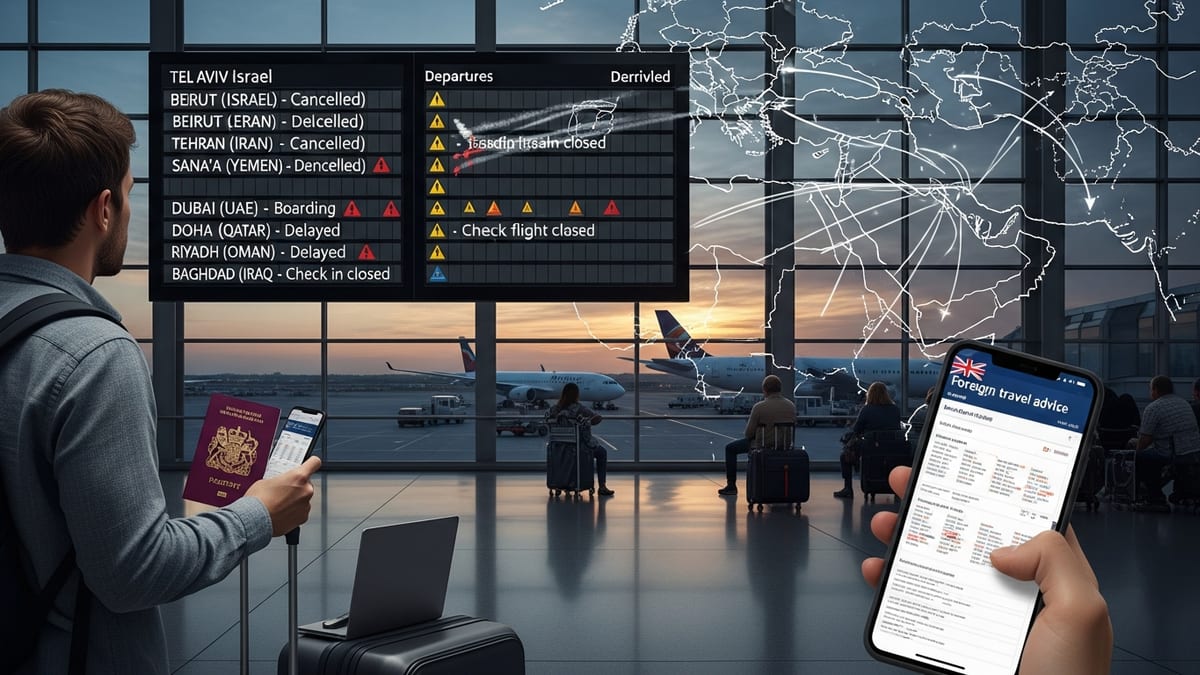
United Kingdom Tightens Advice Ahead of Peak Holiday Season
With the main summer holiday period approaching, the UK Foreign, Commonwealth & Development Office has refreshed a series of destination advisories across a broad arc from Eastern Europe to the Levant. The changes place renewed emphasis on conflict exposure, volatile border regions and the potential for sudden disruption to airspace and overland routes.
The travel advice for Ukraine, updated in late May and current as of mid June 2026, continues to warn against all travel to most of the country, reflecting Russia’s ongoing invasion and frequent missile and drone strikes on cities and infrastructure. Guidance also underlines particular concern within 50 kilometers of the Belarusian border in several northern Ukrainian regions, where the presence of Russian and Belarusian military assets heightens the risk to civilians.
Belarus and Russia remain at the most restrictive end of the spectrum. Publicly available information from the UK and allied governments describes Belarus as affected by a volatile security environment linked to the war in neighboring Ukraine and by domestic legal measures that can be enforced unpredictably against visitors. Russia continues to feature prominently on “do not travel” and “reconsider travel” lists due to the broader regional conflict, internal security controls and constrained consular access.
The United Kingdom’s tougher line aligns it more closely with long standing warnings from Australia and the United States, both of which currently list Belarus, Russia, Syria and much of Ukraine in their highest risk categories.
Caucasus and Black Sea Region Under Closer Scrutiny
The summer update extends beyond active war zones to encompass Armenia, Azerbaijan and Georgia, where the underlying security picture is more complex but still unsettled. UK guidance points to long running tensions along the Armenia Azerbaijan border and within or near disputed territories, advising against all travel in some front line districts and against all but essential travel in others.
Travelers are reminded that several border crossings in the South Caucasus remain closed or heavily restricted as a result of political disputes and prior conflicts. This affects common overland itineraries that once linked Armenia and Azerbaijan directly, and complicates routes for travelers attempting extended journeys between Europe, Central Asia and the Middle East.
Georgia’s overall advisory level remains lower than that of Ukraine or Syria, but foreign travel notices flag the country’s proximity to Russia’s North Caucasus, as well as unresolved issues around breakaway regions where entry is tightly regulated. Visitors are urged to pay careful attention to which areas are accessible from the Georgian administered side and which are off limits, as breaching local regulations can lead to detention, fines or future entry bans.
These layered restrictions are already prompting tour operators to redesign Caucasus trips for the 2026 season, favoring capital city stays and well established mountain routes while avoiding militarized border areas.
Turkey and Syria Highlight Contrasting Risk Profiles
Turkey continues to occupy an intermediate position in the latest round of travel warnings. UK and US advisories encourage travelers to exercise increased caution in parts of the country, citing the risk of terrorism, sporadic political unrest and sensitivities near the Syrian and Iraqi borders. Areas within a defined distance of the Syria frontier are typically marked as unsuitable for tourism, even as coastal resorts on the Aegean and Mediterranean remain open and heavily marketed.
Reports indicate that travel insurers are paying closer attention to these internal risk maps. Policies may exclude claims arising from visits to provinces that foreign ministries classify as unsafe, even if the rest of Turkey is covered. Industry commentators suggest that travelers planning road trips or domestic flights across the southeast need to read policy fine print carefully before departure.
Syria, by contrast, remains subject to blanket “do not travel” advice from all four governments. Public information from Washington and Canberra underscores the cumulative threats from armed conflict, terrorism, crime, kidnapping and the limited ability of foreign missions to provide assistance. The UK’s travel pages similarly stress that conditions can deteriorate without warning, that infrastructure remains badly damaged in many regions and that air routes in and out of the country are scarce and prone to disruption.
Despite some niche interest in religious and cultural tourism, mainstream operators have largely stayed out of Syria, and the newest advisories are expected to reinforce that stance through the 2026 high season.
Allied Governments Move in Parallel on Eurasian Risk Map
The United Kingdom’s recalibrated messaging sits alongside a broader pattern of coordinated advice from key source markets. The US State Department currently lists Ukraine, Belarus, Russia and Syria in its highest warning bracket, while assigning Armenia, Azerbaijan, Georgia and Turkey to intermediate levels that highlight specific regional hazards such as terrorism, civil unrest and unresolved territorial disputes.
Australia’s Smartraveller service maintains a “do not travel” position on Belarus and Syria, and urges its citizens to reconsider travel to parts of Ukraine and Russia. Its notices describe a combination of volatile security conditions, the possibility of arbitrary detention and the potential for airspace closures or sudden flight cancellations. South Korea’s foreign ministry also continues to flag significant risks in Ukraine and surrounding states, with particular emphasis on missile and drone activity, cyber disruption and the prospect of rapid escalation.
While advisory language and categorizations differ by country, the overall picture presented to would be tourists is remarkably consistent. Regions directly affected by Russia’s invasion of Ukraine, areas adjoining long running conflicts in the South Caucasus, and the Syrian theater remain subject to the strongest restrictions, while nearby states such as Georgia and Turkey sit in a middle band where urban centers and resort zones are considered safer than remote or militarized districts.
For the summer of 2026, this coordinated messaging is expected to divert some demand toward alternative destinations in Southern and Western Europe, as well as to longer haul options viewed as politically and militarily stable.
Impact on Travelers and the Tourism Industry
For individual travelers, the most immediate effect of the new guidance lies in insurance, routing and cost. Many comprehensive policies explicitly exclude cover in areas where a traveler’s home government advises against all travel or all but essential travel. As a result, those who proceed to high risk zones may find themselves without protection for medical evacuation, trip interruption or liability claims.
Airlines and tour operators are likewise updating risk assessments. Carriers have already adjusted some flight paths to avoid contested airspace, adding time and fuel expense to routes that previously crossed Ukraine or western Russia. Overland itineraries popular with backpackers, such as extended journeys from Central Europe through the Caucasus toward the Middle East, now require more complex planning to avoid closed borders and red lined districts.
Industry analysts note that city break and resort tourism in lower risk parts of Turkey and Georgia is still expected to perform reasonably well this summer, buoyed by competitive pricing and strong flight connectivity from Europe. However, the broader corridor stretching from Belarus down to Syria is unlikely to see a rapid rebound in multi country overland tourism while conflict and political uncertainty persist.
Travel organizations advise would be visitors to monitor foreign ministry updates closely, register with consular services where available and keep flexible itineraries that can be adjusted if the regional security picture changes at short notice.