


Few places in Europe leave such a lasting imprint on travelers as Florence’s Ponte Vecchio. This medieval bridge across the Arno River appears on postcards, movie scenes and honeymoon itineraries, yet visitors who return to Florence often find themselves drawn back here first, weaving through the gold shops and gazing out over the water as if seeing it all for the very first time. The bridge is more than a landmark. It is a vantage point, a shopping street, a link between historic centers and a front-row seat to daily Florentine life. That mix keeps travelers coming back year after year.
Get the latest updates straight to your inbox!
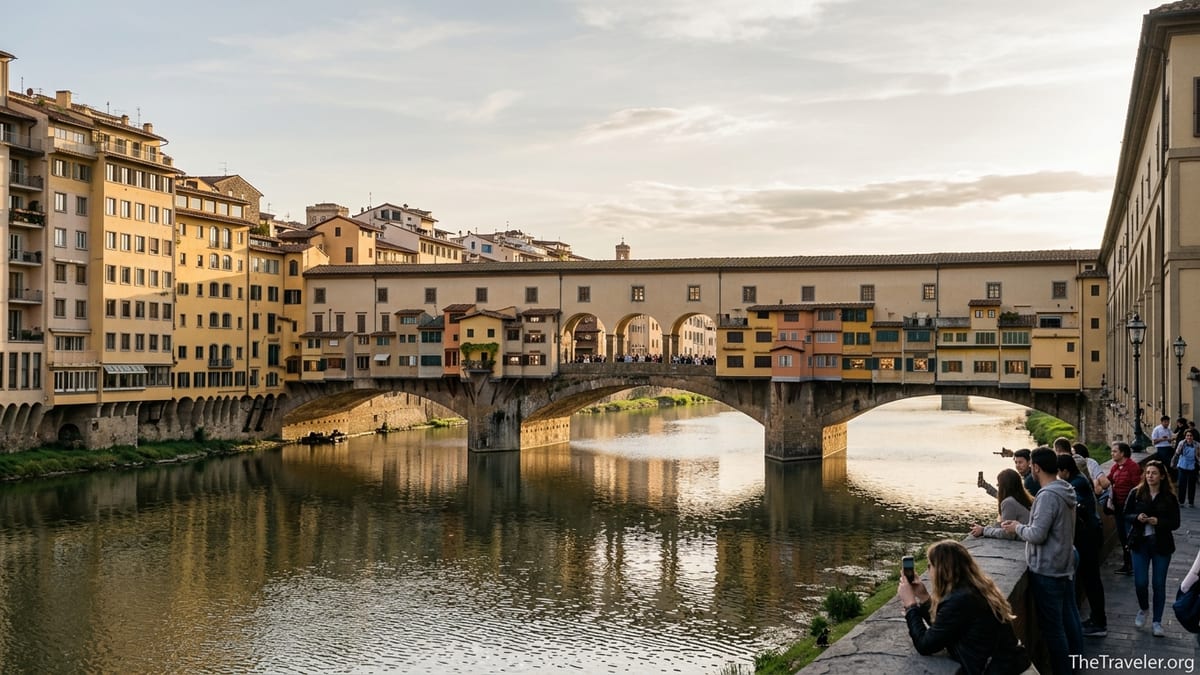
A Living Piece of Medieval History
Ponte Vecchio’s first pull is simple: you are literally walking on centuries of history. The current stone bridge dates to 1345 and is the only bridge in Florence that survived World War II intact, a fact that has turned it into a symbol of resilience for locals and visitors alike. When travelers step onto its worn stone pavement, they are not only crossing the Arno but moving along the same route merchants, soldiers and Medici courtiers once used.
Unlike many European bridges that function mainly as traffic arteries, Ponte Vecchio remains a built-up, closed-spandrel bridge lined with small, overhanging shops. The structures jutting out over the river are not cosmetic additions; they are original-style workspaces where generations of tradespeople have spent their days. Returning travelers often describe the sensation of watching shutters being folded open on a cool spring morning or closed at night in late autumn as one of those small rhythms that makes Florence feel familiar again.
Today the bridge carries only pedestrians, but its importance as a connector is unchanged. On one side are the Duomo, the Uffizi and Piazza della Signoria. On the other is the Oltrarno district, home to Palazzo Pitti, the Boboli Gardens and dozens of artisan workshops. Many visitors report planning their days around this crossing: early walks across the bridge for espresso by Piazza della Signoria, late-night crossings back to an Oltrarno guesthouse after dinner. That repeated movement gives Ponte Vecchio a central place in the mental map of anyone who stays in Florence more than a day or two.
Because the bridge is open at all hours and free to visit, it also becomes the default stop for restless jet-lagged travelers and late-night wanderers. It is common to see solo visitors standing at the railings in the quiet after midnight, using the outline of the opposite bank to get their bearings on the city. That combination of accessibility and historic gravitas is one of the reasons people feel compelled to return whenever they are in Florence.
Gold, Jewelry and the Ritual of Choosing a Piece
For many repeat visitors, Ponte Vecchio is synonymous with jewelry. The butchers’ stalls that once lined the bridge were replaced by goldsmiths and jewelers in the 16th century, and today nearly every storefront displays rings, chains, Florentine-style diamond pieces and religious medallions. Even travelers who have no intention of buying anything usually find themselves pausing at the glass, comparing designs and prices from one shop to the next.
Prices on the bridge tend to be higher than in less famous streets, but the shopping experience is part of the draw. A traveler might spend an hour walking back and forth, checking the current gold price on their phone, then stepping into a shop that feels right. One couple, for example, might compare a pair of simple 18-karat gold wedding bands around 700–900 euros in several boutiques before choosing the place where the jeweler offers to engrave their initials while they wait. Another visitor may decide against buying on the bridge after seeing similar pieces for less in the jewelry district near Piazza Santa Croce, yet still returns to Ponte Vecchio on each trip just to admire the designs and window displays.
By now, many seasoned travelers approach Ponte Vecchio’s jewelry scene the way they might approach a traditional bazaar. They ask whether pieces are handmade in Florence or bought wholesale, they request itemized receipts that show metal weight and labor cost, and they are not shy about walking away. Some visitors schedule a visit to an Oltrarno goldsmith’s workshop earlier in the day, then come back to the bridge with a better sense of what quality and pricing look like in Florence generally. The bridge remains the theatrical stage for purchase decisions, even if the actual transaction happens a few streets away.
That ritual of choosing, comparing and maybe splurging on something small is part of why people return. A solo traveler may buy a simple gold charm on a first visit, then come back years later with family, adding another charm to the same bracelet. Parents who bought a necklace on their honeymoon might return to pick out graduation earrings with their now-grown child. Each object ties a personal story to a widely shared place, making Ponte Vecchio the setting for private milestones.
Sunset Light, River Reflections and Iconic Views
If you ask someone why they walked across Ponte Vecchio three evenings in a row, the answer is often the same: the light. The Arno at sunset offers some of Florence’s most photogenic views, and the bridge is in the middle of it. The shops on Ponte Vecchio create narrow viewing corridors, but just a few steps away, on neighboring bridges like Ponte Santa Trinita, you can frame the Ponte Vecchio itself against the sky and water. Many travelers now plan their itineraries to be near the river around golden hour, roughly an hour before sunset from April through October.
In practice, this means a common route: an afternoon at the Uffizi or the Duomo area, a slow walk down Via Por Santa Maria, and then onto Ponte Vecchio as the jewelry shops turn on their lights. Some visitors stand along the downstream side to watch the bridge’s reflection shimmer in the water, then continue to Ponte Santa Trinita to capture the classic photo of Ponte Vecchio glowing against a pastel horizon. Photos taken with smartphones from this angle frequently end up framed on living room walls or used as holiday-card backdrops, which in turn reinforces the desire to revisit that precise view on the next trip.
The atmosphere changes dramatically with the seasons. In peak summer, sunset can be after 9 p.m., with crowds filling every inch of railing. Travelers who return in late October or early March are often surprised to find softer light, fewer tour groups and more space to lean on the stone parapet for as long as they like. Repeat visitors often describe timing their Florence stays to shoulder seasons specifically so they can reclaim that quieter, more romantic version of the bridge and river.
Some make a point of coming back in different weather. A brief spring shower might leave puddles on the stone that reflect the bright jewelry displays, while a crisp winter evening can frame the bridge against a pale blue sky with snow visible in the far-off Apennines. Because the experience costs nothing and requires no booking, it becomes a simple ritual: after checking into a hotel, stow the bags, find the river, and watch the day end by or around Ponte Vecchio.
The Vasari Corridor and Medici Intrigue Above Your Head
Look up while you are crossing Ponte Vecchio and you notice a long, elevated passageway with small windows running above the shops. This is the Vasari Corridor, a 16th‑century elevated route built to connect the Medici’s seat of power in the Palazzo Vecchio with their residence at Palazzo Pitti. For centuries, it allowed Florence’s rulers to move between home and government without walking among the city’s residents.
After a lengthy closure for safety and restoration work, the corridor reopened to the public in December 2024 with a new visitor route and safety standards. Today, travelers can book timed tickets through the Uffizi Galleries and walk the length of this once-secret passage, passing directly above the jewelry shops of Ponte Vecchio before continuing toward the Boboli Gardens. Group tours often combine the corridor with visits to the Uffizi and Pitti Palace, turning what used to be an inaccessible curiosity into a highlight of a second or third visit to Florence.
For returning visitors, the corridor adds a new layer to a familiar place. Someone who has walked across Ponte Vecchio several times might schedule a Vasari Corridor visit specifically to understand what it feels like to see the bridge from above. Inside, small windows frame shifting views of the Arno and the rooftops, and guides often point out how the Medici engineered their city to control movement and visibility. When travelers step back onto the bridge afterward, they tend to notice the alignment between the corridor and the shops differently, reading the structure as a whole rather than as separate pieces.
There is also a practical reason repeat visitors seek out the corridor: ticketed entry limits crowding. Whereas Ponte Vecchio’s street level can be packed on a summer afternoon, the corridor offers a calmer, slower-paced way to experience the same stretch of river. For history-minded travelers or anyone already familiar with Florence’s main sights, that elevated perspective becomes one more reason to add Ponte Vecchio and its surroundings back onto the itinerary.
Gateway to the Oltrarno and Everyday Florentine Life
One of Ponte Vecchio’s greatest strengths for returning travelers is what lies beyond it. Cross from the Uffizi side toward the south bank and you arrive in the Oltrarno, a district known for its artisan workshops, residential streets and strong sense of local identity. For many people who have done Florence’s main museums on a first trip, the Oltrarno becomes the focus of later visits, and Ponte Vecchio is the most evocative way of entering it.
Within a few minutes’ walk of the bridge, streets like Via Guicciardini, Via dei Serragli and Via Romana open into a network of small studios and workshops. Here travelers find bookbinders pressing marbled paper, restorers carefully retouching old frames, and leatherworkers hand-stitching bags in back rooms that double as family living spaces. Some studios display discreet signs in English inviting visitors to step in and watch; others operate on a “door open, you may look; door closed, please come back later” unwritten rule that regular visitors quickly learn to respect.
Real-world experiences here can be surprisingly personal. A traveler might wander into a silver workshop a few minutes’ walk from Ponte Vecchio and end up watching the owner demonstrate how to hammer a pattern into a bracelet. Another might join a three-hour guided walk advertised through a small local agency, which includes visits to two or three artisans, a stop in a neighborhood café for a cappuccino costing roughly 1.50 to 2 euros at the counter, and a short climb to a less crowded viewpoint. The bridge, in this context, is both starting line and familiar landmark to navigate back to dinner or a tram stop.
Because the Oltrarno has remained more residential than the heavily touristed streets north of the river, it offers a sense of daily life that draws people back. On later visits, travelers often choose accommodation on this side: a small guesthouse facing a quiet piazza, or an apartment above a bakery that sends the smell of fresh schiacciata bread through the stairwell each morning. Ponte Vecchio becomes their route to the rest of the city, something they might cross multiple times a day without ever tiring of the view.
Street Performers, Night Walks and a Sense of Place
Even if a traveler never buys jewelry or books a Vasari Corridor ticket, Ponte Vecchio offers something else: atmosphere. In the warmer months, musicians often set up on one end of the bridge or just off it, playing anything from classical violin pieces to acoustic covers of familiar songs. While it is important to keep an eye on belongings in crowded spaces, many visitors describe lingering to listen, dropping a few coins into an open guitar case and watching the mix of locals heading home and tourists stopping for photos.
At night, most jewelry shops pull heavy shutters across their windows, transforming the bridge from gleaming display corridor to almost medieval passage. Street lamps cast a warm glow on the stone, and conversations from nearby wine bars and gelato shops drift over the water. Couples walk slowly, some with a cone of stracciatella or pistachio gelato from a shop just off the bridge, others sharing a small take-away cup of house red wine from an enoteca on a side street. For many, that simple routine of an after-dinner stroll across Ponte Vecchio becomes a repeated memory that defines their time in Florence.
Travelers who return in different life stages often find the bridge anchors their shifting experiences. A student backpacking on a tight budget may remember eating supermarket sandwiches while sitting on the low wall just beyond the crowds, watching the lights reflect in the Arno. A decade later, they might return on a work trip, squeezing in a 10‑minute solo walk over the bridge between meetings. Still later, they could arrive with children in tow, pointing out the same shuttered shops and retelling the story of how they once got lost on the way back to their hostel.
Because Ponte Vecchio sits at the intersection of several busy routes, it also functions as a convenient meeting point. Friends staying in different parts of the city might agree to meet “in the middle of the bridge at 6 p.m.” before heading into the Oltrarno for aperitivo. Small-group walking tours often choose the Uffizi side entrance as a starting point, gathering guests beneath a recognizable landmark. Each of these everyday uses reinforces the bridge’s role not only as a tourist magnet but as part of the city’s working geography, a reason people instinctively include it whenever they come back to Florence.
Practical Reasons Travelers Keep Coming Back
Beyond romance and history, there are pragmatic reasons Ponte Vecchio remains in repeat itineraries. The bridge sits close to several essential services that travelers use again and again: currency exchange offices, pharmacies, mobile phone shops selling local SIM cards and mid-range cafés where you can sit with a cappuccino and recharge a phone or simply rest. Even experienced visitors who know to avoid the most touristy spots for everyday purchases often end up using the area around Ponte Vecchio as a convenient reference point for errands.
The bridge also appears on virtually every major walking route through the city. Self-guided maps handed out by hotels and tourist offices typically draw a thick line from the Duomo to the Uffizi, then across Ponte Vecchio to Palazzo Pitti and the Boboli Gardens. Paid walking tours follow similar patterns, whether they emphasize Renaissance art, Medici history or food. As a result, people who spend just two or three days in Florence often cross Ponte Vecchio multiple times without even planning to.
Repeat visitors become increasingly strategic about when they go. Many now aim for early morning crossings before 9 a.m. or late evening walks after 10 p.m. to avoid peak daytime crowds, which can be intense in high season. Seasoned travelers also learn small habits that improve the experience: holding bags in front in dense crowds, stepping aside to quieter alcoves when stopping for photos, and using alternative bridges like Ponte alle Grazie or Ponte alla Carraia when moving quickly between neighborhoods.
Though official policies can evolve, city authorities have periodically discussed and tested measures to manage overcrowding around Ponte Vecchio, including increased signage, monitoring and occasional temporary closures or diversions during major events. Returning travelers pay attention to these changes, sharing real-time updates in travel forums and adjusting their plans accordingly. Yet even with these challenges, most continue to include at least one unhurried stroll across the bridge in their stay, valuing the experience more than the inconvenience of the crowds.
FAQ
Q1. Is it worth visiting Ponte Vecchio if I have already seen it once?
Yes. Many travelers find that Ponte Vecchio feels different at various times of day and in different seasons, so a second or third visit often reveals new details, from quieter morning scenes to dramatic sunset light over the Arno.
Q2. When is the best time of day to visit Ponte Vecchio to avoid crowds?
Early morning, roughly before 9 a.m., and late evening after about 10 p.m. are typically the least crowded times. Shoulder seasons like April, May, October and early November also tend to feel calmer than peak summer.
Q3. Are the jewelry shops on Ponte Vecchio a good place to buy gold?
The bridge offers a memorable shopping experience, but prices often reflect its fame. Many visitors browse and compare designs there, then check prices in less touristy areas before deciding where to make a purchase.
Q4. Can I walk through the Vasari Corridor above Ponte Vecchio?
Yes, after a long closure for restoration the Vasari Corridor reopened to visitors in late 2024. Entry is ticketed and usually booked through the Uffizi Galleries or authorized tour operators, often as part of a combined museum visit.
Q5. What neighborhoods can I reach by crossing Ponte Vecchio?
From the Uffizi side, crossing Ponte Vecchio takes you into the Oltrarno district, including areas around Palazzo Pitti, Santo Spirito and San Niccolò, all known for artisan workshops, local restaurants and a more residential feel.
Q6. Is Ponte Vecchio open at night?
Yes. Ponte Vecchio is a public bridge and open 24 hours a day. The jewelry shops close in the evening, but you can walk across, enjoy the night views and listen to occasional street music at any hour.
Q7. How long should I plan to spend on Ponte Vecchio?
A simple crossing takes just a few minutes, but many travelers allow 30 minutes to an hour to window-shop, take photos, listen to musicians and pause to look over the river, especially around sunset.
Q8. Are there good photo spots of Ponte Vecchio itself?
Yes. For classic views of the bridge, many photographers head to Ponte Santa Trinita just downstream or to the riverbanks near the Uffizi. These spots let you frame Ponte Vecchio against the water and sunset sky.
Q9. Is the area around Ponte Vecchio safe?
The area is generally safe and busy, but crowded conditions make it important to watch for pickpockets, especially in peak season. Keeping bags zipped and valuables secure is usually sufficient for most visitors.
Q10. Can I combine a visit to Ponte Vecchio with other nearby attractions?
Yes. Many itineraries pair Ponte Vecchio with the Uffizi Galleries, Palazzo Vecchio and Piazza della Signoria on one side of the river, and Palazzo Pitti, the Boboli Gardens or an Oltrarno artisan walk on the other, all within easy walking distance.