


More news on this day
Flight delays are mounting on both sides of the Atlantic as a combination of air traffic control staffing shortages and crowd-drawing FIFA World Cup 2026 matches strains already stretched aviation systems.
Get the latest news straight to your inbox!
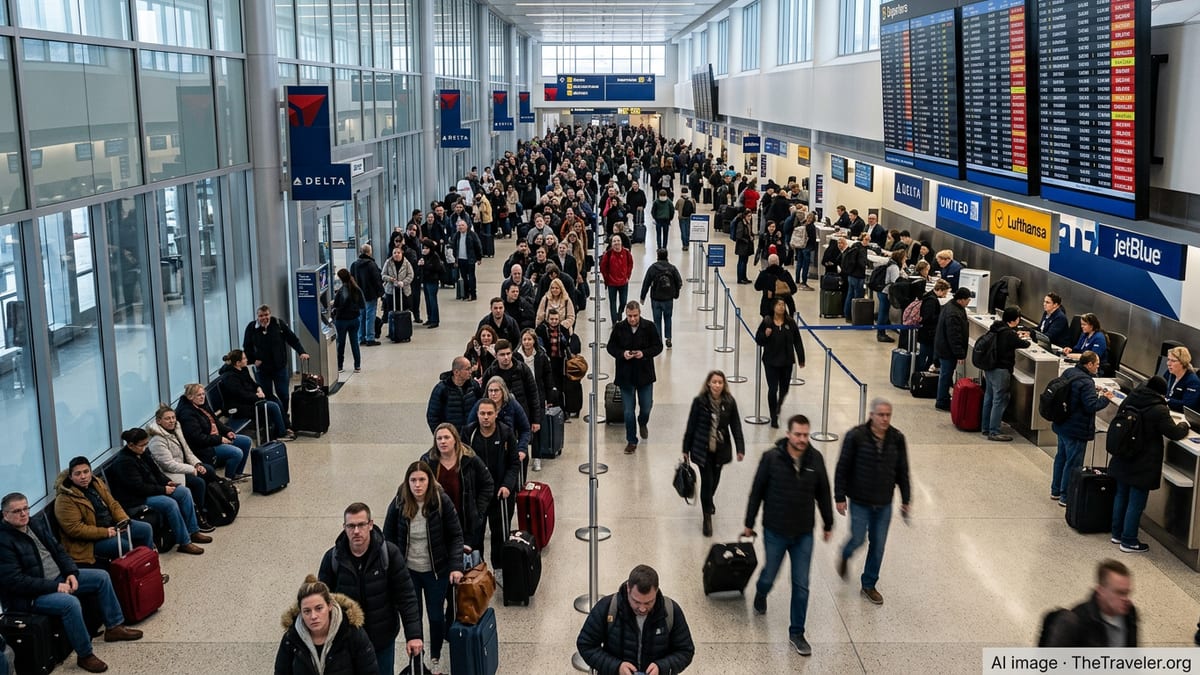
World Cup traffic meets chronic controller gaps
Published briefings and industry analyses indicate that the summer 2026 travel season was already forecast to be intense before the first World Cup whistle. In Europe, Eurocontrol projected traffic growth of around 2 percent over summer 2025, with some weeks expected to be more than 5 percent busier as leisure and business demand rebounded. That rise in movements has collided with long standing staffing issues in air navigation services, particularly in major hubs in France, Spain and Greece, where capacity and controller availability are repeatedly cited as key bottlenecks.
In North America, the United States Federal Aviation Administration entered the summer with an explicit plan to accelerate hiring to address what it has described in public documents as a persistent controller shortfall. Those plans are being tested in real time as World Cup host cities add game-day waves of arrivals and departures on top of already heavy schedules, forcing the system to rely more frequently on flow restrictions and ground delay programs to keep traffic volumes within safe limits.
With stadiums in cities such as Dallas, Atlanta and the New York region attracting tens of thousands of extra visitors, operational alerts and airline messages show routine schedules being adjusted around match days. Flights into key hubs are increasingly subject to metering, which can push back departures by hours once congestion builds, particularly when controller staffing is not sufficient to absorb sudden surges tied to fan travel.
Control tower staffing at the center of disruption
Reports from aviation trade groups and workers’ organizations point to staffing shortfalls at control towers and area control centers as a structural constraint that predates the tournament. European unions estimate that air navigation providers have been operating with several percent fewer controllers than required across the network, a gap that translates directly into lower capacity in busy airspace sectors during peak hours. Similar concerns feature in recent audits of the FAA workforce plan, which underline the challenge of training new controllers quickly enough to replace retirees and build resilience.
The result is that even modest spikes in traffic linked to World Cup matches can tip sectors into overload, triggering flow restrictions and knock on delays. When controllers are in short supply, air navigation service providers often have to cap the number of aircraft handled per hour to maintain safety margins. Airlines then receive less favorable departure slots, and aircraft and crews end up out of position for subsequent rotations, compounding disruptions across the day.
Recent air traffic briefings for Europe list staff shortages, capacity constraints and slow technology transitions as major drivers of en route delay minutes, with France consistently highlighted as a hotspot. Airline commentary has been particularly critical of French air traffic performance, arguing that chronic understaffing and delayed modernization are magnifying the impact of seasonal peaks. With fans relying heavily on routes over or through French and Spanish airspace to reach World Cup venues, those systemic issues are now feeding directly into tournament travel.
Tournament procedures add further pressure
World Cup specific airspace and airport procedures are introducing an additional layer of complexity. In the United States, the FAA has published special traffic management plans around stadium cities that include temporary flight restrictions, no drone zones and tighter coordination of arrivals and departures. These measures are intended to safeguard stadium environments and manage airspace security, but they also narrow the operating window for routine commercial flights when combined with limited controller rosters.
Operational notices describe how ground delay programs are being used more frequently on busy match days. Under these programs, flights are assigned controlled departure times based on the rate at which airports and surrounding airspace can safely accept arrivals. Any disruption, such as convective weather or a staffing gap in a critical sector, can quickly force regulators to cut the arrival rate, which cascades into extended taxi waits, airborne holding and missed connections for passengers.
In Europe, where the World Cup is intersecting with existing border and security initiatives, additional checks are further stretching resources. Industry organizations have warned that the combination of new entry exit systems, border staffing limits and surging summer traffic could create gridlock at certain airports, with knock on impacts for tower operations and runway throughput. When queues build and aircraft cannot reach stands or depart on time, tower controllers must juggle complex movements in confined spaces, increasing workload at precisely the moment staffing is thinnest.
Airlines and passengers caught in the middle
For airlines, the mixed pressures of World Cup crowds and tower staffing constraints are translating into rising delay statistics and more volatile day of operations. Carrier statements and traveler accounts describe aircraft held at gates awaiting departure clearance, diversions around congested sectors and extended waits on arrival as airports work through backlogs. Low cost and network airlines alike report that short haul rotations are particularly vulnerable, since even minor slot changes can cause aircraft to miss their next scheduled departure window.
Industry bodies estimate that air traffic management related inefficiencies have cost airlines and passengers billions over the past decade, with staffing and capacity issues responsible for the majority of en route delays in Europe. The World Cup is acting as a stress test of recent efforts by regulators and service providers to streamline flows and add capacity. While some metrics, such as average delay per flight, had been trending down ahead of the tournament period, the latest congestion around key match days suggests that structural gaps remain unresolved.
Passengers, meanwhile, often receive only terse explanations that flights are delayed due to air traffic control. Without visibility into the interplay of staffing levels, sector capacity and event driven surges, the attribution of blame can become contentious, with airlines pointing to control towers and navigation providers, and workers’ groups arguing that years of underinvestment have left systems brittle. The World Cup travel crunch is amplifying those debates as social media fills with reports of missed matches, disrupted itineraries and stranded fans.
Calls grow for longer term fixes
The latest wave of World Cup linked delays is prompting renewed public discussion about how to build a more resilient air traffic system ahead of future event cycles. Analysts note that the same factors appearing in current reports staffing shortages, uneven modernization and fragmented responsibility between airlines, airports and air navigation providers have been highlighted repeatedly after previous summer disruptions. The difference in 2026 is that tournament related traffic is exposing those weaknesses to a global audience in real time.
Regulators in Europe and North America have outlined plans to accelerate hiring and training, deploy new decision support tools and encourage closer coordination across the network. Eurocontrol, for example, is promoting operational guides aimed at helping airlines and controllers think in terms of the wider network when making tactical decisions, with the goal of smoothing out bottlenecks before they trigger widespread delays. In the United States, workforce roadmaps emphasize continuous recruitment and expanded academy capacity as central to closing the staffing gap over the next several years.
For the millions of travelers hoping to follow their teams this summer, those structural reforms will come too late to prevent the immediate frustration of late departures and missed connections. However, the visibility created by World Cup related congestion is adding urgency to long standing calls for investment in people and systems that can keep pace with growing demand. As the tournament progresses, published performance data and passenger experiences are likely to provide a stark measure of how far the global air traffic system still has to go in matching capacity with expectation.