


You can do almost everything right when you buy travel insurance and still find yourself fighting a denied claim from your hotel room or weeks after you get home. With MSH travel insurance in particular, the problem is rarely that the coverage is useless. More often, travelers simply use it in ways the product was never designed to work. They mix it up with long-term expat health plans, forget to call the assistance line, skip the fine print on pre-existing conditions or assume that adventure sports are automatically covered. The result is confusion, delays and out-of-pocket bills that could have been avoided with a clearer understanding of how MSH actually works in the real world.
Get the latest updates straight to your inbox!
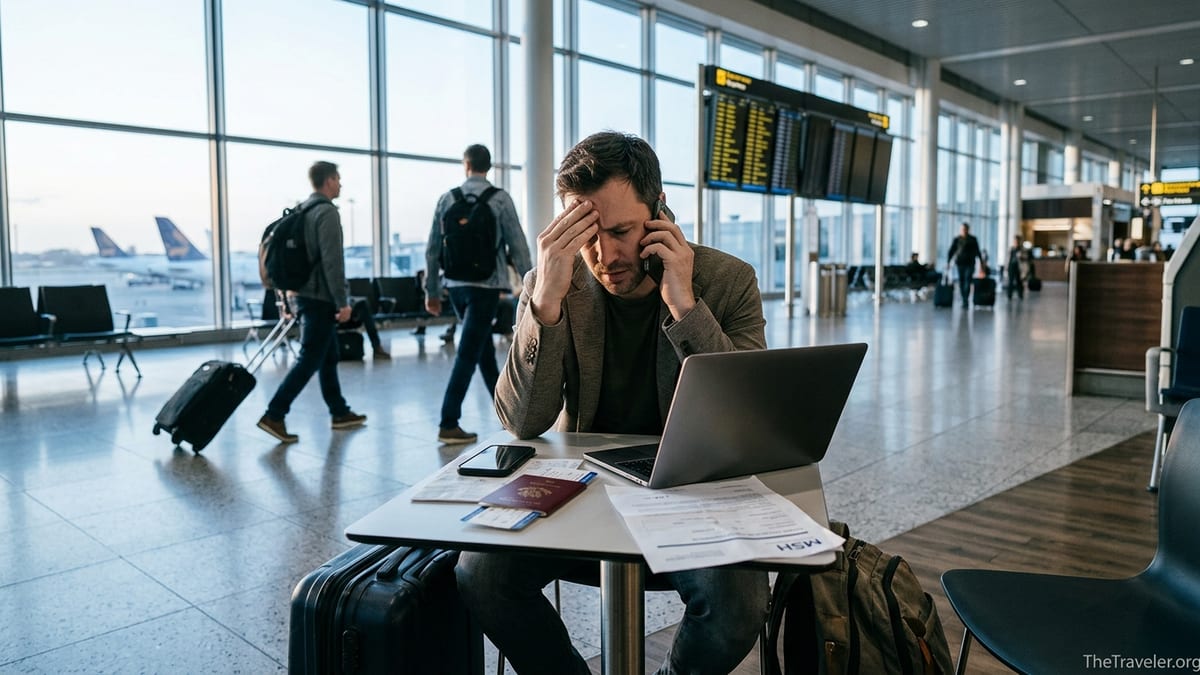
MSH Is Not Just “Travel Insurance” – Know What You Actually Bought
MSH is best known as a global health and assistance provider for expatriates, students and workers abroad, with more than 700,000 members in 193 countries. What many travelers miss is that MSH operates several different types of protection: short-term travel and assistance plans such as neoExplore or Start’Expat, comprehensive international health insurance like First’Expat+, and administration of group or government-linked plans. Each of these behaves differently when you are on the road. Treating your policy as generic “MSH travel insurance” is the first way to use it wrong.
Imagine a French engineer on a two-year assignment in Dubai with a First’Expat+ health plan and an American student spending a semester in Barcelona with an MSH neoStudents policy. Both might say they “have MSH,” but the engineer’s plan is a full-scale international health policy with routine care, maternity and dental available, while the student’s coverage is closer to time-limited travel medical protection. If the student schedules a routine eye exam abroad and then complains that it is not reimbursed, the problem is not that MSH failed; it is that she used a travel product as if it were a permanent health plan.
Another common confusion involves Canadian federal public servants, whose emergency out-of-country medical benefits are administered by MSH under their public service health plan. On forums, these travelers often talk about “MSH travel insurance” when in reality their primary coverage is the government plan and MSH is the administrator handling emergency foreign medical bills. Buying an extra private policy, assuming it will pay first and spare them any paperwork, is a typical misuse. In practice, that second policy usually pays only after the public plan and MSH have processed the claim.
Before your next trip, open your certificate or member guide and confirm whether you hold a short-term travel medical policy, a comprehensive international health policy, or group coverage administered by MSH. The benefits, exclusions and claim workflows differ in important ways. If you do not know which one you have, you are already using MSH coverage incorrectly.
Pre-existing Conditions: The Silent Claim Killer
MSH, like most travel insurers, draws a hard line around pre-existing medical conditions. In many of its expat and travel documents, any illness or injury that developed before enrollment can be considered pre-existing, and expenses linked to that condition are often excluded unless specific criteria are met or the condition has been stable for a defined period. That stability concept is crucial: having a diagnosis is not automatically disqualifying, but changes in medication, recent hospitalizations or new symptoms in the weeks or months before departure can void coverage for that condition.
Consider a traveler from Toronto with an MSH-backed emergency medical plan heading to Florida for three weeks. He has high blood pressure controlled with medication. Two months before departure, his doctor adjusted his dose and added a second drug. On the beach in Miami he experiences chest pain and is admitted to hospital for tests. The hospital bill climbs toward several thousand US dollars. If his condition is considered unstable under the policy’s definitions, MSH may pay only for unrelated emergencies, not for the cardiac work-up tied to his long-standing hypertension. The traveler may feel misled, but from the insurer’s perspective he used an emergency travel product to cover a foreseeable risk tied to an unstable condition.
Real-world complaints rarely revolve around obscure policy language. Instead, they come from people who never discussed their health history with their broker or MSH before buying coverage. A traveler undergoing cancer follow-up assumes that “as long as my doctor says I am fine to travel, I am covered.” Another with long-managed diabetes believes that because there were no major issues in the past year, the condition is automatically considered stable. In both cases, the only definitions that matter are those written in the policy. Stability might require a specific period without any dosage changes or new symptoms, sometimes as short as a few weeks, sometimes longer, depending on the plan.
To avoid using MSH coverage wrong in this area, travelers with any significant medical history should take three practical steps: first, read the eligibility and exclusions section related to pre-existing conditions; second, ask their physician to confirm in writing whether their condition meets those stability requirements; and third, declare health issues accurately when applying. If your risk profile does not match the plan’s eligibility, you may need a different product specifically designed for people with pre-existing conditions rather than relying on a standard MSH travel policy.
Emergency-Only Coverage: What Your Policy Will Not Do
Another frequent misunderstanding is the difference between emergency-only protection and full health insurance abroad. Many plans that MSH manages for employers, governments and short-term travelers are built around one purpose: to handle sudden, unexpected emergencies that make it unreasonable to wait until you return home. They are not designed to cover routine or ongoing care such as check-ups, chronic disease monitoring, physiotherapy for an old injury, dental cleanings or elective procedures.
For example, a Canadian couple relying on MSH-administered emergency coverage for their winter trip to Arizona may assume their out-of-country benefits will pay for a follow-up MRI on a chronic back problem or for frequent physiotherapy sessions. In reality, the policy language in many plans is explicit that benign conditions which can be treated locally and do not prevent you from continuing your trip are excluded. If the back pain worsens suddenly and requires emergency hospitalisation, that is different; if it simply needs ongoing therapy, it is likely outside the scope of emergency travel coverage.
Similarly, a digital nomad using a short-term neoExplore policy for a six-month circuit through Southeast Asia might try to schedule routine blood tests, dental work and a minor elective procedure in Bangkok, assuming their “international insurance” will behave like a domestic health plan. When claims come back denied, they feel that MSH did not live up to the marketing. In reality, they used an emergency or limited-benefit travel policy as if it were a comprehensive international medical insurance plan such as First’Expat+.
If you are planning travel where you know you will seek non-urgent care abroad, you likely need either a more robust international health policy or a plan purchased locally in your destination, not just emergency-focused MSH travel cover. Using emergency insurance as a primary health system is a misalignment of product and expectations, and that is where frustration almost always appears.
Calling Late, Paying First: Misuse of the Assistance Service
One of MSH’s core strengths is its 24/7 assistance capability. In many plans, assistance teams can organize direct billing with hospitals, coordinate medical evacuation, arrange translation or guarantee payment to clinics. Yet countless travelers wait until after treatment, or even after they return home, before contacting the assistance number printed on their card. That delay can turn a manageable situation into weeks or months of paperwork.
Reports from travelers show a clear pattern. A family in Mexico experiences severe allergic reactions and heads straight for the local clinic, paying by credit card on the assumption that they will get reimbursed later. Only back home do they discover that the claim requires pre-authorization or at least a call at the time of treatment, plus a detailed list of medical notes, translations and local invoices. Another traveler in Europe hurts their back, waits more than half an hour on hold with the call center, gives up, pays a private hospital out-of-pocket and then faces a lengthy documentation process because direct billing was never set up.
The general rule with MSH is simple but often ignored: if the situation is serious enough that you are thinking about going to a hospital or private clinic, and if it is at all feasible, contact the assistance line as early as possible. In a true life-threatening emergency you should always go directly to the nearest hospital and call once you are safe, but for anything short of that, calling first can be the difference between MSH paying the provider directly and you needing to compile a complex reimbursement file.
Using the assistance service correctly also means keeping your documentation organised from the start. For a typical emergency room visit in the United States, for instance, MSH may ask for itemised bills, medical reports, proof of your home health coverage where applicable, copies of your passport and boarding passes, and sometimes confirmation that you were not travelling against medical advice. Travelers who throw receipts into a suitcase and try to rebuild the story a month later are effectively misusing the system; the policy is designed to work when documentation is complete and timely.
Sports, Adventure and Other High-Risk Activities
Many MSH policies carve out entire categories of sports and activities from standard coverage. The fine print in some member guides lists bungee jumping, base jumping, caving, certain forms of aggressive white-water kayaking, mountaineering, off-piste skiing, air sports like paragliding and microlighting, and professional-level competition as wholly excluded. Other activities such as scuba diving or canyoning might be covered only in supervised, introductory contexts or require additional riders under specific products.
In practice, travelers often treat these exclusions as negotiable. A skier with MSH coverage heads off marked trails in the French Alps, assuming that if a local guide says the run is safe, insurance will follow. When an accident leads to a helicopter evacuation and hospital stay, the insurer looks not at the guide’s confidence but at the words “off marked trails which are open to the public.” If the policy excludes that scenario, the cost of rescue and treatment can land firmly on the skier’s shoulders. Likewise, a backpacker signs up for a last-minute bungee jump in New Zealand, confident that “travel insurance covers this sort of thing.” In many MSH documents, however, such extreme sports are mentioned specifically as excluded.
Even apparently low-risk activities can trip people up. A traveler on a working holiday visa in Australia with an MSH-linked plan might join a local amateur football club or take part in motorcycle track days. Some policies exclude injuries sustained while participating in organised club sports or motor racing. If the traveler never checks their sports coverage, they may not realize that a broken ankle from a weekend tournament or a crash at a track event falls outside their travel protection.
Using MSH correctly in this area starts with aligning your itinerary and your coverage. If your trip includes diving in Bali, high-altitude trekking in Peru or a paragliding course in Annecy, you should look specifically at whether those activities are listed as covered, excluded or requiring a special rider. If the wording is unclear, contact MSH or your broker in writing and ask for clarification before departure. It is far easier to pay a small premium for dedicated adventure coverage than to argue about exclusions after a helicopter rescue.
Paperwork, Timelines and the Reality of Claims
Another way travelers misuse MSH insurance is by treating claims as an informal process. In reality, travel and expatriate insurance operates within strict timelines and documentary rules. Many MSH claim forms specify that you must submit medical invoices within a defined number of days, include proof of other insurance benefits and provide clear justification for any costs that look out of line with local norms. Delays, missing documents or incomplete forms frequently lead to processing backlogs or even outright denials.
Real-world experiences vary widely. Some policyholders describe smooth, direct-billing experiences where MSH coordinated with a US hospital and the insured paid nothing upfront. Others report long processing times and repeated requests for extra paperwork, such as proof of provincial health coverage, copies of visas or original prescriptions. In nearly every difficult case, the same issues recur: claims opened late, documents scattered or untranslated, and no clear paper trail from first symptoms to final treatment.
Suppose you break a wrist in Portugal. The clinic expects payment at discharge, so you use a credit card. You ask the receptionist for a single summary receipt that reads “medical services, 400 euros.” Weeks later, when you file through MSH, the assessor asks for a detailed invoice, the medical report, X-ray results and proof that you were in Portugal on those dates. If the clinic is slow to respond or you have already flown home, gathering that paperwork becomes a frustrating chase. From the insurer’s standpoint, they simply cannot validate the claim properly without more detail.
The practical fix is to treat every potentially reimbursable encounter like a future claim file. At the moment of care, ask for itemized bills, medical notes in English or French where possible, and contact details for the facility. Keep boarding passes, hotel invoices and any police or incident reports in a dedicated folder or digital file. Then, submit the claim through MSH’s portal or app as soon as you have the core documents, rather than waiting until after the trip. You are not gaming the system by doing this; you are using it the way it was designed to be used.
How to Choose the Right MSH Product for Your Trip
Choosing the wrong type of MSH coverage is one of the biggest strategic mistakes travelers make. They either buy an expat-style policy for a short vacation, pay extra for benefits they will never use, or they rely on a minimal emergency plan for extended stays that would be better served by comprehensive insurance. Getting it right requires matching trip profile, risk tolerance and budget.
For a one- or two-week vacation from North America or Europe to a high-cost country such as the United States, Japan or Switzerland, an emergency medical plan with coverage limits in the millions, strong assistance services and clear hospital networks is typically the priority. This is where MSH-branded travel medical products or employer-sponsored emergency plans can work well, especially when paired with a separate trip cancellation policy from another provider if needed. The goal is to protect against a $50,000 emergency room bill or a medically supervised evacuation, not day-to-day doctor visits.
For longer stays, such as a one-year working holiday in New Zealand or a multi-country study abroad program, MSH solutions like neoExplore or student-specific plans may be appropriate, but only if you understand their limitations. You may want a hybrid setup: an MSH travel or assistance plan for emergencies, plus local student health insurance or access to the public system at your destination for routine care. For true expatriates relocating with families, comprehensive products like First’Expat+ that include maternity, preventive care and chronic disease management might be more appropriate than relying solely on a travel-oriented policy.
Price comparisons should be grounded in realistic scenarios. If an MSH emergency plan costs slightly more than a bare-bones competitor but offers direct billing relationships in your destination and multilingual assistance staff, that extra cost may save you days of stress during an emergency. On the other hand, if you do not engage in risk-heavy activities and have robust health coverage in your home country, you might not need the most extensive add-ons. The key is to resist the temptation to think in generalities such as “I am covered by MSH” and instead ask, “Which specific MSH product do I hold and what exactly does it protect me from on this trip?”
The Takeaway
Most frustration with MSH travel insurance can be traced back to a single issue: a mismatch between what travelers think they bought and what their policy is designed to do. Using an emergency plan as primary health insurance, assuming unstable pre-existing conditions are covered, ignoring sports exclusions, failing to call assistance in time or treating claims as casual paperwork are all ways to misuse an otherwise solid system. When problems arise, they feel personal, but they are often the predictable result of those mismatches.
To put MSH to work for you rather than against you, you need to be deliberate. Identify exactly which product you have, read the sections on pre-existing conditions and sports, and map those rules to your own medical history and planned activities. Store the assistance number in your phone and treat any serious medical visit as a reason to call. Keep every invoice and medical note as if you know you will need them later. If your trip plans involve extended stays, adventure sports or ongoing treatment abroad, consider whether you need a different or additional policy that better fits those risks.
Travel insurance, including products administered or underwritten through MSH, is not a magic shield that makes every problem disappear. It is a contract with clear conditions that can either be an invaluable safety net or a source of disappointment, depending on how you use it. By aligning your expectations and behavior with how these policies actually work, you dramatically improve the chances that when you really need help far from home, your coverage will respond the way you hoped.
FAQ
Q1. Is MSH travel insurance the same as international health insurance?
Not necessarily. MSH offers short-term travel and assistance plans as well as comprehensive international health insurance for expatriates. A travel policy usually focuses on emergencies during a trip, while international health insurance is designed to replace or supplement a full domestic health system for people living abroad long term. Always check which type of product is listed on your certificate.
Q2. Are pre-existing medical conditions covered under MSH travel policies?
Coverage for pre-existing conditions is often limited or excluded in standard travel products, especially if the condition is considered unstable. Some plans may cover sudden and unexpected recurrences of stable conditions under specific criteria, but routine care or foreseeable complications are usually not covered. You should review the pre-existing condition section of your policy and discuss your situation with a medical professional before travelling.
Q3. Do I really need to call MSH before going to a hospital?
If it is a true life-threatening emergency, you should always go to the nearest hospital first and call as soon as reasonably possible. For most other urgent situations, contacting the assistance line before or during your visit allows MSH to help with direct billing, referrals and medical coordination. Waiting until after treatment, or until you return home, often makes the claim process slower and more complicated.
Q4. Does MSH cover adventure sports like skiing, scuba diving or bungee jumping?
It depends on your specific policy and how the activity is defined. Some MSH plans exclude certain adventure and extreme sports entirely, such as bungee jumping, base jumping, some air sports or off-piste skiing. Others may cover activities like scuba diving or canyoning only under limited, supervised conditions or with optional riders. You should review the sports and activities section of your policy and seek clarification before booking any high-risk excursions.
Q5. Why was my routine doctor visit abroad not reimbursed?
Many MSH travel and emergency plans are designed to cover sudden, unforeseen medical emergencies, not routine care, regular check-ups or ongoing treatment of chronic conditions. If you saw a doctor for non-urgent reasons, such as a scheduled check-up or long-term follow-up for a known condition, those costs are likely outside the scope of emergency travel coverage. Comprehensive international health insurance or local health plans are better suited for routine care abroad.
Q6. How can I avoid claim delays with MSH?
Open a claim or contact the assistance line as soon as you have a significant medical issue, keep all original invoices and detailed medical reports, and submit documents within the timelines stated in your policy. Organise boarding passes, hospital bills, prescriptions and any incident reports in one place. Providing complete, clearly legible documentation early is one of the most effective ways to reduce processing delays.
Q7. Does MSH travel insurance include trip cancellation and baggage coverage?
Some MSH-branded products or partner plans may include non-medical benefits such as trip cancellation, interruption or baggage coverage, but many emergency medical plans do not. Travelers often assume they are covered for cancelled flights or lost luggage when their policy actually focuses only on medical emergencies. You should read your benefits summary closely and, if necessary, purchase separate trip cancellation or baggage insurance from another provider.
Q8. I have coverage through my employer or government that uses MSH. Should I still buy extra insurance?
Employer-sponsored or government-administered plans that work with MSH often provide strong emergency medical coverage but may have limits, such as maximum trip length, exclusions for certain destinations or no coverage for trip cancellation and baggage. Buying extra insurance can make sense if your trip exceeds those limits or you want broader non-medical protection. However, any additional policy will generally pay only after your main plan, so you should coordinate benefits carefully rather than assuming the extra policy will pay first.
Q9. What should I do before my trip to make sure I am properly covered with MSH?
Before you travel, confirm which specific MSH product you hold, read the sections on pre-existing conditions, emergency definitions and excluded activities, and verify your maximum coverage limits. Store the assistance phone number in your mobile phone, carry your insurance card, and talk to your doctor if you have ongoing medical conditions. If your itinerary includes high-risk sports or long stays, consider whether you need additional or different coverage tailored to those plans.
Q10. Can I rely on MSH for long-term healthcare if I become a digital nomad?
Short-term MSH travel policies are not meant to replace a full health system for people living abroad indefinitely. If you are becoming a digital nomad or long-term expatriate, you should look at comprehensive international health insurance options that cover routine care, chronic conditions and preventive services, whether through MSH or another provider. Relying solely on emergency travel coverage for long-term life abroad is risky and often leaves important health needs uninsured.