


More news on this day
China’s coastal province of Zhejiang is witnessing a fresh surge in domestic travel as a new high-speed railway section brings the port city of Yuhuan directly into the province’s dense web of tourist-oriented routes, tightening journey times and drawing more visitors to its once-remote islands and fishing villages.
Get the latest news straight to your inbox!
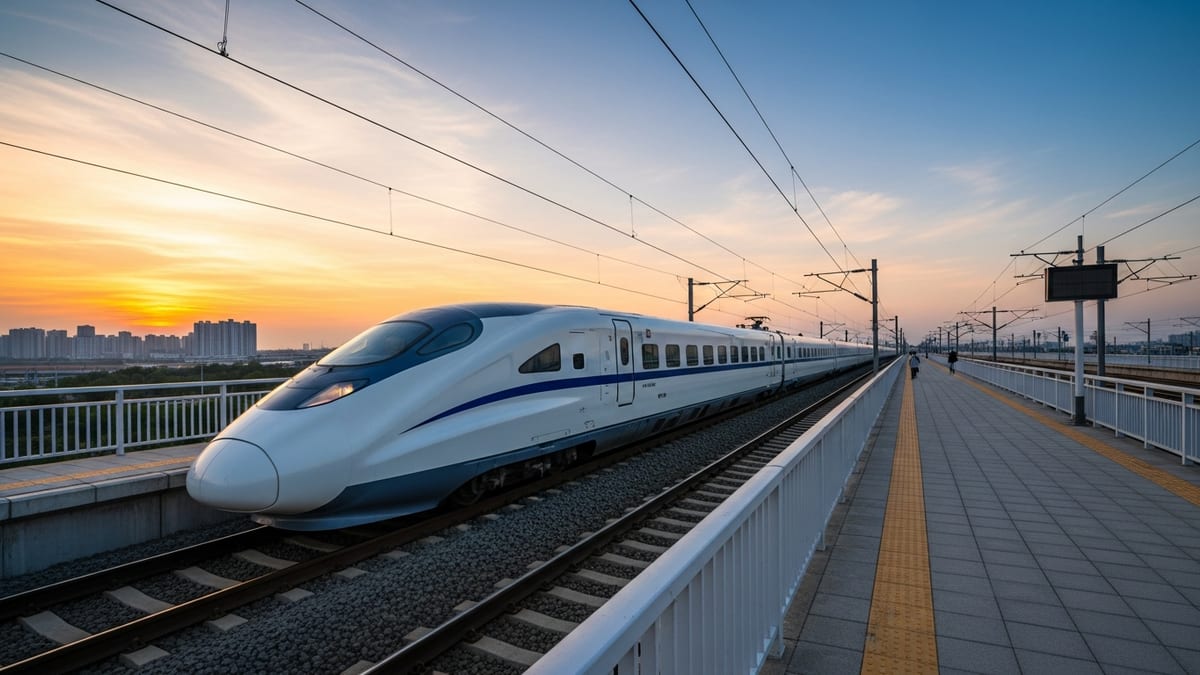
New High-Speed Link Puts Yuhuan on the Tourist Map
The latest boost to Zhejiang’s transport network comes through the Wenling–Yuhuan section of the Hangzhou–Taizhou high-speed railway, which has entered trial operations ahead of full passenger service. Publicly available information from Zhejiang’s transport and development agencies indicates that this segment, long under construction, is the final coastal spur of the line and formally brings Yuhuan into the national high-speed rail grid.
The broader Hangzhou–Taizhou corridor opened to passengers in January 2022, cutting travel times between the provincial capital and the manufacturing hubs of Taizhou. With the Yuhuan extension advancing, travelers will be able to board a train in inland tourism centers such as Hangzhou and Shaoxing and reach the Yuhuan area with only one or two transfers, replacing highway journeys that could previously take half a day or more.
Local planning documents and regional media coverage describe the new section as a strategic connector for the Taizhou Bay area, where port logistics, offshore wind projects and marine tourism are being developed in tandem. By tying Yuhuan into the same high-speed system that already feeds tourists to nearby cities such as Taizhou and Wenzhou, the line is expected to channel more weekend and short-break visitors to the city’s coastal attractions.
Travel platforms tracking search and booking patterns in eastern China already show a seasonal swing toward domestic coastal destinations as families seek alternatives to long-haul trips. The addition of a direct high-speed rail gateway is likely to strengthen Yuhuan’s position within this market, particularly among younger travelers who plan itineraries around rail access.
Part of a Rapidly Expanding Zhejiang Rail Web
The Yuhuan connection builds on a series of high-speed openings that have transformed Zhejiang’s tourism geography in recent years. The Hangzhou–Shaoxing–Taizhou intercity high-speed line, which began service in 2022, has been highlighted in regional coverage for linking historical water towns, ancient temples and coastal resorts and for operating at speeds of up to 350 kilometers per hour.
In September 2024 the 276 kilometer Hangzhou–Wenzhou high-speed railway entered full operation, creating what provincial planners describe as a one hour traffic circle between Hangzhou and the southern city of Wenzhou. Reports on the line’s first full summer season in 2025 note that it had already carried more than 12 million passengers, with trains stopping at intermediate destinations such as Pujiang, Yiwu, Dongyang and Xianju, all of which market themselves aggressively to domestic tourists.
Yuhuan sits just off this coastal axis, and the completion of the Wenling–Yuhuan section effectively plugs the city into this established flow of leisure travelers. Passengers arriving from Hangzhou or from further afield via Shanghai’s interprovincial high-speed links will be able to change at Taizhou or Wenling for Yuhuan services, converting what was once a complex trip involving buses and local trains into a relatively seamless, rail-focused journey.
National railway investment plans continue to prioritize dense, interconnected grids in economically dynamic regions such as the Yangtze River Delta. Analysts examining these networks point out that smaller coastal cities can experience disproportionately strong tourism gains once they obtain their first direct high-speed rail access, as they become viable as stand-alone weekend destinations rather than add-ons to larger city tours.
Coastal Attractions Poised for Visitor Growth
Yuhuan’s appeal lies in a combination of rugged coastline, island scenery and working fishing ports that contrast with the more urban waterfronts of Ningbo or Wenzhou. Municipal tourism information highlights routes that take visitors to offshore islands, sea-view hiking trails and villages known for seafood restaurants and homestays, many of which have been refurbished in recent years to tap rising demand for so called rural leisure tourism.
Previously, reaching these areas required long-distance highway travel from regional hubs or private car transfers from Taizhou. With the new high-speed link, tourism operators are beginning to promote rail-plus shuttle packages that bundle high-speed tickets with minibus transfers to island docks or village guesthouses, making it easier for travelers unfamiliar with the region to navigate local transport.
Travel booking data compiled by domestic platforms after earlier high-speed openings in Zhejiang suggests that newly connected counties often see an initial spike in same day and one night stays, particularly from neighboring cities. As awareness grows, the pattern tends to shift toward longer weekend visits, with family groups and self-guided travelers forming the core of demand.
Industry observers expect a similar trajectory for Yuhuan, especially given its proximity to major population centers. From Hangzhou and Shanghai, journey times that once deterred casual trips are expected to fall to a level where Friday evening departures and Sunday returns become feasible, encouraging short, repeat visits rather than rare, once in a lifetime excursions.
Economic Ripple Effects Across Zhejiang’s Tourism Belt
Beyond passenger numbers, the Wenling–Yuhuan connection is anticipated to feed into Zhejiang’s broader effort to rebalance growth between its inland manufacturing cities and its coastal and island regions. Policy papers from the province’s development authorities identify high-speed rail tourism as a tool for lifting service industries in smaller cities while easing pressure on saturated hotspots.
As more visitors arrive in Yuhuan by rail, secondary businesses in accommodation, dining and local transport stand to benefit. Experience from other newly connected cities in Zhejiang indicates that boutique hotels, themed homestays and small cultural venues are among the earliest winners, often followed by upgrades to public waterfront spaces and the creation of new coastal walking routes.
Regional tourism planners also point to the potential for multi stop itineraries that combine Yuhuan with better known destinations along the Hangzhou–Wenzhou corridor. Travelers might spend one night in the commercial hub of Yiwu or the historic landscapes of Xianju before continuing onward to Yuhuan’s islands, creating new patterns of movement and extending average stays within the province.
At the same time, analysts caution that increased visitor flows will test the resilience of Yuhuan’s coastal environment and heritage sites. Local authorities have signaled, through published planning frameworks, an intention to cap development intensity in sensitive areas and to steer tourist facilities toward existing urbanized zones, an approach that reflects growing national emphasis on sustainable coastal tourism.
Domestic Travel Boom Sets the Context
The timing of Yuhuan’s debut on the high-speed rail map coincides with a broader resurgence in China’s domestic tourism. Research from the China Tourism Academy and other national institutions indicates that domestic trips and tourism revenue have rebounded strongly, with short haul and interprovincial journeys accounting for a growing share of the market.
In this context, Zhejiang’s dense high-speed rail network has become a competitive asset. Lines completed since 2022, including routes linking Hangzhou to Yellow Mountain in neighboring Anhui and strengthening connections within the Yangtze River Delta, have reinforced the province’s role as both a source and destination of rail based leisure travel.
Yuhuan’s new connection is expected to feed into this momentum by diversifying the province’s coastal offerings. For many urban residents of Shanghai, Hangzhou or Nanjing who have already visited well known seaside resorts, the prospect of exploring less commercialized islands reachable by high-speed train offers a fresh alternative without the need for air travel.
As trial operations on the Wenling–Yuhuan segment progress toward full service, travel industry observers will be watching closely to see how quickly visitor numbers respond. Early passenger data from comparable lines in Zhejiang suggest that once regular high-speed schedules are in place, even relatively small coastal cities can experience a rapid shift from peripheral stops to prominent pins on China’s domestic tourism map.