


More news on this day
Flight suspensions between Dhaka and Riyadh have left thousands of Bangladeshi workers and pilgrims stranded this week, as ongoing security disruptions at Saudi airports force airlines to cancel services and rapidly rework schedules.
Get the latest news straight to your inbox!
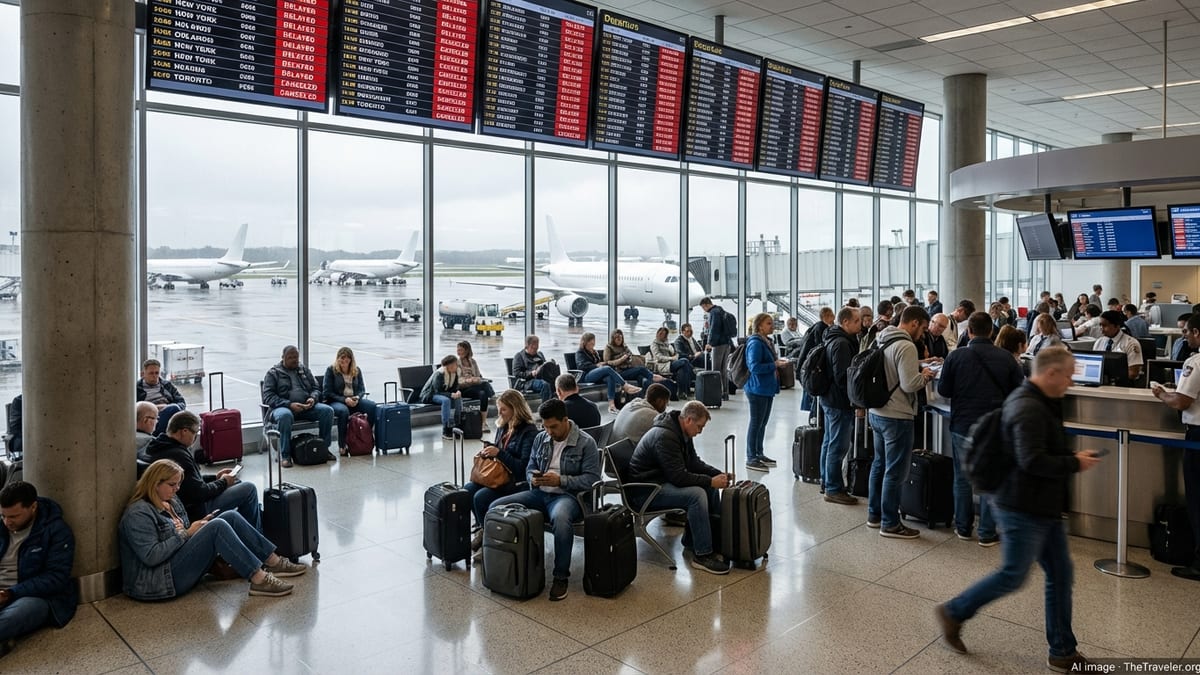
Saudi airport attacks ripple through Dhaka’s main gateway
According to publicly available data from the Civil Aviation Authority of Bangladesh (CAAB), an escalating security crisis at Saudi airports has triggered repeated closures and restrictions at Riyadh’s King Khalid International Airport since 8 October 2026. The measures follow reported missile attacks on the airport, including an incident that destroyed a Saudia Airbus A320 parked on the ramp.
Initial cancellations began on 10 and 11 October, when Dhaka media coverage indicated that eight Riyadh bound flights were grounded and nearly 3,000 passengers were left waiting at Hazrat Shahjalal International Airport. Over the following days, the disruption widened from Riyadh to other Saudi gateways such as Dammam and Jeddah, compounding the impact for travellers originating in Bangladesh.
By 12 October, CAAB statistics cited in local reports showed that 51 flights on Saudi routes had been cancelled or suspended, stranding 5,418 passengers either in Dhaka or at transit points abroad. Those figures covered both direct services and flights routed via hubs in the Gulf and elsewhere that were unable to complete their final legs into Saudi airports.
Travel industry coverage published on 16 October now points to an even larger footprint: 107 flights between Dhaka and Saudi Arabia have been cancelled since 10 October, affecting around 16,620 passengers. Despite that wider number, the Dhaka–Riyadh corridor remains at the centre of the crisis because of the complete halt of regular services on the route.
Dhaka–Riyadh route shut as Biman and others suspend operations
The most high profile move came from national carrier Biman Bangladesh Airlines, which announced on 10 October that it was suspending all Dhaka–Riyadh flights following the explosion at King Khalid International Airport. Subsequent press statements extended the suspension several times, with the latest public information showing cancellations on the route through at least 18 October.
Reports indicate that other operators on the Dhaka–Riyadh corridor have also been badly hit. Data compiled from CAAB and local aviation coverage show that, among the first wave of 12 cancelled direct flights to Saudi Arabia, four were operated by Biman, two by US Bangla Airlines, three by Saudia and three by Riyadh Air. Additional cancellations were later recorded as the situation in Saudi airspace evolved.
The Dhaka–Riyadh shutdown has had knock on effects on related services. Biman has also suspended flights to Dammam during parts of the period and has reallocated aircraft to other Saudi routes perceived as less exposed to the current security risk, notably Jeddah and Madinah. Private Bangladeshi carriers and foreign airlines serving the market have been forced to adjust frequencies or reroute passengers at short notice.
As of 16 October, publicly available schedules and airline statements suggest that there is no confirmed restart date for routine Dhaka–Riyadh operations. Carriers continue to review conditions at Saudi airports on a day to day basis, with many urging passengers to check flight status shortly before departure.
More than 5,000 stranded in first wave, with numbers still rising
The headline figure of roughly 5,000 stranded passengers emerged from CAAB’s assessment on 12 October, when 5,418 travellers were reported affected by the initial 51 cancellations and suspensions. Most were bound for Riyadh, Jeddah and Dammam, either to take up or resume overseas employment or to perform religious travel such as Umrah.
Since then, updated tallies from aviation authorities and airport management, cited in Bangladeshi media on 16 October, suggest that the cumulative total has grown to at least 16,620 passengers as further flights have been removed from the schedule. The stranded include travellers already at Hazrat Shahjalal International Airport in Dhaka, as well as Bangladeshis stuck at intermediate hubs whose onward sectors to Saudi Arabia have been cancelled.
The concentration of affected passengers on labour migration routes has heightened concern. Bangladesh sends hundreds of thousands of workers to Saudi Arabia each year, and many of them travel on tightly timed visas and work contracts. Cancellations on the Dhaka–Riyadh route in particular have left groups of migrant workers facing the possibility of expired entry permits, missed joining dates and significant financial losses.
Coverage from passenger interviews and social media postings highlights scenes of crowded terminal halls, families waiting overnight with luggage and travellers searching for alternative routings. While some have been rebooked on later departures or diverted to other Saudi cities where flights are still operating, others have been asked to return home to await further notice.
Airlines add capacity to Jeddah and Madinah to ease backlog
With direct Dhaka–Riyadh services suspended, airlines are turning to other Saudi gateways to keep at least some travel moving. Biman has publicly detailed a series of mitigation measures, including the deployment of larger widebody aircraft on its Dhaka–Madinah route and the scheduling of additional flights to Jeddah to accommodate passengers who had been booked on cancelled Riyadh and Dammam services.
Local business and aviation media report that Biman has used Boeing 777 aircraft in place of smaller 787s on selected Saudi runs, raising the number of available seats on each flight by nearly 150. Extra frequencies to Jeddah have been added on a temporary basis, prioritising travellers with imminent visa or reporting deadlines.
Other carriers have adopted similar strategies. Some passengers originally holding Dhaka–Riyadh tickets on foreign airlines have been reprotected onto services terminating in Jeddah or Madinah, then advised to continue their journeys overland within Saudi Arabia if local conditions and personal circumstances allow. However, options remain constrained, and not all stranded travellers have been able to secure timely alternatives.
Reports also indicate that airlines are advising customers to monitor updates closely, as further adjustments remain possible depending on the security picture and any new restrictions introduced by Saudi aviation authorities.
Uncertain timeline keeps travellers and tour operators on edge
The key challenge for travellers and the wider travel trade is the lack of a clear timeline for the full reopening of Riyadh and Dammam to routine international traffic from Dhaka. While some limited operations have reportedly been able to use Saudi airspace under special arrangements, the combination of prior attacks and subsequent security alerts has kept capacity on core routes severely constrained.
Tour operators in Bangladesh that specialise in Umrah and labour travel have reported, through local media coverage, extensive rescheduling efforts and the temporary suspension of new bookings on Riyadh bound itineraries. Many agents are focusing on Jeddah and Madinah based packages instead, while warning clients that onward ground transport within Saudi Arabia could take longer and cost more than flying directly into Riyadh.
Public travel advisories issued by foreign missions in Saudi Arabia and carried by regional media have also drawn attention to the possibility of sudden flight cancellations, airspace closures and diversions. Travellers are being encouraged to maintain flexible plans, keep contact details updated with airlines and agents, and ensure that they hold sufficient funds and documentation in case of extended delays.
For now, the halt of Dhaka–Riyadh flights and the broader Saudi airport disruption remain a moving story. With thousands of passengers still waiting for confirmed departures and airlines reassessing security and capacity day by day, the resumption of normal travel patterns between Bangladesh and Saudi Arabia appears to depend heavily on developments far beyond the check in counters at Hazrat Shahjalal International Airport.