


More news on this day
Overnight drone alerts over Moscow turned Vnukovo International Airport into an impromptu waiting room for thousands of passengers, as a sweeping airspace shutdown left flights grounded and travelers scrambling for alternatives across the Russian capital.
Get the latest news straight to your inbox!
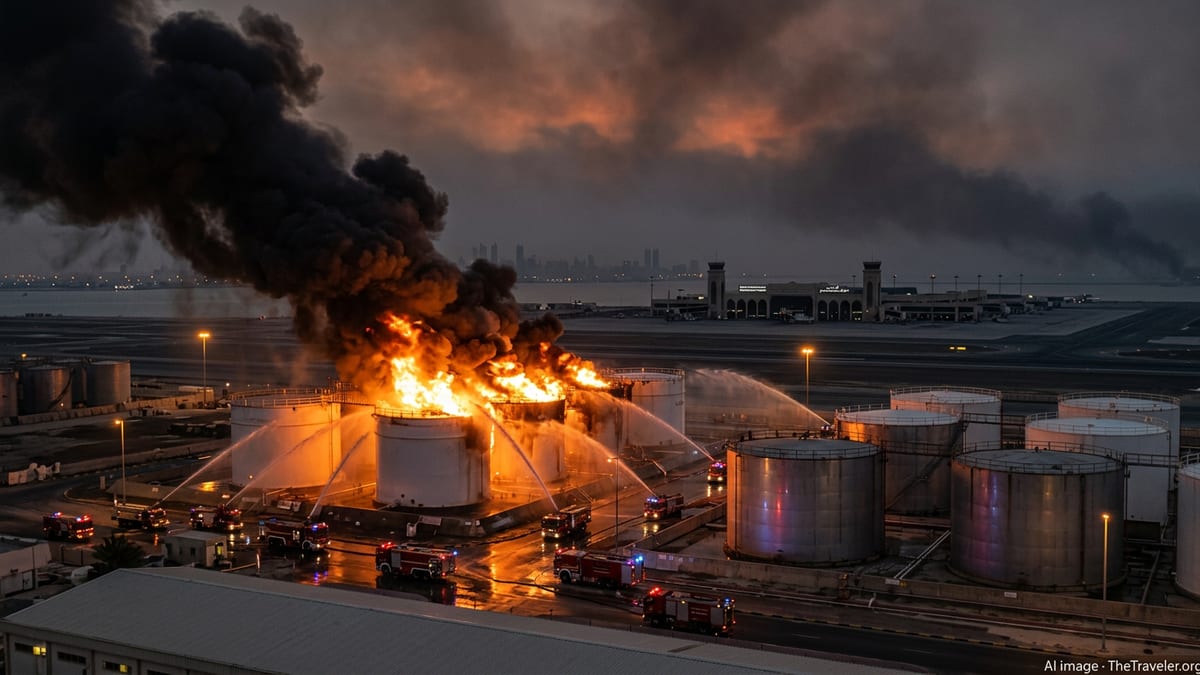
Overnight Closures Hit Vnukovo Hardest
According to publicly available flight tracking data and Russian aviation notices, operations at Vnukovo were suspended from the evening of October 15 into the early hours of October 16 as part of a wider halt at all four of Moscow’s main airports. Civil aviation regulator Rosaviatsia ordered temporary restrictions on arrivals and departures at Vnukovo, Sheremetyevo, Domodedovo and Zhukovsky while air defenses responded to reported Ukrainian drone activity in the region.
Coverage from outlets including Euronews and independent Russian and Ukrainian media indicates that more than 160 flights were delayed or canceled across the Moscow airport system during this latest incident, with Vnukovo and Sheremetyevo shouldering a large share of the disruption. Earlier in October, Vnukovo had already recorded dozens of cancellations and more than a hundred delayed flights in a single day during a previous drone alert, underscoring how exposed the airport has become to airspace security measures.
On October 16, Russian and international reports described airport departure boards in Moscow as dominated by delay notifications, with some passengers waiting through the night as airline schedules were repeatedly revised. While exact passenger counts for this latest disruption have not been released, previous data from Russian insurers and aviation analyses show that millions of travelers in 2026 have already experienced multi-hour delays linked to drone-related airspace restrictions.
“Kovyor” Procedures Turn Terminals Into Holding Areas
Publicly available information about Russian aviation safety protocols shows that authorities increasingly rely on a special emergency regime known as “Kovyor” when a drone or balloon threat is detected near major airports. Once activated, this procedure effectively freezes departures and diverts or holds arriving aircraft until the airspace is declared clear, even if no impact or debris is reported at the airport itself.
Analyses by aviation-focused outlets note that when “Kovyor” is in force, crews may be forced to circle outside the affected area, divert to alternate airports such as St. Petersburg’s Pulkovo, or return to origin, depending on fuel and route constraints. For travelers at Vnukovo, this translates into crowded terminals, long lines at airline service desks and rapidly shifting departure times that can change multiple times in a single hour.
Recent coverage has highlighted how these closures often spill into the following day. Aircraft and crews end up in unexpected cities after diversions, which then disrupts the next morning’s departures even after the immediate drone alert has been lifted. In earlier October shutdowns, some Vnukovo flights reportedly left many hours behind schedule, with occasional long-haul services delayed well into the next calendar day.
Growing Pattern of Drone-Linked Disruptions
The latest shutdown at Vnukovo fits into a broader pattern of drone-related flight disruptions affecting Moscow’s aviation system in 2026. Published data cited by Russian business media shows that cancellations on regular passenger flights across Russia roughly doubled between January and September 2026 compared with the same period in 2025, with insurers explicitly linking the increase to emergency airspace restrictions triggered by drone threats.
Throughout early October, Moscow’s four main airports experienced repeated overnight closures and rolling restrictions. Reports indicate that between October 1 and 14, runways in the capital were closed for more than 100 cumulative hours, more than twice the total recorded for the whole of September. Vnukovo has often appeared as one of the worst affected, in part because it handles a mix of domestic services, leisure routes to destinations such as Turkey and the Caucasus, and official government flights.
Coverage by international media has also drawn attention to specific high-profile disruptions earlier in the month, including reports that government aircraft returning from Central Asia were forced to alter their approach patterns or routes during a drone alert near Moscow. These incidents, while politically significant, mirror the experience of ordinary passengers whose flights are delayed or diverted under the same safety protocols.
What Stranded Travelers at Vnukovo Are Facing
For travelers on the ground, the immediate challenge during a drone-linked shutdown is uncertainty rather than physical danger. Airlines typically cite “air traffic control restrictions” or “airspace closure” as the reason for delays. Because the closures are imposed at short notice and lifted unpredictably, it is difficult for carriers to provide accurate revised departure times, leading to multiple rolling updates on information screens at Vnukovo’s terminals.
Reports from recent shutdowns around Moscow describe passengers sleeping on seats or on the floor, queues forming at check-in and rebooking counters, and growing competition for limited hotel rooms near the airport once it becomes clear that departures will not resume quickly. With international payment systems restricted in Russia, many foreign travelers face added complexity when trying to rearrange ground transport or short-notice accommodation using local services.
Publicly available information from airlines serving Vnukovo suggests that rebooking options during these events depend heavily on ticket type and carrier policy. Some passengers on flexible or more expensive fares may be shifted to later flights without additional charge, while those on heavily discounted tickets can encounter fare differences or change fees if they choose alternative routes. However, when a large portion of the schedule is affected, even passengers entitled to free rebooking may find that replacement seats are only available days later.
Planning Ahead for Travel Through Moscow
Given the frequency of recent drone-related airspace closures over central Russia, travel specialists and aviation analysts quoted in open sources have begun to treat drone alerts as a structural risk factor for journeys involving Moscow’s airports, including Vnukovo. While no formal long-term timetable changes have been announced in response to the latest incident, the accumulation of disruptions since spring 2026 suggests that travelers using Vnukovo should prepare for heightened uncertainty, particularly on overnight and early-morning services.
Passengers transiting through Moscow on complex itineraries are increasingly advised by public travel guidance to consider longer layovers or alternative routings if time-sensitive connections are critical. Some international carriers have already scaled back or rerouted services to avoid central Russian airspace during periods of heightened tension, which in turn reduces the options available for same-day rebooking when a shutdown occurs.
For those who must travel through Vnukovo, monitoring flight status through airline applications and global flight-tracking platforms has become essential. Because notices from Russian aviation authorities may not be easily accessible in all languages, third-party tracking services and international news outlets often provide the first clear indication that a drone threat has affected the airport. In the current environment, travelers heading to or from Moscow face an airspace that can change rapidly, with last-minute drone alerts capable of turning a routine departure from Vnukovo into an overnight stay in the terminal.