


More news on this day
Australian travellers are being urged to avoid popular Middle East transit hubs and be prepared to shelter in place if already in the region, as the government’s latest advice highlights a fast-shifting security landscape affecting key routes between Australia, Europe and Africa.
Get the latest news straight to your inbox!
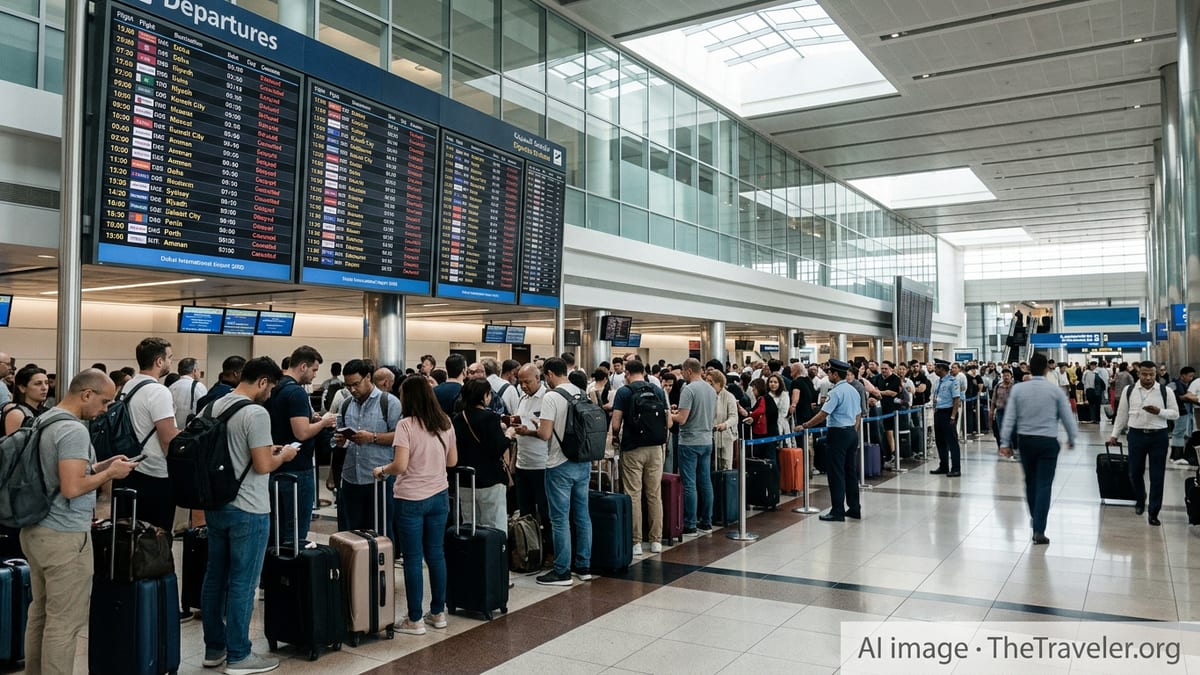
Fresh warnings for Middle East gateways
Publicly available guidance from Australia’s Smartraveller service shows extensive “do not travel” advisories now apply across much of the Middle East, including several countries that host major aviation hubs relied on by Australians connecting to Europe and beyond.
Recent coverage in Australian media indicates the federal government has gone further than country-level alerts by cautioning against transiting through some high‑traffic Gulf airports. Reports describe sharpened wording that tells Australians not to use certain Middle East hubs as stopovers where conflict risks, missile threats or terrorism concerns have intensified.
At the same time, crisis messaging used in Iraq and Iran in recent months emphasises that Australians who cannot leave affected locations may need to “shelter in place” for periods of heightened danger, staying indoors, limiting movement and closely monitoring local developments. Similar language appears in guidance for other destinations in the region, signalling that travellers could experience rapid shifts from normal operations to emergency posture.
The combination of transit warnings and shelter‑in‑place instructions marks a significant change for a generation of Australian travellers accustomed to using Gulf hubs as routine waypoints on long‑haul journeys.
How the Smartraveller alerts have tightened
According to the Smartraveller destination index, many Middle Eastern countries are currently listed at the highest advisory level, “do not travel,” with others at “reconsider your need to travel” or “exercise a high degree of caution,” reflecting what officials describe in public documents as an unpredictable regional security environment.
Media reports focusing on Australia–Europe itineraries note that government advice no longer distinguishes sharply between flying to a destination and simply changing planes in a high‑risk hub. In practical terms, this means an Australian passing through a Gulf airport may now be treated in travel advice as exposed to similar security considerations as someone entering the country itself.
Separate Smartraveller guidance on crisis situations explains that in fast‑moving conflicts or terror threats, travellers may be urged to avoid airports, energy facilities and locations associated with particular political or military actors. In Iraq, for example, Australians have previously been told to remain indoors and shelter in place when intelligence suggested an elevated threat of attacks near key infrastructure.
This framework now underpins the stronger line on Middle Eastern gateways: if airport or airspace security is in question, travellers are warned that evacuation options could narrow quickly and that they should not assume a booked connection guarantees safe passage.
What shelter in place means for travellers
The phrase “shelter in place,” widely used during the COVID‑19 pandemic and in responses to armed incidents, has a specific meaning in today’s travel context. Public advisories describe it as remaining in a secure indoor location, limiting exposure to windows, avoiding unnecessary trips outside and staying alert to official updates and local media.
For Australians in a Middle East hub facing abrupt escalation, that could mean staying inside an airport hotel room or other accommodation, keeping identification and essential documents accessible, and waiting for clear information before moving. Crisis guidance from government sources stresses that individuals should have basic supplies such as water, food, prescriptions and phone‑charging options in case movement is restricted for an extended period.
Shelter‑in‑place alerts may also coincide with curfews, suspension of public transport or temporary airport closures. Travellers are advised in public information materials to avoid crowded areas, demonstrations and high‑profile sites, even if daily life appears to continue normally in other parts of the city.
Australian consular guidance further notes that in many emergency scenarios, commercial flights will be the primary way out, and that travellers should not rely on dedicated evacuation missions. This amplifies the importance of monitoring airline notices closely and being ready to adjust plans quickly if a route is suspended.
Impact on flights between Australia and Europe
Coverage by Australian broadcasters and travel industry outlets in recent months highlights that the shift in advice is already changing how people move between Australia and Europe. Reports indicate that many travellers are reconsidering bookings through Dubai, Doha and other Gulf hubs in favour of Asian or North American connections, despite longer flight times and, in some cases, higher fares.
Airlines serving the traditional “kangaroo route” have begun adjusting capacity to match this changing demand profile. Australian media has pointed to increased seating on some non‑Middle East long‑haul segments and growing interest in itineraries via Singapore, Tokyo and Seoul, particularly among risk‑averse leisure travellers.
Industry commentary also notes that travellers holding tickets through affected hubs may face schedule changes, rerouting or the need to purchase entirely new itineraries if carriers modify operations in response to evolving security assessments. Travel agents in Australia are reported to be fielding higher volumes of queries from customers seeking alternatives that do not cross Middle Eastern airspace at all.
This environment has created a patchwork of options where those set on avoiding the region may need to accept multi‑stop journeys or overnight layovers in other continents, with flow‑on effects for insurance coverage and overall trip costs.
Planning safer routes in a volatile region
Given the evolving advisories, publicly available guidance encourages Australians to check Smartraveller and airline updates at multiple stages: when planning, before purchasing tickets, and again in the days leading up to departure. Special attention is recommended for itineraries that list code‑share flights, as the operating carrier and route may differ from what appears at first glance.
Travel risk specialists quoted across Australian and international coverage suggest building flexibility into itineraries, such as choosing fares that allow changes with lower penalties and budgeting both time and money for possible re‑routing. They also point to the value of comprehensive travel insurance that explicitly covers disruptions linked to security incidents or government advice changes, noting that exclusions can apply if travellers ignore do‑not‑travel warnings.
Universities, companies and other organisations with staff overseas have started revisiting their internal travel policies, with some published guidance stating that work trips cannot transit countries rated at the highest Smartraveller advisory level. This institutional caution is feeding into broader public awareness of the risks involved in relying on certain hubs.
For individual leisure travellers, the key message emerging from official advisories and media analysis alike is that routes once viewed as neutral corridors between continents now carry geopolitical risk. In the current climate, Australians are being encouraged to weigh convenience against exposure to fast‑moving crises, to have contingency plans if shelter‑in‑place alerts are issued, and to recognise that transit choices can be as critical to personal safety as the destination itself.