


More news on this day
A wave of deadly missile and drone strikes on Riyadh’s King Khalid International Airport has triggered urgent travel warnings and widespread flight disruption, raising serious questions about the safety of using Saudi Arabia’s main air hub as a transit point.
Get the latest news straight to your inbox!
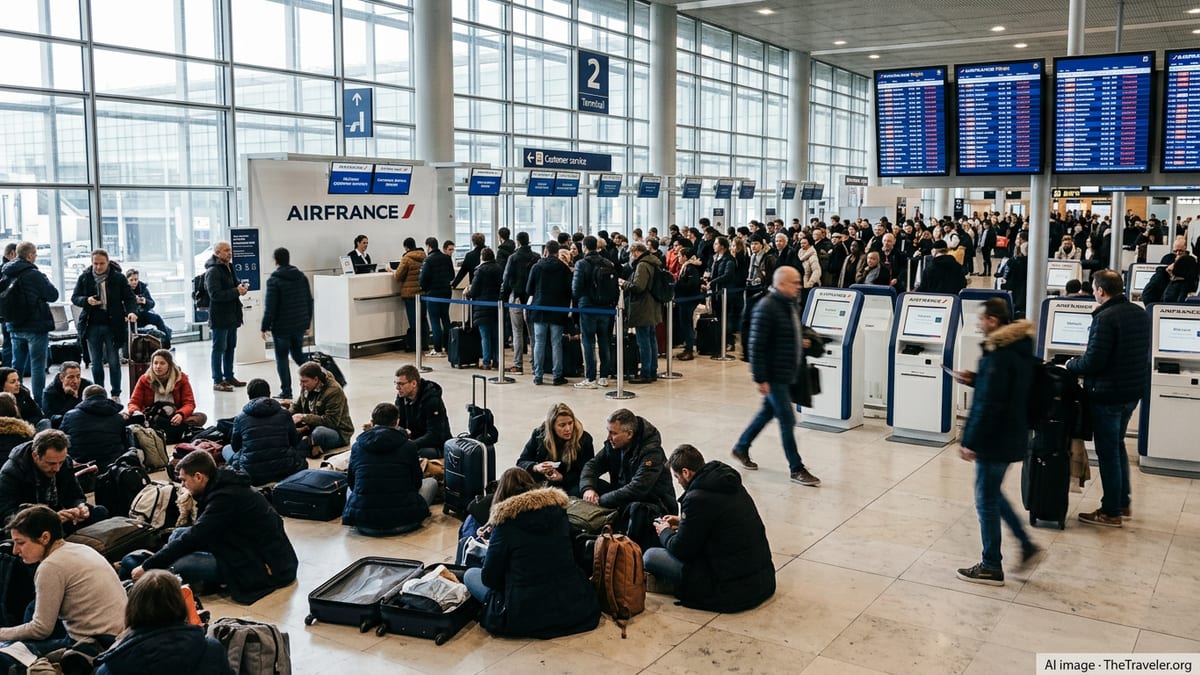
Deadly strikes shut a key Gulf aviation hub
Publicly available information from international media and aviation records indicates that between 6 and 12 October 2026, Yemen’s Houthi movement launched a series of coordinated attacks on airports in Saudi Arabia, with King Khalid International Airport in Riyadh the hardest hit. Reports from multiple outlets describe a major strike on the afternoon of 10 October that tore through a passenger terminal, killing at least 12 people and injuring more than 300, in what observers characterize as the deadliest attack in a Gulf Arab state in more than a decade.
Follow up coverage from agencies and broadcasters describes further projectiles hitting the airport complex on 11 October, including the domestic terminal area, despite heightened security measures. Additional attacks and attempted strikes were also reported at Abha and Dammam airports during the same week, contributing to a broader sense of vulnerability across Saudi Arabia’s civil aviation network.
In the immediate aftermath, authorities suspended all flights in and out of Riyadh, diverting traffic to other regional hubs and leaving thousands of travellers stranded across multiple continents. Flight tracking data and airline statements compiled in global coverage show hundreds of cancellations and diversions over several days, with some airlines announcing temporary suspensions of Riyadh services altogether.
Analysts quoted in public reporting on the incident note that the use of a combination of drones, cruise missiles and ballistic missiles enabled the attackers to penetrate layered air defences along a flight path of more than 1,000 kilometres. Aviation specialists commenting in international media suggest that this represents a significant escalation in the threat profile for civilian airports and overflight corridors across parts of the Arabian Peninsula.
Foreign governments issue strong travel warnings
The severity and frequency of the strikes have led to rapid changes in government travel advice for Saudi Arabia. Updated guidance from the United Kingdom’s Foreign, Commonwealth and Development Office states that, following the 10 October mass casualty incident at King Khalid International Airport, British nationals are advised to stay away from the facility until it is declared secure. The same advisory notes an expanded warning against all but essential travel to several Saudi cities and to all airports in the kingdom except Medina.
Similar language appears in revised advisories issued by other governments. Ireland’s Department of Foreign Affairs has warned citizens about travel to Saudi Arabia after the Riyadh attacks, while coverage of Australia’s Smartraveller service highlights a recommendation that Australians not travel to King Khalid International Airport and reconsider the need for non essential trips to Saudi Arabia. These advisories emphasise the likelihood of further attacks and the possibility of sudden airspace closures.
For United States citizens, publicly available information about embassy security alerts indicates that the US mission in Riyadh has strongly recommended avoiding King Khalid International Airport and the surrounding area following the October strikes. The alert also reiterates longstanding restrictions on US government travel within parts of Saudi Arabia due to the risk of missile and drone attacks, highlighting that official movements face tighter controls than those applied to private travellers.
Collectively, the updated advisories shift Saudi Arabia, and particularly Riyadh, higher on global risk maps. While the precise wording varies by country, a common trend emerges in open source travel guidance: travellers are urged to steer clear of Riyadh’s main airport for the time being, monitor developments closely and maintain flexible plans should the security picture change again at short notice.
Flight cancellations, diversions and insurance complications
The attacks have had an immediate impact on airline operations in and out of Saudi Arabia. International coverage notes that carriers including European, South Asian and Gulf operators have cancelled numerous flights to Riyadh or suspended routes entirely in the days following the strikes. Some airlines are reported to be rerouting traffic through alternative Middle East hubs, placing additional pressure on already busy airports in Doha, Dubai and Abu Dhabi.
Airlines that continue to operate limited services into Saudi Arabia are advising passengers to reconfirm departure times before travelling to the airport, and to expect last minute schedule changes. Travel industry reporting suggests that even when flights are technically still listed, operational decisions can shift quickly if new threats emerge or if airspace restrictions tighten. Travellers with tight connections risk missed onward flights and extended layovers while airlines rework schedules.
The evolving security situation also has implications for travel insurance. Many comprehensive policies include specific exclusions for acts of war or terrorism, and some underwriters apply separate conditions for travel to areas with elevated risk ratings. Insurance specialists quoted in industry analyses advise travellers to review policy documents carefully to understand whether disruptions linked to missile or drone attacks at airports would qualify for trip cancellation or interruption cover, or whether such events fall under general exclusions.
For travellers who booked non refundable tickets through Riyadh in the coming weeks, airline rebooking and refund policies become critical. Some carriers are waiving change fees for journeys that include Riyadh or other affected Saudi airports, allowing passengers to reroute via different hubs or postpone travel. Others may offer credit vouchers instead of cash refunds. Because these policies differ by airline and can be revised frequently, the safest approach is for passengers to check directly with the carrier or their travel agent before making any decisions.
Risk assessment for transit and regional travel
For many international travellers, Riyadh functions primarily as a transit point rather than a final destination. The recent attacks raise an urgent question: how risky is it to use the airport as a connection hub while the security situation remains volatile? Aviation security commentators cited in global coverage stress that any facility repeatedly targeted by long range weapons faces a higher baseline risk until robust protective measures prove effective over time.
However, it is important to separate different layers of risk. The likelihood of a direct hit on any specific flight or terminal at a given moment remains statistically low, yet the consequences of an attack can be severe, as shown by the casualty figures from 10 October. Beyond physical danger, travellers must also consider secondary effects such as prolonged shutdowns, diversions to unfamiliar airports and difficulties in reaching final destinations.
Regional travel within Saudi Arabia and neighbouring states is also affected. Intelligence and security briefings produced by private risk consultancies highlight that further attacks on airports are considered very likely, not only in Riyadh but potentially in other cities such as Dammam and Abha. While Medina currently appears to be treated as an exception in some advisories, there is no public guarantee that it will remain insulated from future escalation.
For travellers whose itineraries are flexible, routing connections through alternative hubs in the Middle East, Europe or Asia may reduce exposure to the most heavily targeted airports. Those with essential reasons to travel to or through Saudi Arabia are being encouraged in open source guidance to remain highly flexible, allow generous connection times, register with consular services where available and have contingency plans in place should flights be cancelled at short notice.
Practical guidance for travellers planning upcoming trips
Given the rapidly changing situation, the most consistent recommendation emerging from official advisories and travel industry commentary is to stay informed and avoid assumptions. Travellers with tickets involving Saudi airports over the coming weeks should check the latest government travel advice for their nationality, then cross reference this with up to date information from their airline or booking platform.
If a government advisory for a particular nationality has moved to a stronger level, such as advising against all travel or all but essential travel to a destination or a specific airport, some travel insurers may consider this grounds for cancellation cover if policies were purchased before the change. However, these provisions vary widely and may not apply if the policy explicitly excludes risks connected to war or terrorism, so confirmation with the insurer is essential.
Passengers already in the region who were planning to depart from Riyadh are being urged in public guidance to avoid travelling to King Khalid International Airport until flights have clearly resumed and the security status improves. Where possible, rebooking through another Saudi or regional airport that is not currently subject to active warnings may offer a safer alternative, provided that the onward route remains operational and local authorities permit transfers.
For those still at the planning stage, one emerging trend in expert commentary is a shift toward spreading risk by favouring itineraries that do not rely on a single high profile hub in a tense security environment. While this may involve slightly longer journeys or higher fares, it can reduce the chance of severe disruption if one major node, such as Riyadh, is suddenly taken offline by a new attack or by precautionary shutdowns of airspace.