


More news on this day
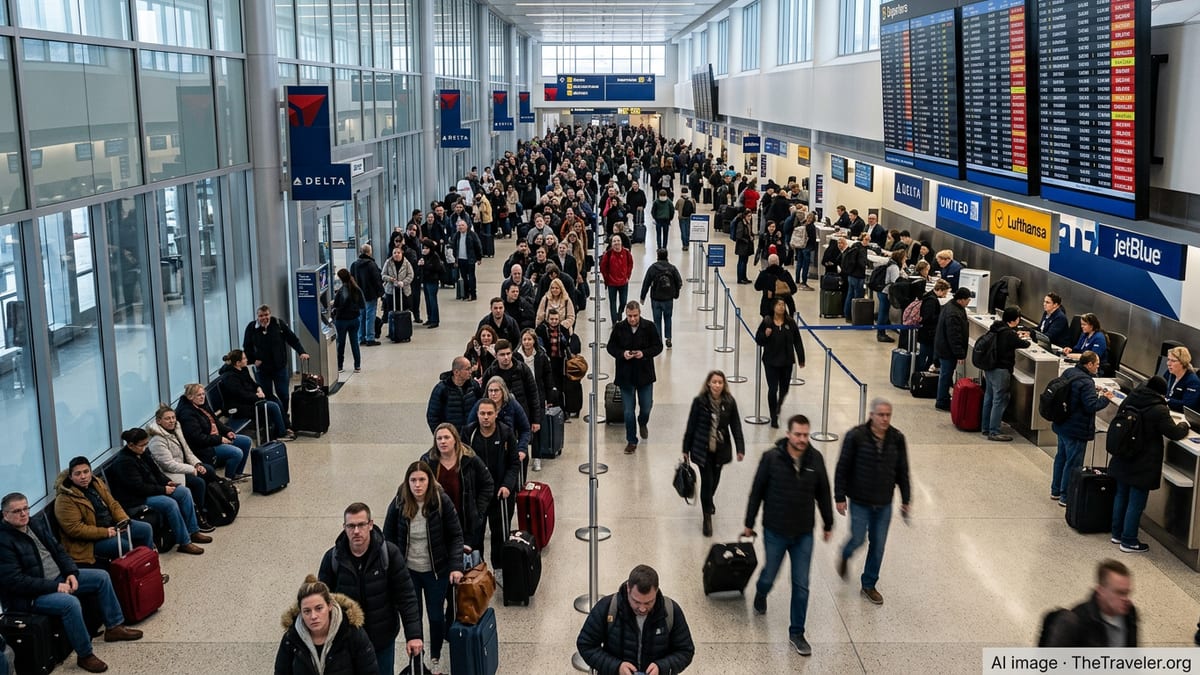
Flight restrictions at major Saudi Arabian airports have led to the suspension of 61 flights from Dhaka to Saudi destinations, initially stranding at least 8,381 passengers and disrupting one of Bangladesh’s busiest international travel corridors.
Get the latest news straight to your inbox!
Flight Suspensions Follow Airport Attacks in Saudi Arabia
Publicly available information from Bangladeshi and regional media indicates that the disruption began after a series of missile and drone attacks on Saudi airports, including Riyadh’s King Khalid International Airport and Dammam’s King Fahd International Airport. The strikes, attributed in multiple reports to Houthi forces based in Yemen, prompted temporary closures and tighter operating restrictions across parts of Saudi airspace.
Initial figures made public by the Civil Aviation Authority of Bangladesh (CAAB) in a late-night notice on Monday, 12 October 2026, showed that at least 61 flights between Dhaka and Saudi Arabia had been either cancelled or suspended over roughly a 48-hour period. Those flights, operating between Saturday night and Monday afternoon, were scheduled to serve passengers traveling from Dhaka to Riyadh, Dammam, Jeddah and onward destinations via transit hubs.
The first comprehensive update from CAAB and airport management sources put the number of affected travelers at 8,381. Subsequent tallies published in Bangladeshi outlets later raised the total number of disrupted passengers to more than 9,000 for those same 61 flights, and later above 15,000 as the period of disruption lengthened and additional flights were scrubbed or rescheduled.
Despite some limited resumptions at certain Saudi airports, notices to airmen and airline statements indicate that King Khalid International Airport in Riyadh remains shut to regular passenger operations until at least 17 October, with knock-on effects for routes from Bangladesh.
Which Flights and Airlines Are Affected
CAAB’s breakdown of the original 61 affected services shows that 22 were direct Dhaka–Saudi flights and 39 involved transit through third-country hubs. Among the direct services, nine were operated by Biman Bangladesh Airlines, seven by Riyadh Air, four by Saudia and two by US-Bangla Airlines, according to figures cited in multiple Dhaka-based news reports.
The suspended transit flights span a wide range of regional and Gulf carriers. Data summarized in local aviation coverage indicates that 16 affected flights were run by IndiGo, nine by Emirates, five each by Qatar Airways and flydubai, three by SalamAir and one by EgyptAir. Many of these services were carrying passengers whose final destination was Riyadh or Dammam, even when their first leg departed Dhaka for cities such as Doha, Dubai, Muscat or Abu Dhabi.
As attacks and airspace warnings continued, the disruption widened. Updated statistics published on 15 October show that a total of 103 Bangladesh–Saudi services had been cancelled or suspended over the five days since the initial strikes. Of these, 42 were direct flights and 61 were transit flights routed via other countries, with 15,779 passengers listed as affected in the latest CAAB figures shared through national media.
The evolving numbers highlight how quickly localized airport closures in Riyadh and Dammam have cascaded through the broader regional network, shifting the story from a short-term operational issue to an extended interruption of a critical labor and pilgrimage corridor.
Impact on Bangladeshi Workers and Religious Travelers
The Dhaka–Saudi route is a lifeline for Bangladeshi migrant workers and religious travelers. Reporting from labor and economic desks in Dhaka notes that in 2026 an average of around 1,200 new Bangladeshi workers were flying to Saudi Arabia each day, alongside a steady flow of returning workers and family visitors. Many of the 8,381 initially stranded passengers were holding employment visas or renewals with time-sensitive entry requirements.
Human-interest coverage from Bangladeshi outlets describes workers traveling long distances from rural districts to Hazrat Shahjalal International Airport in Dhaka, only to discover that their flights to Riyadh or Dammam had been called off. For travelers whose visas are close to expiry or whose employers expect immediate reporting dates, the uncertainty around when normal services will resume has raised concerns about job security and income loss.
The disruption has also affected pilgrims and visitors heading to Saudi Arabia for Umrah and other religious travel. With King Khalid International Airport in Riyadh closed and schedules at Dammam constrained, many passengers who had planned to travel via central or eastern Saudi Arabia have had to pivot to western gateways such as Jeddah and Madinah, if seats are available.
Bangladeshi recruitment agencies and travel operators quoted in domestic coverage warn that a prolonged outage on the Riyadh and Dammam routes could ripple through recruitment cycles, remittance flows and seasonal demand patterns, particularly if visa deadlines are missed or employers look elsewhere for labor amid uncertainty over flight reliability.
Airlines Adjust Routes and Capacity
In response to the closures and security concerns, airlines serving the Dhaka–Saudi market have begun adjusting networks and deploying additional capacity where possible. Public statements and media summaries show that Biman Bangladesh Airlines has suspended its Dhaka–Riyadh and Dhaka–Dammam services through at least Sunday, 18 October, citing passenger safety and the status of Saudi airports.
To partially offset the lost capacity, Biman has scheduled additional flights to Jeddah and upgauged aircraft on the Dhaka–Madinah route. On that corridor, Boeing 777 widebodies are being used in place of Boeing 787 aircraft, increasing available seats by roughly 148 per flight. Travelers with urgent needs are being advised, through airline notices relayed by local media, to consider routing via Jeddah or Madinah where operations remain open.
Privately owned US-Bangla Airlines has halted its Dhaka–Riyadh flights until at least 21 October, according to a notice summarized in national news reports. Other regional and Gulf carriers have adapted by cancelling Riyadh-bound segments, rerouting traffic away from central Saudi Arabia, or holding aircraft at origin points to avoid operating into airspace subject to repeated warnings.
Industry analysts quoted across regional coverage suggest that airlines will remain cautious until there is sustained evidence of stability around Riyadh and Dammam and clarity on any further missile or drone threats. As a result, even if formal airport closures are lifted on 17 October, travelers may continue to see reduced frequencies or last-minute schedule changes in the days that follow.
What Stranded Passengers Can Expect in the Coming Days
As of 16 October 2026, the aviation picture remains fluid. Notices referenced in international and Bangladeshi media show that Riyadh’s King Khalid International Airport is scheduled to stay closed to regular traffic until 17 October, while Dammam’s King Fahd International Airport has experienced intermittent suspensions and resumptions. Authorities in Saudi Arabia have not yet made detailed public commitments about longer-term operating conditions.
Bangladeshi outlets report that CAAB and airline representatives are working through backlogs of passengers on a rolling basis, with priority often given to travelers whose visas or work reporting dates are approaching. However, there is no single, coordinated rebooking window, and options depend heavily on the airline, fare type and flexibility of the original ticket.
Travelers affected by the 61 Dhaka–Saudi flights at the center of the initial disruption, as well as those impacted by the subsequent cancellations that brought the total to 103, are being asked through airline announcements to stay in touch with ticketing agents or carrier sales offices for updated itineraries rather than going directly to the airport without confirmed rebookings.
For now, the experience of the 8,381 travelers first reported as stranded, and the thousands more added to that number in later updates, underscores how quickly geopolitical tensions and targeted strikes can sever vital mobility links between South Asia and the Gulf. Until flight schedules through Riyadh and Dammam stabilize, Dhaka’s outbound workers and religious travelers are likely to face a patchwork of alternative routings, longer journeys and continued uncertainty.