


More news on this day
Deadly missile and drone attacks on Riyadh’s King Khalid International Airport have triggered a cascade of travel warnings, sweeping flight suspensions and growing uncertainty for passengers booked to transit Saudi Arabia in mid-October 2026.
Get the latest news straight to your inbox!
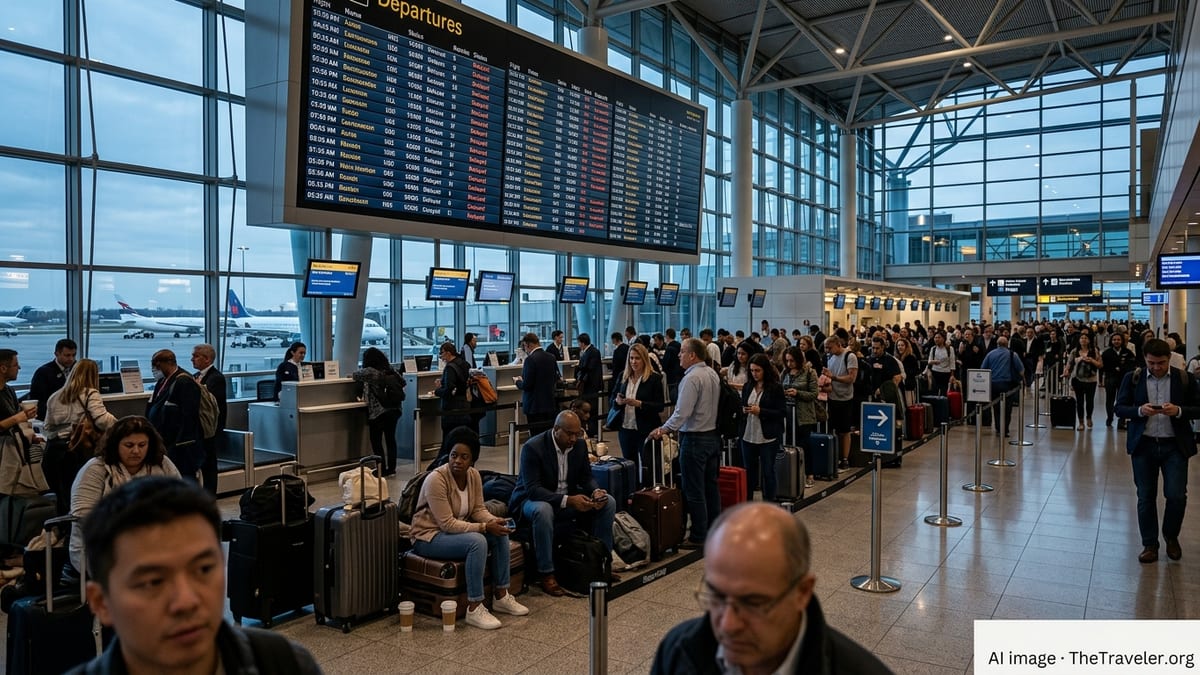
Riyadh’s main hub shuts after mass-casualty strikes
Publicly available information from international media and aviation trackers indicates that a series of Houthi missile and drone attacks struck multiple airports in Saudi Arabia between 6 and 12 October 2026, with King Khalid International Airport in Riyadh suffering the heaviest toll. Reports compiled by global news agencies describe at least one mass-casualty incident on 10 October at Riyadh’s Terminal 3, in which explosions tore through a crowded departure area.
Accounts summarised by outlets such as ABC News and other international media indicate that at least 12 people were killed and more than 300 injured in the 10 October attack alone, making it the deadliest strike in the kingdom in more than a decade. Subsequent projectiles reportedly hit the domestic terminal complex again on 11 October, causing further casualties and structural damage, while separate attacks were recorded at airports in Abha and Dammam.
In response, the General Authority of Civil Aviation in Saudi Arabia issued a notice extending the full closure of King Khalid International Airport to passenger traffic. According to analysis by security consultancies and specialist travel publications, the closure is scheduled to remain in place until at least 21:00 GMT on 17 October 2026, halting regular commercial flights into and out of the capital during that period.
Regional travel media note that the strikes have occurred against the backdrop of wider hostilities linked to the Yemen conflict and the Iran war of 2026, with Houthi spokespeople publicly warning that Saudi airports and airspace, apart from the holy cities of Mecca and Medina, are considered potential targets. This messaging, combined with visual evidence of the terminal blasts circulating via CCTV footage, has sharply escalated risk perceptions around aviation in the kingdom.
Governments issue strong travel warnings for Saudi airports
Foreign ministries in several countries have updated their official travel advisories for Saudi Arabia in direct response to the airport attacks. The United Kingdom’s Foreign, Commonwealth and Development Office now advises against all but essential travel to large parts of the country, including Riyadh, Jeddah and Dammam, and specifically urges travellers to stay away from King Khalid International Airport until it is deemed secure. The UK advice describes the likelihood of further attacks on Saudi airports as very high and highlights the risk of additional missile and drone strikes.
Travel advice services in Ireland and Australia have also raised their alert levels, according to published coverage in national media. Irish reporting notes that authorities formally warn against travel to Riyadh in the aftermath of the weekend attacks, while Australian coverage cites official guidance telling travellers not to go to King Khalid International Airport and to reconfirm any flights routed through the Saudi capital before setting out for the airport.
Public information circulated by the US Mission in Saudi Arabia and summarised by international outlets shows that, as of 13 October 2026, US government employees in the kingdom require special authorization from the Chief of Mission to use any Saudi airport. The alert describes potential risks of attacks on airports, sudden flight cancellations and airspace closures, and calls on private US citizens to exercise extreme caution if they choose to transit Saudi aviation facilities.
Specialist security analyses indicate that several other governments in Europe, Asia and the Middle East have either strengthened existing cautions or issued new guidance advising against non-essential travel to Saudi Arabia, particularly by air. Travellers are being encouraged to monitor the latest advisories from their own foreign ministries, as the situation and official recommendations are being updated frequently in line with security developments.
Airlines suspend services and reroute passengers
The closure of Riyadh’s main airport has triggered widespread disruption across airline networks. According to aviation data compiled by travel industry trackers and reported in international media, a growing list of major carriers from Europe, Asia and the Gulf region has suspended or curtailed operations to Riyadh, and in some cases to Dammam and other Saudi gateways, in the days following the attacks.
Security briefings from commercial risk consultancies describe how airlines are diverting flights away from Saudi airspace, consolidating services into airports considered less exposed, and offering alternative routings via hubs such as Doha, Dubai, Abu Dhabi and Manama. In several cases, passengers scheduled to transit Riyadh this week have been rebooked through other regional gateways without change fees, although fare differences and availability constraints are still affecting many journeys.
Travel media note that airlines are taking varying approaches depending on their risk assessments, insurance coverage and fleet flexibility. Some carriers have announced temporary suspensions to Riyadh until at least the scheduled reopening date of 17 October, while others have issued rolling cancellations or have limited operations to daylight hours and specific routes seen as lower risk. Travellers are being urged to check their booking status repeatedly, as timetables are changing at short notice.
Industry analysts quoted in open-source reporting suggest that regional capacity into and out of the Gulf has tightened in recent days, with knock-on effects for fares and seat availability on popular Europe–Asia and Asia–Africa corridors. However, the scale of the impact varies by route, and some airlines are deploying larger aircraft or adding frequencies on alternative sectors to absorb displaced passengers.
What this means for travellers with upcoming itineraries
For travellers currently booked to fly to, from or through Saudi Arabia in mid-October 2026, the most immediate consequence is the effective standstill at Riyadh’s King Khalid International Airport until at least the evening of 17 October. Publicly available notices and media coverage indicate that no regular commercial departures or arrivals are operating at the airport during the closure window, and that services have either been cancelled, rerouted or moved to future dates.
Specialist travel and insurance publications recommend that anyone ticketed via Riyadh verify their flight status directly with their airline or travel agency before leaving home, even if their journey is scheduled after 17 October. Some carriers are allowing rebooking or refunds where itineraries are directly affected by the airport attacks, but policy details differ significantly between airlines, and not all tickets qualify for flexible treatment.
Travel risk consultancies advise that passengers consider routing around Saudi airspace entirely for the time being if practical, especially for discretionary trips. Neighbouring hubs in the United Arab Emirates, Qatar and Bahrain currently continue to operate, based on the latest open-source reporting, although they too are monitoring regional security conditions closely and may implement route adjustments with limited notice.
Travellers already in Saudi Arabia who need to depart are being encouraged by foreign travel advisories to maintain regular contact with their airlines and, where appropriate, their embassies or consular services. Ground transport to alternative airports within the kingdom may be constrained by security checkpoints and local restrictions, and publicly available guidance stresses the importance of following local instructions and staying alert to official announcements on flight operations.
Security, insurance and planning considerations for future trips
Beyond the immediate disruption, the attacks have raised broader questions about aviation security and risk management for trips involving conflict-affected regions. General guidance from national travel advisory platforms notes that airports, airspace and aviation infrastructure are considered potential targets in periods of heightened tension. Official terrorism awareness resources from the United States and other countries emphasize that attacks can occur with little or no warning and that passengers should remain aware of their surroundings throughout the airport journey, including check-in, security, boarding and arrivals.
Travel insurance is a key area of concern. Analyses in specialist media highlight that many standard policies treat missile or drone strikes as acts of war or terrorism and may exclude certain losses arising from such events. Some providers offer optional terrorism or political risk extensions, while others rely on case-by-case assessments after a major incident. Travellers are being urged in public guidance to review their policy documents carefully, paying particular attention to exclusions relating to war, civil unrest and government travel warnings.
For future itineraries, open-source travel risk advice suggests building additional flexibility into plans, including longer connection times, the possibility of overnight stops at alternative hubs and the financial capacity to adjust routes at short notice if security conditions change. Booking directly with airlines, rather than via multiple intermediaries, can simplify rebooking in the event of sudden airport closures or airspace restrictions.
Given the dynamic nature of the situation, travel experts quoted in published coverage stress that any decision to transit the region in the coming weeks should be grounded in the most recent official advisories, airline communications and security assessments. While many parts of the Middle East remain open to tourism and business travel, the deadly attacks on Riyadh’s main airport have underlined how quickly conditions can shift, and how essential it is for travellers to monitor developments up to and including the day of departure.