


More news on this day
Bangladesh’s Civil Aviation Authority has moved to contain growing travel turmoil on Dhaka–Saudi routes, issuing a seven-point order to airlines after security-related disruptions at Saudi airports triggered mass cancellations and left thousands of passengers stranded.
Get the latest news straight to your inbox!
Security crisis at Saudi airports spills over to Dhaka
The disruption follows a series of attacks on Saudi airports linked to the escalating Middle East conflict, including strikes targeting facilities at Riyadh’s King Khalid International Airport and a Saudia aircraft on 8 October 2026, according to official Saudi aviation statements and international media coverage.
Published data from the Civil Aviation Authority of Bangladesh, supported by reports in leading Dhaka-based outlets, indicates that more than 100 direct and transit flights connecting Bangladesh and Saudi Arabia have been disrupted since 10 October. The latest tallies suggest that at least 16,000 passengers have seen their travel plans upended, with many of them migrant workers and pilgrims travelling on time-sensitive visas.
Operations on the busy Dhaka–Riyadh corridor have been particularly hard hit. Local reports describe waves of cancellations beginning around 10 October, initially affecting a handful of departures before widening into a rolling series of suspensions on routes linking Dhaka with Riyadh and other Saudi cities. As aircraft and crews remained out of position, disruption spread to connecting services routed through Saudi hubs.
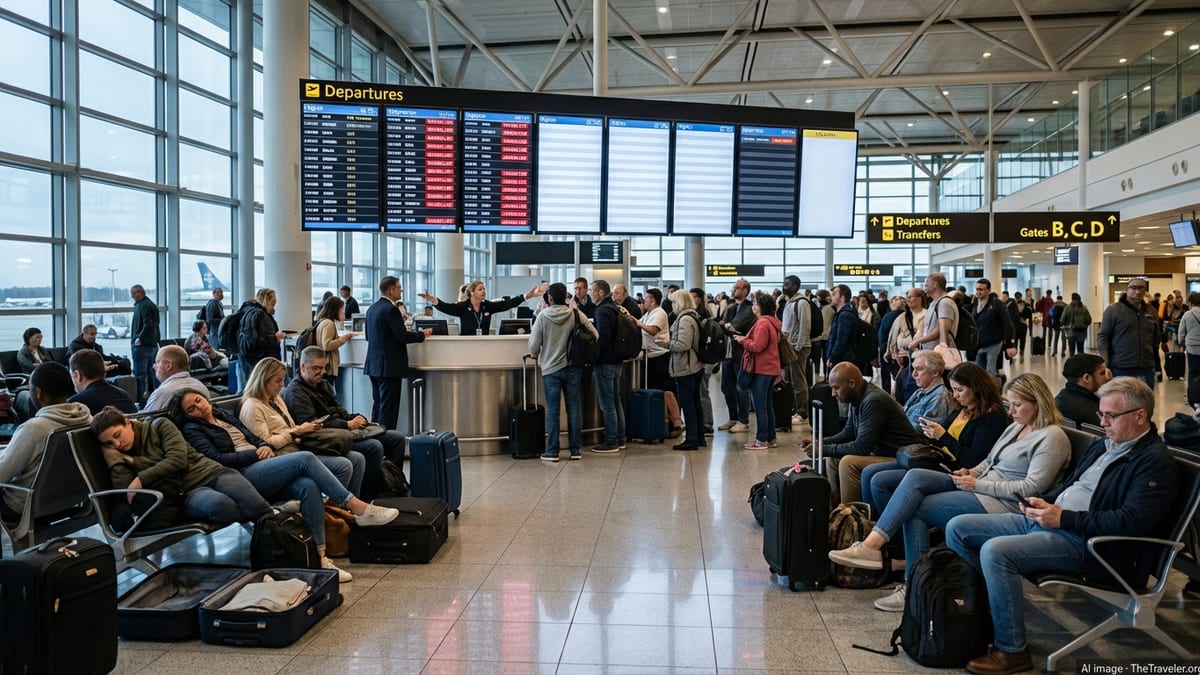
At Dhaka’s Hazrat Shahjalal International Airport, the impact has been visible in crowded terminal areas and long queues at airline counters. Travellers arriving from outside the capital, many of them bound for jobs in the Gulf, have reported finding their flights delayed indefinitely or cancelled at short notice, with limited information about rebooking options.
Seven directives focused on information, care and crowd control
In response to the mounting chaos, the Civil Aviation Authority of Bangladesh issued a written circular on 12 October setting out seven mandatory directives for all airlines operating direct and transit flights between Bangladesh and Saudi Arabia. According to publicly available summaries of the circular, the regulator’s priority is to ensure clearer communication and minimum standards of care for disrupted passengers.
Airlines have been instructed to provide the latest status of departures, delays, diversions and cancellations using multiple channels, including phone calls, SMS, email, websites and social media. The order specifies that revised schedules and routing changes must be communicated before passengers begin their journey to the airport whenever possible, so that travellers are not left waiting at terminals for flights that will not operate.
The circular also calls on carriers to actively discourage passengers from travelling to Hazrat Shahjalal International Airport without prior confirmation that their flight is running. Reports indicate that this measure is intended to ease overcrowding and confusion in the departure halls, where large numbers of travellers have been arriving many hours in advance only to discover that services have been withdrawn.
Another component of the seven-point order requires airlines to ensure that stranded passengers at Dhaka airport receive essential support. Publicly available coverage notes that this includes assistance with basic refreshments and access to information desks, along with guidance on rebooking, refunds and any necessary coordination related to visas or work permits affected by prolonged delays.
Airlines suspend key routes as cancellations mount
The order comes against a backdrop of sweeping schedule changes by carriers serving the Dhaka–Saudi market. National flag carrier Biman Bangladesh Airlines has suspended selected services to Riyadh and Dammam until at least 17 October, citing security conditions at Saudi airports and operational restrictions reported by Saudi authorities.
Private carrier US-Bangla Airlines has similarly halted its Dhaka–Riyadh flights, with public statements indicating that suspensions currently run through 21 October. Saudia and newly launched Riyadh Air have also cancelled multiple Dhaka–Riyadh departures in recent days, according to figures shared by the Bangladeshi regulator and summarised in local economic and aviation coverage.
By midweek, data released by the Civil Aviation Authority of Bangladesh showed that more than 40 direct flights and several dozen connecting services involving Saudi airports had either been cancelled or suspended between 10 and 14 October. Subsequent updates pushed the combined total of affected flights past 100, underlining the depth of the disruption on one of Bangladesh’s most important outbound corridors.
The knock-on effects extend beyond passengers in Dhaka. Reports from Bangladeshi and regional outlets highlight that workers and visitors in Saudi Arabia have also faced difficulties returning home, with some travellers reportedly asked to leave affected airports as security measures were tightened and terminal operations scaled back.
High stakes for migrant workers and religious travellers
The Dhaka–Saudi market is heavily driven by migrant labour and religious travel, which amplifies the consequences of sudden schedule changes. Publicly available reporting notes that many affected passengers are Bangladeshi expatriate workers whose visas and work contracts have fixed start or expiry dates, leaving little margin for extended delays.
When flights are cancelled close to visa expiry, travellers risk overstaying regulations in Saudi Arabia or missing critical reporting dates for employers. Local media coverage in Bangladesh describes growing anxiety among families who have invested significant sums in recruitment fees and travel costs, only to see departure dates repeatedly pushed back amid uncertainty over when normal services will resume.
Pilgrims and Umrah visitors are also exposed to the disruption, particularly those who planned itineraries that rely on specific return dates. Concerns raised in regional discussion forums and news reports include questions about what happens if flights are cancelled just days before visa deadlines, and whether carriers will offer alternative routings through other hubs to help passengers exit Saudi territory in time.
Against this backdrop, the CAAB directive’s emphasis on transparent rebooking and refund procedures is seen in local commentary as a modest but necessary step, aiming to give travellers clearer choices in an environment shaped by fast-changing security conditions and airline schedules.
What the seven-point order means for travelers now
For passengers currently booked on Dhaka–Saudi routes, the immediate practical effect of the seven-point order is a stronger duty on airlines to keep customers informed and to organise basic assistance when plans fall apart. Publicly available outlines of the directive specify that carriers must facilitate rebooking on later dates where seats are available, process refunds in line with fare rules, and maintain a clearly identified focal point at the airport to coordinate support.
Each airline operating affected routes has been asked to designate a responsible contact person for Hazrat Shahjalal International Airport and to share their name, role, phone number and email address with the airport’s Flight Management Department. According to Bangladeshi media summaries of the directive, this measure is designed to streamline communication between the regulator, airport operators and carriers as schedules are revised day by day.
Travel industry reports stress that conditions remain fluid. Security assessments and operational restrictions at Saudi airports continue to evolve, and airlines are adjusting timetables accordingly. This means that same-day checks of flight status through official airline channels are likely to remain essential for anyone planning to travel between Bangladesh and Saudi Arabia in the coming days.
For now, the seven-point CAAB order represents an attempt to impose a minimum framework on an unpredictable situation, seeking to limit passenger hardship at Dhaka’s main gateway while regional aviation authorities and airlines work to stabilise routes affected by the wider crisis in Saudi airspace.