


More news on this day
A 12-billion-euro overhaul of one of France’s busiest rail hubs is moving from planning to construction, as national rail operator SNCF and public authorities press ahead with a decade-long effort to expand capacity, modernise infrastructure and anchor more sustainable travel across the wider region.
Get the latest news straight to your inbox!
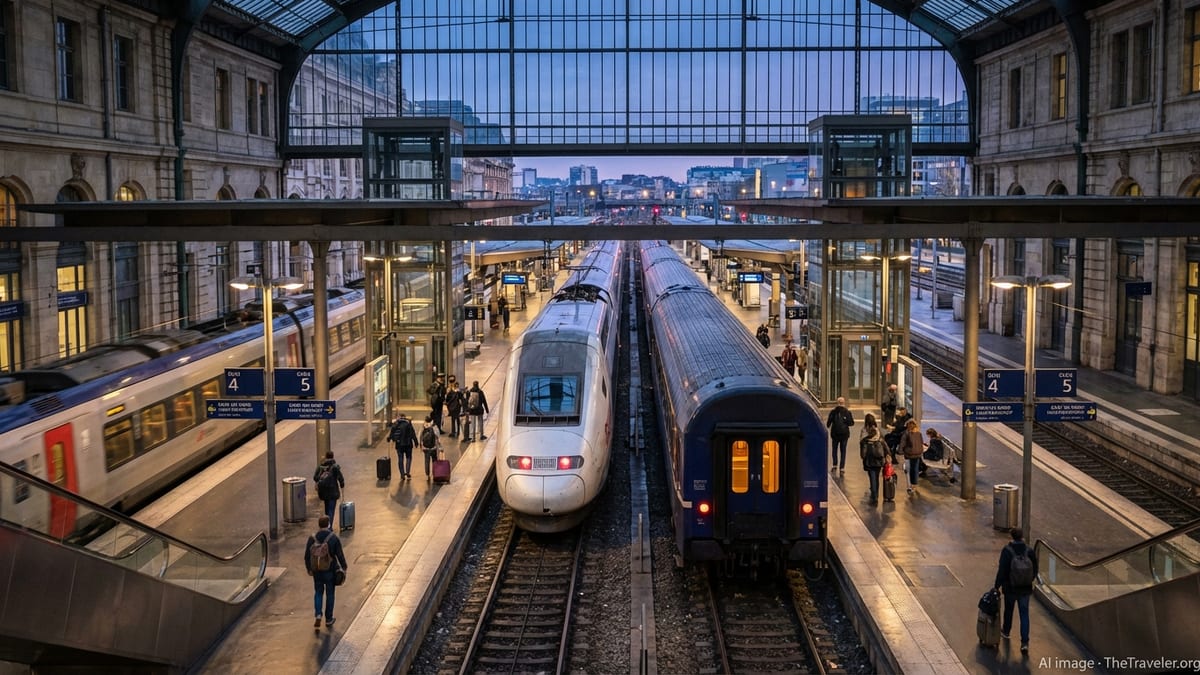
A strategic node in France’s rail network
The hub, identified in national planning documents as a priority interchange, handles a mix of long-distance, regional and suburban services that has steadily grown in recent years. Publicly available traffic data show that daily train movements have pushed existing track, platforms and signalling close to their design limits at peak periods, creating a risk of cascading delays across multiple routes.
The station also functions as a gateway between conventional and high-speed lines, linking dense urban commuter markets with intercity and international services. Rail planning reports describe it as a “structuring node” in France’s rail geography, meaning that disruption or underperformance there can quickly spill over into neighbouring regions and major cities.
The 12-billion-euro programme is therefore framed not only as a local upgrade but as a national resilience project. By increasing capacity at this single hub, planners aim to unlock more frequent services, improve punctuality on existing routes and create space for new cross-country connections that are central to France’s long-term low‑carbon transport strategy.
According to published coverage of the national rail modernisation push, the project sits within a broader effort that targets higher traffic volumes across the network while holding operating costs in check through new technology and more efficient maintenance regimes.
From concept to construction phasing
Early work on the overhaul focused on technical studies, environmental assessments and consultation with local and regional authorities. Planning documents outline a multi-stage construction schedule designed to keep the hub operational throughout the decade-long upgrade window, a complex task given the limited spare capacity on surrounding approach lines.
The first visible phase concentrates on track and signalling rationalisation on key approach corridors, where trains converge before entering the station throat. Engineering notes indicate that new turnouts, modernised interlockings and upgraded train control systems are being installed to allow tighter headways and more flexible routing, which should cut dwell times and reduce the risk of bottlenecks.
Subsequent phases are set to reconfigure platforms and passenger circulation areas inside the station itself. Concepts shared in public presentations show extended platforms capable of handling longer trains, new access points to distribute flows more evenly, and redesigned concourses that separate arriving and departing passengers more clearly than today.
Construction is being sequenced to avoid large-scale shutdowns, with works clustered in targeted “windows” during off-peak periods and holiday seasons. Project documentation highlights this phasing as essential to maintaining confidence among commuters and operators who depend on the hub for daily travel and freight movements.
Capacity, reliability and passenger experience
The central objective of the 12-billion-euro overhaul is to increase the number of trains and passengers the hub can handle without sacrificing reliability. Network modelling published in technical summaries suggests that, once complete, the station and its approaches should be able to accommodate significantly more daily services, including new regional and high-speed connections that are currently constrained by path availability.
Improved signalling and revised track layouts are expected to play a major role in achieving these gains. With more flexible routing options, dispatchers will be able to recover more quickly from minor incidents, preventing small delays from escalating into network-wide disruptions. This resilience is especially important for hubs that mix suburban stopping services with long-distance trains travelling at higher speeds.
Passenger-facing improvements are also prominent in project descriptions. Proposals include brighter, more open concourses, additional seating, enhanced wayfinding, and better separation between different flows such as local commuters, intercity travellers and those transferring to other modes. In some scenarios, the station is presented as a “multimodal hub,” integrating rail with metros, trams, buses and active travel routes to simplify door-to-door journeys.
Accessibility standards form another important strand of the work, with designs calling for step-free access to all platforms, upgraded lifts and escalators, and tactile guidance surfaces. These elements are increasingly treated as core infrastructure rather than add-ons, particularly in stations that expect rising volumes of older and mobility-impaired passengers over the coming decades.
Financing, partners and wider investment context
The 12-billion-euro budget reflects both the scale and complexity of rebuilding a live, high-traffic rail hub. Publicly available information indicates that the financing package draws on a mix of national funds, regional contributions and, potentially, European support instruments aligned with climate and cohesion policy goals.
The project coincides with a broader shift in France’s infrastructure investment priorities, with rail positioned as a central pillar of efforts to cut transport emissions and offer alternatives to short-haul aviation and private car use. Reports on national spending plans describe a long-term rail modernisation programme that spans high-speed lines, regional services and major station upgrades in several metropolitan areas.
Within this landscape, the hub overhaul is seen as a flagship example of how complex, brownfield sites can be reworked to meet modern operational standards. Engineering consultancies and construction groups with experience in dense urban environments are involved across design and delivery phases, reflecting the technical demands of working above and around active tracks, heritage structures and constrained rights-of-way.
Observers note that rising construction costs and tight public budgets add pressure to keep the project on schedule and within its financial envelope. Recent commentary on European rail investments highlights the importance of careful phasing, risk management and transparent cost reporting in sustaining political and public support for long-running schemes of this scale.
Tourism, regional development and long-term outlook
Beyond its transport function, the renewed hub is expected to act as a catalyst for urban regeneration and regional tourism. Station masterplans presented to local stakeholders link rail works with adjacent real estate, public spaces and commercial developments, aiming to create a more attractive gateway for visitors while improving daily life for residents.
For leisure travellers, more frequent and reliable rail services can make it easier to reach nearby historic centres, coastal areas or wine regions without a car. Travel industry analysis often points to modernised stations as key tools for marketing secondary destinations, since they offer clearer information, better connections and a more comfortable first impression upon arrival.
Local and regional authorities are positioning the project as a long-term driver of economic activity, counting on better connectivity to support business travel, conferences and service-sector growth. Over time, improved rail access may also shift some demand from airports and highways, easing pressure on other parts of the transport system and reinforcing climate objectives.
While the full benefits will only materialise once successive phases are complete, the gradual rollout of capacity and service improvements is already being framed as a test of France’s ability to deliver large, complex rail upgrades in live environments. The performance of this 12-billion-euro overhaul is likely to influence how future hub modernisations are scoped, funded and communicated across the country.