


Lunar New Year in 2027 falls on Saturday 6 February in mainland China, Taiwan, Hong Kong, Macau and Vietnam, and that same long weekend anchors South Korea’s Seollal. The season brings spectacular celebrations but also sold out trains, higher fares and widespread business closures. This guide explains how the holiday is scheduled in each destination, what that means for transport and sightseeing, and how to plan whether you want to dive into the festivities or avoid disruption as much as possible.
Get the latest updates straight to your inbox!
Key 2027 Lunar New Year dates and why calendars differ
The first day of Lunar New Year in 2027 is Saturday 6 February across mainland China, Taiwan, Hong Kong, Macau and Vietnam, with Lunar New Year’s Eve on Friday 5 February. South Korea’s Seollal follows the same lunar date, so its main family holiday also centers on Friday 5 to Sunday 7 February. The shared lunar date often leads travelers to assume that holiday periods are identical across the region, but each government sets its own legal days off and substitute days.
For mainland China, the detailed Spring Festival public holiday block is usually announced by the State Council in late October or November of the previous year. At the time of writing, specialist briefings that track draft work calendars expect a multi day holiday stretching around 5 to 13 February 2027, with make up workdays on adjacent weekends. However, the final notice has not yet been published, so travelers should treat any specific workday arrangements for China as provisional and reconfirm closer to departure.
Taiwan has already published its 2027 government administrative calendar through the Directorate General of Personnel Administration. It confirms a five day Lunar New Year holiday around 6 February 2027 for public agencies and schools, starting the day before Lunar New Year’s Eve and continuing through the third day of the first lunar month. The lunar date itself is the same as mainland China, but the number of official days off and any bridge days differ because Taiwan structures its long weekends separately.
Vietnam, Hong Kong, Macau and South Korea also publish their own calendars. Vietnam’s Ministry of Home Affairs has approved a seven day Tết break for civil servants from 2 to 10 February 2027, tied to the lunar dates 28 of the 12th month through 5 of the first month. Hong Kong’s Labour Department lists statutory holidays for 2027 that include Lunar New Year’s Day on Saturday 6 February, the second day on Sunday 7 February and the third day on Monday 8 February, with the fourth day on Tuesday 9 February becoming a holiday because the second day falls on a Sunday. Macau’s official gazette lists obligatory holidays for the first, second and third days of Lunar New Year, while South Korea’s business guides show Seollal as a three day break from Saturday 6 to Monday 8 February 2027.
China’s Chunyun travel rush and intercity planning
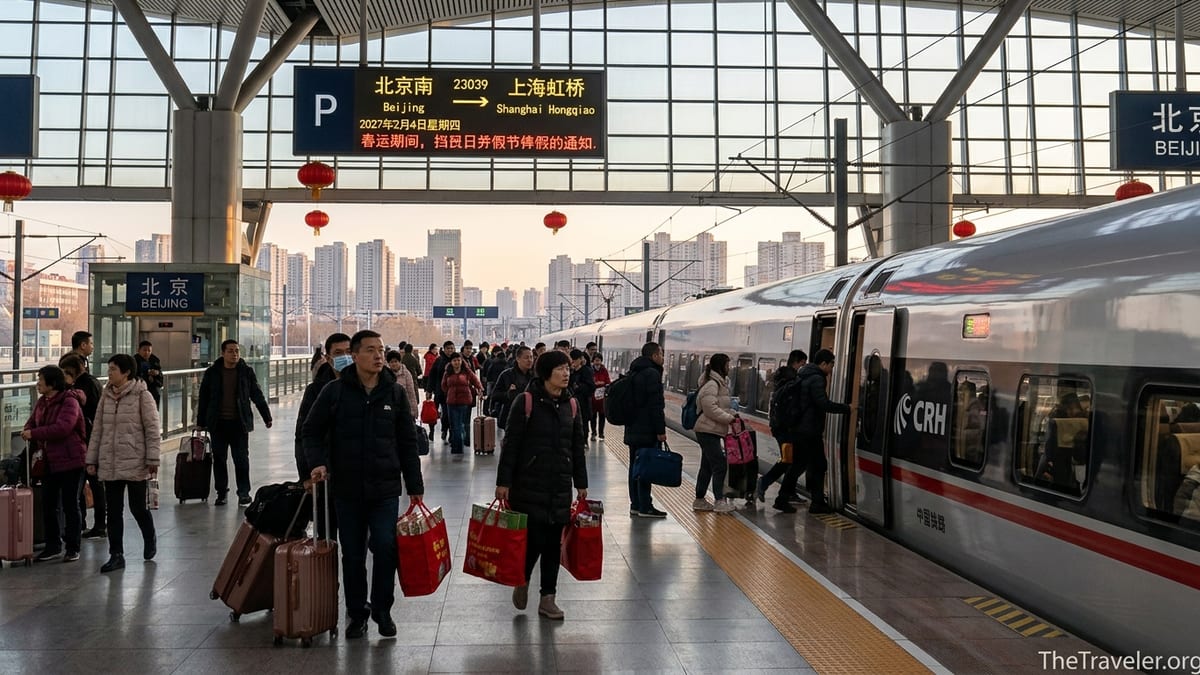
The most important concept for planning travel in mainland China around Lunar New Year is Chunyun, the annual Spring Festival migration. This period usually begins about 15 days before Lunar New Year’s Day and lasts for roughly 40 days. In 2027 that means late January through mid March sees huge passenger flows as migrant workers and students travel home and then return to the cities. Even before the exact 2027 State Council holiday notice is released, it is safe to assume that the week around 6 February will be one of the busiest times of the year on China’s transport network.
China State Railway Group typically releases tickets for high speed trains 15 days in advance when booking online or via app. During Chunyun that window becomes a hard deadline. For example, travelers trying to secure tickets on popular routes such as Beijing to Shanghai or Guangzhou to Wuhan around New Year’s Eve will often find that first and second class seats sell within minutes of the release time. Practical experience from recent Spring Festivals shows that overnight hard sleeper and soft sleeper berths on long distance trains can also sell out as soon as they appear, especially to major hometown regions in Henan, Sichuan and Hunan.
Long distance travel patterns intensify pressures on specific dates. Outbound traffic from big cities peaks in the three to five days before New Year’s Eve as workers head home, leading to packed stations and long taxi queues around hubs like Beijing South, Shanghai Hongqiao and Guangzhou South. Return flows peak about five to ten days after the official holiday as people return to work. Even if you hold a reserved seat, expect crowded station concourses, extra security checks and lines at ticket machines. Travelers who are not visiting family should avoid long intercity journeys in China from roughly 2 to 8 February and again on the main return weekend, and instead stay put in one city.
Air travel follows similar patterns. Domestic airlines frequently raise fares on trunk routes in the pre holiday rush, and deeply discounted economy tickets are scarce on dates like 3 to 6 February 2027. Flexible travelers can save money by flying a week earlier in late January or delaying intercity moves until after 10 February, when demand begins to ease. When tickets do sell out on preferred trains or flights, alternatives include booking slower conventional trains, choosing indirect routes with a connection in a smaller hub, or using long distance express buses, although these may also face congestion.
Taiwan transport, reservations and local services
Taiwan’s 2027 administrative calendar defines a five day Lunar New Year holiday around Saturday 6 February, and transport operators already use that framework for planning. Taiwan Railways Administration and Taiwan High Speed Rail both run special Lunar New Year timetables that add extra services and lengthen trains on peak days. Demand on the north south spine between Taipei, Taichung, Tainan and Kaohsiung is particularly strong as urban residents return to hometowns in central and southern Taiwan.
In recent holiday periods, Taiwan High Speed Rail has opened Lunar New Year advance reservations about four weeks before the first peak day, then gradually added extra trains. Experience from those years suggests that afternoon and evening departures from Taipei on the last workday before the holiday can sell out across all three cabin classes. On Taiwan Railways, popular express services such as Tze Chiang Limited Express along the east coast toward Hualien and Taitung see heavy demand, and standing tickets are commonly sold for passengers willing to forego seats.
Within cities, bus companies adjust routes to accommodate temple visits and holiday traffic. In Taipei, services to major temples and to suburban attractions remain relatively frequent, but commuter routes may run reduced schedules. In smaller towns, some local buses do not operate on the first or second day of Lunar New Year, so travelers planning hikes or countryside excursions should verify timetables in advance or arrange taxis. Convenience stores, which are a lifeline for visitors, usually stay open, although some branches outside major centers may reduce overnight hours.
Hotel availability in Taiwan around Lunar New Year tends to tighten in popular domestic destinations such as Sun Moon Lake, Alishan and Kenting as local families take short breaks. City center business hotels in Taipei and Taichung, however, sometimes see softer corporate demand and can offer competitive rates if booked early. International visitors who want to experience temple fairs and lantern displays can comfortably base themselves in Taipei during the core holiday without facing the extreme closures seen in some mainland Chinese cities.
Seollal in South Korea: transport, closures and dining
South Korea’s Seollal holiday in 2027 runs from Saturday 6 to Monday 8 February as a three day public break anchored on Lunar New Year’s Day. Although the legal period is shorter than Vietnam’s Tết or a likely extended holiday in China, the impact on transport and business is similarly intense because Seollal is one of the two main family homecoming periods alongside Chuseok.
Korea Railroad Corporation opens KTX and major intercity train reservations for Seollal in dedicated sale windows that are heavily publicized domestically. On these days, Koreans queue online and at stations to secure seats. For 2027, travelers should expect peak southbound travel from Seoul to Busan, Daegu, Gwangju and regional hometowns on Thursday 4, Friday 5 and Saturday morning 6 February, with the big return wave on Monday 8 and Tuesday 9 February. Express bus terminals such as Seoul Express Bus Terminal and Dong Seoul Terminal also become very crowded and tickets can sell out on the most desirable departure times.
Within Seoul, major tourist attractions like Gyeongbokgung Palace often operate with limited opening hours or close on New Year’s Day itself but may be open on surrounding days. Many small, family run restaurants close for at least the first day of Seollal, sometimes for the entire three day period. Large franchise chains in busy districts like Myeongdong, Hongdae and Gangnam usually maintain limited operations so visitors can still find meals and coffee, but travelers should not expect normal dining variety. Supermarkets such as E Mart or Lotte Mart sometimes close on New Year’s Day or operate reduced hours, so stocking up beforehand is sensible.
On the other hand, some sightseeing experiences can be enhanced. Folk villages and cultural centers stage Seollal themed performances where visitors can watch traditional games, kite flying and ancestral rite reenactments. Urban roads are often quieter on the morning of Seollal itself because so many residents are indoors with family. Foreign visitors who remain in Seoul during the three day break can enjoy walks along the Cheonggyecheon stream or through Bukchon Hanok Village with fewer office workers, but they should confirm attraction schedules carefully and consider booking accommodation within walking distance of several dining options.
Vietnam’s Tết: closures, flights and city by city impact
Vietnam’s government has formally approved a seven day Tết holiday for 2027 from Tuesday 2 to Wednesday 10 February for public sector workers. This corresponds to the 28th day of the last lunar month through the 5th day of the first lunar month, with Lunar New Year’s Day itself on Saturday 6 February. Private sector companies may adjust details, but the law requires that employees receive at least the minimum Tết days off, so most offices and factories follow similar patterns.
Domestic travel demand climbs sharply in the week before Tết as millions return to hometowns. Airlines based in Vietnam typically add temporary flights on trunk routes such as Ho Chi Minh City to Hanoi, Da Nang and Hue, but prices rise significantly in the final few days before Lunar New Year. Recent traveler reports for 2025 and 2026 show that one way domestic tickets that might cost a moderate amount in a normal month can be two to three times higher on the peak pre Tết days, especially for evening departures. By contrast, flights on the afternoon of Lunar New Year’s Eve or early on the first day sometimes fall in price because most people have already arrived home.
For visitors, the most striking effect is the pattern of closures. In Hanoi and Ho Chi Minh City, many family run cafes, bars and shops close from New Year’s Eve through at least the second day of Tết, and some remain closed until the fifth day. International hotel chains keep operating, and large shopping malls often reopen from the second or third day with holiday promotions, but traditional eateries and small museums may not. In smaller towns and countryside destinations such as Hue, Hoi An or mountain resorts, closures can be even more pronounced and local tour operators may suspend activities for two or three days.
Travelers who position themselves carefully can still have a rewarding experience. In Hanoi, the area around Hoan Kiem Lake hosts cultural performances, and many Vietnamese families come to take photos at illuminated displays. In Ho Chi Minh City, pedestrianized Nguyen Hue Boulevard usually features elaborate flower streets in the days leading up to Tết, drawing large crowds and street food vendors. However, getting between cities during the peak period is challenging and costly, so it is wiser to arrive in your chosen base city by around 3 or 4 February and stay put until at least 9 or 10 February.
Hong Kong and Macau: celebrations, transport and retail
Hong Kong’s official public holiday list for 2027 treats Lunar New Year slightly differently from its neighbors due to its substitution rules. Lunar New Year’s Day on Saturday 6 February, the second day on Sunday 7 February and the third day on Monday 8 February are public holidays. Because the second day falls on a Sunday, the fourth day on Tuesday 9 February is also a public holiday. This creates a four day break for many workers from Saturday through Tuesday, though offices that typically close on Saturdays may effectively have a three day break.
Hong Kong’s MTR network, buses and trams continue operating throughout the holiday, often with extended late night services around major celebration sites. The Tsim Sha Tsui waterfront, Victoria Harbour cruises and temples such as Wong Tai Sin see very high visitor volumes on the first and second days, and popular hikes like Dragon’s Back can also be busy as families take advantage of days off. Large shopping centers and international brand stores mostly stay open during Lunar New Year, although some smaller shops, traditional markets and independent restaurants close for the first two days. Hotel rates in core tourist districts may rise for rooms overlooking harbour firework displays if such events are scheduled in that year.
Macau’s 2027 public holiday schedule lists the first three days of Lunar New Year as obligatory holidays. Casino resorts remain fully operational throughout, and in some ways the city is at its liveliest, with lion dances in integrated resorts and heavy foot traffic in the Historic Centre of Macau. However, government offices, many small local eateries and family run guesthouses close, and ferry and bus routes can be crowded with day trippers from Hong Kong and Guangdong. Visitors who want a quieter experience of Macau’s cultural heritage may prefer to arrive either just before the holiday or after the third day, when tour group numbers start to ease.
Both Hong Kong and Macau generally remain easier to manage during Lunar New Year than cities in mainland China because public transport and a large proportion of retail remain in operation. For travelers who want a festive atmosphere without facing the complete shutdown seen in some provincial mainland cities, combining several days in Hong Kong with a side trip to Macau can be a practical choice.
Date by date planning and booking strategies
From a traveler’s perspective, the key period around Lunar New Year 2027 runs roughly from Monday 1 February through Monday 15 February, even though official holidays are shorter. In mainland China, outbound Chunyun crowds surge in the first week of February, peaking in the few days before New Year’s Eve on Friday 5 February and then again in the main return wave roughly a week after the official holiday. In Vietnam, official Tết leave for state employees runs from Tuesday 2 to Wednesday 10 February, with urban streets becoming noticeably quieter on New Year’s Eve and the first two days as city dwellers spend time at home or visit pagodas.
Booking lead times need to adjust accordingly. For China’s high speed rail network, travelers who must move on core dates such as 4 to 7 February should be ready to purchase tickets as soon as the 15 day booking window opens, using the official rail app or authorized agents. For Taiwan High Speed Rail, a four week advance reservation strategy for the main north south corridor is prudent, especially for departures on the Friday before the holiday. In South Korea, monitoring Korail’s announcements for Seollal reservation days is crucial because regular booking patterns do not apply when reservation quotas open in a concentrated window.
Flight bookings benefit from a two phase approach. Travelers who want to be in place before the rush, for example arriving in Hanoi or Seoul by late January, can watch for promotional fares months in advance. Those who must fly in the immediate pre holiday period should accept that fares on routes such as Shanghai to Chengdu, Taipei to Kaohsiung or Ho Chi Minh City to Da Nang will be elevated and that flexible dates with a one day shift can make a major difference in price. Within cities, hotel reservations in business districts can occasionally remain reasonable even during the holiday because corporate travelers vanish, while resorts, historic towns and ski areas experience heavy domestic demand and require much earlier booking.
Strategies differ for travelers who want to immerse themselves in festivities versus those who primarily seek smooth logistics. Celebration focused travelers should lock in central hotels near major temples or waterfronts, such as Tsim Sha Tsui in Hong Kong or Hoan Kiem in Hanoi, and accept that some days will involve wandering among crowds rather than ticking off museums. Those who wish to avoid disruption are better off scheduling long distance moves at least three or four days away from New Year’s Day and choosing large, cosmopolitan cities where some restaurants and attractions stay open, such as Taipei, Hong Kong, Seoul and central Ho Chi Minh City.
Sample itineraries, budgets and backup plans
A realistic China city break itinerary for Lunar New Year 2027 could center on Shanghai from Wednesday 3 to Wednesday 10 February. Arriving by air on 3 February avoids the absolute last minute rush, and staying put eliminates the need to navigate sold out trains. A traveler might budget a mid range nightly hotel rate in central areas like Jing an or the Former French Concession, noting that some business hotels can discount slightly during the holiday. Local metro services continue to run, allowing visits to Yuyuan Garden’s lantern displays, the Bund and modern art museums that announce special opening hours. Dining would focus on hotel restaurants, larger chains and open local spots identified through Chinese language listings, with an expectation that many family kitchens will be closed.
For Taiwan, a one week holiday could run from Thursday 4 to Thursday 11 February. Flying into Taipei before the five day official break starts allows time to adjust and shop before crowds peak. After enjoying temple visits in Taipei on New Year’s Eve and the first day, travelers could use Taiwan High Speed Rail to reach Taichung or Tainan on the third or fourth day, when hometown travel volumes are slightly calmer. A moderate daily budget in Taiwan might include a midrange hotel, meals at chain restaurants and night markets where open, and train tickets booked in advance. Families benefit from Taiwan’s child discounts on some rail services and from the widespread availability of convenience stores that stock snacks even when smaller restaurants close.
A third itinerary could focus either on South Korea or Vietnam, with an emphasis on working around closures. In South Korea, visitors could arrive in Seoul by Thursday 4 February, spend Seollal itself in the capital visiting palaces and folk events that remain open, then travel to Busan by KTX on Tuesday 9 February after the main return wave. In Vietnam, a Hanoi based itinerary could begin by 1 or 2 February, include several days of normal sightseeing before Tết, then shift to a slower rhythm over New Year’s Eve and the first two days, focusing on street life around Hoan Kiem Lake and temple visits. In both cases, travelers should set aside part of their budget for possible holiday surcharges from drivers, guides or local transport, particularly on the first and second days of Tết in Vietnam.
Across all these itineraries, backup plans are essential. If train tickets sell out on a desired day, alternatives include shifting travel by one day, choosing an earlier or later departure, or re routing via a less busy city. When museums or restaurants are unexpectedly closed, travelers can pivot to outdoor walks, hotel facilities or festivals that do proceed. Building flexibility into schedules and budgets turns the unpredictability of Lunar New Year into part of the experience rather than a source of frustration.
Cultural etiquette and choosing the right destination
Lunar New Year, Seollal and Tết are first and foremost family holidays, and understanding that helps visitors navigate etiquette. On trains and buses, expect travelers carrying large boxes of gifts and local specialties; leaving space for these in luggage racks and being patient with families traveling together is appreciated. When invited to a home or small guesthouse celebration, modest gifts like fruit, sweets or high quality tea are welcome, and in Vietnam and China red envelopes containing new banknotes are a traditional way to give money to children, though visitors are not expected to participate unless they are close to the family.
In temples and pagodas, dress modestly and follow the lead of local worshippers, especially around incense offerings and queue systems. Avoid intrusive photography during ancestor rites or when families bow before altars. In South Korea, bowing to elders and using both hands when offering or receiving items are important aspects of Seollal etiquette. In all destinations, restaurants and small businesses that choose to open on the first or second day of the holiday are often understaffed and very busy, so showing patience and gratitude, and not bargaining aggressively, respects the extra effort workers are making.
There is also a clear distinction between tourist oriented celebrations and private family traditions. Large public events such as lantern festivals, waterfront fireworks in major cities, lion dances in hotel lobbies and cultural shows in theme parks are designed for broad audiences and welcome visitors. By contrast, the most meaningful family moments usually happen at home during reunion dinners on New Year’s Eve and ancestral rites on the morning of the first day. Observing these from a respectful distance rather than treating them as spectacles will lead to more positive interactions.
For travelers deciding where to be in early February 2027, practicality varies by destination. Hong Kong, Taipei, Seoul and central districts of Ho Chi Minh City remain feasible bases thanks to continued public transport and a substantial number of open restaurants, especially in areas with international chains and hotels. Macau is also workable for those who plan to stay in major resort complexes. By contrast, intercity travel in mainland China, domestic flights in Vietnam and hometown bound KTX trains in South Korea will be heavily strained before and after the holiday. Unless you specifically want to experience those peak crowds, it is often wiser to schedule major moves one week before or after New Year’s Day and to treat 5 to 8 February 2027 as days for staying in place, people watching and enjoying the ambiance rather than trying to cover long distances.