


Planning a 2027 New England fall foliage road trip is less about circling a “peak” day on the calendar and more about understanding how and where color usually unfolds, then building a trip that can pivot in real time. In a warming and increasingly unpredictable climate, travelers who chase a specific weekend often end up driving under green hills or bare branches. Those who plan around latitude, elevation, weather and tree species, and who use live foliage reports to adjust their route, have a far better chance of standing under glowing maples when it matters.
Get the latest updates straight to your inbox!
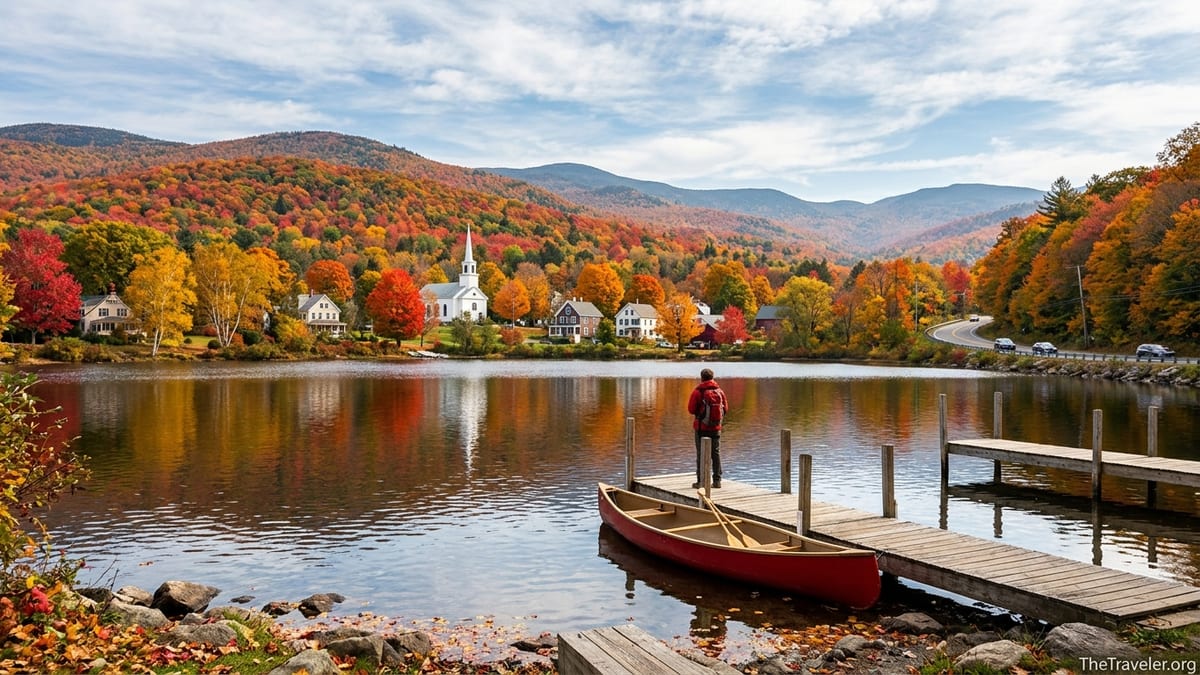
How New England’s Leaves Really Change Color
New England’s famous red maples, golden birches and copper beeches do not all change at once. Color progresses from north to south and from higher elevations toward the coast, roughly from the last week of September through late October. State tourism and forestry offices in Maine, New Hampshire, Vermont and Massachusetts all emphasize that their “typical peak” maps are historical averages and not guarantees for a specific date in any given year. In practice, the same town can peak a full week earlier or later than the long term norm depending on temperature and rainfall in late summer and early autumn.
Latitude is the broadest driver. Northern Vermont and northern New Hampshire, along with the interior of northern Maine, tend to color up first, often in late September and the first days of October. A Vermont regional planning guide for the Northeast Kingdom notes that high elevation and far northern locations usually begin their best color in the last week of September and run through the Columbus Day or Indigenous Peoples’ Day period. As you move south to the Massachusetts Berkshires, inland Connecticut river valleys and finally the Rhode Island and southeastern Massachusetts coasts, color typically arrives one to three weeks later.
Elevation can shift local timing significantly. In western Maine, the state’s official foliage reports and tourism materials explain that the western mountains, including areas such as Rangeley, Bethel and Carrabassett Valley, often peak in early to mid October, even when coastal areas remain largely green. Central and coastal Maine, including Acadia’s oceanfront headlands, usually do not hit widespread peak until mid to late October. Similar patterns play out in New Hampshire’s White Mountains, where ridge tops above 3,000 feet can wash with color days before valley roads like Interstate 93 in Franconia Notch.
Weather and tree species add more complexity. A warm September can delay peak color by a week or more, while early frost or summer drought can dull tones and shorten the peak period. The National Weather Service has highlighted in its educational materials that the last week of September through the first half of October is often the most vibrant for Maine and New Hampshire, but also cautions that wind and heavy rain events can strip leaves quickly. Hardwoods such as sugar maple, red maple and birch drive the classic New England palette and dominate interior uplands. Coastal corridors and southern New England include more oaks, which tend to turn later and hold leaves longer, extending color but shifting the palette toward bronze and russet.
Comparing Key New England Foliage Regions
Northern Vermont is one of the earliest and most reliable regions for punchy reds and oranges. Tourism and regional planning documents suggest that areas along Route 100 and around Stowe, Smugglers’ Notch and the Northeast Kingdom see their best color from roughly the last days of September into the first half of October in a typical year. Towns like Stowe, Waterbury and Morristown sit in valleys framed by the Green Mountains, so visitors can combine low elevation river walks with drives to mountain passes to sample slightly different stages of color in one day.
Across the Connecticut River, New Hampshire’s White Mountains center on classic foliage drives such as the Kancamagus Highway, Franconia Notch and Crawford Notch. The state’s travel and foliage updates, along with local observations, indicate that higher passes along the Kancamagus and in Franconia Notch often peak near late September or the first week of October, while lower elevation lake towns to the south lag behind by several days. Discussion among local residents and travelers in recent seasons confirms that Indigenous Peoples’ Day weekend is usually the single busiest period of the year for White Mountains tourism, with very heavy traffic and extremely full trailhead parking.
In Maine, the state’s official fall foliage site and tourism materials describe a north to south progression that starts in Aroostook County and the North Woods in late September, moves through the western mountains and central Maine in early to mid October, and finishes along the coast from mid to late October. Guides compiled by Maine tourism partners list western mountain routes near Bethel, Rangeley and Kingfield as prime early October options, while Acadia National Park and the Downeast coast often hold good color into the third week of October. The National Park Service notes that color on Mount Desert Island frequently peaks in the first half of October at higher inland elevations, with coastal slopes lagging slightly.
Farther south, Massachusetts, Connecticut and Rhode Island provide a later season option. The Massachusetts Office of Travel and Tourism emphasizes that there is no single peak date for the Berkshires, but that color typically runs through October, with higher ridges above towns like North Adams and Great Barrington often turning earlier than valley floors. Massachusetts has even introduced an interactive state foliage map to help visitors match their trip dates to likely color bands. Southern New England states tend to peak in mid to late October, and coastal Rhode Island and southeastern Massachusetts can retain significant color close to the end of the month, especially in years without strong mid autumn storms.
Signature Routes and Trail Access: Vermont, New Hampshire and Maine
Several New England roads have become shorthand for fall foliage, but each comes with specific driving, parking and hiking logistics. Vermont’s Route 100 is often described as the state’s classic north south foliage corridor. Driving from Stowe south to the Mad River Valley and beyond is roughly 60 to 80 miles depending on where you turn around, usually two to three hours of driving without stops. The road passes trailheads for popular walks such as the Stowe Recreation Path access points, Moss Glen Falls near Stowe, and side roads leading to Smugglers’ Notch and to ski areas that run foliage chairlifts on select autumn weekends.
Stowe itself is a major hub, with a compact village, several hotels and inns, and nearby access to both short strolls and longer hikes. The auto toll road on Mount Mansfield typically operates into early October, weather permitting, and ski resorts such as Stowe Mountain Resort and others in the region often run scenic gondolas or chairlifts on peak weekends. Travelers should budget additional time for traffic near the base areas in early October, particularly on Saturday afternoons when visitors depart.
Across the border, New Hampshire’s Kancamagus Highway, designated as Route 112 between Conway and Lincoln, is about 35 miles long. Without stops it is roughly a one hour drive, but most foliage visitors take two to four hours to accommodate scenic overlooks and short walks. The road lies largely within the White Mountain National Forest. Many roadside stops have designated parking lots that can completely fill by mid morning on peak weekends, especially near trailheads such as Champney Falls. Local reports from recent years describe overflowing lots and vehicles parked along the roadway during Indigenous Peoples’ Day weekend, so arriving around sunrise or using less famous pullouts is wise.
Franconia Notch on Interstate 93 and adjoining state facilities is another hotspot. The Franconia Notch area includes parking areas for the Flume Gorge, the aerial tramway at Cannon Mountain and trailheads for the Franconia Ridge loop. The state manages parking at some trailheads with designated lots and overflow options, and during busy weekends there may be temporary closures to additional vehicles when lots fill. Nearby Crawford Notch along Route 302 offers trail access to waterfalls and moderate peaks, and many visitors choose a loop that links Franconia Notch, Crawford Notch and the Kancamagus in a single long day, a circuit of roughly 100 to 120 miles that can easily consume eight to ten hours including stops.
In Maine, western mountain foliage routes often center on the drive between Bethel and Rangeley, along stretches of Route 2, Route 5 and Route 17. The famous Height of Land overlook on Route 17 above Mooselookmeguntic Lake is frequently cited in photography and hiking guides as one of the state’s premier foliage viewpoints and sits about a 45 minute drive from Rangeley or about 90 minutes from Bethel. In Acadia National Park, the Park Loop Road and the summit of Cadillac Mountain provide easily accessed vistas, but the National Park Service increasingly uses timed vehicle reservations for Cadillac’s summit road during peak times, and there is a per vehicle entrance fee for the park itself. Parking at popular trailheads like Jordan Pond and Sand Beach can be full for long stretches of the day during peak foliage weeks.
Southward Options: Berkshires, Connecticut and Rhode Island
The Massachusetts Berkshires offer a compact but varied landscape of rolling hills, state forests and small towns. The state’s tourism office highlights fall road trips along routes such as the Mohawk Trail area near North Adams and the hill towns near Great Barrington. A downloadable foliage driving guide produced by the state warns of congestion on roads such as Rockwell Road and Notch Road near Mount Greylock during peak October weekends and encourages travelers to plan extra time for parking and to consider less trafficked routes when possible.
For travelers starting or ending in Boston, a loop through the central and western parts of the state to the Berkshires and back often combines well with a northern Vermont or New Hampshire segment. Driving from Boston to Lenox or Great Barrington is roughly 130 to 140 miles, often three hours or more with traffic. Once in the Berkshires, scenic roads such as Route 7 and Route 2 connect small towns, state parks and short hikes like those at Mount Greylock State Reservation. A typical day might mix a short summit walk or tower viewpoint with art visits in North Adams or Stockbridge to hedge against rainy weather.
Connecticut and Rhode Island extend the possible foliage travel window into late October. Inland Connecticut towns along the Litchfield Hills and Connecticut River valley often show their best color in mid to late October, and the mix of maples and oaks can provide both bright early turns and durable late season brown and copper tones. Rhode Island’s coastal parks and inland reservoirs add water views and usually turn after interior New England. Travelers following official state foliage maps can sometimes shift a 2027 trip one week later into October to catch full color further south when northern mountains have already passed peak.
Driving distances in southern New England are modest compared with the northern mountains. Boston to Providence is about 50 miles, usually one hour by highway without traffic. Boston to Litchfield County in northwest Connecticut is closer to 150 to 170 miles. Families planning a ten day trip might reasonably spend three to four nights in the northern mountains, then drive five to six hours south in one day to reposition for a second phase focused on the Berkshires and Connecticut or Rhode Island.
Flexible Seven Day and Ten Day 2027 Itineraries from Boston
A rigorous 2027 foliage road trip plan begins with a starting point and time frame rather than a fixed list of towns. For a seven day itinerary beginning and ending in Boston in early October, one effective structure is to hold two base regions and move only once. For example, start with three nights in the White Mountains of New Hampshire and finish with three nights in either the Berkshires or coastal Maine, depending on how color is progressing when you finalize reservations.
One sample seven day outline for a couple arriving in Boston late September might be: Day 1 drive to Lincoln or North Woodstock in New Hampshire, about 130 miles or two and a half hours, and use this base for the Kancamagus Highway and Franconia Notch walks. Day 2 explore the Kancamagus eastward to Conway, with short hikes and overlooks. Day 3 visit Franconia Notch and, weather permitting, consider the Cannon Mountain tram for high elevation views without a long hike. On Day 4, check live foliage reports from Vermont, Maine and Massachusetts. If northern mountains are passing peak but western Massachusetts is glowing, drive roughly 200 miles to the Berkshires for three nights. If reports show western Maine and Acadia at or approaching peak, drive about 200 to 250 miles east to the Maine coast instead.
A ten day alternative provides more room to follow the color. A couple flying into Boston around late September could book refundable or flex rate stays in three different regions, confirming them once foliage reports near their target dates improve. One possible structure is three nights in northern Vermont or the White Mountains, four nights in western Maine or Acadia, and three nights in the Berkshires or Connecticut. The long leg from northern New Hampshire to Acadia is around 250 to 300 miles depending on route, while the shift from Acadia to the Berkshires can be 350 miles or more and may be better broken into a coastal stop in southern Maine or New Hampshire.
Families with school schedules that anchor them to the Indigenous Peoples’ Day period in 2027 can still build in flexibility by choosing bases that remain attractive off peak. For example, Stowe or North Conway offer indoor attractions, family friendly lodging and dining, and non foliage draws such as gondola rides, zip lines or small museums. If a warm autumn delays full color, the trip remains enjoyable. Conversely, if wind or rain strips leaves earlier than expected, visitors can lean more heavily on coastal walks, lighthouses and harvest festivals in places like Portland or Newport on the drive back to Boston.
Booking Strategy, Pricing and Practical Costs
The core financial reality of a 2027 foliage road trip is that weekends in October are high demand across the region. Hotel and short term rental prices in foliage hubs such as Stowe, North Conway, Bar Harbor and Lenox often run significantly higher on Friday and Saturday than midweek. It is common to see standard chain hotel rooms in these towns in the range of a few hundred dollars per night during peak weekends, and independent inns sometimes require two or three night minimum stays over Indigenous Peoples’ Day weekend. State tourism advisories and lodging booking patterns from recent years both point to that holiday weekend as the costliest and most competitive period.
One strategy that aligns with a flexible foliage chasing approach is to reserve refundable rooms in two possible base regions for the same nights, then cancel one set once foliage reports clarify where color will be best. Many chain hotels near interstate corridors or in secondary towns allow free cancellation up to one or two days before arrival, particularly on rates that are slightly higher than prepaid options. For example, booking a cancellable room in Littleton, New Hampshire and another in Bethel, Maine for the same Tuesday to Thursday window in early October allows a traveler to decide that week which direction to drive based on updated state foliage maps and webcams.
Beyond lodging, travelers should budget for transportation, park fees and incidentals. A one week car rental from a Boston airport location in late September or early October often falls somewhere in the range of a few hundred to perhaps around a thousand dollars before fuel, depending on vehicle type and how early you book. Fuel prices in New England fluctuate, but a compact SUV driving 1,000 to 1,200 miles over a week might consume roughly 35 to 45 gallons, so even at higher price points the fuel portion of the trip usually stays in the low hundreds of dollars. Tolls apply on portions of the Massachusetts Turnpike, the New Hampshire and Maine turnpikes, and select bridges, and visitors without local transponders are typically billed by license plate.
For public lands, Acadia National Park charges a per vehicle entrance fee that is valid for multiple days, with an additional timed entry requirement on popular routes such as the Cadillac Mountain summit road during certain seasons. State parks in Maine, New Hampshire, Vermont and Massachusetts often charge modest day use fees per vehicle or per person, and many smaller trailheads in national forests are free or use voluntary envelopes. Travelers should check whether their chosen hikes require reservations or permits. Some chairlifts and gondolas operating for foliage viewing in ski areas charge in the range of several tens of dollars per adult for a round trip ride, which can be worthwhile for visitors who want summit views without a long climb.
Experiences, Accessibility and Columbus Day Weekend Crowds
Different travelers will combine scenic drives, photo stops and hikes in different proportions. Many of the most photographed foliage locations are roadside or require only very short walks. The Kancamagus Highway features multiple overlooks directly adjacent to parking areas, and Franconia Notch’s Flume Gorge offers a structured walkway with graded paths and railings, albeit with moderate stairs. In Maine’s Rangeley region, the Height of Land viewpoint is immediately beside the road and accessible to visitors with limited mobility. Along Vermont’s Route 100, village greens and covered bridges provide gentle strolls suitable for a wide range of abilities.
Chairlift or gondola rides at ski resorts, such as Cannon Mountain in New Hampshire or several areas in northern Vermont, are appealing choices when weather is clear but hiking conditions are muddy or slippery. These rides typically run on select fall weekends and offer sweeping views without the risks of long, rocky trails. By contrast, classic summit hikes such as Franconia Ridge, Mount Mansfield via the Long Trail, or Acadia’s Beehive and Precipice routes involve steep, exposed sections and are not appropriate for all visitors, especially in wet or windy conditions. Weather can change rapidly in October at higher elevations, with chilly winds and the possibility of freezing rain or early snow at the highest summits.
Accessibility varies widely across the region. Some state parks and national park facilities have paved or hard packed accessible paths to viewpoints and lakeshores, accessible restrooms and designated parking spaces. Before finalizing a route, travelers who need step free access should review individual park and trail descriptions and consider bringing trekking poles or traction devices if attempting short natural surface paths. Public visitor centers in places like Lincoln, North Conway, Bar Harbor and Rangeley can provide up to date information on which short walks are currently in good condition.
Columbus Day or Indigenous Peoples’ Day weekend in October significantly amplifies all of these pressures. Locals in New Hampshire and Maine frequently describe it as the single busiest three day span of the year for foliage tourism, with standstill traffic reported on the Kancamagus Highway and fully packed parking lots at popular trailheads from mid morning onward. Lodging in focal towns such as North Conway, Lincoln, Stowe and Bar Harbor may sell out months in advance or command their highest nightly rates. Travelers who must visit over this weekend should plan to do their most popular drives and hikes at sunrise or late in the afternoon, leave mid day hours for in town activities, and strongly consider basing themselves slightly outside the core resort villages to reduce congestion.
Sample Daily Budgets and Contingency Routes
Costs vary enormously by travel style, but a realistic daily budget helps anchor trip planning. For a couple on a midrange 2027 foliage trip, a rough daily target might fall somewhere between several hundred and around five hundred dollars, excluding flights. That could include a hotel or inn room in the 200 to 350 dollar range on most nights, with higher prices expected in Stowe, North Conway or Bar Harbor on peak weekends and lower prices midweek or in secondary towns. Adding a rental car cost averaged out to perhaps 50 to 80 dollars per day, fuel at perhaps 20 to 30 dollars for a typical day of driving, and meals in the range of 80 to 120 dollars per day for casual restaurants and coffees, one can see how the totals add up quickly.
For a family of four, lodging is often the largest fixed cost. A two queen hotel room in a chain property in a gateway town might cost in the mid hundreds per night on October weekends, and some families opt for short term rentals with kitchens in order to self cater breakfasts and some dinners, which trades higher nightly accommodation costs for lower restaurant spending. Daily restaurant spending for a family of four that eats one sit down meal and one faster casual meal per day can easily exceed 150 dollars, especially in resort towns. Park fees, gondola rides, and occasional museum or attraction tickets might add another 30 to 80 dollars per day across the group.
Because color timing in 2027 could be early, late or disrupted by storms, having contingency routes is essential. If color is running early and peak foliage pushes into late September in the northern mountains, travelers arriving in early October might find that higher elevation areas like Smugglers’ Notch and Franconia Ridge have already passed peak. In that case, they could reorient south toward the Berkshires, Litchfield Hills and Rhode Island, where color will be nearer its best. Conversely, if a warm autumn delays change, visitors might skip southern areas entirely and spend their days in northern Vermont, the White Mountains and western Maine, where even partial color combined with evergreen forests and mountain views can be satisfying.
Storms present a different challenge. A strong wind and rain event in early October can strip the brightest maple leaves from exposed ridges while leaving sheltered valleys in decent condition. Travelers monitoring state foliage reports and local photography can decide to focus more on river corridors, lower elevation lakes and coastal walks that rely not just on foliage but on rock, water and sky for their appeal. Acadia’s granite shorelines, Maine’s lighthouses, and Massachusetts harbor towns remain memorable even after the brightest leaves fall, so routing toward these areas can salvage a trip that might otherwise seem mistimed.
Tracking Foliage in Real Time and Final Trip Structure Verdict
To maximize the chance of seeing vibrant color in 2027 without promising yourself a specific peak date, you will need a foliage tracking routine starting in early September. Each New England state with significant tourism infrastructure publishes official foliage updates, often weekly, that rate regions by percent color and leaf drop. Maine’s Department of Agriculture, Conservation and Forestry publishes a weekly fall foliage report, and similar updates appear from tourism offices in New Hampshire, Vermont and Massachusetts. These reports typically begin in early to mid September and continue until early November, and they often include photographs and suggested drives in regions approaching peak.
Alongside official reports, local webcams, social media photos and community discussions provide fine grained context. Before committing to drive the Kancamagus Highway on a particular day in October, travelers can check recent images from roadside overlooks or ski area webcams to gauge actual conditions. Regional fall foliage maps created by tourism authorities often distinguish between “typical peak window” and currently observed color, which helps travelers avoid the common mistake of assuming that a long term average date applies to a specific year. When reading any forecast style peak map, note whether it clearly states that it uses historical data, and pair it with the freshest live observations available.
A practical foliage tracking checklist for 2027 might include starting to read state foliage reports two to three weeks ahead of departure, confirming car rental and baseline lodging at least several months out, and holding extra refundable reservations in a second region when traveling near high risk weekends such as Indigenous Peoples’ Day. In the week before your trip, check reports every few days, watch for mention of storms or unusually warm weather, and adjust your driving priorities accordingly. Once on the road, be willing to pivot a full day’s plan if locals or rangers recommend a different valley or elevation band with better color.
The most effective overall trip structure for a 2027 New England foliage road trip is one that fixes only what must be fixed. Lock in flights into and out of Boston and reserve a car and at least the first two nights of lodging in a relatively central gateway such as Concord, New Hampshire, Montpelier, Vermont or Portland, Maine. From there, keep at least one later lodging segment flexible, with refundable bookings in two different regions that you can prune a week before arrival. Favor base towns with multiple scenic options at varying elevations within a one hour drive, so that you can spend clear days on mountain passes and rainy or windy days along lakes, rivers or the coast.
By treating historical peak windows as guidelines, relying on official live reports and choosing a route that can bend with 2027’s particular weather, you shift your odds decisively in favor of standing under brilliant maples at least once or twice during your journey. No plan can guarantee perfect peak on every hillside, but a flexible, information driven approach can deliver what matters most in New England in autumn: the moment when you step out of the car, breathe cold air scented with leaves, and look up into a canopy of red and gold that feels as if it were waiting just for you.