


More news on this day
Summer air travel in 2026 is off to an uneasy start as one recent day logged 526 flight cancellations and thousands more delays worldwide, according to real time tracking data, signaling that a season of weather, congestion and capacity constraints is already straining airline operations.
Get the latest news straight to your inbox!
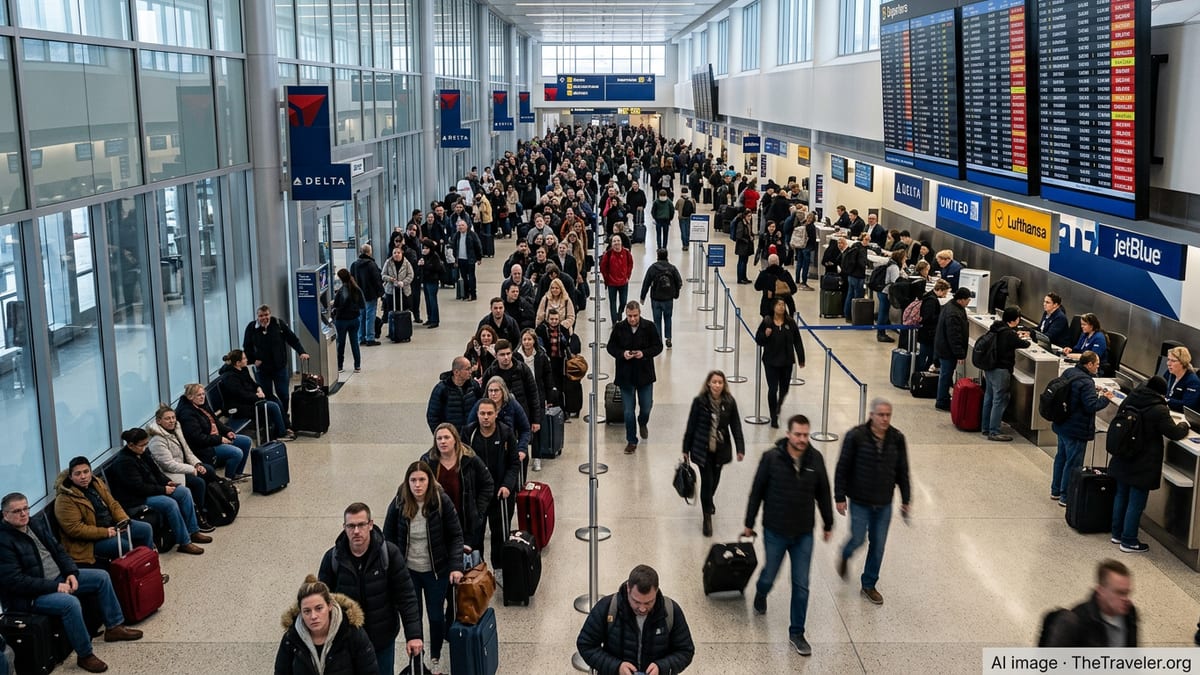
A Sudden Spike in Cancellations Marks a New Phase of Disruption
Tracking platforms that monitor global aviation activity show that a recent late August day crossed the 500 mark for cancellations and surged past 2,500 delayed departures across major hubs, with the combined total exceeding 3,000 disrupted flights. Publicly available FlightAware statistics indicate that on some peak summer days, delays within, into, or out of the United States alone have climbed above 4,000, with well over a hundred cancellations layered on top of that baseline.
In Europe, flight tracking data cited in published coverage shows that August 30 produced nearly 3,000 disruptions once delays and cancellations were combined, making it one of the most severe single day spikes of the season across the continent’s busiest hubs. Reports indicate that this surge occurred even without a major strike or large scale technical failure dominating the narrative, underlining how fragile the system has become when traffic is already near capacity.
These figures offer a snapshot of what 526 cancellations actually represent in context: not a freak outlier, but part of a wider pattern in which operational buffers are thin, weather is more volatile and traveler demand is back at or above pre pandemic levels. For passengers, that combination is translating into a higher probability that any given summer travel day will feature some level of disruption.
Weather, Heat and Capacity Squeeze the System
Recent reports highlight how severe thunderstorms and airspace volume controls combined to hammer Chicago O’Hare on August 30, producing more than 1,600 delays and leaving one major carrier with the highest cancellation tally among U.S. airlines that day. According to published coverage drawing on FlightAware data, that single hub accounted for a substantial share of the national disruption footprint, illustrating how localized weather can create network wide ripple effects.
Elsewhere, heavy rain and thunderstorms across New England in late July triggered hundreds of delays and cancellations at Boston Logan International Airport, according to local media coverage, with knock on effects for connecting traffic throughout the Northeast corridor. These events mirror patterns in Department of Transportation data that show delays, rather than outright cancellations, as the dominant pressure point facing travelers this year.
Extreme heat is emerging as a compounding factor. Analysis from the Associated Press notes that heat waves in the United States and Europe are increasingly forcing weight restrictions and schedule adjustments at airports such as Las Vegas, where hot, thin air can limit aircraft performance even under clear skies. The result is more frequent operational tweaks, from slower departures to payload limits, that can feed into broader delays when schedules are already tight.
Record Demand Meets Thin Operational Margins
Airlines and tourism groups have been signaling for months that 2026 would be a record year for summer travel. AAA forecasts projected tens of millions of Americans on the move over key holiday periods, with nearly 6 million domestic air travelers expected over the extended Independence Day window alone. Major carriers, including American Airlines, publicly announced their largest ever summer schedules, expecting to carry more customers than at any point in the company’s history.
At the same time, federal regulators have been pressing some hubs to curb ambition. A Federal Register notice published this year detailed how schedules submitted for the March to October 2026 season at Chicago O’Hare risked exceeding the airfield’s capacity during peak hours. The Federal Aviation Administration and Department of Transportation concluded that a temporary reduction in planned operations was necessary to avoid a repeat of past congestion driven meltdowns.
The Department of Transportation’s Air Travel Consumer Report for this spring reinforces the picture of narrow margins. Reporting carriers operated roughly 660,000 domestic flights in April, and while cancellation rates remained modest for most airlines, complaints about delays, refunds, baggage and general customer experience stayed elevated. Industry analysis suggests that when the system is this tightly wound, a day with 526 cancellations can be enough to tip entire networks into visible chaos.
Passengers Feel the Strain in the Peak of Summer
Travel forums and social media posts from frequent flyers this season describe a noticeable uptick in long delays and last minute cancellations compared with pre pandemic years. Some travelers report that almost every round trip now includes at least one severely delayed or canceled leg, even when headline cancellation percentages remain relatively low in official statistics.
Industry observers point to several overlapping causes behind the lived experience. Airlines have rebuilt schedules aggressively to capture demand, leaving fewer spare aircraft and crews to absorb shocks. Persistent air traffic control staffing constraints in busy corridors, particularly around key hubs, have reduced flexibility when thunderstorms, smoke or heat driven performance limits force reroutes. When disruptions stack up over the course of a day, aircraft and crews can easily end up in the wrong place for the next morning’s departures.
These dynamics help explain why a single day’s tally of 526 cancellations can feel far more disruptive than the raw number suggests. Many of those flights sit on heavily traveled trunk routes or at constrained airports, meaning disruptions cascade quickly through connections. For travelers, that translates into missed weddings or cruises, extra nights in airport hotels and, increasingly, a sense that summer flying has become a gamble even on days without obvious storms in the forecast.
Planning Strategies in a Summer of Uncertainty
Consumer advocates analyzing government data and real time tracking trends emphasize that delays are now a more common threat than wholesale mass cancellations, but both are part of the risk landscape. Reports based on the latest Air Travel Consumer Report recommend that passengers treat airline performance statistics as planning signals, not guarantees, and pay special attention to carrier specific cancellation rates during busy summer months.
Published guidance from aviation analysts and travel groups converges on similar practical strategies. Early morning departures are generally less exposed to the knock on effects of afternoon storms and earlier delays, while nonstop routes reduce the chances that a single missed connection will unravel an entire itinerary. Building buffer time into onward ground or cruise plans, and monitoring weather systems around key hubs, can also help travelers anticipate when a routine delay day might escalate.
Even with robust planning, the numbers suggest that more days like the recent 526 cancellation spike are likely as the peak travel season continues. With demand still strong, climate related weather extremes becoming more frequent and infrastructure upgrades progressing gradually, summer 2026 is shaping up to be another test of how resilient the global air travel system can be under sustained strain.
FlightAware live cancellations and delays
Yahoo Travel report on late August Europe disruptions