


The Acropolis Museum is one of Athens’ essential stops, and timing your visit correctly can make the difference between a relaxed stroll through the galleries and a rushed dash before closing. In recent years, Greek archaeological sites and museums have adjusted hours several times, and travelers still regularly arrive to find doors closed earlier than expected. This update-style guide walks you through the current Acropolis Museum opening hours, how they change by season, when last entry is, what happens on Friday evenings, and how holiday closures work in practice, so you can plan with confidence in 2026.
Get the latest updates straight to your inbox!
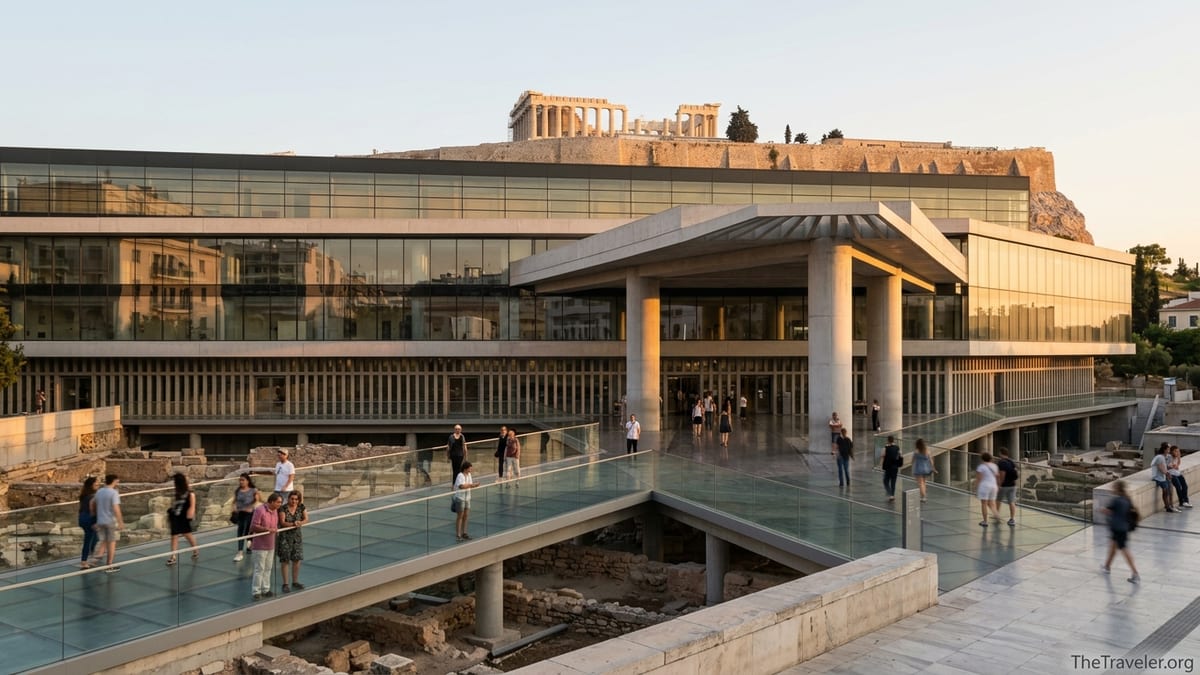
Understanding the Acropolis Museum’s Current Opening Hours
The Acropolis Museum operates with different schedules for the busier warm months and the quieter winter period. As of mid‑2026, the official website lists a broad daily schedule where the museum typically opens in the morning and stays open into the early evening, with extended hours on Fridays. Daytime visitors in spring and summer can generally expect to find the museum open from early morning through late afternoon or early evening, while in winter the museum may close earlier, particularly on weekdays.
The key practical point is that the museum has a fixed daily closing time and a clear last‑entry cut‑off. For example, in recent winter seasons Saturday and Sunday operation has run roughly from 9:00 to 20:00, with last entry 30 minutes before closing. On weekdays, hours can be shorter, often ending in the late afternoon. These patterns matter if you are planning to see both the Acropolis archaeological site on the hill and the museum at the foot of the slope on the same day, since the hillside site uses a different schedule.
Travelers frequently report that arriving in the final hour of opening still allows enough time for a focused visit to the Parthenon Gallery and the Archaic Gallery, but it is not ideal if you want to explore every section. A couple from Toronto visiting in April 2026, for instance, booked a 17:00 time slot thinking they had two full hours, only to realize on arrival that last entry had already passed for some galleries. Their experience underlines how vital it is to match your planned visit time to the specific day’s schedule.
When reading any hours table, ensure you are looking at information for the Acropolis Museum itself, not the Acropolis of Athens on the hill. The two are run by different authorities and often have different closing times. Travel forums are full of threads where people mistakenly follow the Acropolis site hours, then are surprised to find the museum doors still open, or already closed.
Seasonal Changes: Summer vs Winter Schedules
The Acropolis Museum adjusts its timetable across the year, with longer hours in the high season and reduced hours in winter. High season in Athens usually runs from April through October, when cruise ships and European summer holidays bring the largest crowds. During these months, opening hours typically start early in the morning and continue into the early evening most days, with Fridays running later into the night. The aim is to spread visitor numbers across a longer day to reduce peak‑hour congestion.
In the low season, roughly November through March, hours are often shortened on weekdays, which can catch city‑break visitors unaware. For example, a business traveler staying near Syntagma in January might assume they can sightsee after a full workday and stroll over at 18:00, only to discover that weekday winter closing can be closer to mid‑afternoon on certain days. If you visit in winter, it is wise to plan your museum time before lunch or immediately after, rather than leaving it to the evening.
These seasonal adjustments are not unique to the Acropolis Museum. Many Greek museums, such as the National Archaeological Museum, run extended summer hours and shorter winter ones. For a typical three‑day Athens itinerary in June, travelers often pair an early‑morning Acropolis hill visit with a mid‑day museum visit, using the museum’s longer summer schedule to rest from the heat. In February, the same combination usually works best flipped, with the museum visited first in late morning and the Acropolis hill saved for the warmest daylight hours.
Because exact seasonal patterns can be updated at relatively short notice, especially when staff schedules and national guidelines change, treat any guidebook or blog that lists fixed hours “all year” with caution. Use them to understand the pattern, not to assume an unchanging timetable.
Friday Evening Visits and Late‑Night Experiences
One of the most appealing features of the Acropolis Museum schedule is the extended opening on Fridays. Recent seasons have seen the museum operating into the late evening on this day, and the first‑floor restaurant has traditionally stayed open even later, allowing visitors to dine with a view of the illuminated Parthenon. For many travelers, this is the most atmospheric time to visit, combining cooler temperatures with fewer school groups and tour buses.
In practice, a Friday visit might look like this: a couple arrives around 18:00, when many day tours have finished and families with young children are heading out. They spend a quiet hour in the Archaic Gallery, then move up to the Parthenon Gallery as sunset washes the real temple outside in golden light. Afterward, they sit down for a late dinner on the restaurant terrace, watching the Acropolis illuminated against the night sky. This rhythm is very different from a mid‑morning visit, when the café line is longer and galleries are more crowded.
The exact Friday closing time, and whether the restaurant runs even later than the galleries, can vary from year to year. Some seasons have featured special late‑night openings tied to cultural events such as European Museum Night or the August full moon, when the museum has remained open until midnight. If an evening experience is a priority for your trip, check the museum’s announcements in the month before you travel, rather than relying on an older blog post or guide.
Do keep in mind that if you visit late on Friday, last entry rules still apply. Security staff will start gently directing visitors toward the exits as closing time approaches, and sections of the museum may begin to close before the official end of the evening. Arriving right at the end of the last entry window may give you only a short, hurried experience, even on an extended Friday.
Last Entry Rules: How Close to Closing Can You Arrive?
The Acropolis Museum, like most major museums, operates with a clear gap between last entry and final closing. Typically, last entry is set about 30 minutes before the posted closing time. This buffer allows security and cleaning staff to clear galleries and lock sections progressively without rushing visitors out mid‑visit. For example, if the museum closes at 20:00, last entry is usually around 19:30. Visitors who arrive at 19:32 are likely to be turned away, even if they can see people still inside the building.
This rule affects more than just the ticket desk. Some interior areas, such as the temporary exhibition spaces or the reading room, may restrict new entries a little earlier, especially on quieter days. A family arriving late on a Sunday afternoon in March might be allowed into the main permanent collection but find a special exhibition already closed for the day. Similarly, the shops close roughly 15 minutes before the museum itself, so if you want to buy a catalog or a replica owl figurine, you should plan to visit the shop before heading to the exit.
Real‑world examples from recent visitor reports show how this plays out. A solo traveler with a 17:00 Acropolis hill ticket in early May hoped to “pop into the museum afterward” around 19:15. They found the queue for security long, and though they reached the entrance doors at 19:28, staff were already warning that last entry was being enforced strictly that evening. They were allowed in but had time only for a quick pass through the top floor. On another occasion, a family visiting in November tried to enter 10 minutes after last entry and were politely refused, despite the museum remaining visibly busy inside.
The safest practice is to treat posted closing time as the point by which you should already be on your way out, not just entering. Aim to arrive no later than one hour before last entry if you want a relaxed visit, and at least 90 minutes before if you are a dedicated museum‑goer who likes to linger over display labels.
Holiday Closures and Reduced‑Hour Days
Greek public holidays and religious observances directly affect Acropolis Museum hours. Several days each year the museum is completely closed, and on others it operates with reduced hours, usually closing in the early afternoon. Days that frequently involve full closure include New Year’s Day, Easter Sunday in the Greek Orthodox calendar, Labour Day on May 1, and Christmas Day and Boxing Day on 25 and 26 December. On those dates, travelers should not expect to visit at any time.
There are also days with partial openings, where the museum opens later or closes earlier than usual. For example, Christmas Eve and New Year’s Eve often involve reduced hours, such as closing in the late afternoon rather than evening. Good Friday and Holy Saturday in the Orthodox calendar typically have special hours, sometimes with a late‑morning opening on Friday and an early closure on Saturday so staff can observe religious services. If your Athens trip coincides with Orthodox Easter, which often falls on different dates from Western Easter, check exact timings carefully.
Travel patterns around these holidays can produce some surprising effects. On 28 October, a national holiday when some archaeological sites offer free entry, visitors often focus on the Acropolis itself, leaving the museum somewhat calmer in the late afternoon. Conversely, on rainy winter public holidays when the Acropolis on the hill is less appealing, the museum can get busier as visitors seek an indoor alternative. A couple visiting for Christmas week in 2025, for example, reported that while they knew Christmas Day was a full closure, they had not realized that Christmas Eve hours would be reduced, and they missed their chance to visit before flying out.
To avoid disappointment, build your itinerary around the assumption that major Greek public holidays are “museum risk days.” Either plan to visit on a non‑holiday, or verify the specific hours for your dates and schedule your visit in the morning, when unexpected early closures or reduced evening hours are less likely to affect you.
Café, Restaurant and Museum Shop Opening Times
The Acropolis Museum complex includes a ground‑floor café, a first‑floor restaurant with Acropolis views, and two museum shops, one on the ground floor and a bookstore on an upper level. These facilities broadly follow the museum’s overall opening hours, but with some important differences. The shops close about 15 minutes earlier than the galleries, and the restaurant, especially on Fridays, may remain open later than the exhibition floors.
In practical terms, this means that if the museum closes at 20:00, you should expect the shops to stop admitting new customers around 19:45 and begin directing people to the tills. The café often winds down service around the same time, though seated guests are normally given a short grace period to finish drinks and snacks. On extended Friday evenings, the restaurant has traditionally taken last orders around 23:30, with the space closing around midnight, allowing for a full dinner service under the floodlit Parthenon.
These facilities can shape how you organize your visit. A popular strategy in summer is to start with a mid‑morning tour of the galleries, then break for a light lunch or coffee at the café, using the shaded terrace overlooking the archaeological excavations under the museum. Families with children often plan a snack break in the café about halfway through their visit, giving younger travelers a rest from the galleries. In winter, when outdoor seating is less appealing, the interior seating areas become more valuable, and can fill quickly around Greek lunch hours, typically 13:00 to 15:00.
Because café and restaurant operations rely on separate staffing, their hours can occasionally be affected by private events or special functions, particularly on Friday evenings. If eating at the museum restaurant is a highlight for you, check whether reservations are needed and whether any special closures are announced for your dates, rather than assuming it will match the public gallery schedule exactly.
Why You Should Always Verify Hours Before You Go
In recent years, Greek archaeological authorities and cultural institutions have had to adjust opening hours several times in response to staffing levels, heat‑wave closures, and wider national regulations. The Acropolis Museum has been relatively stable compared with the hilltop Acropolis site, but travelers still encounter surprises when relying on printed guidebooks or older blog posts. A book printed in 2019, for example, may list a specific summer closing time that no longer applies, or may not mention extended Friday hours introduced in a later season.
Online reviews and travel forums can also lag behind reality. It is common to see multiple answers to the question “What time does the Acropolis Museum close?” in the same thread, reflecting different years’ rules. A visitor who went in 2022 might report a last entry time that changed by 2025, while another comments based on a special late‑night event that is not part of the standard schedule. Without context, it is easy to take a one‑off experience as a permanent rule.
The most reliable approach is to use unofficial sources for planning patterns, but to confirm exact times shortly before your visit. Many experienced travelers to Athens now build a quick check into their pre‑trip routine. A week before flying, they look up the museum’s current hours for the dates in question and check whether any public holidays, strikes, or heat advisories are in effect. Then, on the morning of their chosen museum day, they double‑check for any last‑minute notices, particularly during summer heat waves when outdoor sites may close early and send more visitors into the museum.
This habit of verification does not require much effort but can save a great deal of frustration. It also gives you flexibility: if you learn that the museum will be open late on your first night in Athens, you can shift your visit to enjoy a quieter evening atmosphere, freeing up your morning for a guided Acropolis tour or a neighborhood walk through Plaka and Monastiraki.
The Takeaway
For a smooth visit to the Acropolis Museum in 2026, think of opening hours not as a single fixed rule but as a pattern shaped by season, weekday, and special events. High season brings longer days and popular Friday evenings, while low season often means shorter weekday hours. Last entry is usually set around 30 minutes before closing, shops and café shut slightly earlier than the galleries, and major Greek holidays can bring either full closures or reduced hours.
Use this pattern to sketch out your ideal visit. If you enjoy cooler temperatures and quieter galleries, consider a Friday evening during the warm months, followed by dinner overlooking the Acropolis. If you are visiting in winter or over a holiday period, give yourself a generous buffer by going late morning or early afternoon on a non‑holiday weekday. Above all, verify the latest schedule shortly before you go, and treat last entry as the real deadline, not the official closing time. With a little planning, the Acropolis Museum can be one of the most rewarding, unhurried experiences of your time in Athens.
FAQ
Q1. What are the typical opening hours of the Acropolis Museum in 2026?
The museum generally opens in the morning and closes in the early evening, with slightly longer hours in the high season and earlier closing on some winter weekdays. Exact times vary by day and season, so always check the current schedule for your specific dates.
Q2. Is the Acropolis Museum open every day of the week?
The museum usually operates six or seven days a week, but specific days and hours can change with seasonal schedules and staffing. Before planning a visit, confirm whether your chosen day is listed as open and whether any special closures apply.
Q3. How does the museum’s schedule change between summer and winter?
During the busier months from roughly April to October, the museum typically stays open longer, often into the early evening and later on Fridays. In the quieter months from November to March, weekday hours are usually shorter, with some days closing in the late afternoon.
Q4. Does the Acropolis Museum stay open late on Fridays?
Yes, recent schedules have included extended opening on Fridays, making it an excellent time for an evening visit. Friday evenings are popular for combining a quieter museum experience with dinner at the museum restaurant overlooking the illuminated Acropolis.
Q5. When is the last entry time before closing?
Last entry is typically about 30 minutes before the posted closing time. If the museum closes at 20:00, for example, last entry is usually around 19:30. Arriving after last entry, even if people are still inside, normally means you will not be admitted.
Q6. Is the Acropolis Museum open on Greek public holidays?
Some major holidays, such as New Year’s Day, May 1, Easter Sunday and 25 to 26 December, often involve full closures. Other holidays, such as Christmas Eve or New Year’s Eve, may have reduced hours. Because these patterns can change, always verify holiday opening times in advance.
Q7. Do the café, restaurant and shops follow the same hours as the galleries?
The café and shops broadly follow museum hours but usually close a little earlier, often around 15 minutes before the galleries. On some evenings, particularly Fridays, the restaurant may stay open later than the exhibition spaces, allowing for late dinners.
Q8. Can I visit the museum without a prebooked time slot?
Walk‑up visitors are generally accepted when capacity allows, and many travelers buy tickets on arrival, especially outside peak midday hours. However, during busy periods such as summer weekends, prebooking a time slot can reduce waiting and help you avoid arriving close to last entry when slots may be full.
Q9. How much time should I allow for a visit based on the opening hours?
Most visitors find that 1.5 to 2 hours is enough for a comfortable first visit, while enthusiasts may spend three hours or more. To avoid feeling rushed, try to arrive at least 90 minutes before last entry, giving yourself time for both the galleries and a short break in the café or shop.
Q10. Why do guides recommend double‑checking Acropolis Museum hours?
Hours have been adjusted several times over the past few years due to staffing, seasonal changes and special events, and older information online is not always accurate. Double‑checking ensures you do not turn up to find the museum closed, operating reduced hours or enforcing a last‑entry time earlier than you expected.