


Priority Pass is often the first name people hear when they start chasing airport lounge access. Yet frequent travelers quickly discover its limits: crowded third-party lounges, inconsistent quality, restaurant access that comes and goes, and a guest policy that can add up quickly for families. If you want something more flexible and better aligned with how you actually travel, there are several compelling alternatives that combine proprietary lounge networks, premium credit cards and pay-per-use options.
Get the latest updates straight to your inbox!
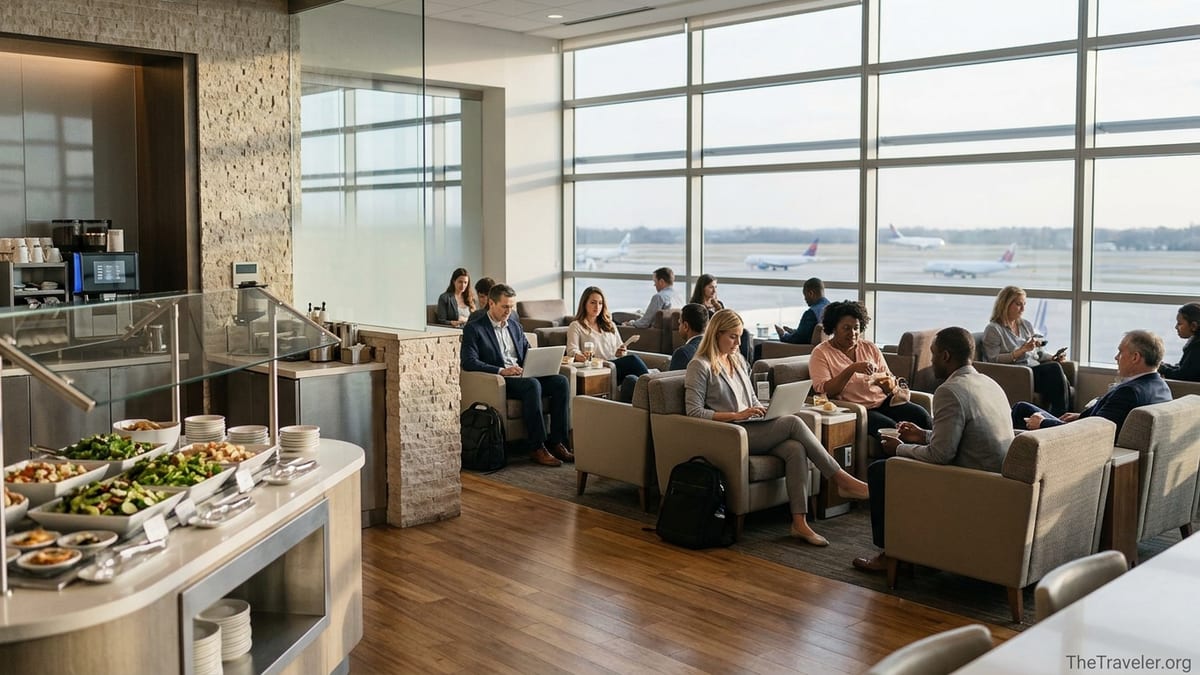
Why You Might Want an Alternative to Priority Pass
Priority Pass still has its place, especially for casual travelers who fly a few times a year and want a quiet seat and free snack. But its model is built around volume. Many lounges in the network are small independent spaces or contract lounges used by multiple airlines. At peak times, you can be turned away or find yourself in a room where every seat is taken, the buffet is picked over and the Wi-Fi crawls. Travelers who regularly pass through busy hubs like London Heathrow, New York JFK or Los Angeles often report that some Priority Pass locations are “standing room only” at evening departure banks.
Another friction point is shifting benefits. Over the past few years, restaurant credits and non-lounge “experiences” have been added and removed depending on which bank issued your membership. For example, several U.S. premium cards that provide Priority Pass have dropped the restaurant component, so you may no longer get that 28 to 32 dollar dining credit you once relied on at airports where there is no traditional lounge. If you plan a trip around those benefits and discover at check-in that your card no longer covers them, the disappointment can be real and expensive.
Lastly, the guest policy rarely fits everyone’s situation. A solo traveler may find Priority Pass cost-effective, especially if it is bundled with a credit card they already carry. A family of four, on the other hand, can quickly burn through complimentary guest allowances or end up paying out of pocket per guest per visit. That is where alternatives with clearer or more generous guest rules, or models that let you simply pay when you actually use a lounge, can offer much more flexibility.
Against this backdrop, a new generation of lounge networks tied to premium credit cards has emerged, along with day-pass platforms and airline-specific solutions. Used strategically, these options can provide better control, better quality and a smoother experience than relying solely on Priority Pass.
Amex Global Lounge Collection: A Premium Ecosystem, Not Just a Pass
For many frequent flyers, the single strongest alternative to a pure Priority Pass membership is the American Express Global Lounge Collection, available primarily through The Platinum Card and certain high-end business products. As of early 2026, Amex advertises complimentary access to more than roughly 1,550 lounges in about 140 countries, which is more locations than any single third-party program claims. Instead of one uniform network, it blends several: Amex Centurion Lounges, Delta Sky Club access when flying Delta on the same day, Plaza Premium lounges, Escape Lounges in the U.S. and U.K., and several partner airline lounges in places like Hong Kong and Sydney.
In practice, that means a traveler flying from Dallas to London on British Airways with an Amex Platinum card can use a Centurion Lounge in Dallas before departure, then a partner lounge in London on the return, all under the same card benefit. Centurion Lounges in cities such as New York LaGuardia, Los Angeles and Miami tend to offer noticeably higher-quality food and drink than many Priority Pass locations, often including made-to-order dishes, premium spirits and barista-made coffee. Showers and quiet work areas are the norm rather than the exception.
The tradeoff is cost and a tightening guest policy. The Platinum Card’s annual fee is high by any standard, and recent changes require cardholders to pay a per-guest fee for many lounge visits unless they meet certain spend thresholds. Families who previously walked in with multiple companions for free now need to think carefully about who actually enters. On the other hand, a frequent solo or business traveler who values quality and regularly passes through airports with Centurion Lounges will often find the effective cost per visit drops quickly over a year.
One real-world way to view Amex as an alternative to Priority Pass is to map your regular routes. If you often fly through airports like Seattle, Philadelphia, Houston (IAH), or London Heathrow Terminal 3, where partner lounges and Escape Lounges are strong, the Global Lounge Collection might give you better coverage with consistently higher standards and fewer capacity issues than you'd see with Priority Pass alone.
Capital One Lounges: Flexible Access and Strong Value for U.S. Travelers
Capital One has built one of the most traveler-friendly alternatives for those who want high-quality lounges without juggling multiple programs. Since opening its first lounge in Dallas–Fort Worth, the bank has rolled out additional locations at Denver and Las Vegas, with more at major hubs such as New York JFK and Washington Dulles, plus smaller “Landing” concepts at New York LaGuardia and Washington National. An additional lounge is planned for Charlotte, which will strengthen coverage in the Southeast.
Access is straightforward. Holders of the Capital One Venture X and Venture X Business cards receive unlimited complimentary entry to Capital One Lounges and Landings for the primary cardholder. The walk-up price for non-cardholders is typically around 90 dollars per visit, so regular users can easily justify the card’s annual fee with even a few lounge stops per year. The bank has also introduced a system where authorized users can be granted lounge access for an annual fee per person. That can be worthwhile for a spouse or partner who travels independently but less so for occasional companions.
Capital One has adjusted its guest policy to manage crowding. Complimentary guests are limited, and in many cases, additional guests pay a discounted entry fee. There is also a spending threshold, in the range of tens of thousands of dollars per calendar year on the card, that unlocks ongoing free guest access for the primary cardholder. For example, a Venture X customer who charges a large amount of business or family travel to the card over a year might find that they qualify for two complimentary guests at lounges such as Denver or Dallas for their future visits.
What makes these lounges a practical alternative to Priority Pass is the consistency of the experience. At Denver, for instance, travelers can expect solid hot and cold food options, including local touches, extensive soft drinks and cocktails, fast Wi-Fi and generous power outlets at nearly every seat. In contrast with some crowded contract lounges in the Priority Pass network, Capital One spaces are designed with work, rest and quick grab-and-go in mind. For a U.S.-based traveler who primarily flies domestic routes or North America short-haul, pairing a Venture X card with occasional pay-per-use entries for companions can feel much more predictable and flexible than relying on whichever third-party lounge happens to accept Priority Pass that month.
Chase Sapphire Lounges and the Hybrid Strategy
Chase has taken a hybrid approach that combines its own Sapphire Lounge by The Club network with bundled Priority Pass Select access on the Chase Sapphire Reserve and certain ultra-premium cards. Travelers with these cards can use Sapphire-branded lounges in locations such as Boston, New York JFK, Washington Dulles, Phoenix and Hong Kong, along with over 1,300 Priority Pass lounges worldwide. In some airports, like Hong Kong, the Sapphire lounge shares space with an airline-branded lounge that has been renovated and rebranded, offering a premium environment comparable to some flagship airline clubs.
From a flexibility standpoint, the advantage is choice. Imagine a traveler flying from Boston to London with a Sapphire Reserve card. At Boston Logan, they can choose between a Sapphire Lounge with full buffet dining, craft cocktails and quiet zones, or a standard Priority Pass contract lounge in another terminal if that is closer to their gate. In Hong Kong on a later trip, they might again opt for the Sapphire Lounge if traveling on a partner airline, but fall back on one of the many independent Priority Pass lounges if the Sapphire space is crowded or temporarily closed.
Guest policies are relatively generous for the primary cardholder and authorized users, who typically receive complimentary access with up to two guests for both Sapphire Lounges and Priority Pass lounges. Additional guests often pay a modest per-visit charge. For families who travel together several times a year, this predictability is helpful. You know that on your spring break trip, your partner and two kids can likely enter the Sapphire Lounge together without complicated calculations about which card to use at the front desk.
The main tradeoff compared with a standalone Priority Pass membership is that you are paying an annual fee for a broader travel rewards card, not just lounge access. If you will use the card’s travel credits, earning structure and insurance benefits, this can make a lot of sense. If lounge access is the only perk you care about, you will need to weigh whether the annual fee and tightening restrictions on things like non-lounge experiences via Priority Pass still align with your priorities.
DragonPass, LoungeKey and Airline Programs for Frequent International Flyers
Outside North America, DragonPass and LoungeKey are quietly significant competitors to Priority Pass, often bundled with bank accounts and credit cards rather than sold directly to consumers. DragonPass has strong coverage in China and across parts of Asia and Europe, where some airports favor it over Priority Pass for access to contract lounges. Travelers who open a premium account with certain international banks may receive a DragonPass membership that includes a set number of complimentary visits per year, then paid visits thereafter at a fixed price per person.
For example, a traveler based in Singapore or Hong Kong who holds a regional bank’s visa or Mastercard might rely on DragonPass to access lounges in secondary Chinese cities where Priority Pass has limited coverage. The quality of these lounges varies, but in several busy airports on the Chinese mainland, DragonPass has contracts with the only reasonably comfortable option available. That makes it a more flexible tool in those specific markets than a Priority Pass card that turns out to be useless on the ground.
LoungeKey, owned by the same company as Priority Pass, takes a different angle. Instead of issuing a separate membership card, it lets eligible credit card holders access a similar global network by simply presenting their payment card. Some U.S. and international banks use LoungeKey with premium Visa Infinite or World Elite Mastercard products. For a traveler, this can be more flexible in daily life, as there is no separate ID to remember and benefits are typically tied to how often you use the underlying card. In some cases, you pay per visit at a set rate that is less than buying a lounge pass directly at the door.
Alongside these third-party networks, airline-specific programs remain a strong alternative for travelers who are loyal to one carrier or alliance. An American Airlines frequent flyer who regularly crosses the country might find an Admirals Club membership more practical than any generic pass, simply because the club is located in the terminal they always use, often closer to their usual gates. The same applies to United Club or Delta Sky Club members. These airline lounge programs are not universally better than Priority Pass, but they solve a different problem: access that mirrors your exact flying patterns instead of scattering benefits across dozens of unrelated spaces.
Pay-Per-Use Platforms and Single-Visit Passes
Not everyone needs ongoing lounge access. If you are an occasional traveler, or if your company already pays for business-class travel a few times a year, buying lounge access only when you actually need it can be the most flexible and cost-effective approach. Several platforms and airlines sell day passes that often include the same amenities as membership visitors: food, drinks, showers, Wi-Fi and quiet seating.
At many U.S. airports, independent lounges that participate in Priority Pass also sell walk-up access for a flat fee, commonly somewhere between 40 and 80 dollars depending on the location and time of day. For instance, a family connecting at Orlando before a long-haul flight might decide that paying a set amount directly to the club makes more sense than carrying a premium credit card all year just to get in. In Europe, airports like Amsterdam and Zurich have independently operated lounges that sell day passes at the door or via the airport’s own website, giving travelers the option of upgrading a particularly stressful connection without committing to a long-term program.
Airlines themselves sometimes offer day passes to their branded clubs. American Airlines, for example, has offered single-visit passes to Admirals Club lounges for a fee that is roughly comparable to many independent lounges, and similar options appear periodically with United Club and other carriers. While these may not always be the cheapest route to lounge comfort, they are highly flexible because you pay only for the exact day and airport where you need an oasis from the terminal crowds.
For digital natives, app-based platforms that aggregate day-pass options can also serve as ad hoc Priority Pass alternatives. By checking availability in advance, you can see which lounges sell passes for your specific flight date and time, compare amenities, and make a decision based on that trip’s needs instead of a one-size-fits-all membership model.
How to Choose the Right Mix for Your Travel Style
Rather than searching for a single “best” alternative to Priority Pass, it is more useful to build a small toolkit that reflects how and where you travel. Start by listing your three to five most common departure or transit airports and the airlines you typically fly. Then check which lounges exist in those terminals and who operates them. If Centurion Lounges or Capital One Lounges appear at several of your home or transit airports, a premium card tied to those networks may provide the most predictable and pleasant experience.
Next, consider who you usually travel with. A solo business traveler doing monthly trips between New York and London will value different benefits than a parent shepherding two kids through Orlando every summer. Families should pay close attention to guest policies and any spending thresholds required for free guests, as those can drastically change the real cost of lounge access. In some cases, it may be cheaper to buy one or two day passes for specific trips rather than upgrading to a more expensive card just to unlock unlimited guest access.
Finally, be honest about how much you will really use lounges. Many travelers get excited by glossy marketing shots of buffets and open bars, only to realize they actually have time to visit a lounge just a handful of times a year. Before paying several hundred dollars in annual fees for a premium card, estimate the number of visits you will likely make, then divide the annual fee (minus any credits you know you will use, such as travel or hotel credits) by that number. If the effective cost per visit comes out higher than buying a day pass or using an airline’s occasional single-visit offer, a lighter-weight solution may be the better alternative to Priority Pass for you.
Some seasoned travelers end up with a hybrid setup: an Amex Platinum for Centurion and partner lounges, a co-branded airline card for that carrier’s domestic clubs, and occasional pay-per-use entries for odd routes or airports with no coverage. Others prefer to keep things simple, relying on a single premium card like Venture X or Chase Sapphire Reserve and then paying for access only when they hit an airport off that card’s radar. The point is not to collect as many memberships as possible, but to create a flexible, cost-effective mix that fits your own travel rhythm.
The Takeaway
Priority Pass remains a useful tool, especially when it is bundled with a credit card you already value. Yet it is no longer the only meaningful gateway to airport comfort. From the high-touch ecosystem of the Amex Global Lounge Collection to the curated experiences offered by Capital One Lounges and Chase Sapphire Lounges, and from regional players like DragonPass to straightforward pay-per-use options, travelers today have more control than ever over how they access quiet spaces, better food and reliable Wi-Fi on the road.
The smartest approach is to stop thinking in terms of brand loyalty and start thinking in terms of flexibility. Map your routes, weigh your annual fees against realistic lounge usage, and pay close attention to guest rules and recent policy changes. With a bit of planning, you can move beyond the sometimes frustrating limitations of Priority Pass and build a personalized lounge strategy that makes every airport stop a little calmer, no matter where you are flying.
FAQ
Q1. Is Priority Pass still worth it if I already have a premium travel credit card?
It can be, but only if you actually use the lounges it unlocks and your card still includes the full Priority Pass benefit. Many premium cards bundle Priority Pass Select, so you may not need a separate paid membership. Check which lounges you use most often and compare them to what your credit card already offers through its own lounge partnerships.
Q2. Which alternative to Priority Pass is best for mostly U.S. domestic travel?
For frequent U.S. flyers, Capital One Lounges, Amex Centurion Lounges and Chase Sapphire Lounges are often more consistent than typical Priority Pass options. If your home or transit airports have one of these proprietary lounges, holding the associated card can provide a better and more predictable experience than relying on third-party contract lounges.
Q3. I travel with my family. Which lounge option has the most family-friendly guest policy?
Policies change regularly, but cards tied to proprietary lounges, such as Capital One Venture X or Chase Sapphire Reserve, often include at least some complimentary guest access for immediate family members. Still, most now limit free guests or tie expanded guest access to annual spending thresholds. Families should compare the total cost of annual fees plus any guest charges against simply buying day passes for the trips that matter most.
Q4. Are airline lounge memberships better than Priority Pass for frequent flyers?
They can be if you are loyal to one carrier or alliance and mostly use the same hubs. An American Airlines traveler who always departs from Dallas or Charlotte may get more consistent value from Admirals Club access than from a generic lounge network, simply because the airline’s own clubs are located exactly where they need them, often near their usual gates.
Q5. What is the difference between DragonPass and Priority Pass?
Both are third-party lounge networks, but DragonPass has especially strong coverage in parts of Asia and Europe and is often bundled with bank accounts and regional credit cards. Priority Pass is more widely marketed globally and frequently paired with U.S. premium credit cards. In certain airports, particularly in mainland China, DragonPass has access where Priority Pass does not, making it more useful for travelers on those routes.
Q6. How do pay-per-use lounge passes compare with a membership like Priority Pass?
Pay-per-use passes are ideal if you only visit lounges a few times a year. Instead of paying an annual fee, you buy access only when needed, often for a fee similar to a guest charge under Priority Pass. If you expect to visit lounges ten or more times annually, a bundled membership through a premium card may work out cheaper in the long run.
Q7. Can I stack different lounge programs for more flexibility?
Yes. Many frequent travelers carry a mix of programs, such as an Amex Platinum for Centurion and partner lounges plus a co-branded airline card that offers that carrier’s club access. Others pair a card that grants entry to proprietary lounges with occasional day passes for airports not covered by their memberships. The key is to avoid redundant benefits you will not use.
Q8. Do any lounge alternatives offer better food and drink than typical Priority Pass lounges?
In many cases, yes. Amex Centurion Lounges, Capital One Lounges and some Chase Sapphire Louges are known for higher-quality buffets, craft cocktails and often locally inspired dishes. They are designed as flagship experiences rather than contracted spaces, and reviews frequently highlight that their food and beverage offerings stand out compared with the average Priority Pass lounge.
Q9. How often do lounge access rules and guest policies change?
Lounge policies change frequently, sometimes annually or even more often, as banks and operators respond to crowding and costs. This includes adjustments to guest limits, spending thresholds for free guests, and which locations are included. Travelers should review their card’s benefits guide and the latest lounge access pages at least once or twice a year, and again before major trips.
Q10. What is the most flexible overall strategy if I am starting from scratch?
If you travel several times a year, a single premium card that unlocks a strong proprietary lounge network, such as Amex Platinum, Venture X or Chase Sapphire Reserve, plus selective use of pay-per-use lounges, offers a good balance of flexibility and cost. If you only fly once or twice a year, skipping memberships and buying day passes for those specific trips may be the most flexible and budget-friendly alternative to Priority Pass.