


For many first-time visitors to Athens, the Acropolis Museum is where the city’s ancient stones suddenly come alive. Just a few minutes’ walk from the Acropolis hill itself, this glass-and-marble museum gathers the most important finds from the Sacred Rock into one calm, beautifully lit space. This guide focuses on the practical details first-time travelers need: how tickets and opening hours work in 2026, which exhibits you should not miss, the smartest route through the galleries, and how to pair your museum visit with a walk up to the Parthenon.
Get the latest updates straight to your inbox!
Essential Facts: What First-Time Visitors Should Know
The Acropolis Museum is a modern archaeological museum at the foot of the Acropolis in central Athens. It opened in 2009 to house artifacts found on the Acropolis and its slopes, replacing the much smaller museum on the hill. Everything here is focused on a single archaeological site, which makes it far less overwhelming than a large national museum. If you dedicate around two to three hours, you can see the highlights without rushing.
The museum sits on Dionysiou Areopagitou Street, the pedestrian promenade that curves beneath the Acropolis. From Syntagma Square, most visitors either walk down Amalias Avenue and into the pedestrian zone, or take the metro to Akropoli station, whose exit is roughly a one-minute walk from the museum entrance. Many first-time visitors combine the museum with the Acropolis itself in one half-day, since the Acropolis main gate is about a 10 to 15 minute uphill walk from the museum.
Inside, the design is deliberately simple. Light-filled galleries, polished concrete floors, and huge windows looking onto the Parthenon help you connect the sculptures in front of you with the monument above. The permanent exhibition spans several floors, from finds uncovered beneath the museum’s own foundations to the celebrated Parthenon Gallery on the top level. Temporary exhibitions are usually smaller and clearly marked, so they are easy to either include or skip depending on your time.
Most visitors will feel comfortable allocating a morning or afternoon for the museum. For example, a family arriving at 9:00 in the morning can visit the galleries at a relaxed pace, pause for coffee with Acropolis views around 11:00, and still be finished before lunchtime. Evening visits on Fridays, when closing time is later, are ideal for couples who want a quieter, more atmospheric experience.
Tickets, Opening Hours, and How to Avoid the Lines
In 2026 the Acropolis Museum operates with seasonal hours, but a typical pattern has it opening in the morning around 8:00 or 9:00 and closing late afternoon or evening, with Friday often having extended hours into the late evening. Schedules also vary on specific dates such as March 6 (in memory of Melina Mercouri), Greek national holidays like March 25 and October 28, and International Museum Day in May, when opening hours may be extended or admission may be free or discounted. Because details can change slightly each year, it is wise to check the official Acropolis Museum website or on-site notices close to your travel dates.
There are two main ticket price periods: a higher summer rate in the busy months and a reduced winter rate in the low season. As a broad reference for budgeting, travelers typically pay a modest per-person fee that is lower than the Acropolis hill ticket. Children, EU students, and seniors from EU countries usually receive discounts or free entry during specific periods with proof of age and nationality, while non-EU visitors often benefit from reduced winter prices. Free days during the year, such as certain national holidays, can be crowded, so budget travelers should weigh the savings against the extra time spent in line.
The most important thing for first-timers is understanding that there is no longer an official combination ticket that covers both the Acropolis archaeological site and the Acropolis Museum. You need two separate tickets: one purchased through the Ministry of Culture system or on-site for the Acropolis and its associated sites, and one purchased for the museum. City passes sold by private companies may bundle the Acropolis Museum with the Acropolis or other attractions, but these are essentially reseller packages, not an official joint ticket. Always compare the advertised inclusions with the face value of buying separate tickets directly, especially if you have limited time.
To avoid queues, particularly in high season between April and October, pre-booking a timed museum entry slot online is recommended for late morning and early afternoon visits. Travelers arriving outside peak times, such as 9:00 in the morning or after 17:00 in the evening, often find that buying tickets on arrival at the official ticket counters is straightforward. If you are visiting in July or August, it is sensible to choose a morning entry time before 11:00 or an evening slot, especially if you are combining the museum with the Acropolis the same day.
Planning Your Route: How to See the Museum Without Getting Lost
The Acropolis Museum is designed around a clear vertical route. You start on the ground level, where glass floors reveal the excavated remains of an ancient Athenian neighborhood beneath the building. From there, you move progressively upward through the Archaic Gallery and other spaces until you reach the Parthenon Gallery on the top floor. This vertical progression echoes the climb from the city up to the Acropolis and then to the Parthenon itself.
First-time visitors are often tempted to rush straight to the Parthenon Gallery, but you will understand that space better if you follow the recommended route. A sensible plan is to spend 20 to 30 minutes on the ground floor, focusing on the finds from the slopes of the Acropolis and the sanctuaries below the rock. These include everyday objects such as pottery, figurines, and small altars that remind you the Acropolis was part of a living neighborhood, not an isolated monument. Families with children often enjoy pointing out ancient toys or household objects that mirror modern life.
Next, ascend to the first main exhibition level, where the Archaic Gallery showcases sculptures from the early temples and votive offerings to Athena. The gallery is laid out in an open plan with statues free-standing in space, so you can walk all the way around them. Plan to spend about 45 minutes here, slowing down in front of the most famous works such as the Kore statues and the Calf Bearer. This is also a good place to take photos, as natural light from the glass walls produces soft shadows and reflections on the marble.
From the Archaic Gallery, you move upward again to spaces devoted to the Propylaia, the Erechtheion, and other Acropolis buildings, before emerging into the Parthenon Gallery. A typical first-time route through the museum therefore looks like this in practice: 20 to 30 minutes on the ground floor, 45 to 60 minutes in the Archaic Gallery, 30 minutes exploring the Classical period rooms and the Caryatids, and 30 to 45 minutes in the Parthenon Gallery. That adds up to roughly two and a half hours, allowing for a few short photo stops and a brief pause on a bench.
Must-See Highlights: From Caryatids to the Parthenon Gallery
While every traveler will have personal favorites, several exhibits are widely considered unmissable. Near the beginning of the galleries, many visitors remember their first glimpse of the small bronze and terracotta offerings found in shrines on the Acropolis slopes. These modest pieces tell stories of ordinary Athenians: a figurine of a worshipper, a miniature chariot, a clay plaque with a dedication. Spending a few minutes here gives context to the more spectacular marble sculpture you will see later.
The Archaic Gallery is one of the most atmospheric spaces in the museum. Do not miss the line of kouroi and korai, life-size statues of youths and maidens that once stood as votive offerings or grave markers. Look closely at the Kore 675, where trace pigments show the original reds, blues, and greens that colored her hair and dress. Just a few steps away, the Calf Bearer statue of a man carrying a calf on his shoulders has become a favorite with visitors; its gentle, almost smiling expression is strikingly human for a work carved more than 2,500 years ago.
One floor above, the Caryatids of the Erechtheion are perhaps the museum’s most photographed sculptures after the Parthenon marbles. Five of the original maidens are displayed together in a dedicated area, arranged so you can walk around them and see details of their braided hair, flowing garments, and the subtle weight shift of their stance. The sixth Caryatid is in the British Museum in London, and discreet signage in the gallery explains this absence. Stand at medium distance to appreciate how the sculptors turned structural supports into elegant figures that still convey a sense of quiet strength.
The Parthenon Gallery crowns the museum. Here, full-scale casts of the missing sections are combined with the original blocks held in Athens, allowing you to see the Parthenon frieze and metopes as a unified story running around the perimeter of the room. The gallery is oriented to match the Parthenon itself, and floor-to-ceiling windows frame the actual temple on the hill opposite. Many visitors choose to walk the perimeter twice: once quickly to get a sense of the narrative, and once more slowly to study details such as the horse heads, chariot wheels, or drapery folds. Try to time your visit for when the sun is lower in the sky; late afternoon light can make the reliefs easier to read.
Pairing the Museum with the Acropolis: Smart Itineraries
Most first-time visitors want to see both the Acropolis archaeological site and the Acropolis Museum. The central question is whether to visit the hill first or the museum. If you travel in warmer months, a practical approach is to climb the Acropolis as soon as it opens in the morning, often around 8:00, to avoid heat and crowds, then descend to the museum for a late-morning or midday visit. For example, you might book an 8:30 entry slot for the Acropolis, spend two hours exploring the Parthenon, Erechtheion, and views, then walk down to the museum for a 11:00 or 11:30 ticket time.
In cooler months or on days with overcast weather, some travelers prefer to reverse this order. Starting in the museum allows you to understand the sculptures and architectural details while you are fresh and out of the sun. After a break in the café, you can walk up to the Acropolis in the mid-afternoon, when tour group numbers begin to thin. This sequence can be particularly good for families with school-age children, since the museum’s models, videos, and smaller objects help make the ruins on the hill more meaningful later in the day.
Guided tours are a convenient option if you do not want to manage logistics yourself. Several local providers and licensed guides offer combined tours that include both the Acropolis and the museum in a three- to four-hour experience. In practice, this might look like a 9:00 meeting at the Acropolis metro station, two hours on the hill with commentary, a short break, and then a curated walk through the museum’s highlights until around 13:00. For travelers visiting Athens on a short city break or cruise stop, this kind of structured itinerary ensures you see the essentials without worrying about lines or navigation.
Remember that the Acropolis and the museum have separate security checks. Liquids and large bags are restricted on the hill, while the museum requires you to check backpacks and larger items in the cloakroom. If you plan to take many photos, ensure your camera batteries are charged before starting the combined visit, since there are few charging points available once you are on the move between sites.
Café, Restaurant, and Shop: Making the Most of Your Breaks
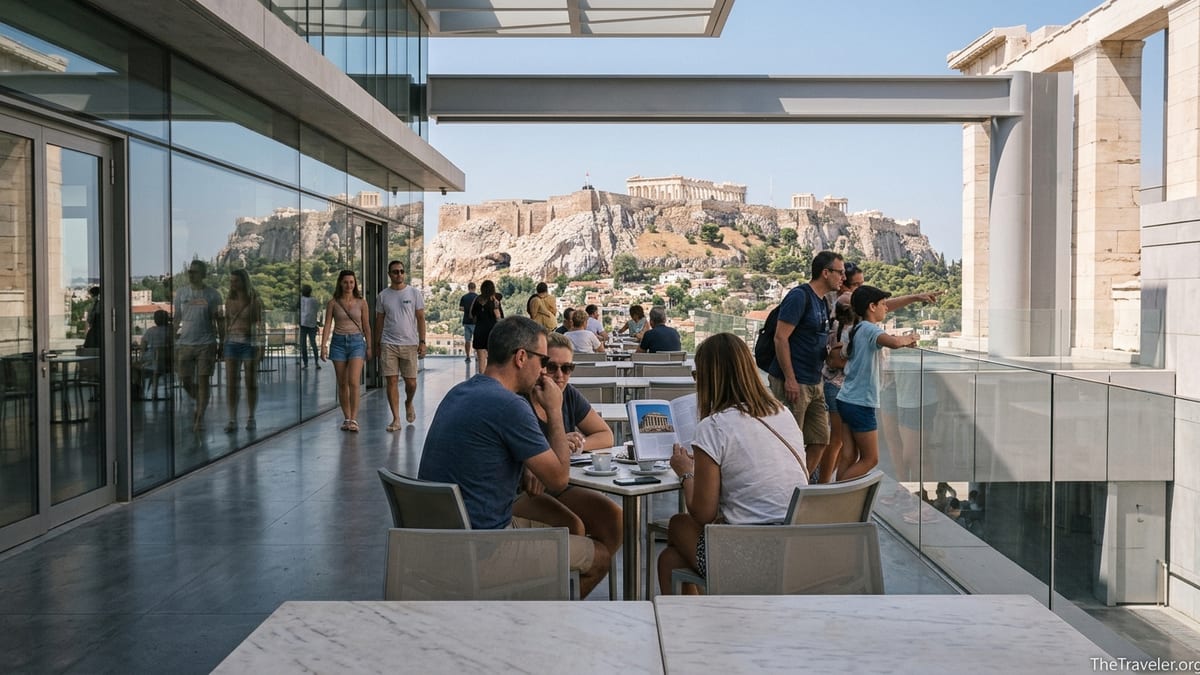
The museum’s café and restaurant are more than just convenience stops; they are part of the experience. On the second floor, a large restaurant space offers indoor tables and a terrace with panoramic views of the Acropolis and surrounding hills. Many visitors time their visit so they can sit here with a Greek coffee or a light meal while looking at the Parthenon framed by floor-to-ceiling glass. It is a calm alternative to the often-busy tavernas along nearby Makriyanni or Koukaki streets.
Menus usually feature a mix of Greek-inspired dishes and lighter options suitable for museum-goers: salads with local feta and olive oil, grilled vegetables, pasta, and a few meat and fish mains. Prices are slightly higher than a casual neighborhood café but comparable to other quality museum restaurants in Europe. For a concrete example, travelers might expect to pay a moderate amount for a main dish, less for a salad or dessert, and café-style prices for coffee. Portions are generally generous, making sharing a practical option for couples or parents with children.
The café-bar area is ideal if you simply want a drink and something small. It typically serves espresso-based coffees, soft drinks, wine, and snacks such as pastries or simple sandwiches. Because it is inside the museum, it can be especially welcome on hot summer afternoons when you need an air-conditioned break without exiting the building. Keep your ticket handy, as you may need it if re-entering exhibition spaces from the café level.
The museum shop is another highlight for many visitors. It is carefully curated, with reproductions of famous pieces such as the Caryatids or Parthenon frieze details, high-quality art books, children’s activity guides about Greek mythology, and tasteful jewelry and ceramics based on ancient designs. Prices range from inexpensive postcards and magnets to more substantial replicas. A common strategy for travelers trying to avoid last-minute souvenir shopping is to plan 15 to 20 minutes at the end of their visit to browse the shop and pick up gifts; that way, your souvenirs are closely tied to what you have just seen rather than to generic tourist stands.
First-Time Practical Tips: Timing, Photography, and Accessibility
One of the most common questions first-time visitors ask is how early they should arrive. If you want a relatively quiet experience with minimal waiting, aim to enter the museum shortly after opening time. Between 9:00 and 11:00, groups are present but the galleries still feel spacious, and the glass floors and windows are less crowded for photography. Late afternoon and early evening, especially on Fridays when closing time is extended, can also be pleasantly uncrowded; many tour groups have departed by then, and the light on the Parthenon through the windows can be beautiful.
Photography is generally allowed in much of the museum, but flash is not permitted and certain temporary exhibitions may prohibit photos entirely. Staff members are good at gently pointing out where restrictions apply. For best results, use a camera or phone that handles low light well and avoid bright reflections by stepping a little to the side rather than shooting straight into the glass. Tripods and large camera rigs are usually not allowed without special permission, so plan for hand-held photography only.
The building is designed with accessibility in mind. Elevators connect all floors, ramps assist with gentle level changes, and wide walkways in the galleries make it easier for visitors using wheelchairs or strollers to move around. Seating is available in several areas for those who need to rest. The museum also provides basic information on accessibility on its official channels, including details on accessible entrances and services. If you or a companion has specific mobility needs, it is a good idea to contact the museum ahead of your visit for the latest information.
Finally, dress for comfort rather than formality. The museum is climate-controlled, but you may be coming directly from or going straight to the Acropolis, where temperatures can be high and surfaces reflect heat. Light, breathable clothing, comfortable walking shoes with good grip, and a small bag that can be easily checked in at the cloakroom are ideal. As a practical example, many travelers carry only a crossbody bag containing tickets, water, sunscreen, and a hat, leaving bulkier items at their hotel.
The Takeaway
The Acropolis Museum is one of the rare places where a world-famous archaeological site becomes genuinely understandable in just a few hours. For first-time visitors to Athens, it provides a clear narrative: from the humble offerings of everyday Athenians to the monumental sculpture of the Parthenon. By planning ahead for tickets and opening hours, following the natural route through the galleries, and prioritizing highlights such as the Caryatids and Parthenon Gallery, you can experience the museum in depth without feeling rushed.
Pairing the museum with a walk up to the Acropolis itself, whether you visit the hill first thing in the morning or after a museum-based introduction to the art and architecture, creates a memorable day that ties together views, objects, and stories. A stop at the café or restaurant with its Acropolis panorama, a thoughtful browse in the shop, and a few quiet moments in front of favorite sculptures help turn a checklist visit into a deeper encounter with Athens’ ancient heart.
FAQ
Q1. How long should I plan for a first visit to the Acropolis Museum?
Most first-time visitors are comfortable with about two to three hours inside the museum. This allows enough time to follow the main route from the excavations under the building up through the Archaic Gallery, the Caryatids, and the Parthenon Gallery, with a short break in between. Travelers particularly interested in ancient art may easily stretch their visit to half a day.
Q2. Can I buy a combined ticket for the Acropolis and the Acropolis Museum?
No, there is currently no official combination ticket that includes both the Acropolis archaeological site and the Acropolis Museum. You must buy separate tickets for each. Some private city passes sold by tour companies bundle them together with other services, but these are reseller products rather than an official joint ticket, so always check what is included and whether it suits your plans.
Q3. Is it better to visit the Acropolis or the museum first?
In the hot months, it is usually more comfortable to visit the Acropolis first thing in the morning, then visit the museum late morning or midday. In cooler seasons, many travelers prefer to start in the museum so they understand the sculptures and architectural details before seeing the ruins on the hill. Either order works; the best choice depends on weather, your schedule, and whether you prefer to climb early or later in the day.
Q4. Do I need to book Acropolis Museum tickets in advance?
Advance booking is strongly recommended in high season, especially for popular late-morning and early-afternoon time slots and on weekends. In quieter months or if you plan to visit shortly after opening or later in the evening, buying tickets on-site is usually manageable. If your time in Athens is limited or you are visiting during a busy holiday period, pre-booking helps avoid uncertainty.
Q5. Are there free or discounted days at the Acropolis Museum?
The museum typically participates in certain national or international cultural days when admission is free or discounted, such as March 6, some national holidays, or International Museum Day in May. Exact dates can change from year to year, and free days are often much busier than normal. Budget-conscious travelers should balance the money saved against the likelihood of larger crowds and longer waits.
Q6. What are the absolute must-see exhibits for a first-time visitor?
For a first visit, prioritize the Archaic Gallery with its kouroi and korai statues, the five original Caryatids from the Erechtheion, and the Parthenon Gallery on the top floor. Many visitors also enjoy the ground-floor displays of small finds from the Acropolis slopes, which show the everyday side of ancient Athens. If you are short on time, a focused 60- to 90-minute visit to just these areas still gives a strong impression of the museum.
Q7. Is the Acropolis Museum suitable for children?
Yes, the museum is generally family-friendly. Wide spaces, natural light, and clear sightlines help keep children engaged, and many parents report that the Kore statues, the Caryatids, and the models of the Acropolis complex are particular favorites. Some periods see family-oriented materials or trails available, so it is worth asking at the information desk. Bringing a small notebook or sketchbook can also help kids connect more actively with what they see.
Q8. Are there food and drink options inside the museum?
Yes, the museum has a café and a full restaurant, both of which offer excellent views of the Acropolis. You can stop in for coffee, light snacks, or a full meal without leaving the building. Prices are higher than a basic street café but comparable to other quality museum restaurants, and the air-conditioned interior makes them particularly appealing during hot summer days.
Q9. Is the Acropolis Museum accessible for visitors with limited mobility?
The museum is designed to be accessible. Elevators connect all exhibition levels, ramps assist with gentle level changes, and there is seating available throughout the galleries. Visitors using wheelchairs or with limited mobility can follow the same general route as other guests. For specific questions about equipment, accessible restrooms, or assistance, contacting the museum before your visit is advisable.
Q10. Can I take photos inside the Acropolis Museum?
In most of the permanent galleries, photography is allowed without flash. Some temporary exhibitions or specific objects may have restrictions, which are clearly indicated by signs or by staff. Tripods and bulky camera gear are generally not permitted without prior authorization. For the best photos, try visiting early or late in the day when galleries are less crowded and the light is softer.