


More news on this day
Spain’s rail infrastructure manager ADIF and the Catalan commuter rail operator are preparing potential legal action against Siemens Mobility after a series of software and signaling failures repeatedly brought Barcelona’s Rodalies network to a standstill, intensifying pressure over reliability on one of Europe’s busiest urban rail systems.
Get the latest news straight to your inbox!
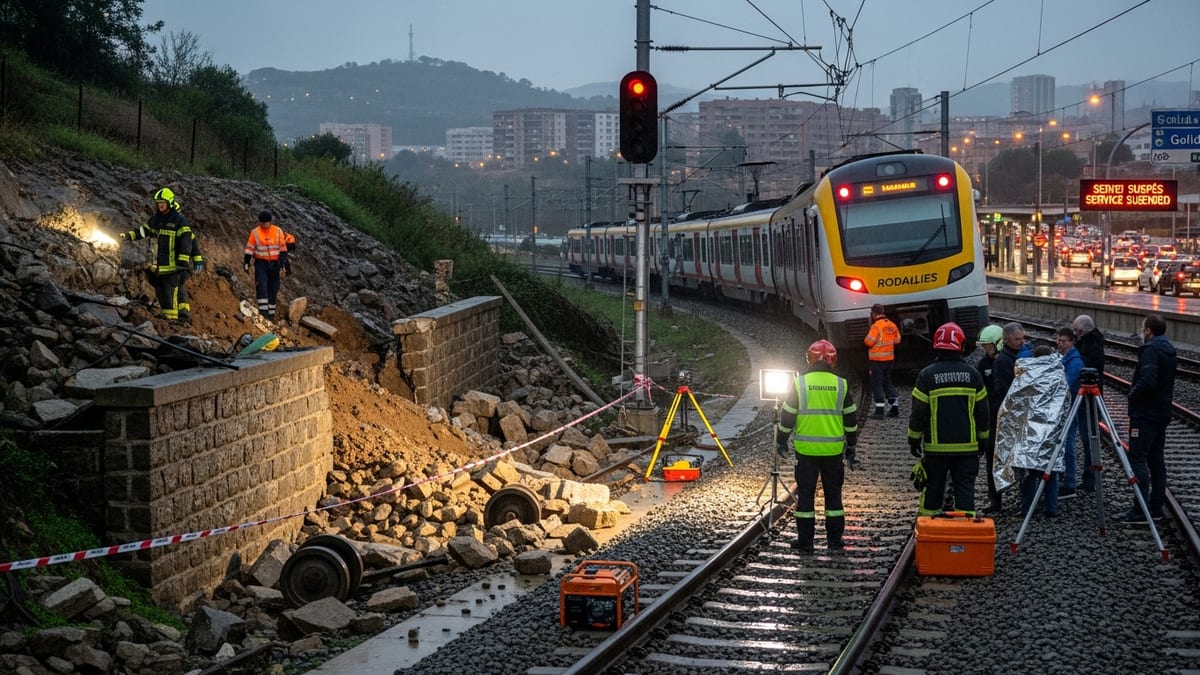
Recurring breakdowns hit Barcelona’s Rodalies network
Published accounts from Spanish and Catalan media indicate that the dispute centers on repeated failures of Siemens Mobility’s signaling and traffic-control software at the Estació de França control center, which manages much of the Rodalies suburban network around Barcelona. Several serious incidents over recent months have caused widespread delays and cancellations in the metropolitan area, affecting hundreds of thousands of daily commuters.
Reports describe episodes where trains were halted for hours at peak times after the control system froze or required emergency restarts. In some cases, services across multiple Rodalies lines were suspended, forcing passengers to crowd onto metro services, buses, or private vehicles. Passenger groups say these patterns have gone beyond occasional technical glitches and now resemble structural unreliability in the control technology.
The latest disruption, characterized in local coverage as part of a “recurring” pattern, appears to have prompted ADIF and the Catalan operator to formally study legal options. Public information suggests that internal incident reports are being compiled to determine whether Siemens has met its contractual obligations on availability, redundancy and recovery times for the system.
Barcelona’s Rodalies network is a critical spine for regional mobility, with heavy demand from daily commuters as well as airport and port connections. Repeated system-wide failures at the control center have therefore become a political as well as operational flashpoint, intersecting with broader debates over who should bear responsibility for long-running rail problems in Catalonia.
ADIF and Catalan operator seek accountability
According to published coverage in Spanish and Catalan outlets, ADIF and the Catalan rail operator are now evaluating whether the incidents constitute a breach of performance clauses in their contracts with Siemens Mobility. These contracts typically define strict thresholds for system availability, response times, and incident management, particularly on complex hubs such as Barcelona.
Legal specialists cited in open commentary on the case note that infrastructure managers usually retain the right to claim damages if repeated technical failures can be traced to design flaws, software instability or insufficient maintenance by the supplier. ADIF’s internal contingency framework, reflected in its network statements, emphasizes that operators not responsible for a disruption may be entitled to compensation, which in turn can intensify pressure on technology providers.
For the Catalan operator, the stakes are equally high. The regional government has made improved reliability a political priority, as it negotiates the gradual transfer of Rodalies management from the central administration. Any perception that technical partners are failing to deliver resilient systems risks complicating those negotiations and undermining public confidence in the transition.
Both ADIF and the operator also face strong scrutiny from passenger associations, which argue that accountability should not stop with contractors. Even if Siemens technology is found to be at the root of the failures, critics say that public managers are responsible for ensuring adequate redundancy, real-time passenger information and alternative transport plans when outages occur.
Siemens Mobility under pressure in strategic rail market
The emerging legal threat in Barcelona comes at a sensitive moment for Siemens Mobility in Spain, where the company supplies signaling, train control and rolling stock on high speed and conventional lines. Previous high-profile debates over fleet reliability and track performance in the Spanish network have already brought manufacturers and infrastructure managers under closer public scrutiny.
Industry commentary points out that Barcelona is a showcase market in which performance problems can echo far beyond Catalonia. The city’s dense commuter rail operations host services from multiple operators and handle significant tourist flows, making reliability a central selling point for any technology provider. Persistent problems at the core control center could therefore influence future procurement decisions, both in Spain and elsewhere in Europe.
Siemens Mobility has publicly defended the robustness of its systems in other contexts, highlighting their deployment on major European corridors. However, analysts note that even proven technology can behave differently when integrated into legacy infrastructure, intense traffic patterns and complex governance structures such as those in Barcelona’s mixed long-distance and commuter network.
While Siemens has not been reported as commenting in detail on the latest conflict, legal experts suggest the company is likely to argue that any failures need to be assessed in light of network conditions, maintenance responsibilities and the operating procedures of ADIF and the Catalan operator. How liability is ultimately apportioned could hinge on technical logs, incident timelines and prior modification requests.
Impact on passengers and Catalonia’s rail reform agenda
The disruptions have had a tangible impact on daily life in and around Barcelona. Commuters describe longer travel times, missed connections and crowded platforms, particularly on radial routes into the city center. At times, the control center failures have coincided with other incidents on the Spanish rail network, adding to a sense of fragility in the system.
Passenger associations and civic groups have used the breakdowns to renew calls for accelerated investment in Catalan rail infrastructure, including signaling upgrades, capacity increases on key corridors and better integration between Rodalies, metro and regional services. The recurring problems at the Estació de França center are often cited as emblematic of what they view as years of underinvestment and delayed modernization.
The legal tensions also intersect with a broader political discussion over the transfer of Rodalies governance to Catalonia. Regional authorities argue that greater control over infrastructure and operations would allow them to prioritize investments and demand stronger performance guarantees from suppliers. Critics counter that governance changes alone will not solve engineering and maintenance challenges highlighted by the Siemens-related incidents.
In the short term, public information suggests that ADIF, the Catalan operator and Siemens are working within existing procedures to stabilize the system and reduce the likelihood of further mass disruptions. Even so, the possibility of court proceedings raises the prospect of a protracted dispute that could shape the future of rail technology procurement and accountability across Spain’s busiest rail hub.