


More news on this day
Travelers heading into the Juneteenth holiday weekend are encountering mounting delays across major U.S. transportation hubs, with weather disruptions, staffing limits and heavy demand combining to slow both air and road journeys.
Get the latest news straight to your inbox!
Stormy Skies Collide With Peak Holiday Demand
The Juneteenth National Independence Day holiday on Friday, June 19, 2026, arrives at the same moment early summer travel demand is surging, creating a volatile mix for airlines and passengers. With schools out in many regions and a three-day weekend for many workers, airport volumes have pushed toward typical summer peaks.
Published coverage from national outlets indicates that thunderstorms and heavy rain across parts of the Midwest and South in the days leading up to the holiday have already triggered delays and cancellations, particularly at large hub airports where even short ground stops can ripple across the network for hours. Travel waivers issued in recent days for cities such as Chicago, Houston and several Midwest destinations illustrate how quickly localized storms can disrupt wider schedules.
Publicly available information from airline operations trackers shows that weather-related disruptions rarely remain isolated to one region. When storms slow departures at a major hub, aircraft and crews often miss scheduled rotations to other cities, creating secondary delays for travelers who are not directly in the storm zone but are relying on those aircraft for their own departures.
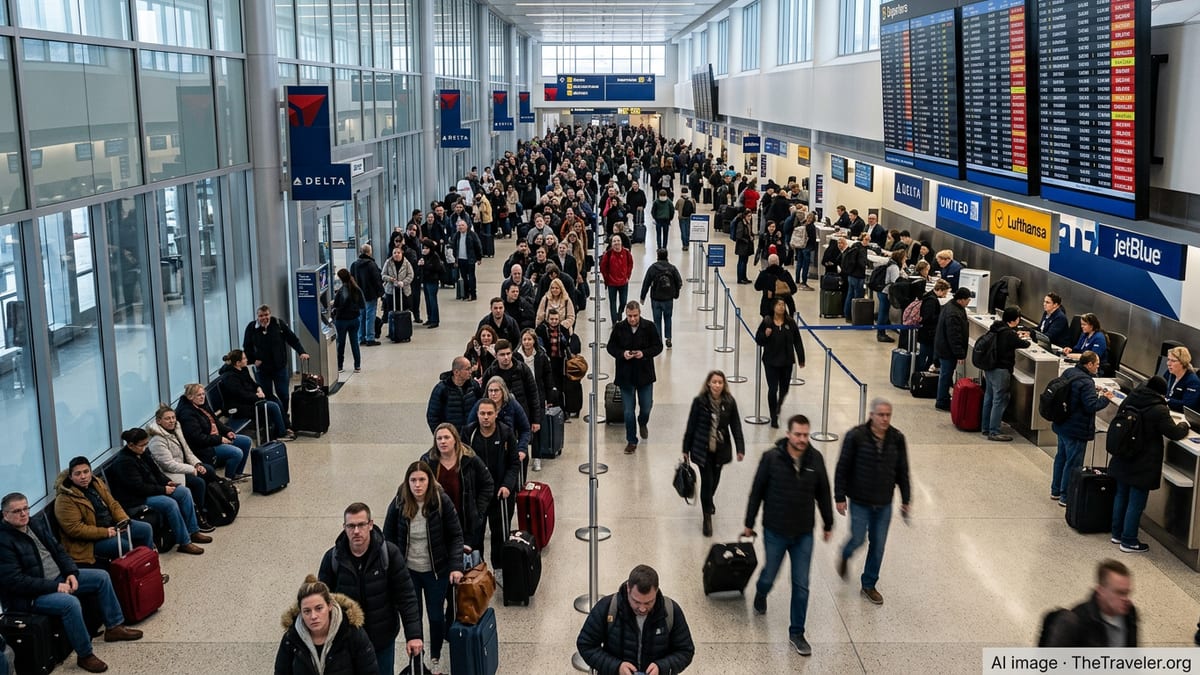
For passengers, the effect is most visible in longer security lines, packed gate areas and departure boards that increasingly feature creeping delay estimates as the holiday weekend gets underway.
Airlines Strain to Keep Juneteenth Schedules on Track
According to aviation industry data and day-of-travel dashboards, U.S. carriers are running dense schedules around Juneteenth to meet strong leisure demand, particularly on domestic routes. That tight scheduling leaves little slack in the system when storms or congestion hit, increasing the risk that individual delays can build into broader operational challenges.
Reports from airline-focused news sites and traveler forums suggest that some of the sharpest disruptions are concentrated among carriers with large hub operations in storm-affected regions, including those with major bases at Chicago and Dallas. When ground stops or flow-control measures are put in place at those hubs, travelers can see their itineraries shift from minor delays to missed connections or rebookings later in the day.
Operational bulletins and public advisories indicate that several airlines have encouraged passengers flying around the holiday to check their flight status frequently and, where eligible, make use of flexible rebooking policies when severe weather is forecast. These policies can ease congestion at airports by allowing some travelers to shift their trips to earlier or later days, but they also reflect how challenging it has become to guarantee on-time performance when storms form repeatedly along key flight corridors.
Despite these measures, seat availability for same-day changes remains tight on many popular routes, a reminder that even when airlines waive change fees, high load factors can limit practical options for stranded passengers.
Highway Congestion Adds to the Holiday Slowdown
Travel delays are not confined to the skies. State transportation departments and traffic monitoring services report heavier-than-normal vehicle volumes on major interstates leading into the Juneteenth holiday, particularly near large metro areas hosting commemorative events and festivals.
Data from federal transportation statistics show that nationwide vehicle miles traveled have been trending higher than last year, and the holiday adds another spike as families and groups drive to regional celebrations, parades and concerts. In some corridors, lingering construction zones and ongoing bridge work are compounding the slowdown, narrowing lanes and reducing speeds just as traffic surges.
Several states have issued advance notices about holiday enforcement campaigns and posted reminders for drivers to plan extra time, anticipating that congestion and minor incidents could lengthen travel times throughout the weekend. These advisories highlight not only safety concerns but also the expectation that even routine fender benders may cause outsized backups when roads are already close to capacity.
For urban travelers, the mix of holiday-related road closures, rerouted public transport and rideshare demand spikes can further complicate the final leg of the journey from airport or highway to hotel and event venues.
Travelers Adjust Plans as Delays Accumulate
With delays mounting, many travelers are adjusting expectations and itineraries. Publicly available comments on travel forums show passengers arriving at airports earlier than usual, opting for morning departures in the hope of beating afternoon storm patterns, and building longer layovers into multi-leg trips to reduce the risk of missed connections.
Consumer travel experts quoted in recent coverage recommend that those who have not yet departed treat Juneteenth travel much like the peak of summer or Thanksgiving: choose nonstop flights when possible, avoid tight connections through weather-prone hubs, and keep essential items and one day’s worth of medications and clothing in carry-on bags in case checked luggage is delayed.
For those traveling by car, mapping services and navigation apps are becoming essential tools to route around traffic incidents and construction bottlenecks. Many drivers are also shifting departure times to early morning or late evening to avoid the busiest hours on Friday and Saturday, trading off convenience for a smoother drive.
While not every route or region is affected equally, the pattern emerging around this year’s Juneteenth holiday suggests that as the observance becomes more widely celebrated and aligned with summer vacation habits, transportation systems can expect sustained pressure on capacity and punctuality.
Preparing for the Remainder of the Holiday Weekend
Forecasts indicate that pockets of unsettled weather could linger into the remainder of the Juneteenth weekend in some regions, raising the prospect of continued travel disruptions even after the peak getaway period. Airlines and transportation agencies are monitoring storm tracks closely and may update advisories or flexible travel policies as conditions evolve.
Travel industry analysts note that the Juneteenth holiday now sits near the start of the busiest stretch of the U.S. summer travel season, meaning residual delays may take time to clear as aircraft, crews and traffic patterns return to normal. Travelers booked for flights in the days immediately after the holiday could still encounter aircraft arriving late from earlier segments or crews reaching duty-time limits, both common knock-on effects of prior disruptions.
For those yet to depart, the most effective strategies remain proactive: monitoring itineraries, enabling airline and navigation alerts, and building flexibility into plans wherever possible. Although the growing recognition of Juneteenth has brought new opportunities for meaningful travel and celebration, it has also created another focal point on the annual calendar where U.S. transportation networks are tested by heavy demand and fickle summer weather.