


More news on this day
Japan Airlines is extending special ticket flexibility on routes touching the Middle East, responding to continued airspace restrictions and airport disruption that are unsettling travel plans across Asia, Europe and the Gulf.
Get the latest news straight to your inbox!
Extended Waiver Covers Doha and Dubai Itineraries
Publicly available information indicates that Japan Airlines has lengthened the validity of its special ticket handling policy for customers booked on flights involving Doha and Dubai. The latest update, reported in mid-May, shows that the waiver now applies to trips scheduled through early August, reflecting the continuing volatility affecting key Middle East hubs.
According to airline bulletins shared with travel agencies, the policy covers tickets issued by Japan Airlines on or before late February for itineraries that include services to or from Doha and Dubai. Where flights are canceled or significantly disrupted, affected passengers are being offered a one-time change to an alternative flight or a refund, subject to specific fare rules.
The extension follows Japan Airlines’ earlier decision to suspend its Tokyo–Doha service into late summer while regional tensions and airspace advisories remain elevated. Operational data compiled by aviation news outlets show that many carriers are still avoiding or limiting flying through conflict-adjacent corridors, constraining capacity and pushing some passengers onto longer reroutes.
Japan Airlines’ approach aligns with a wider pattern of Asia and Europe based carriers deploying rolling waivers and flexible policies as they monitor the security situation and airspace availability around the Middle East.
Protecting Passengers From Mounting Airport Disruptions
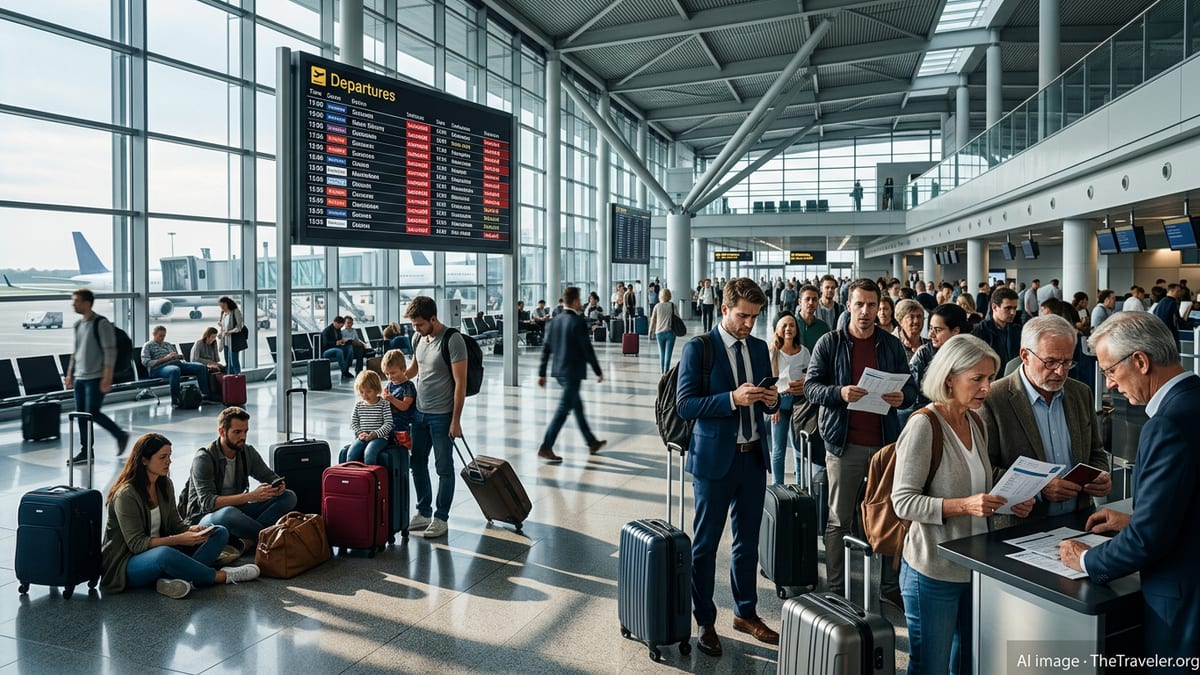
Industry trackers report that Middle East related airspace closures and reroutes have triggered hundreds of cancellations and delays across major Asian and Gulf hubs since early March. Flight data reviewed by independent travel analysts points to disruption rippling outward to airports as far apart as Tokyo, Bangkok, Dubai and Doha, as airlines replan routings or trim frequencies.
In this environment, Japan Airlines’ extended flexibility aims to buffer passengers from last minute changes that are beyond their control. By allowing rebooking and refunds within a defined waiver window, the carrier is giving customers on affected Middle East linked itineraries a clearer set of options if schedules shift again.
Travel risk specialists note that such policies can help reduce secondary chaos at airports, because more passengers are able to resolve their plans in advance rather than queuing at service desks when a cancellation is announced. For travelers connecting between Japan, Europe and the Middle East, the ability to adjust tickets proactively can be critical to avoiding missed onward flights and unexpected overnight stays.
Japan Airlines has also been reiterating, through its public information channels, the importance of checking international flight status and operational outlooks before departure. The carrier’s online tools highlight which services are at risk of disruption and which tickets may qualify for fee waivers when irregular operations are expected.
How the Special Handling Policy Works
Based on the latest agency guidance, the Middle East special handling framework allows eligible passengers to make a one-time itinerary change without standard change fees when their booked Japan Airlines operated flight is canceled or materially impacted. In practice, this typically means shifting to another Japan Airlines service on a nearby date, or rerouting where capacity exists, within a time limit that currently runs through early August.
Where suitable alternatives are not available, or where passengers prefer not to travel under the current conditions, refunds are permitted in line with the commercial policy that accompanies the waiver. Travel trade documents show that these rules are designed to sit alongside Japan Airlines’ broader disruption policies, which already allow changes and refunds in cases of severe weather, operational irregularities or other extraordinary circumstances.
However, the special handling does not amount to open-ended flexibility. Travelers generally need to act before their original departure time and within the specified travel window. Those who voluntarily move their trips outside the protected dates may still face fare differences, especially on heavily booked long haul sectors between Japan, Europe and alternative hubs.
Agents and corporate travel managers are being urged, in public advisories, to verify the applicable waiver codes and conditions before reissuing tickets. This is intended to minimize confusion at check in and to ensure that passengers who have been rebooked under the policy are correctly recognized as protected by the system.
Part of a Wider Shift Toward Flexible Travel Policies
Japan Airlines is not alone in extending flexibility for Middle East bound passengers. Carriers across Europe, the Gulf and Asia have announced temporary suspensions, trimmed schedules and rebooking waivers as regional tensions have disrupted established air corridors and raised operational risk levels.
Recent coverage from aviation and travel news outlets describes airlines in the United Kingdom, continental Europe and the Gulf reducing flights or rerouting services around conflict-affected airspace, often pairing those adjustments with customer-friendly policies that ease date changes. Some Middle East based airlines have gone further by broadening waivers to cover a wide range of itineraries that transit their hubs, reflecting the central role those airports play in global connections.
Analysts point out that this wave of flexibility marks a continuation of practices that became more common during the pandemic era, when airlines learned that transparent rebooking options could help maintain customer confidence during prolonged uncertainty. The ongoing disruptions linked to the Middle East have revived those tools, although the triggers are now geopolitical rather than health related.
For passengers contemplating new trips involving Japan and the Middle East, the persistence of waivers and flexible rules may offer some reassurance. At the same time, the evolving nature of airspace advisories means that itineraries routed through alternative hubs can also be subject to change at short notice, underscoring the importance of monitoring airline updates closely.
What Travelers Should Expect in the Months Ahead
With Japan Airlines’ Tokyo–Doha suspension currently stretching into late August and special handling in place for Doha and Dubai linked tickets, travelers can expect limited direct capacity between Japan and certain Gulf destinations for at least part of the northern summer season. According to airline schedules compiled by industry data providers, some passengers are already being moved onto itineraries via Europe or other Asian hubs when Middle East routings are not available.
Travel consultants suggest that passengers with existing bookings involving Doha or Dubai should review their itineraries now, rather than waiting for a potential last minute schedule change. Those whose trips fall within the current waiver period may have more options to adjust dates or routings while alternative flights still have seats.
For new bookings, observers say that flexibility remains essential. Choosing fares that allow changes at reasonable cost, allowing longer connection times and avoiding tight same day transfers through disruption prone hubs are all strategies that may reduce stress if conditions deteriorate again. Purchasing travel insurance that specifically addresses geopolitical or airspace related disruption can provide another layer of protection, although coverage details vary.
As regional tensions continue to influence airline networks, Japan Airlines’ decision to extend Middle East ticket flexibility illustrates how carriers are trying to balance safety, operational constraints and customer expectations. Travelers hoping to bypass the worst of the travel chaos will likely need to pair that flexibility with careful advance planning and close attention to schedule updates.