


More news on this day
Multiple public safety agencies converged on the Upatoi area overnight after reports of a train derailment, prompting temporary road closures and an extended emergency response as crews assessed damage and potential hazards along the rail line.
Get the latest news straight to your inbox!
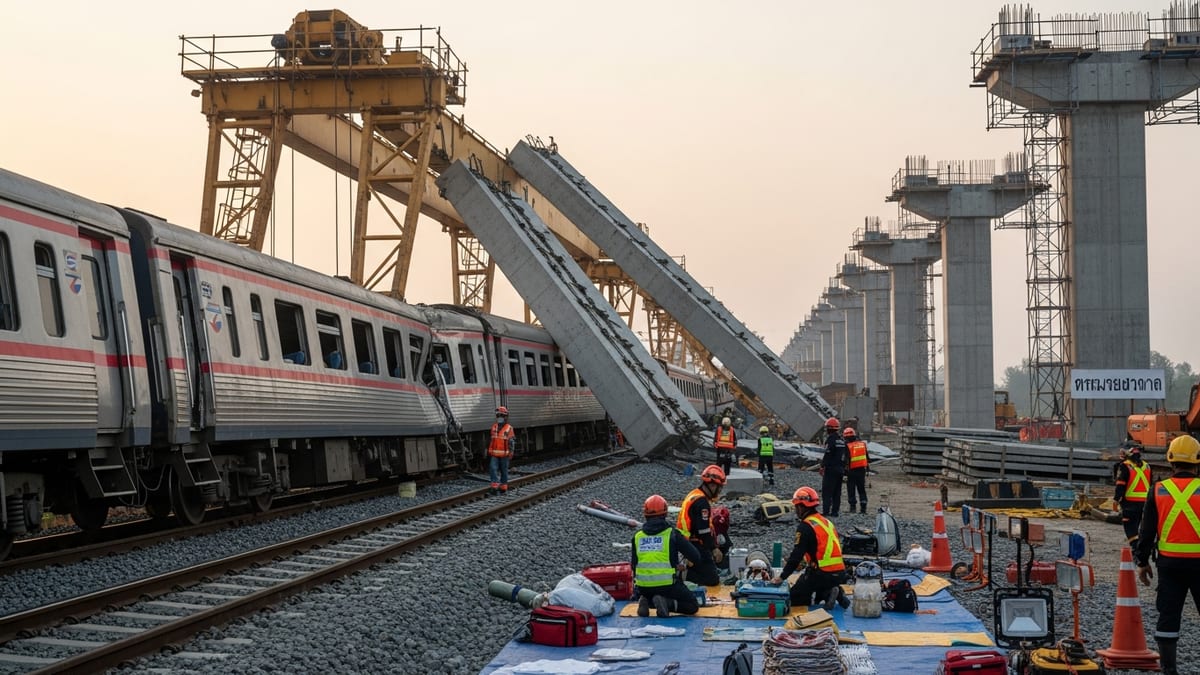
Overnight Incident Draws Large Emergency Response
Reports indicate that the incident occurred in the overnight hours near the community of Upatoi, east of Columbus, along a freight rail corridor that sees regular train traffic through rural stretches of Muscogee County. Initial information shared through publicly available dispatch summaries and local coverage describes a response for a reported derailment, triggering automatic calls for multiple agencies to assist.
Fire, law enforcement and medical units from the surrounding area were dispatched to the scene, with crews staging along nearby roadways to secure access points and establish a safe perimeter. Given the limited lighting and wooded terrain common around the tracks in this area, responders worked through challenging conditions to locate and assess any railcars that may have left the tracks.
Early accounts suggest the primary focus in the first hours was determining whether any hazardous materials were involved and whether there were injuries among train crew members or anyone in the vicinity. As is typical in rail incidents, responders moved cautiously, balancing the need for rapid assessment with precautions around unstable equipment and the possibility of fuel leaks or other unseen hazards.
As of early morning, publicly available information had not identified any widespread injuries or major secondary impacts to nearby homes or businesses, though access restrictions and an active investigation continued to affect the immediate area around the tracks.
Road Closures and Local Travel Disruptions
The reported derailment led to temporary closures or restrictions on roads that intersect or run alongside the affected rail line near Upatoi, affecting early morning commuters and local residents. Traffic control points were established so that emergency vehicles and railroad personnel could move freely in and out of the incident zone while keeping bystanders at a safe distance.
Motorists in parts of eastern Muscogee County encountered detours as crews repositioned apparatus and heavy equipment near grade crossings and access roads. Publicly available traffic and emergency alerts described congestion in spots where vehicles were turned around or guided to alternate routes, particularly in the pre-dawn hours when information about the duration of closures remained limited.
Residents in nearby neighborhoods also reported seeing emergency lights and hearing rail activity through the night, contributing to concern about the scale of the event. As daylight approached and the situation became more stable, some restrictions began to ease, though rail operations in the immediate area remained disrupted while inspections and recovery planning continued.
Impacts to regional rail schedules were not immediately clear, but freight movements through the corridor were expected to be slowed or rerouted until track inspections and any necessary repairs could be completed. Longer-term disruptions typically depend on the number of railcars involved, the condition of the track bed and whether specialized cranes are needed to remove damaged cars.
Multi-Agency Coordination at the Scene
Publicly available accounts of the Upatoi response describe a familiar pattern for modern rail incidents, in which fire departments, law enforcement, emergency medical services and railroad representatives converge under a unified command structure. This approach is designed to streamline decision-making, ensure consistent safety messaging and coordinate the movement of personnel and equipment in a confined operating area.
Rail incidents often draw in additional support from regional hazardous materials teams and emergency management staff, particularly in the early stages when the contents of railcars and any potential environmental risks are still being verified. Published guidance from federal rail and hazardous materials agencies notes that even when no hazardous cargo is ultimately involved, initial response plans generally err on the side of caution because of the potential for fuel spills, fire risk and damage to nearby waterways or infrastructure.
According to training and preparedness materials used nationwide, multi-agency coordination in derailments typically includes setting up operational zones, designating safe entry and exit routes along the tracks and maintaining constant communication between ground crews and dispatch centers. In rural communities such as Upatoi, where specialized resources may be farther away, neighboring jurisdictions and county-level agencies often play a key role in supplying additional equipment, tankers and personnel.
As the situation stabilizes, responsibility for the site typically transitions more fully to railroad contractors and recovery teams, while public agencies maintain oversight of safety, traffic control and any necessary protective measures for nearby residents.
Focus on Safety, Assessment and Cleanup
In the hours following the initial response near Upatoi, the emphasis shifted from urgent life safety concerns toward detailed assessment and planning for debris removal and track repair. Railcars that have left the rails can place considerable stress on track components and the supporting ballast, even if they remain upright, so inspectors commonly examine a significant stretch of line on either side of the reported incident.
Cleanup operations at derailment sites often involve specialized lifting equipment, rail cranes and heavy trucks to remove damaged cars and any spilled cargo. Publicly available information on comparable freight derailments indicates that the timeline for restoration can range from several hours to multiple days, depending on the number of cars involved, the availability of equipment and the complexity of the track layout at the site.
Environmental considerations are also central to the post-incident phase. Even when hazardous materials are not present, responders typically check for diesel fuel leaks from locomotives, lubricants from rail equipment and debris that could reach drainage channels or nearby creeks. Coordination with state and federal environmental agencies may follow if any reportable spill thresholds are reached.
Once rail operations resume, monitoring often continues for a period of time to confirm that repairs are holding and that no residual issues remain along the affected section of track. Communities such as Upatoi that sit close to active rail corridors frequently call for clear communication about cleanup progress and any long-term safety improvements implemented after an incident.
Broader Context of Rail Safety Concerns
The reported Upatoi derailment comes amid ongoing national attention to rail safety and emergency preparedness in communities along busy freight routes. Recent freight and passenger train incidents in several states and abroad have kept issues such as track inspection, train length, staffing levels and hazardous materials routing in the public spotlight.
Federal rail safety data and policy reviews highlight the wide range of factors that can contribute to derailments, from track defects and equipment failures to weather impacts and collisions at grade crossings. Training materials for emergency responders emphasize the importance of pre-planning with rail operators, mapping access points and understanding the types of cargo that commonly move through a given corridor.
For smaller communities bordering rail lines, the Upatoi response underscores the reliance on mutual aid networks and standardized incident management practices to handle low-frequency but potentially high-impact events. Publicly available information about recent derailments elsewhere shows that rapid, coordinated action can limit injuries and environmental damage, even when equipment damage is significant.
As more details about the reported incident near Upatoi become available through official summaries and railroad updates, residents and travelers are likely to watch closely for information about the cause, any infrastructure repairs and whether additional safety measures will be introduced along this stretch of track.