


More news on this day
Nearly 250 rail passengers were left stranded on New Zealand’s South Island after fierce winds sent trees crashing across the tracks, bringing a regional passenger service to a standstill amid a fast-moving storm system.
Get the latest news straight to your inbox!
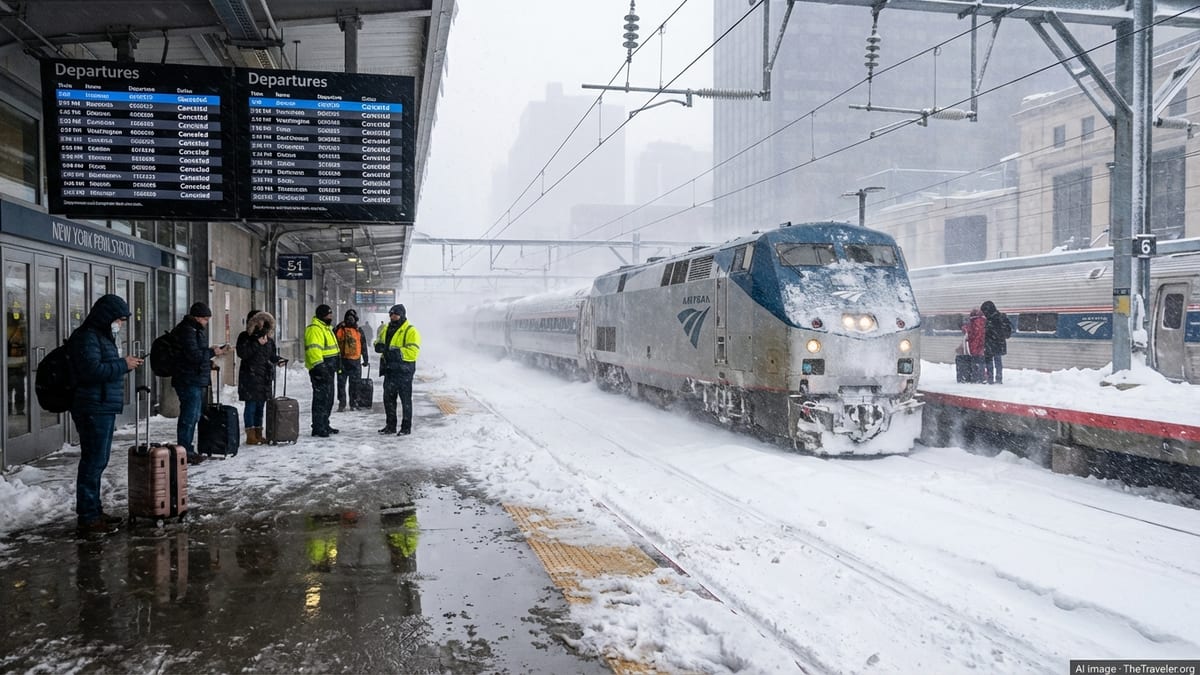
Storm Lash Leaves Passenger Train Immobilised
According to published coverage from New Zealand media, the incident occurred as a band of severe winds swept across parts of the South Island, toppling trees onto rail lines and disrupting power in several communities. One affected service, carrying 248 passengers, was forced to stop after trees blocked the track, leaving the train immobilised in a rural area.
Reports indicate that the stalled service formed part of a broader pattern of disruption as the storm moved through, with debris scattered on roads, flight cancellations at regional airports and localized outages affecting thousands of properties. Wind gusts in parts of the South Island were reported as reaching well over 100 kilometres per hour, creating hazardous conditions for both rail and road transport.
Rail operators temporarily suspended movements in the affected corridor while crews assessed track conditions and the stability of surrounding trees. Passenger trains behind the blockage were either held at stations or rerouted where possible, as control centres worked to maintain safety margins in rapidly changing weather.
Onboard Delays and Complex Passenger Logistics
Published reports describe passengers remaining on board for several hours while rail staff coordinated with emergency and maintenance teams to clear the line and arrange onward travel. With the train unable to proceed and conditions outside considered unsafe, travellers were initially instructed to stay seated, conserve battery power on devices and follow crew updates.
As the scale of the obstruction became clearer, replacement buses were sourced to move people to the nearest major towns once access roads were confirmed safe. The transfer operation was complicated by blocked routes, strong crosswinds and the need to position vehicles close enough to the immobilised train without exposing passengers to additional risk from falling branches or flying debris.
Some travellers experienced extended journey times as services were rescheduled or terminated short of their planned destinations. Families, international visitors and commuters had to reorganise accommodation and connecting travel at short notice, with local tourism operators and motels in nearby centres reporting a spike in last minute bookings as disrupted passengers sought somewhere to stay.
Rail Network Faces Intensifying Weather Challenges
The South Island incident fits into a broader pattern in which high winds, heavy rain and slips have increasingly disrupted services in New Zealand and other countries with exposed rail corridors. Historical summaries of severe weather events in the region show that fallen trees and debris have repeatedly blocked lines, delayed trains and, in some cases, damaged rolling stock.
Publicly available information from transport and civil defence agencies highlights that many key New Zealand rail routes run through areas of steep terrain, river valleys and coastal fringes where vegetation and unstable slopes sit close to the tracks. In these environments, strong gusts can quickly bring trees down across overhead lines and rails, particularly after periods of saturated ground.
In recent years, rail infrastructure managers have faced a balancing act between maintaining lineside vegetation for erosion control and biodiversity and reducing the risk of storm damage. Weather-related safety reviews and formal investigation summaries have pointed to the importance of vegetation management, drainage upgrades and real-time monitoring systems to detect obstructions at an early stage.
Safety Protocols and Passenger Support Under Scrutiny
While there were no reports of serious injuries linked to the South Island disruption, the experience for the 248 stranded passengers has prompted renewed attention to how rail operators communicate and provide support during prolonged delays. Travel advisories already encourage passengers in New Zealand to carry essential medication, water and warm clothing, especially on longer regional journeys where alternative access can be limited.
Guidance from emergency preparedness agencies in New Zealand emphasises that storms can develop quickly, cutting power, blocking roads and affecting multiple transport modes at once. Rail passengers caught in such events may find that standard contingency plans, such as simple bus replacement services, become difficult to implement when routes are littered with debris or affected by surface flooding.
Analysts note that operators globally are reviewing protocols for severe weather, including pre-emptive service suspensions when forecasts predict extreme winds, more robust onboard supplies for stranded passengers and closer integration between rail control rooms and regional civil defence networks. The South Island incident is likely to feed into these discussions, adding a fresh example of how rapidly conditions can deteriorate on relatively remote stretches of track.
Implications for Future Travel on Scenic South Island Routes
The affected passengers were travelling through a region renowned for its scenic rail journeys, which form an important part of the South Island’s tourism appeal. Disruptions of this kind underline the vulnerability of these routes to the very landscapes that make them attractive, with dense forest, river gorges and coastal cliffs all contributing to higher exposure during storms.
Tourism operators and regional economic agencies have increasingly framed rail as a key component of low-emission travel, encouraging visitors to opt for trains instead of rental cars on popular corridors. However, the latest disruption highlights the need for continued investment in resilience measures so that services can recover quickly after extreme weather and maintain traveller confidence.
Travel industry observers suggest that visitors planning journeys on South Island rail services should monitor weather forecasts closely, build extra time into itineraries and be prepared for short-notice changes, especially during seasons when strong systems are more common. For now, rail remains a compelling way to see some of New Zealand’s most dramatic landscapes, but the experience of 248 stranded passengers is a reminder that these journeys are increasingly at the mercy of powerful winds and falling trees.