


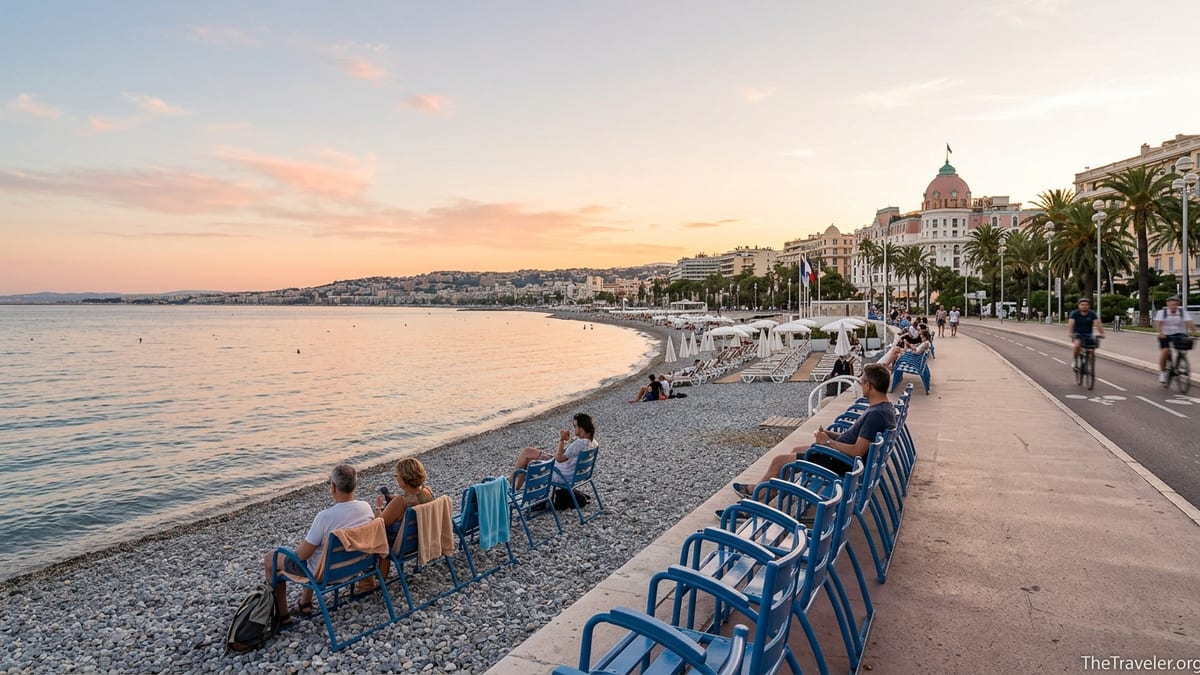
Stretched along the curve of the Baie des Anges, Nice’s Promenade des Anglais looks deceptively simple: a graceful seafront boulevard, blue chairs facing the Mediterranean, and a ribbon of grey pebbles leading to crystalline water. Yet many first-time visitors discover that enjoying this iconic waterfront is not as effortless as it seems. From misreading beach culture to underestimating the traffic, visitors repeat the same costly or uncomfortable mistakes every season. Knowing what to expect on this 7‑kilometre promenade can mean the difference between a sun-drenched highlight and a frustrating day by the sea.
Get the latest updates straight to your inbox!
Underestimating the Pebble Beaches and the Mediterranean Sea
The postcard image of the Promenade des Anglais suggests soft sand and gentle waves. In reality, almost the entire beachfront is made up of large rounded pebbles. Newcomers often arrive in flimsy flip‑flops, drop a towel directly on the stones, and only then realise how uncomfortable it is to sit or lie down. Standing barefoot can feel like walking on marbles, and getting in or out of the water can be awkward and even hazardous for anyone with mobility issues.
A simple fix is to plan for the terrain. Local sports shops in central Nice sell inexpensive rubber water shoes for roughly the price of a café lunch, and they make an enormous difference when climbing in and out of the sea. Many repeat visitors also bring a foldable foam mat to place under their towel. On public stretches of Plage Publique de la Promenade des Anglais, these small investments transform an uncomfortable hour into a relaxed afternoon.
Another common mistake is misjudging the sea itself. The Baie des Anges can look glassy and calm from the promenade, yet the seabed drops off quickly, so the water becomes deep within just a few steps. Swimmers who are used to slowly sloping sandy beaches can be surprised by how suddenly they are out of their depth. In moderate swell, waves also rebound off the pebble bank, creating a push‑pull effect that can knock people off balance when they try to get out.
In summer, certain sections of the Promenade des Anglais are monitored by lifeguards and display coloured flags indicating conditions. A recurring error is ignoring these signals because the water “looks fine.” Visitors sometimes enter the sea near unguarded stretches or swim outside the designated zones marked by buoys. Even strong swimmers are better off staying within flagged areas, entering and exiting slowly, and avoiding the temptation to dive from the waterline where submerged rocks may sit just below the surface.
Misreading Public vs Private Beaches and Blowing the Budget
On a hot afternoon, the rows of sun loungers and chic parasols along the Promenade des Anglais look irresistible. Many visitors wander down assuming these beds are part of the public beach, only to be surprised when staff explain that a single lounger with parasol can cost around 20 to 30 euros for the day in high season on many central beach clubs. Some upmarket spots charge more for prime front‑row positions, while double beds with service can approach restaurant prices for a couple.
This confusion often leads to awkward conversations or unplanned spending. A visitor might sit on a plush lounger at a well‑known venue like Le Galet, order a drink, and realise only when the bill arrives that the price includes a full‑day lounger rental plus bar service. Elsewhere on the promenade, beach clubs such as Cocoon Beach closer to the western end list separate rates for first and second rows, towels, and beds, and the total can climb quickly for families or groups of friends.
The key is understanding that the seafront is a patchwork of free public beaches and concessioned private sections. Public stretches cost nothing to use, and you can bring your own towel, umbrella, and snacks, though there are no free sun loungers or showers beyond basic municipal facilities. Private clubs, by contrast, offer changing cabins, waiter service, dedicated restrooms and often a full restaurant menu, but they charge per person for loungers and parasols, and sometimes prohibit outside food and drink.
To avoid budget surprises, walk along the promenade before committing. Most clubs display their current rates at the entrance, and some adjust prices slightly between shoulder season and peak summer. If you are happy with a simple setup, pick a public section near a lifeguard post and rent only what you need, such as a single parasol from a vendor or a beach mat from a nearby shop. Save the splurge for one special day at a club that matches your style, whether that is a historic institution near Place Masséna or a more relaxed venue farther west toward the airport.
Ignoring Heat, Sun and Hydration on an Exposed Seafront
The Promenade des Anglais is wide, bright and almost completely exposed to the elements. In July and August, midday temperatures regularly climb into the high twenties and low thirties Celsius, and the reflected glare from the sea, white façades and pale pavement can be intense. Visitors often underestimate this combination, heading out for “a quick walk” without a hat or sunscreen and returning to their hotel with a painful sunburn after less than an hour.
Another frequent misstep is leaving hydration to chance. There are public fountains and kiosks along the promenade, but in peak season queues can be long and prices at seaside kiosks can feel steep compared with supermarkets on nearby streets. Travelers sometimes sit on the famous blue chairs for long stretches with nothing more than an ice‑cream, then feel drained and headachy by late afternoon.
Locals treat the Promenade des Anglais differently depending on the time of day. In high summer, many go for runs, swims or bike rides early in the morning or in the golden hour before sunset, when the light is soft and a sea breeze cools the air. Adopting the same rhythm helps visitors avoid the fiercest heat and the densest crowds. A practical routine is to schedule indoor sightseeing or a leisurely lunch between late morning and mid‑afternoon, then return to the promenade later when the sun begins to drop behind the city.
Even in shoulder seasons like May or late September, the UV index can be stronger than it feels in the breeze. Pack a lightweight hat, sunglasses and a refillable water bottle, and apply broad‑spectrum sunscreen before you leave your accommodation rather than waiting until you are already on the stones. For families, bringing a small pop‑up shade tent or at least a UV umbrella to a public section can make the difference between children happily playing on the pebbles and everyone retreating early with red shoulders.
Overlooking Traffic, Bike Lanes and General Safety
Because the Promenade des Anglais is so closely associated with leisure, many visitors assume it is a pedestrian‑only space. In reality, it is also a busy urban artery carrying several lanes of traffic parallel to the sea, along with dedicated bike and scooter lanes. A common mistake is stepping straight off the seaward path across the cycle track to the car lanes while distracted by the view, which can startle oncoming cyclists or scooters and lead to near misses.
Local authorities have worked in recent years to improve road safety on the promenade and to crack down on serious speeding, but the mix of cars, buses, delivery vehicles and hire bikes still demands attention when crossing. Visitors unfamiliar with the layout sometimes drift into the cycling lane while taking photos, particularly around popular viewpoints near Jardin Albert 1er and the curved section by the iconic hotels. Riders using rental bikes or electric scooters may also misjudge their speed when weaving through strolling pedestrians.
The safest approach is to treat the seaside as two distinct zones. On the water side of the promenade, stick to the pedestrian path and pause at designated crossings when you need to cross the bike lane and roadway to the city side. When using a rental bike, ride predictably in the marked lane and slow down near busier sections where families and joggers often step out without checking. If you are travelling with children, agree on a simple rule that no one crosses the cycle lane alone, even to reach the beach.
Personal safety is another consideration that some visitors dismiss entirely or, conversely, overestimate. The promenade and central Nice are generally lively and feel safe, but petty theft does occur. Bag snatches and opportunistic pickpocketing are reported periodically along the seafront, particularly in crowded summer evenings when street performers draw clusters of spectators. It is unwise to drape a handbag over the back of a blue chair, leave phones charging unattended on a lounger, or walk close to the curb with handbags on the traffic side where a passing scooter rider could grab them. A cross‑body bag worn to the front and a simple habit of keeping valuables in zipped pockets go a long way toward avoiding problems.
Misunderstanding Local Culture, Commemoration and Beach Etiquette
For many visitors, the Promenade des Anglais is purely a holiday setting, yet for residents it is also a place of memory and daily life. Some tourists are unaware of the 2016 attack that unfolded along this same waterfront during Bastille Day celebrations, and they may be surprised by memorials and security measures in the area. While there is no expectation of solemn behaviour at all times, loud jokes or selfies directly in front of commemorative plaques can jar locals who have a personal connection to the events.
Beach culture along the promenade has its own unwritten rules, and ignoring them can cause friction. Playing music on portable speakers is a frequent source of tension. On the public sections, many visitors now arrive with Bluetooth speakers, but blasting playlists at full volume in a tightly packed cove is rarely appreciated. On private beach clubs, staff may ask guests to keep their own music off or use headphones to preserve a more relaxed atmosphere for everyone.
Dress codes and norms are another area where casual missteps occur. Topless sunbathing is legal and relatively common on some parts of the Côte d’Azur, and visitors are free to choose what feels comfortable within the bounds of local law. At the same time, wandering directly from the stones into busy city streets or upmarket hotel lobbies wearing only swimwear and no cover‑up can feel out of place and is sometimes frowned upon. A light shirt or sundress thrown over a swimsuit allows you to move easily between the beach, cafés and tram stops without attracting unwanted attention.
Food etiquette also deserves a mention. On public sections, picnics are part of the summer atmosphere, and you will see locals sharing baguettes, salads and fruit on the stones as the sun sets. However, bringing large quantities of alcohol in glass bottles can be problematic, especially during crowded evenings or special events when broken glass becomes a safety risk. On many private beaches, outside food and drink are not permitted at all because the club runs a full bar and restaurant service. Checking the rules posted at the entrance and using plastic or reusable bottles on public areas helps keep the seafront pleasant for everyone.
Arriving at the Wrong Time or Expecting a Deserted Riviera Stroll
Images of the Promenade des Anglais often show a near‑empty seafront at sunrise or in the soft light of spring. Visitors who arrive in late July or August at midday can be shocked by how busy it becomes. Cruise ship excursions, families on school holidays and day‑trippers from nearby resorts all converge on the same stretch, and finding a quiet patch of stones close to the water can be surprisingly difficult. Many first‑timers assume this is the only possible experience, not realising that timing makes a dramatic difference.
Another common misconception is assuming that the sea is warm and swimmable year‑round simply because this is the French Riviera. While hardy locals do plunge in throughout the year, the main beach season typically runs from late spring through early autumn, and private beach clubs generally open fully for loungers and restaurant service in this window. Visitors arriving in winter are sometimes disappointed to discover that there are fewer facilities on the stones, the water is chilly and that the promenade functions more as a scenic urban park than as a full beach resort.
Short‑stay travellers also occasionally misjudge how early the promenade comes to life in the morning and how it evolves throughout the day. Joggers and dog walkers appear at first light, followed by commuters on bikes and scooters. By late morning, sunseekers begin to fill the blue chairs, and by evening the seafront becomes a popular place for aperitif, with people bringing takeaway pizzas or stopping at terraces along the city side of the road. Planning your own day around these rhythms helps you avoid the most crowded slots and see the promenade’s different moods.
If you are hoping for wide‑angle photos with few people in frame, set an alarm for sunrise and walk the section between the Old Town and the central gardens while the sun comes up over the bay. Conversely, if your priority is swimming with full lifeguard cover and a lively buzz, aim for late morning to mid‑afternoon in peak season, accepting that you will be sharing the stones with many others. Knowing in advance what the promenade feels like at various hours prevents disappointment and helps you choose the atmosphere that best matches your trip.
Overpacking or Under‑preparing for a Day on the Promenade
Because the Promenade des Anglais is so central and urban, some visitors assume they can simply head out with nothing but a room key and a towel, expecting to buy or rent whatever they need as they go. Others, especially families, bring full cool boxes, multiple bags and bulky beach chairs, only to find themselves struggling down the steps and across the pebbles in the heat. Both extremes can make a simple seaside outing more stressful than it needs to be.
On public sections, there are limited shaded areas and relatively few places to stash belongings securely while you swim. Dragging unnecessary valuables, laptops or multiple cameras to the stones increases the risk of loss or damage. Leaving bags piled on the upper part of the beach while everyone in the group goes swimming together is another common misjudgement. Although most visits pass without incident, opportunistic thieves do look for unattended items, especially during busy afternoons when people are distracted by the water.
A more balanced approach is to pack light but deliberately. Bring only the essentials: swimwear, a compact towel or mat, water, sunscreen, a small amount of cash and a payment card, plus one phone in a waterproof pouch. If you are heading to a private beach club, check what is included in the lounger fee; towels, lockers or changing cabins may already be part of the service, so you can leave bulkier items at your accommodation. Travellers who plan to cycle along the promenade should avoid hanging bags in front baskets where they are easy to snatch and instead use closed panniers or a backpack worn securely.
At the same time, certain items that many people forget can greatly improve comfort without adding much weight. Foldable jelly shoes make the stony seabed manageable, and a lightweight sarong or cotton shirt doubles as a cover‑up and as extra shade. A small dry bag lets you keep passports and phones together while you are in the water, whether you leave it with a trusted person on the shore or tuck it under your head as a makeshift pillow on the stones. Thinking ahead about what you genuinely need for the hours you plan to spend on the seafront keeps the focus on the view rather than on logistics.
The Takeaway
The Promenade des Anglais is far more than a simple seaside walkway. It is a working urban artery, a pebble beach, a place of memory and a stage for the relaxed Mediterranean lifestyle that draws millions of visitors to Nice each year. Many of the most common mistakes visitors make here come from assuming it functions like a typical sandy resort: expecting free loungers, soft underfoot conditions, gentle shallows and quiet streets.
By arriving with realistic expectations and a few practical habits, you can avoid sore feet, surprise bills and unnecessary risks. Respect the bike lanes and traffic as you would in any city, prepare for strong sun and deep water, understand the difference between public stones and private clubs, and stay alert to your belongings without becoming anxious. Do that, and the Promenade des Anglais becomes what it has long been for locals: an everyday pleasure with an extraordinary view, best enjoyed slowly, from sunrise strolls to sunset swims.
FAQ
Q1. Is it safe to walk along the Promenade des Anglais at night?
It is generally considered safe, especially in the early evening when many people are out, but you should stay on well‑lit sections, avoid isolated areas late at night and keep valuables out of sight, just as you would in any busy city.
Q2. Are the beaches along the Promenade des Anglais free to use?
Most of the shoreline is made up of free public beach where you can lay a towel without charge, but there are also private beach clubs that rent sun loungers and parasols for a daily fee and include additional services.
Q3. Do I need special shoes for the pebble beaches?
You do not have to wear them, but many visitors find rubber water shoes or jelly sandals very helpful for walking on the stones and getting in and out of the sea without discomfort.
Q4. Can I bring my own food and drinks to the beach?
On public sections you can bring snacks and non‑glass drinks for a picnic, provided you clean up afterwards, while private beach clubs usually do not allow outside food and require you to order from their bar or restaurant.
Q5. How expensive are sun loungers on the Promenade des Anglais?
Prices vary by club and season, but in central Nice it is common for a standard lounger and parasol to cost somewhere in the range of a few dozen euros per person for a full day, with premium front‑row spots and double beds costing more.
Q6. Is the water suitable for children and inexperienced swimmers?
The sea can be very clear and inviting, but it becomes deep quickly and waves can be strong on some days, so it is best for children and nervous swimmers to stay within lifeguarded, flagged areas and close to the shore under adult supervision.
Q7. Are there showers and toilets along the promenade?
There are basic public beach showers and toilets at intervals along the seafront, though they can be busy in high season, while private beach clubs have their own facilities reserved for paying guests.
Q8. Can I cycle or use an electric scooter on the Promenade des Anglais?
Yes, there is a dedicated cycle lane that runs along much of the promenade and is widely used by bicycles and scooters, but you should ride carefully, respect speed limits and be prepared for pedestrians who may step into the lane.
Q9. What is the best time of day to visit the promenade in summer?
Early morning and the hours before sunset are usually the most pleasant, with cooler temperatures, softer light and slightly fewer crowds than at midday, when the heat and glare can be intense.
Q10. Is it appropriate to take photos near memorials on the promenade?
You may photograph public spaces, including memorials, but it is considerate to do so quietly, avoid posing in ways that seem disrespectful and remember that these sites have deep meaning for many residents.