


More news on this day
Morning rail travel into New York City was severely disrupted after a maintenance train caught fire near Penn Station, prompting an evacuation in the area and widespread delays for commuters across several rail networks.
Get the latest news straight to your inbox!
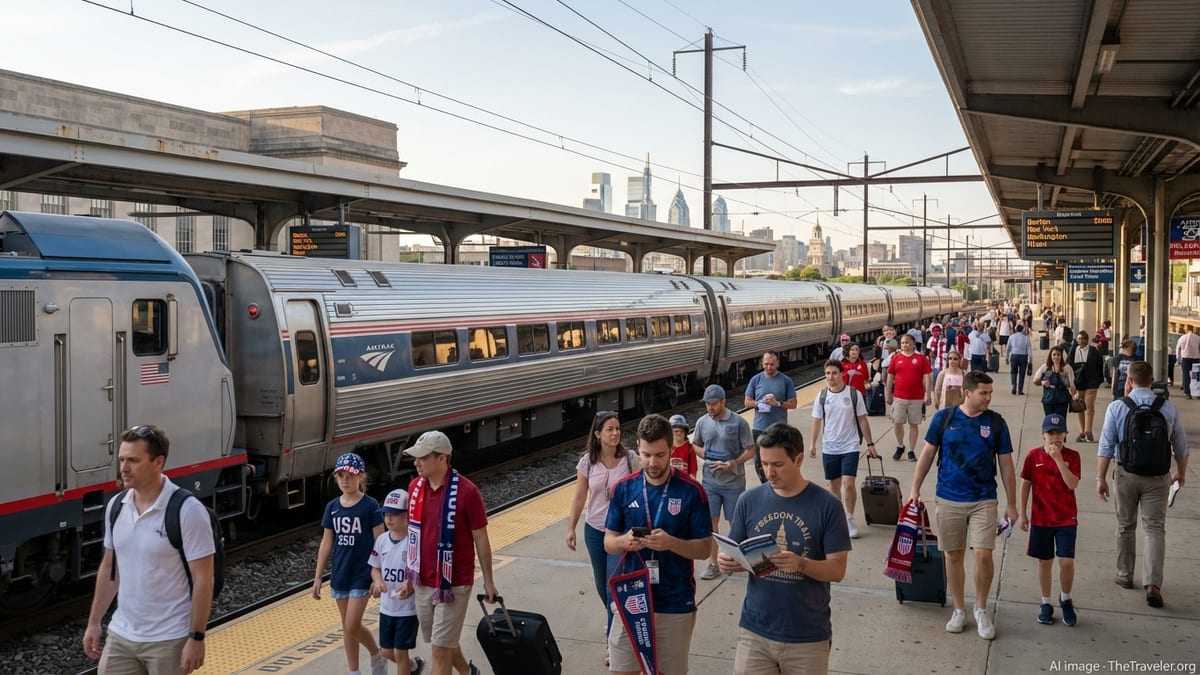
Fire breaks out on maintenance train near key rail hub
According to published coverage from United States media, the incident involved an Amtrak maintenance train that caught fire close to New York’s Pennsylvania Station during the morning peak period. Initial reports indicate that the blaze started in one of the rail cars as the train was operating on tracks feeding the busy hub, which handles hundreds of intercity and commuter services each day.
Publicly available information shows that the fire produced heavy smoke in the tunnel approaches, triggering an emergency response and an immediate halt to train movements through the affected section. Five people on board the maintenance consist were reported injured and received medical attention, while other rail staff and contractors in the vicinity were moved away from the tracks as a precaution.
The incident occurred at a particularly sensitive point in the network, where Amtrak’s Northeast Corridor infrastructure intersects with New Jersey Transit and Long Island Rail Road operations. The concentration of traffic at this location meant that even a short loss of capacity quickly cascaded into significant disruption for passengers.
Trains halted, platforms crowded, and services suspended
Travel alerts issued by the rail operators described a mix of cancellations, reduced frequencies, and substantial delays into and out of Penn Station once the fire was reported. New Jersey Transit services heading into Manhattan were among the first affected, with some trains held at outer terminals and others turned short of their normal destinations to keep rolling stock and crews in usable positions.
Long Island Rail Road temporarily suspended some services into Penn Station while fire crews and rail maintenance teams worked in the area. Public statements from the rail companies urged passengers to expect residual delays throughout the morning and to consider alternate routes where possible, including services into other New York terminals.
For Amtrak’s intercity travelers on the Northeast Corridor, publicly available information indicates that a number of Boston, Washington, and regional services were delayed or subject to speed restrictions near the affected tracks. Some trains were reported to be held outside New York until the immediate safety checks were completed, which added to crowding both on board and at intermediate stations.
Station evacuation and safety checks around the fire zone
Rail safety documentation and media coverage emphasize that any fire close to a major station triggers a series of pre-defined responses, including clearing passengers from platforms that may be exposed to smoke or operational risks. In this incident, sections of Penn Station and adjoining track areas were temporarily cleared while firefighters tackled the blaze and rail personnel inspected overhead power equipment and signaling systems.
Once the flames were brought under control, engineers carried out inspections of the track bed, tunnel lining, and adjacent equipment to determine whether heat or smoke had caused damage. Similar incidents at large stations in the past have shown that even minor fire damage can lead to prolonged disruption if critical cabling, signaling cabinets, or ventilation systems are affected.
In this case, early reports suggest that physical damage to the infrastructure was limited, allowing rail operators to begin restoring a reduced level of service after the fire was extinguished. However, the need to move empty trains, reposition crews, and clear congestion on the approaches meant that knock-on disruption persisted for hours after the initial evacuation.
Impact on travelers and guidance for rail passengers
The timing of the fire during the morning rush significantly affected commuters from New Jersey, Long Island, and points along the Northeast Corridor who rely on Penn Station as their primary gateway into Manhattan. Social media posts and passenger accounts shared with news outlets described crowded concourses, packed replacement services, and extended journey times as travelers sought alternative routes.
Rail operators advised passengers to check real-time updates before setting out, highlighting that timetables would be subject to change as the incident response evolved. Experience from previous fire-related disruptions at major hubs such as London’s Paddington and Glasgow Central illustrates that services can take most of a day to fully recover, even once tracks are technically open and declared safe.
Travel industry observers note that such incidents underscore the importance of flexible booking policies, robust mobile information tools, and clear station signage to help passengers re-plan journeys quickly. For visitors arriving in New York, including international tourists using the train as a lower-carbon link from other cities, the disruption served as a reminder to allow extra time when connecting with flights, tours, or cruise departures.
Broader questions on infrastructure resilience and contingency planning
The fire near Penn Station has renewed attention on the resilience of one of the busiest rail junctions in North America. Analysts regularly highlight that the tunnels and station approaches handle a volume of traffic that leaves little margin for error; any incident affecting a single track can have outsized effects on the broader timetable.
Comparisons are being drawn with other recent rail disruptions where fires close to stations have forced evacuations and prolonged closures, including events on major commuter networks in the United Kingdom and continental Europe. In each case, published safety bulletins emphasize that conservative decisions to halt trains and empty platforms are central to modern rail risk management, even when they lead to major short-term inconvenience.
Industry commentary suggests that long-planned capacity and renewal projects on the Northeast Corridor, including tunnel upgrades and new interlockings, are intended in part to provide more operational flexibility when unplanned incidents occur. For now, however, travel organizations are advising passengers to remain alert to short-notice disruptions in and around Penn Station, particularly during peak periods, and to consider backup options such as alternative terminals or adjusted travel times when planning rail journeys through New York City.