


More news on this day
Emergency planners, first responders, and rail officials converged on a simulated train derailment site on June 17, 2026, for a large-scale exercise designed to test how well agencies work together when a rail incident threatens travelers and nearby communities.
Get the latest news straight to your inbox!
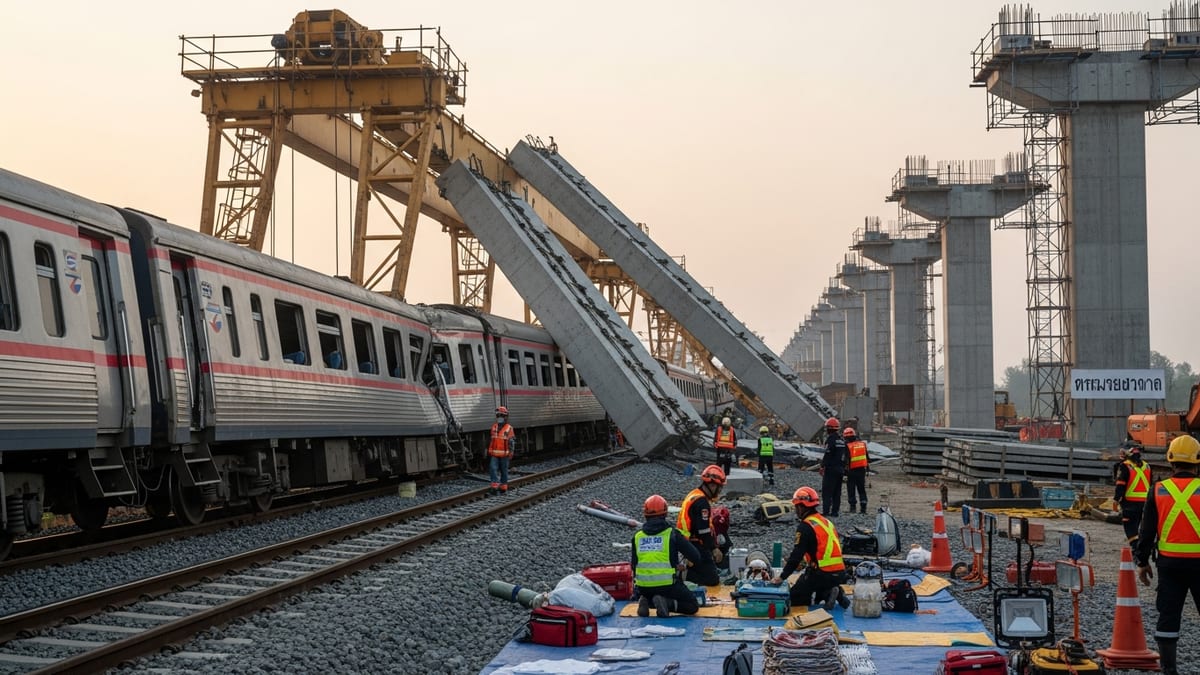
Coordinated Drill Reflects Rising Concern Over Rail Incidents
The full-scale exercise, covered during a News 19 broadcast at 4 p.m., was built around a scenario in which multiple railcars left the tracks near a populated area and key transportation corridors. Organizers used a realistic mix of damaged rail equipment, mock casualties, and staged traffic disruptions to mirror the cascading problems that follow a derailment.
Publicly available information indicates that the drill brought together local fire and rescue crews, law enforcement agencies, emergency medical services, rail safety staff, and regional emergency management specialists. Participants treated the exercise as if it were a live incident, moving resources, setting up command posts, and managing information as news cameras documented each phase.
The decision to spotlight the event on an afternoon newscast reflects broader public attention on rail safety. Recent derailments in the United States and abroad have shown how quickly rail disruptions can shut down major routes, impact commuter and long-distance services, and raise questions about hazardous cargo and aging infrastructure.
By designing a complex, time-pressured scenario, planners aimed to reveal where communication slows, where jurisdictional responsibilities overlap, and how quickly agencies can transition from initial chaos to an organized, unified response.
Simulated Scene Tests On-Scene Command And Communication
The June 17 exercise framed the derailment as a multi-faceted emergency: a freight consist leaving the tracks, potential fuel leakage from locomotives, victim rescues along the right-of-way, and road closures affecting nearby neighborhoods and businesses. Responders arriving at the scene had to secure the area, establish perimeters, and identify potential hazards before sending teams into the mock wreckage.
Training materials shared by emergency organizations for similar drills show a strong emphasis on the incident command system, a standardized approach that assigns clear leadership roles and decision-making authority. During the exercise, command posts were established away from the tracks, with designated spaces for operations, planning, logistics, and public information functions.
Radio traffic, data sharing, and coordination among different dispatch centers played a central role. Participants practiced relaying railcar numbers, track positions, and cargo information to ensure that responding crews understood what was in the consist and which areas posed the greatest risk. The scenario also tested how quickly command staff could request specialty teams, such as hazardous materials units or technical rescue crews.
Observers noted that even in a controlled setting, simulated derailments can strain communication systems when multiple agencies converge on a single, noisy, and geographically constrained scene. The exercise format allowed trainers to pause segments, review missteps, and refine radio protocols that could make a critical difference during an actual emergency.
Focus On Hazardous Materials, Evacuation, And Public Messaging
Although the June 17 drill was an exercise, planners incorporated elements commonly seen in real-world rail incidents, including the possibility of hazardous materials on board. Responders worked from a notional train manifest, identifying which cars would require isolation zones, protective gear, or extended monitoring due to potential chemical releases.
Emergency management guidance for derailment scenarios typically includes decisions on whether to shelter residents in place or order evacuations, how to establish detours for road traffic, and how to protect sensitive locations such as schools, hospitals, and industrial sites. The exercise allowed participating agencies to rehearse these choices under time pressure, with simulated weather conditions and shifting wind directions added to complicate plume modeling and protective action recommendations.
Public communication formed another critical component. The News 19 segment offered a real-time demonstration of how information about a derailment can reach residents predominantly through television and digital platforms. Exercise planners treated the media presence as part of the scenario, drafting sample statements, updating incident details, and clarifying which agency would speak on specific topics such as rail operations, environmental monitoring, or travel disruptions.
By rehearsing the messaging alongside field operations, agencies worked to avoid confusion and reduce the chance of conflicting updates. Consistent public information is seen as essential when travelers face canceled trains, closed roads, or advisories regarding air quality and water safety.
Travel And Infrastructure Implications Highlighted For Viewers
The training event also underscored the broader travel impacts that accompany even a single derailment. Recent incidents in major rail corridors have shown how freight disruptions can cascade to passenger services, forcing detours, bus bridges, or temporary suspensions of routes that connect key cities and tourism hubs.
In the exercise scenario, planners built in simulated timetable disruptions and platform closures, mirroring what travelers might experience if a mainline or junction were suddenly blocked. The News 19 coverage used the drill to illustrate how rail operators coordinate with local agencies to reroute traffic, prioritize essential freight, and restore limited service while heavy equipment clears damaged cars from the right-of-way.
For nearby communities, the exercise highlighted how a derailment can quickly change the rhythm of daily life. Road closures may alter school bus routes and commuter patterns, while noise, lights, and heavy machinery can continue around the clock during cleanup. The drill setting allowed officials to map out traffic-control points, temporary signage, and alternative access for emergency vehicles that need to reach neighborhoods bordering the rail line.
By placing these elements into a single, choreographed scenario, the June 17 exercise offered a snapshot of the interconnected nature of modern transport, where rail incidents can ripple through local roads, regional highways, and airport access routes.
Lessons For Future Preparedness And Traveler Confidence
After the simulated derailment wrapped up, participating agencies moved into evaluation mode, reviewing how decisions were made, how resources were deployed, and how quickly critical tasks were completed. Public summaries from similar exercises typically point to concrete improvements, such as updating contact lists, revising mutual-aid agreements, and investing in new equipment or training.
The June 17 drill fits into a broader national and international effort to treat rail incidents as complex, multi-agency challenges rather than isolated accidents. Travel corridors carry a mix of freight, commuters, and long-distance passengers, and disruptions can have economic impacts that extend far beyond the immediate crash site. Regular exercises help keep response plans aligned with evolving rail technology, new freight patterns, and updated federal guidance on hazardous materials and incident management.
For travelers and residents who watched the News 19 coverage, the exercise served as a reminder that rail safety planning is an ongoing process. Preparedness efforts are not limited to major disasters but also target the more frequent, lower-profile incidents that can still halt service and unsettle nearby neighborhoods.
By staging a visible, carefully structured train derailment drill on June 17, agencies sought to strengthen their readiness, identify remaining gaps, and demonstrate that coordination and communication are central to protecting both passengers and communities along the tracks.