


More news on this day
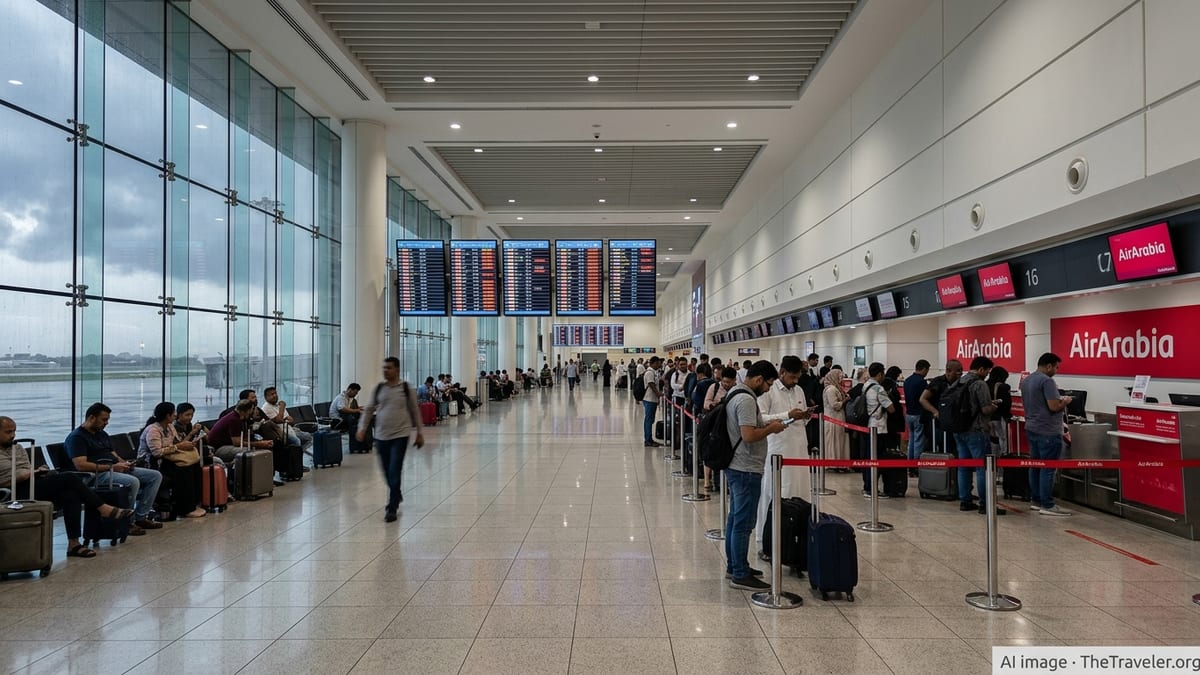
Scores of travelers across Qatar have faced fresh disruption on the busy Doha–Sharjah corridor after Air Arabia canceled two key services, stranding passengers at Hamad International Airport just as Gulf air links were beginning to recover from weeks of war-related shutdowns.
Get the latest news straight to your inbox!
A Sudden Setback on a Reopening Gulf Corridor
The cancellations affected Air Arabia services on the Doha to Sharjah route, a short but strategically important link that connects Qatar’s main hub with the low-cost carrier’s base in the United Arab Emirates. The move came only days after Hamad International Airport began welcoming back a growing list of foreign airlines under a phased restart of operations, heightening the sense of uncertainty for travelers relying on newly restored schedules.
Operational updates from Doha indicate that Air Arabia had resumed services to Qatar around April 22 as part of a broader wave of airlines returning to the capital following the partial reopening of Qatari airspace in March. The decision to abruptly withdraw two Doha–Sharjah flights has therefore taken many passengers by surprise, given that demand on the route remains strong and alternative options are still limited.
The cancellations coincide with a fragile regional aviation environment shaped by the Iran war and earlier closures of multiple Gulf airspaces. While Qatar Airways is in the process of rebuilding its own network and has resumed daily services to Dubai and Sharjah, capacity across the region remains below pre-crisis levels, leaving little slack to absorb sudden schedule changes by other carriers.
For many travelers, the disruption is compounded by the short-notice nature of the cancellations and the complex, multi-leg itineraries that rely on Sharjah as a transfer point to South Asia, North Africa, and beyond. With options already constrained by wider regional instability, the loss of even a handful of frequencies can cascade quickly across individual travel plans.
Passengers Stranded and Scrambling for Alternatives
Reports from Doha describe passengers left at the airport seeking rerouting or overnight accommodation after the two Air Arabia services were removed from the schedule. Some travelers had already checked in or arrived early in anticipation of congestion, only to find their flights no longer operating and alternative departures heavily booked.
Publicly available traveler accounts from recent weeks show how easily disruptions on Gulf routes can spiral into longer journeys, missed connections, and unplanned stays. The Doha–Sharjah sector is often used as a budget-friendly bridge to onward flights from Sharjah, particularly for workers and families traveling between Qatar and destinations in India, Pakistan, Southeast Asia, and parts of Africa. When that bridge is removed at short notice, rebooking frequently means higher fares or longer routings via third countries.
In the current environment, even minor changes can carry outsized consequences. With Qatar only recently moving from evacuation-focused operations back toward scheduled passenger services, and the United Arab Emirates still managing its own capacity and security constraints, replacement seats on nearby routes such as Doha–Dubai are not always available. Travelers report that some flights on alternative Gulf carriers are selling out quickly or departing with long standby lists.
The strain is particularly acute for travelers on time-sensitive trips, including expiring visas, job start dates, family emergencies, or school terms. For these passengers, the financial and emotional cost of an unexpected cancellation extends beyond a single lost flight to accommodation, missed work, and potential immigration complications.
Airlines Rebuild Schedules Amid Regional Volatility
The Air Arabia cancellations unfold against a backdrop of gradual but uneven recovery in Qatar’s air connectivity. After a near-total shutdown in late February following missile attacks and airspace closures, Qatar’s Civil Aviation Authority began allowing limited emergency routes in early March, focused primarily on evacuations and cargo operations. Commercial carriers have been returning in stages as conditions permit.
Recent operational updates from Hamad International Airport show that several foreign airlines have restarted flights to Doha on staggered dates, with low-cost and regional carriers among the first to resume. Flydubai restarted services on April 21, followed by Air Arabia on April 22, while Qatar Airways has announced plans to ramp up to more than 150 destinations by mid-June if conditions remain stable.
On the UAE side, Sharjah has served as a key alternative for passengers navigating around earlier closures at other Gulf hubs. Air Arabia’s hub there plays an important role in connecting secondary cities across Asia, the Middle East, and Europe. Any disruption on the Doha–Sharjah link therefore affects not only point-to-point passengers but also those using Sharjah as a cost-effective transfer airport.
Industry observers note that airlines across the region are still operating with significant operational constraints, including aircraft and crew positioning challenges, corridor routing restrictions, and shifting security assessments. This environment increases the likelihood of short-notice cancellations or schedule consolidations, especially on secondary routes, even as headline announcements highlight the resumption of daily services on major city pairs.
What Impacted Travelers Need to Know Right Now
For passengers affected by the latest Air Arabia cancellations, publicly available guidance from airlines and travel platforms offers several practical steps. Travelers are generally advised to confirm their flight status directly with the carrier before heading to the airport, as day-of changes remain common on routes touching Qatar and the wider Gulf.
Rebooking policies vary by airline and ticket type, but many Gulf and regional carriers have adopted more flexible change rules for journeys originally scheduled during the peak disruption period from late February through April. In practice, this can mean fee-free date changes, fare differences only, or in some cases, full refunds if no reasonable alternative is available. Travelers who booked through online agencies or third-party platforms typically need to work through those intermediaries to access any waivers.
Given the pressure on remaining seats, experts recommend that stranded travelers consider a wider range of routing options, including departures from other Gulf airports that have more robust operations in place. However, any cross-border surface travel carries its own time and cost implications, and border and visa rules should be checked carefully before committing to overland connections.
Travelers with urgent needs are also being encouraged in published advisories to keep documentation such as employment letters, medical records, or school enrollment papers on hand. These documents can sometimes help in negotiating priority rebooking or compassionate consideration from airlines or consular offices under certain circumstances, although outcomes are not guaranteed.
Outlook for the Doha–Sharjah Route in the Coming Weeks
Despite the immediate disruption, industry reports point to a broadly upward trajectory for Qatar’s connectivity over the next two months, provided that the wider security situation in the region does not deteriorate further. Qatar Airways is already restoring high-frequency services to key markets and has publicly outlined ambitions to reach or exceed pre-crisis capacity on several long-haul routes by mid-year.
For the Doha–Sharjah corridor specifically, the presence of both Air Arabia and Qatar Airways suggests that competitive options should gradually return, even if short-term volatility persists. Qatar Airways has already resumed daily services to Sharjah as part of its network rebuild, and Air Arabia’s earlier decision to restart Doha flights indicates that the airline views the route as commercially important, despite the latest cancellations.
Aviation analysts note that smaller Gulf sectors are often used as a buffer in dynamic scheduling environments, adjusted quickly in response to aircraft availability or shifts in demand. That flexibility can be challenging for passengers in the short term but may ultimately help carriers maintain broader network stability as they navigate constrained resources and evolving airspace restrictions.
For travelers planning to use the route in the weeks ahead, the key message from recent disruptions is to remain flexible. Booking with changeable fares where possible, monitoring flight status closely in the 24 hours before departure, and allowing extra time between connections can reduce the risk of being stranded if further schedule changes occur along this critical Gulf corridor.