


More news on this day
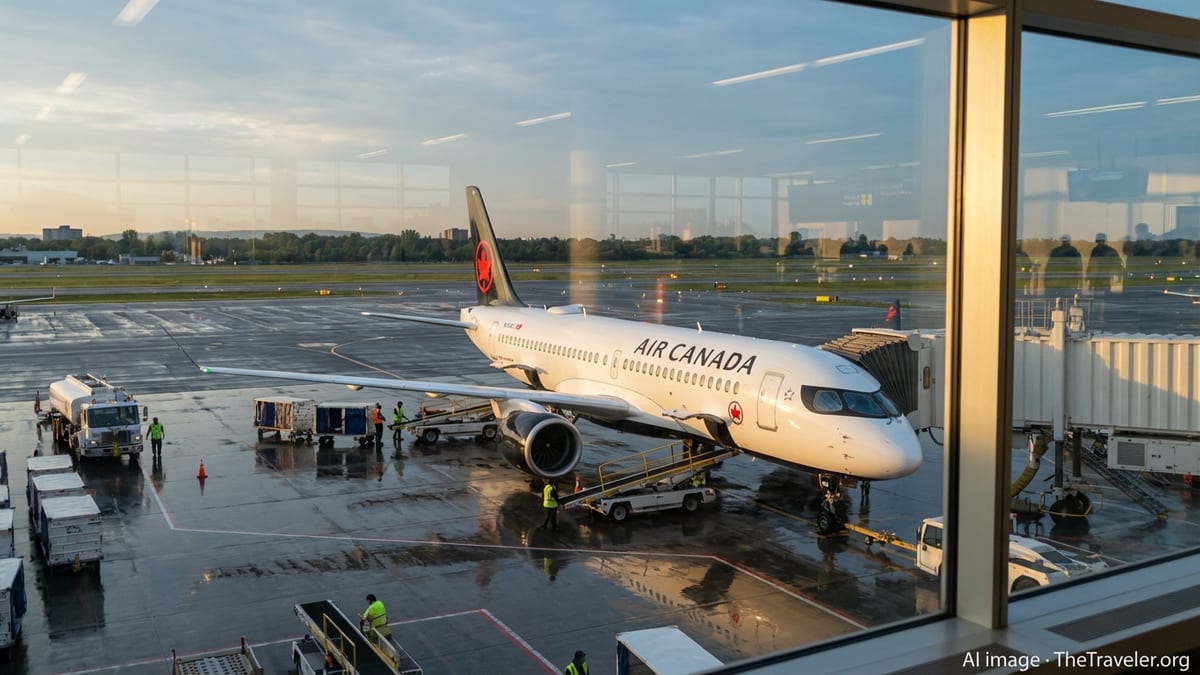
Canada’s growing appetite for Central America is getting a significant boost, as Air Canada moves to expand its Montreal–Guatemala City link into a powerful daily, year-round route that cements the carrier’s Latin American push and strengthens Montreal’s role as a north–south hub.
Get the latest news straight to your inbox!
Route Evolves From Newcomer To Strategic Corridor
The non-stop connection between Montreal’s Trudeau Airport and Guatemala City’s La Aurora International Airport entered Air Canada’s network as part of a wider Latin America expansion that industry coverage has described as one of the airline’s most ambitious pushes into the region. Initial schedules highlighted the route as a limited-frequency service, with operations centered on peak winter sun demand.
Publicly available timetable data now shows the Montreal–Guatemala City link shifting from a niche seasonal option toward a core connector in the airline’s Central America portfolio. The progression from two weekly flights at launch toward sustained, year-round availability reflects consistently strong performance, according to schedule trackers that monitor load factors and capacity growth on new international services.
Air Canada’s wider network strategy has prioritized direct access from Canada’s largest cities to emerging leisure and business destinations in Latin America. The Montreal–Guatemala City route fits that pattern, pairing a major Canadian hub with a growing Central American capital that serves as both a domestic gateway and a jumping-off point for regional tourism circuits.
Industry observers note that Air Canada’s annual reports and seasonal planning updates have repeatedly emphasized Latin America as a key growth pillar, pointing to new destinations and higher frequencies as indicators of demand resilience. Within that context, turning Montreal–Guatemala City into a daily, year-round operation marks a logical next step rather than an isolated schedule tweak.
Daily Year-Round Service Signals Confidence In Demand
Moving to daily operations typically represents a significant vote of confidence in a market’s medium-term prospects. For travelers, the Montreal–Guatemala City route’s evolution into a seven-day schedule means more flexibility on departure dates, easier same-day onward connections, and improved reliability when disruptions occur.
Published schedule information indicates that the flight time between Montreal and Guatemala City is just over five hours, placing Guatemala within comfortable reach for both long-weekend getaways and extended stays. A daily pattern enhances the appeal for Canadian travelers who may be comparing Central America with closer Caribbean options that already benefit from dense service.
For Guatemala, the expanded link offers a more predictable pipeline of visitors from Canada, one of its fastest-rising long-haul tourism markets in recent years. More frequent service also supports the Guatemalan diaspora in Quebec and eastern Canada, who rely on consistent connectivity for family visits and seasonal trips.
Travel analysts point out that daily service can also help stabilize fares over time. With more seats in the market across all seasons, Air Canada has added capacity that can accommodate both early-booking leisure travelers and short-notice business passengers without relying solely on peak-season pricing.
Montreal Strengthens Its Role As A North–South Hub
Montreal has been steadily reinforcing its position as a gateway between Canada and Latin America, benefiting from its geographic location and growing number of non-stop links to the region. The decision to elevate Montreal–Guatemala City to daily, year-round status aligns with broader efforts to channel more connecting traffic through Air Canada’s Quebec hub.
According to network overviews and route maps, Montreal already supports extensive service into Mexico, the Caribbean and parts of South America. Adding a robust Central American link enhances connection opportunities from cities across eastern Canada and parts of the northeastern United States that route through Montreal on Air Canada’s domestic and transborder network.
For passengers originating in markets such as Toronto, Ottawa, Halifax or smaller Canadian cities, a same-day connection through Montreal to Guatemala City can be more convenient than transiting through U.S. hubs, particularly for those seeking to avoid additional border formalities. The daily schedule opens more connection windows throughout the week, reducing overnight layovers and widening itinerary options.
Airport capacity planning documents and airline briefings have described Montreal’s role as increasingly focused on diversifying long-haul destinations rather than relying solely on transatlantic traffic. The strengthening of the Guatemala City service is consistent with that trend, layering in southbound options that help balance seasonal swings in Europe-bound demand.
Boost For Tourism, Trade And Diaspora Links
Beyond schedule mechanics, the upgraded route carries implications for tourism, trade and cultural ties between Canada and Guatemala. Tourism boards and travel agencies tracking booking patterns report a steady rise in interest for Central American itineraries that combine colonial cities, volcano hikes and Mayan archaeological sites with beach stays on the Pacific and Caribbean coasts.
For Canadian travelers, Guatemala’s appeal lies in its mix of cultural depth and relatively short flight time compared with South America. Tour operators have increasingly packaged Guatemala with neighboring countries such as Belize and Honduras, using Guatemala City as an arrival or departure point. Daily year-round service from Montreal simplifies planning for these multi-country journeys and can support the development of more fixed-date group tours.
On the trade side, more frequent passenger flights typically support cargo uplift in the belly of widebody or narrowbody aircraft. Canada–Guatemala commerce includes agricultural products, textiles and manufactured goods, and logistics observers highlight that reliable air links can be particularly important for time-sensitive shipments, high-value items and e-commerce flows.
The route also serves sizable Guatemalan communities living in Quebec and elsewhere in Canada. For these travelers, daily year-round flights mean more options for school-holiday travel, religious festivals and emergency trips, reducing the need to route via Mexico or the United States. Community organizations have long advocated for more direct Central American connectivity from Canada, and the reinforcement of Montreal–Guatemala City is viewed as a tangible response to that underlying demand.
Competitive Landscape And Future Growth Prospects
While Air Canada currently operates the only non-stop service between Montreal and Guatemala City according to multiple schedule aggregators, the move to daily year-round operations places competitive pressure on one-stop itineraries offered by U.S. and regional carriers. With more direct seats in the market, connecting options via major American hubs may become less attractive for travelers based in Quebec and eastern Canada.
Airline network analysts suggest that sustained daily performance on Montreal–Guatemala City could pave the way for future refinements, such as upgauging aircraft during peak periods or adjusting departure times to optimize onward connections. Strong results might also influence decisions on additional Central American links from other Canadian cities over the medium term.
At the same time, industry commentary notes that airlines have become more agile in managing capacity, particularly following the pandemic recovery period. Even as Air Canada signals confidence in the route by expanding it, observers will be watching load factors and yield trends closely to see how the market responds to year-round daily supply.
For now, the message to travelers is clear: Canada’s direct access to Guatemala is entering a new phase, with Montreal anchoring a stronger, more flexible bridge to Central America that reflects both the country’s growing travel ambitions and Air Canada’s evolving global strategy.