


More news on this day
Early indicators for July suggest a 3% slide in international tourist arrivals to the United States, sharpening concerns about the country’s post‑pandemic tourism recovery even as California moves in lockstep with other global travel powerhouses to defend market share.
Get the latest news straight to your inbox!
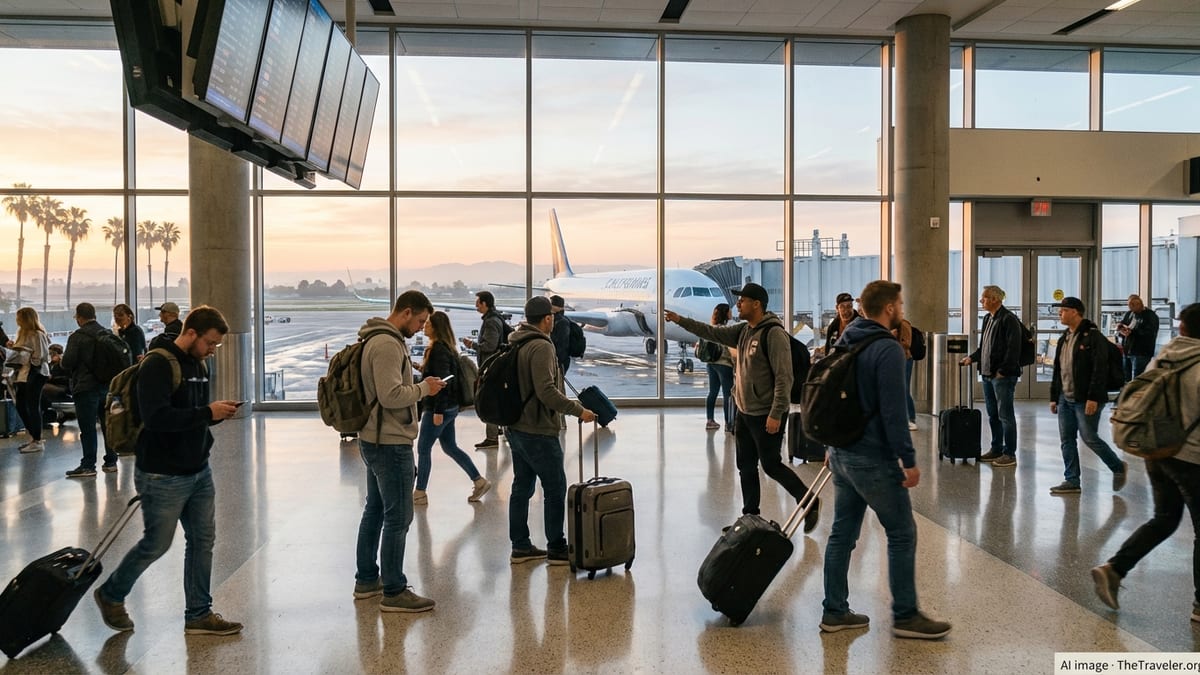
July Softness Adds to a Stalling U.S. Tourism Recovery
Preliminary readings from aviation, booking and arrivals trend trackers indicate that international visitor growth to the United States lost momentum at the start of the peak summer season, with July pointing to an estimated 3% drop in arrivals compared with the same month a year earlier. The setback comes after government data showed overseas arrivals were already contracting in the first half of 2026, underscoring how fragile the recovery remains.
National Travel and Tourism Office summaries and industry analyses have described a pattern of weakening overseas demand since late spring, including a 1.8% decline in June visitor volumes after an even sharper fall in May. Analysts say July’s likely 3% slide would extend that sequence of softer months and leave the United States trailing some rival long‑haul destinations that are reporting modest gains in European and Asian arrivals.
Industry research suggests that higher airfares, a strong U.S. dollar and persistent visa processing backlogs are weighing on potential travelers, particularly from long‑haul markets in Europe and Asia. At the same time, many travelers are opting for multi‑country regional trips closer to home, reducing the appeal of a single long‑haul journey to North America at a time of cost‑of‑living pressures.
While total international visitation to the United States is still projected to rise over the full year, the mid‑summer slowdown raises questions about whether those forecasts will need to be revised if the current softness continues into the shoulder season.
California Aligns With Global Travel Heavyweights
Against this national backdrop, California continues to position itself alongside global tourism powerhouses such as Spain, France and Italy in terms of brand strength, visitor volume and marketing heft. State tourism planners have highlighted that California remains the top U.S. destination for overseas visitors, and recent industry forecasts project incremental growth in visitation and spending through 2026 despite global headwinds.
Research commissioned by Visit California and prepared by Tourism Economics indicates that statewide visitor volume is expected to climb further in 2026, with analysts pointing to the breadth of the state’s product mix, from major gateway cities and national parks to wine regions and coastal resorts. These fundamentals, they argue, help California behave more like a stand‑alone national destination in the global marketplace than a single U.S. state.
California’s tourism strategy mirrors those of leading international destinations by combining sustained brand marketing with targeted campaigns in key overseas markets. The state has remained active in promoting its cities and regions in Europe, Canada and the Asia‑Pacific, even as some destinations have trimmed budgets in response to weaker inbound numbers.
This approach, industry observers suggest, allows California to capture a disproportionate share of international demand that still exists, even when overall U.S. volumes soften. As a result, the state is seen as standing firmly with other global travel powerhouses that continue to invest through the cycle, rather than retrenching at the first sign of slower growth.
Data Show Diverging Trends Within the United States
Recent federal and industry data reveal a growing divergence between national averages and performance in major coastal gateways such as California, New York and Florida. While the United States as a whole has experienced declining overseas arrivals in several recent months, select large states have reported more resilient hotel occupancy and visitor spending in core urban and resort markets.
California‑focused research dashboards tracking weekly hotel trends in key destinations, including Anaheim and other Southern California hubs, have shown relatively steady occupancy and revenue per available room through early July. Although not a perfect proxy for international visitation, these metrics suggest that the state has been more successful than many inland destinations in sustaining demand during a choppy recovery.
Federal visitation snapshots indicate that overseas travelers continue to concentrate in a limited number of U.S. states, with California consistently ranking near the top by share of total international visits. This concentration amplifies the importance of California’s performance for the broader U.S. tourism economy, particularly when nationwide visitor growth is under pressure.
Analysts note that if California and a handful of other gateway states had not held up comparatively well, the national decline in inbound tourism in mid‑2026 would likely have been steeper than the estimated 3% July drop now emerging from early indicators.
Headwinds Challenge Inbound Markets, but Long‑Term Outlook Holds
The July setback for U.S. arrivals comes at a time when long‑term projections for international travel to the country remain broadly positive. The National Travel and Tourism Office’s multi‑year forecast anticipates that total international visitation will increase between 2025 and 2030, eventually surpassing pre‑pandemic records as new air capacity comes online and major events help stimulate demand.
In the near term, however, several headwinds are clouding the outlook. A strong dollar makes visits more expensive for many origin markets, while higher airfares and limited seat capacity on some transatlantic and transpacific routes continue to constrain growth. Visa processing delays and evolving security requirements in both origin and destination markets add further friction to trip planning.
Industry reports also point to shifting traveler behavior, with more visitors opting for single‑destination trips and longer stays rather than multi‑city itineraries across multiple U.S. states. That trend can benefit large, diversified destinations such as California but can leave smaller markets struggling to attract their traditional share of international tourists.
Still, long‑range forecasts factor in potential boosts from the global events calendar, improving airline connectivity and gradual easing of economic pressures in key source markets. For destinations that maintain investment and adapt to changing traveler expectations, the current soft patch is viewed as a challenge to manage rather than a reversal of the broader recovery trajectory.
California Bets on Marketing Muscle to Capture Future Demand
California’s response to the national slowdown has been to double down on its long‑running message of lifestyle, diversity and year‑round experiences. Campaigns highlighting outdoor recreation, wine and culinary tourism, theme parks and major cultural events aim to convert aspirational interest into actual bookings, particularly from high‑value long‑haul markets.
State tourism planners are also emphasizing the role of the visitor economy in supporting jobs and tax revenues across California, using new data to quantify spending and employment impacts in both urban and rural regions. Those figures are being cited in budget discussions as the state weighs how aggressively to fund tourism promotion during a period of slower national growth.
As California stands shoulder to shoulder with other global tourism leaders, its performance over the remainder of the year will be closely watched by the wider U.S. industry. If the state continues to outperform national trends, it may offer a blueprint for how aggressive branding, diversified product offerings and sustained investment can help destinations weather a period marked by a 3% summer drop in visitors and an increasingly competitive global travel market.