


More news on this day
Air Canada has officially introduced its first Airbus A321XLR into scheduled service, launching a new era of single-aisle transatlantic flying with lie-flat Signature Class suites on board.
Get the latest news straight to your inbox!
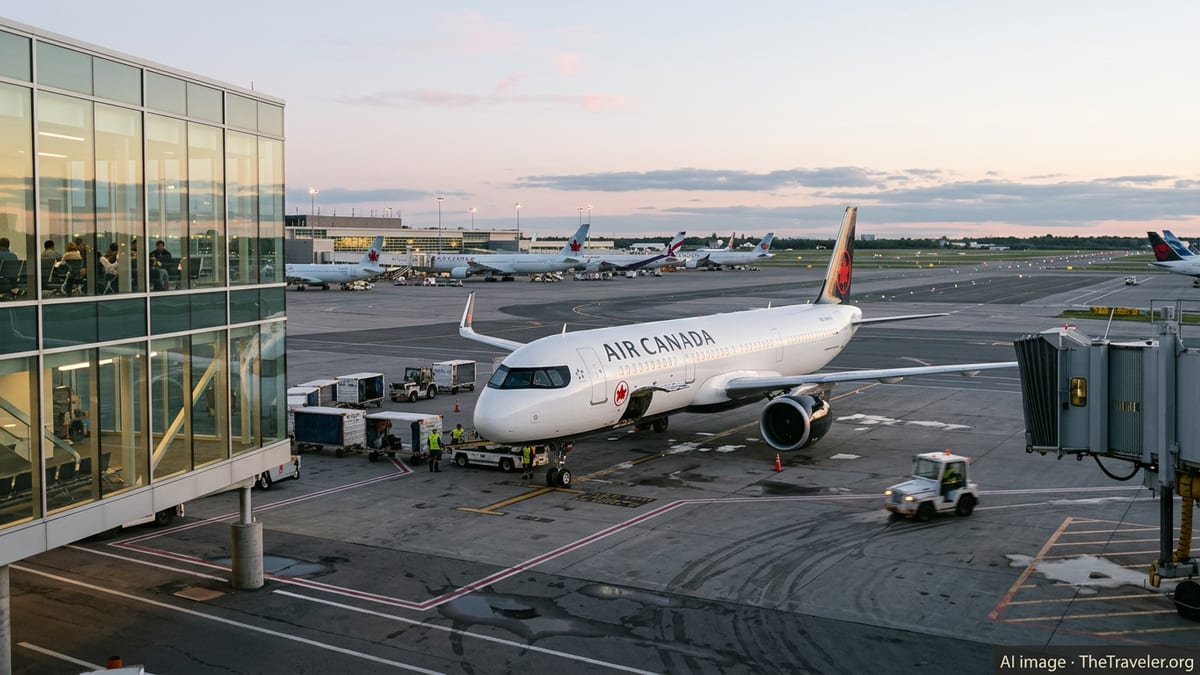
A321XLR enters service with widebody-style comfort
The A321XLR entered regular commercial service on June 9, 2026, following its delivery from Airbus in Hamburg in late April. Publicly available information from the airline and manufacturer indicates that Air Canada has ordered 30 of the extra-long-range narrowbody jets, positioning them for both North American transcontinental and transatlantic missions.
The aircraft is configured in a two-class layout with 14 Air Canada Signature Class seats and 168 economy seats, for a total of 182 passengers. The premium cabin features fully lie-flat suites arranged in a 1-1 layout, giving every Signature Class traveler direct aisle access, a feature more commonly associated with widebody aircraft.
According to published coverage and technical material from Airbus, the A321XLR is designed to fly up to around 4,700 nautical miles, enough to connect Canadian hubs such as Montreal and Toronto with many key destinations in Western Europe. That range allows Air Canada to deploy a single-aisle jet on routes traditionally operated by larger twin-aisle aircraft, while still maintaining a long-haul business-class product.
The airline has presented the A321XLR as part of its broader fleet renewal strategy, complementing widebody types such as the Boeing 787 and Airbus A330 on longer routes while replacing older single-aisle aircraft on high-demand sectors.
Signature Class lie-flat suites debut on a single-aisle jet
The most visible change on the A321XLR is the introduction of lie-flat Air Canada Signature Class seats on a single-aisle aircraft, something the carrier has not offered before. Industry reports describe the new suites as based on Collins Aerospace’s Aurora platform, customized with Air Canada-specific finishes and details.
Each of the 14 suites converts to a fully flat bed and is positioned in a 1-1 configuration along the length of the forward cabin. This layout eliminates middle seats and allows all business-class passengers to move in and out of their seats without disturbing a neighbor, mirroring the direct-aisle-access standard that has become common on long-haul widebodies.
The Signature Class cabin is also being promoted as part of Air Canada’s updated design language, sometimes referred to in company materials as a “glowing hearted” experience, which emphasizes warmer colors, modern finishes, and a more residential feel. The A321XLR is among the first aircraft types to showcase that refreshed interior across both premium and economy cabins.
For business travelers used to larger jets across the Atlantic, the introduction of lie-flat seating on a narrowbody is intended to reduce the perceived downgrade that can come when capacity is right-sized on thinner routes. With a full suite product, Air Canada is positioning the A321XLR as an alternative that offers most of the comfort of a widebody with the flexibility of a smaller airframe.
Transatlantic and long-range routes targeted
Air Canada has outlined a clear role for the A321XLR in its network planning. Publicly available schedules and earlier route announcements show that the type is slated for new and existing transatlantic services from Montreal and Toronto, along with selected long-range domestic and transcontinental routes within North America.
One of the headline deployments is a new summer route between Montreal and Palma de Mallorca, announced in 2025 as the first entirely new destination planned specifically for the A321XLR. The aircraft’s extended range allows Air Canada to reach Mediterranean leisure markets directly from Canada with a smaller gauge than a typical widebody, while still offering a lie-flat business cabin aimed at premium leisure and connecting passengers.
Additional transatlantic routes from Montreal and Toronto to Western Europe are expected to follow as more aircraft are delivered. Network updates also indicate that the A321XLR will fly on longer domestic sectors such as Montreal to Calgary and other high-demand Canadian trunk routes, giving domestic passengers access to the new cabin product and allowing crews to build experience on the type.
The flexibility to alternate between transatlantic and transcontinental flying is a core part of the business case for the aircraft, as airlines globally look to match capacity more precisely to demand while offering a consistent premium experience.
Cabin technology and passenger experience upgrades
Beyond the lie-flat seats, the A321XLR introduces several technology upgrades that differentiate it from earlier generations of single-aisle aircraft in the Air Canada fleet. According to product fact sheets and media briefings, every seat in both cabins is equipped with an individual seatback entertainment screen using 4K OLED technology.
Signature Class suites feature 19-inch screens, while economy seats are fitted with 13-inch displays. The system supports Bluetooth audio pairing, allowing passengers to use their own wireless headphones without an adapter, a feature that has been gradually rolling out across newer aircraft at major carriers worldwide.
The cabin also incorporates expanded personal storage, power outlets and USB ports at every seat, and updated LED lighting designed to reduce fatigue on longer flights by simulating different phases of the day. Reports suggest that the lavatory and galley areas have been reconfigured to maximize cabin space while preserving service capability on flights lasting six hours or more.
These elements align the A321XLR with Air Canada’s latest-generation widebodies, helping the airline present a more uniform onboard experience even as passengers move between different aircraft types on multi-segment itineraries.
Single-aisle long-haul trend gains momentum
Air Canada’s launch of A321XLR service with lie-flat seating fits into a broader industry trend in which airlines are adopting long-range narrowbodies for routes that would previously have required larger aircraft. Similar moves by European and North American carriers using Airbus A321 variants and Boeing 757 replacements have demonstrated demand for premium cabins on thinner long-haul sectors.
For transatlantic travelers, this means that single-aisle aircraft are likely to become more common on routes between secondary cities and major hubs, but with comfort standards that increasingly mirror those on twin-aisle jets. The A321XLR’s combination of range, fuel efficiency and cabin flexibility has been cited in industry analysis as a key factor supporting the viability of such services.
At the same time, some frequent flyers have expressed mixed views in public forums about spending six to eight hours on a narrowbody, citing aisle congestion and fewer lavatories as potential drawbacks. Airlines, including Air Canada, are betting that upgraded seating, in-flight entertainment and connectivity will outweigh those concerns for many passengers, particularly in premium cabins.
As additional A321XLRs join the fleet over the next several years, Air Canada is expected to steadily expand the number of routes featuring lie-flat suites on a single-aisle aircraft. For travelers on both sides of the Atlantic, that will mean more choice of departure points and schedules, with an increasingly widebody-like experience even when the aircraft has only one aisle.