


More news on this day
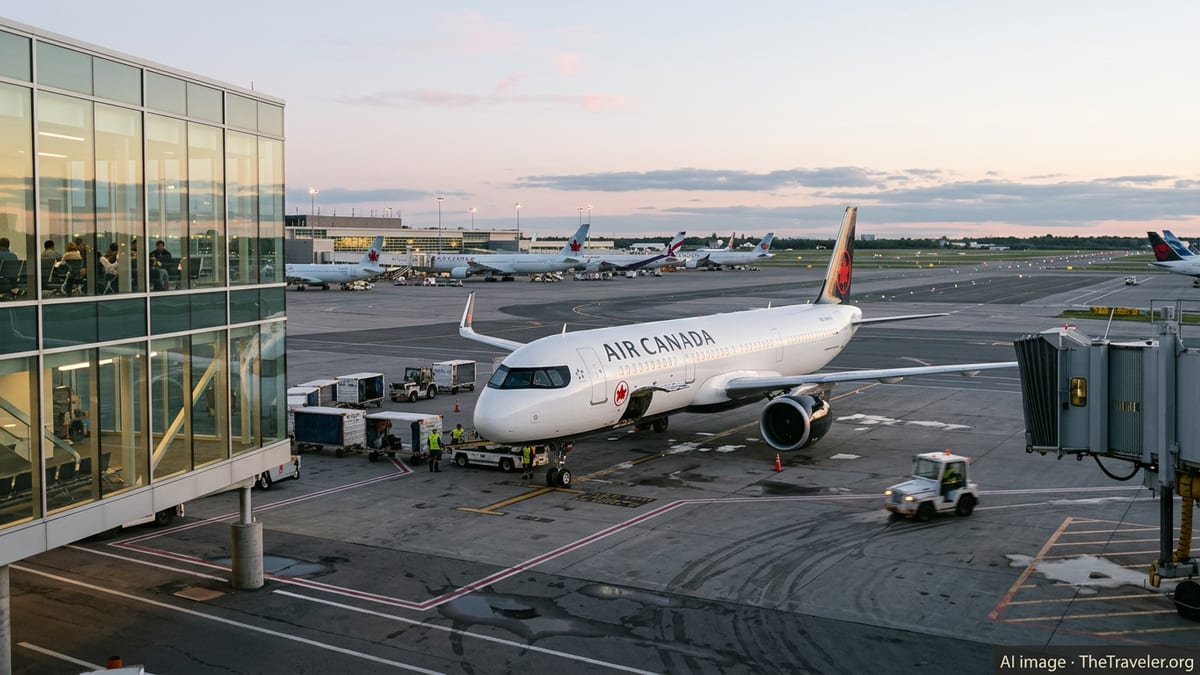
Air Canada has placed its first Airbus A321XLR into regular commercial service, marking a key fleet milestone for the carrier and underscoring the growing role of long range single aisle aircraft on transatlantic and transcontinental routes.
Get the latest news straight to your inbox!
First Revenue Flight Marks New Chapter for the Carrier
According to publicly available information from the airline, the first Airbus A321XLR entered scheduled service on June 9, 2026, operating an initial commercial flight from Montréal. The milestone comes just weeks after the aircraft was handed over to Air Canada at Airbus’s facility in Hamburg and ferried to Canada for final preparations.
The aircraft is the first of 30 A321XLRs that Air Canada has on order as part of a broader narrowbody renewal strategy. Reports indicate that the type is intended to bridge the gap between the airline’s existing single aisle fleet and its widebody aircraft, providing both additional range and lower fuel burn on longer routes.
Industry coverage notes that the introduction of the A321XLR positions Air Canada among the early adopters of the extra long range variant globally, and the launch operator in Canada. The move reflects a wider trend in commercial aviation toward using advanced narrowbody jets on routes that were previously the domain of twin aisle aircraft.
Published statements from the airline describe the entry into service as a “transformative” moment for its network and product, highlighting the jet’s ability to connect secondary cities and support growth in both leisure and business markets.
Cabin Configuration Focuses on Comfort and Premium Demand
Air Canada’s A321XLRs are configured with a two cabin layout designed for longer flights, featuring a premium cabin marketed as Air Canada Signature Class and a refreshed economy section. Publicly released specifications show 14 lie flat seats in a 1 1 configuration in the forward cabin, giving each passenger direct aisle access on a single aisle aircraft.
Behind the premium cabin, the aircraft offers 168 economy class seats, for a total of 182 seats on board. The interior incorporates the latest Airbus Airspace design, including larger overhead bins, updated sidewalls and advanced LED lighting intended to reduce the effects of jet lag on extended sectors.
Reports indicate that the in flight entertainment system supports 4K capable screens, Bluetooth audio pairing and in seat power at every seat. Connectivity has been described as a key element of the product, with Wi Fi planned throughout the cabin to support both work and streaming on flights lasting up to eight or nine hours.
The seating throughout the aircraft is supplied by Collins Aerospace under a program announced earlier in 2026. Public documentation shows that the company’s Aurora suites are being deployed in the premium cabin, while new generation slimline seats are installed in economy to balance comfort and capacity.
New Jet Extends Air Canada’s Reach on Long Thin Routes
The A321XLR is the longest range version of the Airbus A321neo family, capable of flying up to about 4,700 nautical miles. This allows airlines to deploy the aircraft on routes that would typically require a larger widebody, but where demand is better matched to a smaller gauge.
For Air Canada, that flexibility is expected to be particularly important on transatlantic and longer North American routes. Based on network plans previously outlined by the carrier, the aircraft will be used to connect Montréal and Toronto with European cities such as Berlin, Toulouse, Edinburgh and Palma de Mallorca, as well as select destinations in Western Canada and the United States.
Industry analysts note that these types of markets, often referred to as long thin routes, benefit from the economics of a single aisle aircraft with widebody like range. The extra range and lower fuel consumption per seat can make non stop service viable year round, rather than relying on seasonal or connecting options.
The aircraft is also expected to support Air Canada’s competitive position in key leisure markets. The launch of a new seasonal route from Montréal to Palma de Mallorca using the A321XLR in summer 2026 has been highlighted in earlier announcements as a showcase for the jet’s capabilities over the Atlantic.
Fleet Renewal Strategy Aims at Efficiency and Lower Emissions
The introduction of the A321XLR forms part of a multi year renewal of Air Canada’s narrowbody and widebody fleets. The airline has been phasing in Airbus A220s and Boeing 737 MAX aircraft in recent years, while also planning for next generation widebodies such as the Airbus A350 1000 to replace older long haul jets.
According to material released by Airbus and Air Canada, the A321XLR offers up to 30 percent lower fuel burn per seat compared with previous generation aircraft of similar size, thanks to new engines, aerodynamic improvements and additional fuel capacity integrated into the airframe. The model is also certified to operate with a blend of sustainable aviation fuel, aligning with broader industry goals to reduce lifecycle emissions.
Public filings and investor presentations show that fleet renewal is a central component of Air Canada’s strategy to manage operating costs, improve environmental performance and offer more consistent onboard products. The A321XLR, with its long range and smaller capacity, is positioned as a tool to right size capacity on certain long haul routes while still offering a full service product.
The aircraft’s commonality with the broader Airbus A320 family is also viewed as an advantage in terms of pilot training, maintenance and spare parts, helping the airline manage complexity as it introduces new types and retires older jets.
What Passengers Can Expect on Upcoming A321XLR Flights
For travelers, the most visible impact of the A321XLR’s entry into service will be on comfort and convenience. The aircraft’s long range makes possible more point to point links between Canadian cities and smaller European destinations, reducing the need for connections through major hubs.
In the cabin, passengers can expect a quieter interior compared with older narrowbodies, larger overhead storage and modern lighting. Those in the premium cabin will experience full flat seating typically associated with widebody aircraft, but on routes that may previously have offered only recliner style business seats or premium economy.
Economy travelers are set to benefit from updated seats, individual screens and expanded entertainment options. The addition of Bluetooth connectivity responds to changing passenger preferences, allowing the use of personal wireless headphones without adapters.
As the first A321XLR rotates through Air Canada’s schedule in the coming months, aviation observers will be watching how the airline deploys the type across both business and leisure markets, and how travelers respond to a new generation of long range single aisle flying.