


More news on this day
The United States has issued a heightened warning for travel across the Middle East after a recent Houthi attack, advising Americans to brace for possible flight cancellations, airspace closures and broader disruptions as tensions escalate around key Red Sea and Gulf transport corridors.
Get the latest news straight to your inbox!
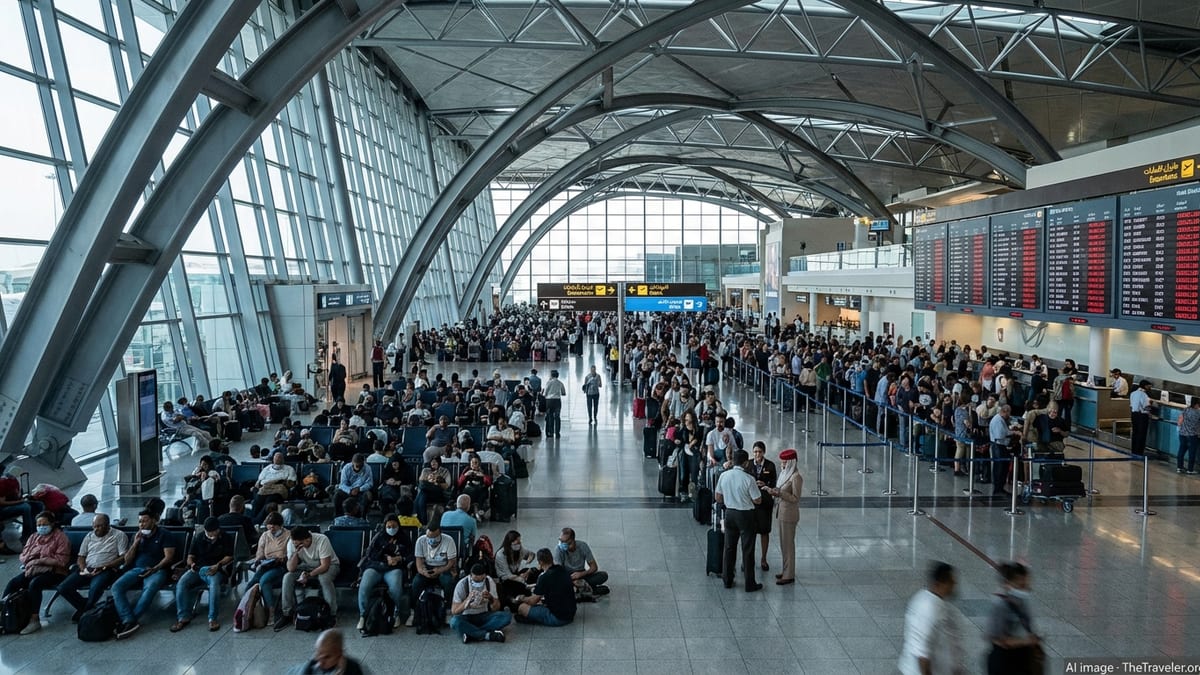
Regional alerts expanded after fresh Houthi strike
According to publicly available security alerts and media coverage on October 19, 2026, US embassies across the Middle East circulated near-identical messages urging citizens to exercise what they described as heightened vigilance. The alerts were issued for countries including Saudi Arabia, the United Arab Emirates, Qatar, Bahrain, Kuwait, Oman, Jordan, Iraq, Lebanon, Israel, Yemen and Iran, reflecting concern that the fallout from the latest Houthi operation could spread quickly across borders.
The move follows weeks of intensifying Houthi activity linked to the conflict in Yemen and the broader confrontation involving Iran and regional rivals. Reports indicate that Houthi forces claimed responsibility for recent attacks affecting Saudi territory and maritime traffic near the Red Sea and Gulf of Aden, building on a campaign that has previously targeted airports, oil facilities and commercial shipping lanes.
Analysts note that the timing of the new alerts, arriving shortly after a string of incidents at sea and on land, underscores Washington’s concern that renewed Houthi strikes could disrupt both civil aviation and shipping. Publicly available information from maritime and security bulletins points to a higher risk environment around the Bab al Mandab Strait and adjacent waters, raising the stakes for airlines and travelers who transit nearby airspace.
For travelers, the alerts do not impose a ban on visiting the region but strongly encourage reconsidering nonessential trips and preparing for sudden schedule changes. Travel industry observers say this kind of broad, regionwide messaging remains relatively rare and is usually reserved for periods when multiple risk factors converge.
State Department advisories highlight shifting risk map
The latest embassy notices build on formal country-level travel advisories already in place. The US Department of State currently lists Iran and Iraq under its highest Level 4 category, advising citizens not to travel due to risks that include terrorism, civil unrest, kidnapping and, in Iran’s case, concerns over wrongful detentions. Several Gulf and Levant states, including Saudi Arabia, the United Arab Emirates and Kuwait, are under Level 3 guidance that urges travelers to reconsider travel.
Recent updates to the Saudi Arabia advisory in mid October 2026 explicitly cite the threat of drone and missile activity linked to Iran and Iran-backed Houthi forces, particularly around key infrastructure and urban centers. The text also highlights that attacks can occur with little or no warning and may target locations frequented by foreign visitors, ranging from airports and shopping centers to public events.
In the United Arab Emirates, advisory language from late August 2026 references the broader US Iran confrontation and warns of an ongoing risk to civil aviation in airspace over the Persian Gulf and Gulf of Oman. Public information notes the potential for sudden disruptions to commercial flights, as well as the possibility that airports could temporarily halt operations if tensions spike.
General guidance from the State Department for the wider Middle East emphasizes that threat levels can shift quickly and that advisory categories can change with little notice. Travelers are encouraged to enroll in the Smart Traveler Enrollment Program, monitor embassy alerts and maintain contingency plans that include flexible tickets, alternative routings and access to funds for unexpected accommodation or rebooking costs.
Strategic chokepoints under pressure in Red Sea and Gulf
The latest US warning is closely linked to the geography of regional trade. The Bab al Mandab Strait, connecting the Red Sea to the Gulf of Aden and onward to the Indian Ocean, carries an estimated high single digit share of global seaborne trade and energy shipments. When security conditions deteriorate, shipping lines often divert around Africa’s Cape of Good Hope, adding significant days to transit times between Asia and Europe and increasing costs for fuel and insurance.
Maritime advisories from US transportation authorities and international industry groups describe a pattern of Houthi activity that includes anti ship missiles, drones and explosive boats targeting commercial vessels in the southern Red Sea, Bab al Mandab and Gulf of Aden. Several bulletins issued since 2024 instruct US flagged and other commercial ships on measures such as altering routes, increasing watchkeeping, coordinating with naval task forces and, in some circumstances, limiting the use of tracking transponders when a security incident is imminent.
In recent days, media reports have detailed fresh confrontations, including incidents in which naval vessels intercepted drones believed to be launched from areas under Houthi control toward merchant ships. European defense missions operating in the Red Sea and Gulf of Aden have also raised alert levels, reflecting a consensus that the waterway remains volatile despite periodic lulls in attacks.
For air travelers, the implications are less visible but still significant. Airlines and aviation regulators routinely adjust flight paths to avoid high risk zones, sometimes routing aircraft hundreds of kilometers away from conflict areas. Industry watchers point out that when military activity intensifies near critical straits or coastlines, airlines may cancel or reroute flights at short notice, complicating connections for passengers traveling between Europe, Africa and Asia via Middle Eastern hubs.
What the new warning means for travelers and itineraries
Travel professionals following the latest US alerts stress that the new language is primarily about preparedness rather than panic. While major hubs such as Dubai, Doha, Abu Dhabi and Riyadh continue to operate, the risk of disruption is elevated, particularly if additional Houthi attacks trigger temporary airspace restrictions or prompt airlines to suspend certain routes.
Publicly available embassy guidance encourages Americans already in the region to keep travel documents up to date, carry identification at all times and maintain a low profile in public areas. Travelers are also urged to confirm flight status directly with airlines before heading to the airport, allow extra time for security procedures and remain ready to adjust plans if routes through the Red Sea corridor or adjacent airspace become constrained.
For those planning cruises or ferry journeys that transit the Red Sea, Gulf of Aden or nearby ports, recent maritime advisories and shipping industry circulars underline that conditions can change rapidly. Some cruise lines and cargo operators have previously rerouted voyages or adjusted schedules to avoid known trouble spots near Yemen and the Bab al Mandab Strait, and further changes remain possible if attacks intensify.
Insurance considerations are also coming to the forefront. Travel insurers sometimes modify coverage in response to official advisories and active conflict zones, excluding certain countries or limiting benefits for trips booked after a warning is published. Prospective travelers are being encouraged by industry commentators to read policy language carefully, paying close attention to clauses regarding war, terrorism and government advisories before purchasing coverage.
Balancing essential travel with evolving security realities
The United States is not alone in reassessing Middle East travel risk after the latest Houthi related incident. Regional governments and other Western states have issued or updated their own advisories in recent weeks, in some cases warning airlines about operating to specific airports that were named in Houthi statements as potential targets.
Despite the heightened rhetoric, commercial activity in many Gulf and Levant cities continues, and a substantial number of business travelers, expatriate workers and religious pilgrims remain in the region. Travel analysts describe a landscape in which essential travel is proceeding but often subject to enhanced security screening, stricter document checks and a stronger emphasis on contingency planning.
Public reports from shipping and aviation sectors suggest that any long term impact on global travel patterns will depend on whether attacks persist or broaden. A sustained campaign affecting the Bab al Mandab corridor or major Saudi airports could encourage more airlines and logistics firms to favor alternative routings, potentially increasing fares and travel times for passengers who rely on Middle Eastern hubs as transit points.
For now, officials and industry experts quoted in open sources converge on a similar message for travelers considering the region. Nonessential leisure trips may be best postponed or re routed, while those with critical business, family or humanitarian reasons to travel should proceed with caution, remain closely informed of local developments and be prepared for swift changes to the air and sea routes that link the Middle East to the rest of the world.